
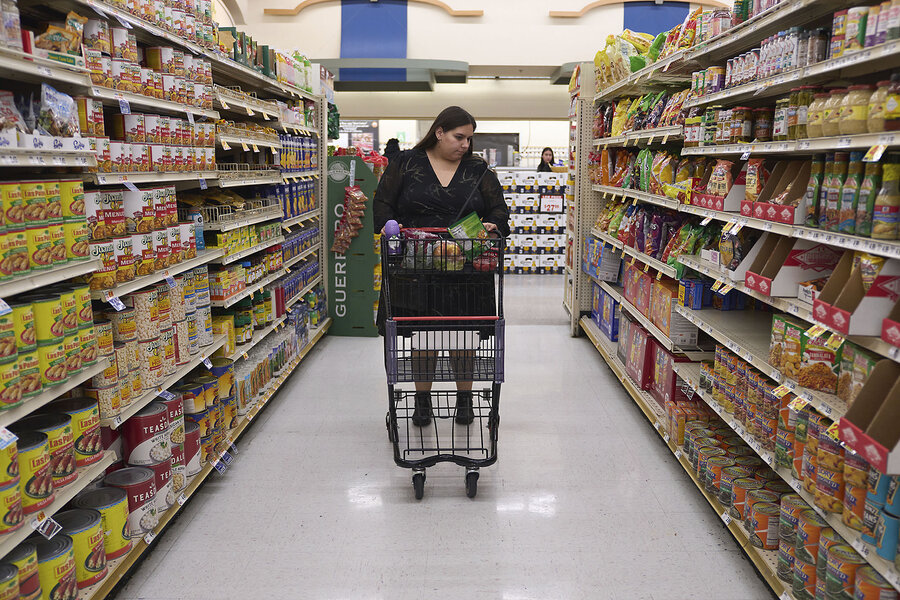
A federal program that helps millions of Americans pay for food each month hits a key deadline this week set by a 2025 Republican bill aimed at cutting wasteful spending.For people who use the Supplemental Nutrition Assistance Program, or SNAP, nothing will automatically change on Sept. 30. But new requirements could lead to more people having benefits denied or delayed.Two things will happen by that date: State agencies that administer the program will take on expenses that are usually covered by the federal government; and states will know if they’ll have to pay even more next year, based on how many benefit payment mistakes they’ve made. It’s likely that the majority will, since in fiscal year 2025, only 15 states fell within the acceptable error rate set by the legislation. The remaining states had until Sept. 30 to get there. This week’s deadline hasn’t received widespread news coverage. But experts say it could hit people’s pocketbooks if states’ costs are passed on to recipients, meaning more people lose benefits or struggle to get help with problems.Republicans’ tax cuts were paired with some spending reductions, including a major overhaul of SNAP. Many of the big changes didn’t happen right away. Instead, the bill’s authors scheduled them to play out over the next few years. J. Scott Applewhite/AP/FileRepublican House Speaker Mike Johnson (left) of Louisiana is joined by Secretary of Agriculture Brooke Rollins at a news conference to discuss SNAP food aid benefits during the government shutdown, in Washington, Oct. 31, 2025. It’s unclear exactly how these changes will affect people who rely on SNAP. But observers say the incentives for states to quickly reduce their error rates are already causing enrollment to fall.States are requiring people to show more documentation when they enroll, deprioritizing other goals like timeliness, or making budget cuts, reducing caseworkers who could help recipients with payment problems. The Monitor reached out to the eight states with the steepest SNAP enrollment declines. The three that responded said they are taking steps to meet the new requirements, though the Illinois Department of Human Services called the benefit-sharing change “punitive” and says it has called on Congress to delay it. “We’re already seeing the changes,” says Gina Plata-Nino, the SNAP director for the Food Research & Action Center, an anti-hunger advocacy organization. “People are saying, ‘I’m trying to call in, no one’s picking up the phone. I’m getting kicked off [my benefits], even though I’m eligible.’”States making trade-offsFor people like Arelis Velasquez, bureaucratic hurdles can mean the difference between getting a meal or not. The Arizona single mother says she lost both her SNAP and state health insurance benefits without explanation in mid-2025. It was a year before she started receiving them again, also without explanation of what had gone wrong.During that time, she visited the state’s SNAP agency multiple times, waiting for hours, and was told a caseworker would call her. After missing the first of those calls, she had to start over.In the meantime, she visited food banks, struggling to buy healthy food, and weighing whether she could take on an extra job or two.“Do I buy groceries or do I pay the [internet] cable bill that went up by 30, 40 dollars?” she recalls wondering.It is not possible to say whether Ms. Velasquez’s problems resulted directly from the new demands on states. Arizona’s SNAP payment error rate – a measure of how much states accidentally overpay or underpay SNAP recipients – was 10.8% in 2025, and the state set a goal of getting it to 6% by 2026. In Arizona, SNAP enrollment plummeted by 52% from July 2025 to June 2026, which state officials have attributed to challenges and trade-offs from meeting the new federal requirements.Part of the decline “was because people couldn’t get through to the state agency because of the excessive verification that’s now being required to reach that goal,” says Ashley St. Thomas, director of public policy for the Arizona Food Bank Network. She says food banks across Arizona have seen a surge in first-time visitors, which she attributes to changes in SNAP.Some states may be already making trade-offs so overstretched caseworkers can prioritize the new focus on accuracy. A July 2026 report by the American Public Human Services Association found 15 states said they were reducing focus on benefit timeliness, and 11 said they would consider narrowing SNAP eligibility policies. Four states said they might consider pausing or withdrawing altogether from SNAP, although conservative scholars have argued this is a political bluff, and states are unlikely to give up billions in federal assistance.“States have had more than one year to prepare for this shift, and subsequent guidance has been issued for clarification,” said the U.S. Department of Agriculture, which runs the federal administration of SNAP, in a statement to the Monitor.Republicans also say the error-rate penalties will mean states make fewer mistakes that waste taxpayer funds. In 2025, SNAP made $10.1 billion in improper payments, more than 1 of every 10 dollars spent on the program. “Now states have a bigger incentive to invest themselves in the administration of the program because they have a real financial incentive to get things right,” says Kevin Corinth, a senior fellow at the conservative American Enterprise Institute who researches safety net programs. He agrees with advocates on the left who say the current formula for measuring states’ payment error rates contains flaws.Falling SNAP enrollmentNational SNAP enrollment fell by 13% between July 2025 and June 2026, with every state except Alaska seeing some decline. During that time, the unemployment rate remained steady, implying the enrollment dip wasn’t because more people were getting jobs. This comes after an era in which participation surged during the Great Recession and, roughly a decade later, the COVID-19 pandemic. SOURCE: Pew Research Center, U.S. Department of Agriculture | Jacob Turcotte/Staff Many SNAP advocates have warned the new penalties create an incentive for states to overcorrect and deny more people their benefits. Essentially, that’s because states will be penalized for overpayments or underpayments – but there’s no penalty for wrongly denying, delaying, or stopping payments to eligible households. So, if state caseworkers receive applications that are unclear or missing documents, they might decide it’s safer to simply deny the benefit rather than risk an overpayment error.Dr. Corinth says the overcorrection theory may be true in some states like Arizona. But in a nationwide study he conducted, he found no meaningful connection between states with high error rates and states that were removing people from their SNAP rolls. Deepen your worldviewwith Monitor Highlights.Politics with respectGet political stories with respectful analysis.There‘s a world of new ideas in everyBooks newsletter.There‘s more to life, enrich yours withCulture & Learning weekly.Follow humanity‘s discoveries withScience & Nature stories in your inbox.Gain a spiritual perspectivefrom the stories in your inbox.Want to understand the deeper impact of critical events? Learn the Monitor‘s insight.Already a subscriber? Log in to hide ads. Beth Martino, president and CEO of Three Square Food Bank in Nevada, says they have been scrambling to meet rising demand. But she emphasizes that food banks aren’t a long-term replacement.“We cannot fill the gap that deep cuts to SNAP create,” she says. “For every meal that we provide from a food bank, SNAP is estimated to provide nine.” ALREADY A SUBSCRIBER? LoginReal news can be honest, hopeful, credible, constructive.The Christian Science Monitor was founded in 1908 to lift the standard of journalism and uplift humanity. We aim to “speak the truth in love.” Our goal is not to tell you what to think, but to give you the essential knowledge and understanding to come to your own intelligent conclusions. Join us in this mission by subscribing.
A push to cut SNAP error rates could threaten food benefits
Full Article
Original Source
Read the full article at Csmonitor →KhanList aggregates and links to publicly available news content. We do not host full articles from third-party sources. Always verify important information with original sources.