
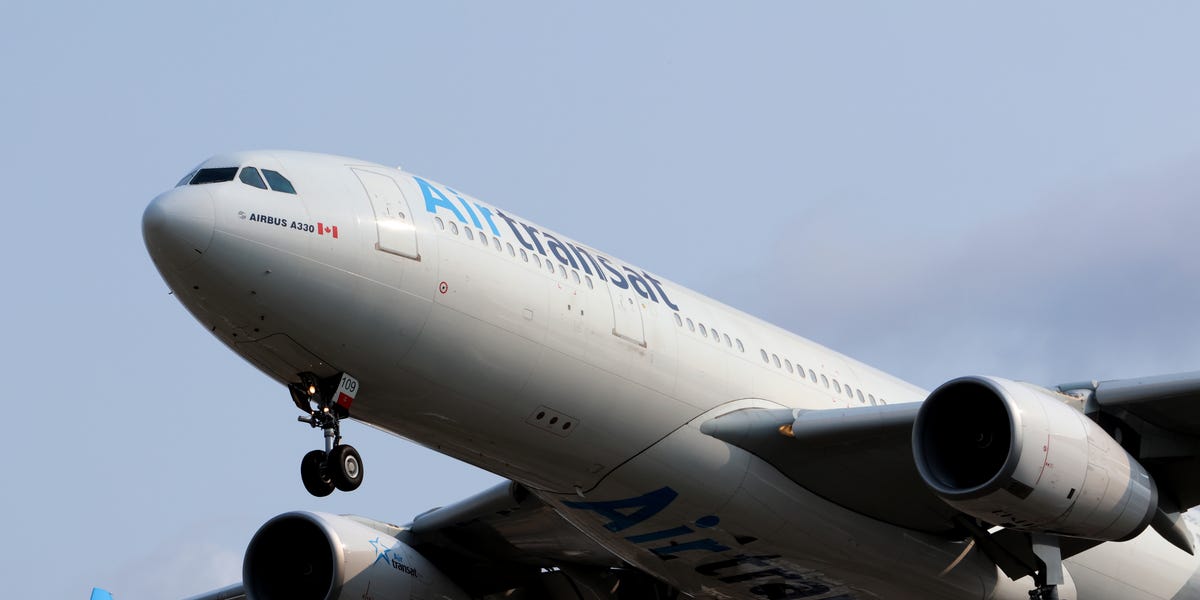
5 min readOn August 24, 2001, Air Transat Flight 236 lost both engines over the Atlantic Ocean with 306 people aboard.A three-inch crack in the right engine’s fuel line caused a catastrophic leak that went undetected.The crack originated during maintenance when an incompatible hydraulic pump from an older Rolls-Royce engine was installed.It’s August 24, 2001, and you’re on a flight from Toronto to Lisbon. The plane took off at around 9 p.m., and now you’re one of roughly 300 people who need to figure out how to kill several hours. You’ve already watched the in-flight movie (Chocolat, starring Johnny Depp and Juliette Binoche) and find yourself wishing anything could liven up the next few hours ahead. In mere moments, you’ll come to regret that wish.You hadn’t even really taken notice when one of the flight crew inexplicably shone a flashlight through the window to inspect the plane’s wing, searching for some kind of answer in the darkness of the night. Now, though, it’s undeniable that something is amiss.The lights go out.The engines stop.The plane is no longer flying, it’s simply gliding.All that surrounds you is silence and darkness.“At first I wasn’t sure that something terrible was happening,” Margaret McKinnon, a psychologist who was a passenger aboard Air Transat Flight 236, would recall of that fateful August night. “But after the lights went out and the plane lost altitude so sharply, I suspected we would probably die.”Thanks to the quick thinking of Captain Robert Piché and First Officer Dirk DeJager, however, the Airbus A330 would ultimately land safely (albeit with wheels on fire) at Lajes Air Base in the Azores, with all 293 passengers and 13 crew members alive and safe. For those 306 people, that they survived at all was the only thing that mattered. The Portuguese Aviation Accidents Prevention and Investigation Department, however, had some more questions. How the hell could this have happened? How did these seasoned pilots (Piché had logged over 16,800 hours, DeJager 4,800) even find themselves in such a predicament?As it turns out, the answer was partly because the men were actually too good at their jobs.PHIL CARPENTER//Getty ImagesCaptain Robert Piché and First Officer Dirk DeJager deliver a press conference on August 28, 2001. Piché appears in the foreground, DeJager behind him.A little over four hours into their flight, the cockpit received some surprising alerts. The plane’s right engine appeared to have high oil pressure and low oil temperature. The plane had taken off with more than enough fuel for the flight (46.9 metric tons), so the pilots inferred it was a standard fuel imbalance problem between the two engines and followed the protocol they knew by heart: transfer some fuel from the plane’s left tanks to its right engine. Under normal circumstances, that should have resolved the problem.Unfortunately, due to a three-inch crack in the right engine’s fuel tube, one that no one before or during the flight had noticed, the fuel transfer not only didn’t solve their problem, it actually made their situation drastically worse. The right engine gave those odd indications because it was leaking fuel, about 13 metric tons per hour, and in their efforts to resolve what the they perceived as a less serious issue, the cockpit crew had just directed even more fuel toward that leak.Forty-five minutes would pass between that initial alert and the revelation that things were far worse for the plane than it had first appeared. Piché contacted Santa Maria Oceanic control, declaring a fuel emergency and announcing their intention to land at Lajes Air Base, on Terceira Island in the Azores, more than 200 nautical miles from their present location. They had to hope there was enough fuel left to make it there.Thirty minutes and 50 nautical miles later, it became clear that the pilots had hoped in vain. The right engine flamed out. Piché and DeJager adjusted their altitude accordingly, but twelve minutes later, the left engine also stopped functioning. With 65 nautical miles to go, they simply had to put their faith in the plane’s ability to glide.A ram air turbine (also known as a RAT) deployed, which acted as a power source for the bare essentials like the flight controls and instruments, but they had no control over the flaps or the spoilers. Relying on military air traffic controllers to guide them via radar, Piché and DeJager managed to land Air Transat Flight 236 at Lajes Air Base 19 minutes after the second engine stopped. With their brake systems inoperative, the landing gear were worn down to the axle by the time the plane came to a complete stop, and the tires caught fire from the friction. In spite of that, only a handful of injuries were ultimately sustained by the crew and passengers.Wikimedia CommonsAir Transat Flight 236 photographed after its emergency landing at Lajes Air BaseCaptain Piché would receive the Superior Airmanship Award from the Air Line Pilot’s Association in 2002 for his quick thinking. However, without impugning the remarkable piloting feat Piché performed by landing the plane without fuel, the Portuguese Aviation Accidents Prevention and Investigation Department’s report ultimately found that had Captain Piché and his crew identified the leak sooner, and followed the appropriate procedure instead of performing a fuel transfer from memory, they would have been able to conserve enough fuel for a normal landing at Lajes.According to the FAA’s description, there were protocols in place that could have addressed this exact scenario, as the Airbus A330 had a “FUEL LEAK checklist” with specific procedures for “LEAK NOT FROM ENGINE or the LEAK NOT LOCATED.” As the FAA summarized, the Portuguese Aviation Accidents Prevention and Investigation Department’s report concluded that “had the Air Transat crew taken the actions required by the FUEL LEAK checklist when the fuel loss was first recognized at 05:53, the aircraft would not have run out of fuel before reaching Lajes.”Of course, though the crew of the plane failed to identify the leak until the situation became dire, the inciting incident that created that three-inch crack occurred well before the crew ever boarded.During maintenance ahead of the flight, the Airbus A330 needed its right engine replaced. No exact replacement model was available, so the decision was made to use an older model on loan from Rolls-Royce. That older engine lacked its necessary hydraulic pump, and in spite of the objection of the lead mechanics, a pump from a “similar engine” was swapped in. What went unnoticed was that the pump was incompatible with the fuel line; the difference of distance was only a few millimeters from where it should have been, but that was enough to create friction, a chafing that ultimately ruptured the fuel line.Air Transat accepted responsibility for the incident, paying a fine of $250,000 Canadian (roughly $303,200 in today’s U.S. dollars). Actions were subsequently taken by Air Transat, Rolls-Royce, Transport Canada, and Airbus to prevent similar incidents from occurring. Today, the terrifying fuel-less landing of Flight 236 serves as a thrilling cautionary tale about a preventable aerial miracle.Michale Natale is a News Editor for the Hearst Enthusiast Group. As a writer and researcher, he has produced written and audio-visual content for more than fifteen years, spanning historical periods from the dawn of early man to the Golden Age of Hollywood. His stories for the Enthusiast Group have involved coordinating with organizations like the National Parks Service and the Secret Service, and travelling to notable historical sites and archaeological digs, from excavations of America’ earliest colonies to the former homes of Edgar Allan Poe.
A Plane Ran Out of Fuel over the Atlantic. Then Its Pilots Pulled off a Miracle and Saved 306 Lives.
Full Article
Original Source
Read the full article at Popularmechanics →KhanList aggregates and links to publicly available news content. We do not host full articles from third-party sources. Always verify important information with original sources.