
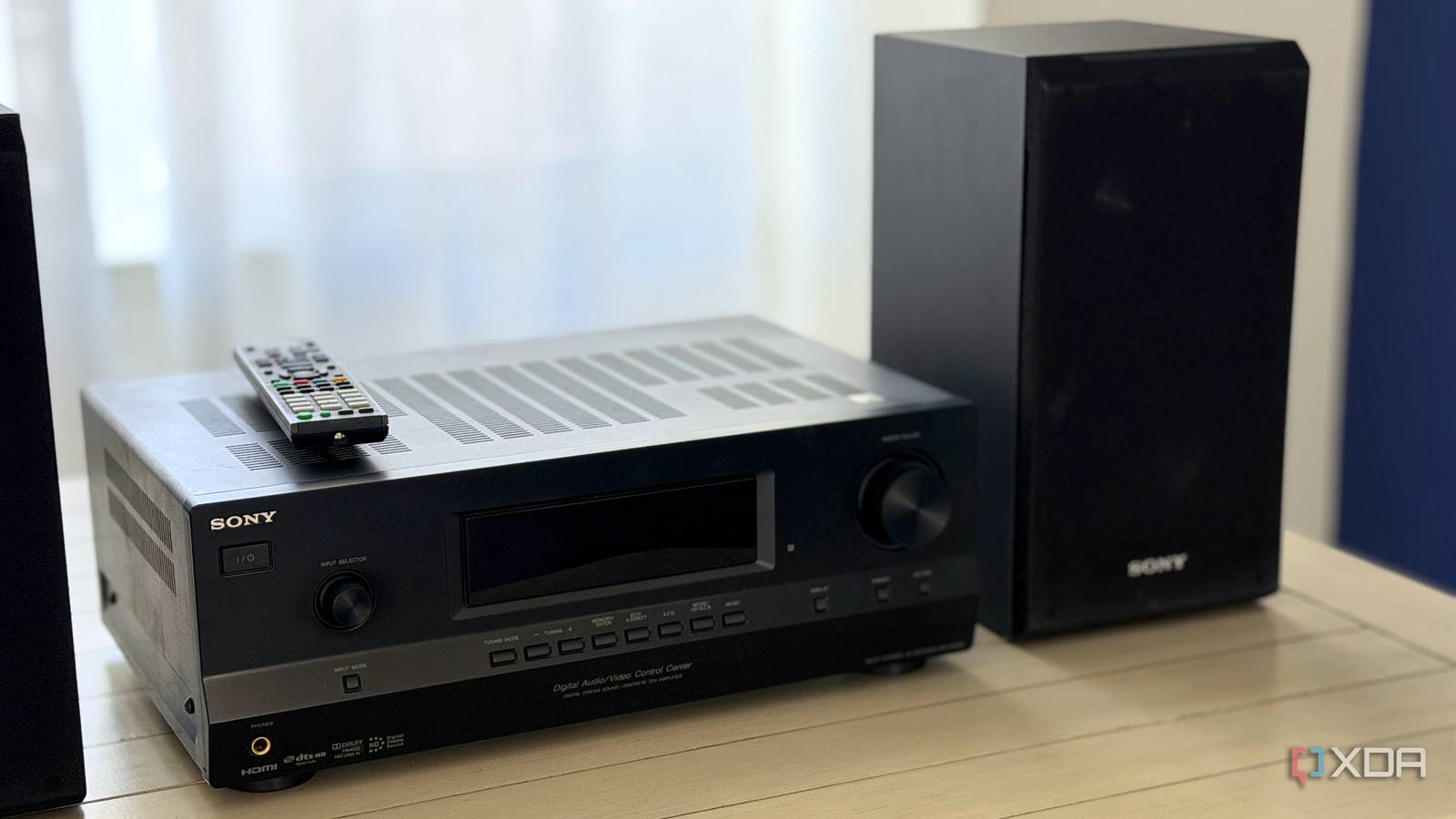
Published Sep 21, 2026, 11:30 AM EDT Shivansh began his tech journey as an avid reader of tech publications, which inspired him to launch his career in video media at Sillycorns. He has led content across multiple tech YouTube channels and Instagram accounts, crafted go-to-market (GTM) strategies for Vivo, and consulted on digital growth. Coming full circle to his roots in written media, he now delivers deep-dive tech journalism. Outside of his professional work, Shivansh loves watching movies, riding bikes, and playing cricket. I saw a diagram showing how a soundbar bounces sound off the ceiling down to the couch. It’s a clever trick, and plenty of people like it. The list includes one of my colleagues who replaced his desktop speakers with a soundbar and didn't regret it. But this trick only works in the right room. On the other hand, if you buy a pair of bookshelf speakers or the ones wired to a used AV receiver, then you don't need any tricks at all. A soundbar throws its voice, and two speakers don't have to Sonos even calls it phantom height A soundbar works on neat acoustic illusions. It stands in one spot and makes you believe the voices are coming from somewhere else. On the contrary, two bookshelf speakers are more like two singers who simply stand where the voices belong. Sonos is refreshingly open about its act. The Sonos Beam (Gen 2) product page says advanced processing creates phantom height channels and a virtual surround experience. That's a $499 soundbar, and every driver lives inside a box over 2 feet wide. Width is where the act struggles most. Polk's own Dolby Atmos setup guide takes it as given that your left and right speakers sit 30 degrees to each side of your seat. That's a 60-degree spread. Sit 8 feet from a Beam, and the whole bar covers about 15 degrees of your view, at most. Processing has to fake the other 45. I assumed a longer bar would close that gap, but it barely does. A bar twice as wide still covers only about 30 degrees from the same couch. Two used speakers set 8 feet apart get the full 60, and they don't need a faster chip to do it. Measure from your seat to each speaker spot, then between the two spots. If all three distances match, you've built the 60-degree triangle. The width problem is plain geometry, but height has a stricter rule It lives both above and below you That diagram from the intro shows how the soundbars handle height. But here's a catch: not all rooms can bounce off the sound perfectly. Let's take a look at Dolby's own home theater installation guidelines. They ask for a flat ceiling, not angled or vaulted, between 7.5 and 14 feet high. The ceiling should also be hard, like drywall, plaster, or hardwood. The list of conditions grows even longer when you account for guidelines from different speaker makers. This seems unfair for a feature we expected because it was printed on the box. So the soundbars need to make a perfect guess about how your ears locate sound. However, two speakers make no guess. A soundbar may depend on cloud services to keep its features running, while two speakers just need a floor and a little space. A smart soundbar can lose features it shipped with Bose's SoundTouch shutdown made that very real Bose sold SoundTouch speakers and soundbars starting in 2013. On May 6, 2026, it switched off the cloud they depended on. That date had already slipped once, from February 18, to give owners more time. Bose's own support page lists what stopped working. Presets are gone. So are browsing music inside the SoundTouch app, Alexa voice commands, and stereo pairing on the SoundTouch 10. The same page says these products won't get any more security or firmware updates. So a chunk of the acoustic illusions act, which relied on a script written on Bose's servers, is now left unperformed. To be fair to Bose, its soundbars still play TV audio over HDMI or optical, and a local app update saved several features. In case of retired features, you will depend on the speaker maker to provide APIs, developers to build replacements, and volunteers to keep the features alive. A passive speaker has nothing to retire. There's no script, no server, and no update. Polk still keeps an online archive of its old models, and those manuals are about wires and placement. Nobody has ever had to update a speaker cable. Soundbar vs bookshelf speakers: the soundbar still wins on convenience And a cheap amp won't listen to your TV remote A soundbar is one box and one HDMI cable. Your TV remote controls its volume. It can lift dialogue, which matters when a movie whispers and then explodes. In a small bedroom, it's the sensible pick. The cheap amp side has real friction. A Fosi Audio V3 costs about $110 on Fosi's site, and it's a neat little box. It also has a volume knob and analog inputs, not HDMI. Hooking it to a TV usually means an optical-to-analog converter, and your TV remote stops controlling the volume. A used AV receiver fixes that, but it brings a box full of menus with it. Look back at that Sonos Beam page from the first screenshot. The same page that promises phantom height also suggests adding a subwoofer and rear speakers for more immersive sound. Stereo has its own weak spot, too. Two singers sound best from the middle seat. Sit far to one side, and the closer speaker takes over. Sonos Beam (Gen 2) Used speakers + amp Price $499 $399 Spread from 8-feet 15 degrees 60 degrees Height Effect Phantom None Needs an app/cloud Yes None TV remote controls Applicable over eARC No Software Updates Until the maker stops None needed Surprisingly, the cheapest upgrade is of enthusiast-grade If I were setting up a living room tomorrow, I'd skip the bar. I'd find a used pair of bookshelf speakers, a small amp, and a measurement tape. A soundbar's tricks are clever, but they lean on your ceiling, on processing, and on someone else's servers. My version is simpler: two boxes, 8 feet apart, pointed straight at my couch.
A pair of used bookshelf speakers and a cheap amp beat every soundbar I've tested
Full Article
Original Source
Read the full article at Xda-developers →KhanList aggregates and links to publicly available news content. We do not host full articles from third-party sources. Always verify important information with original sources.