
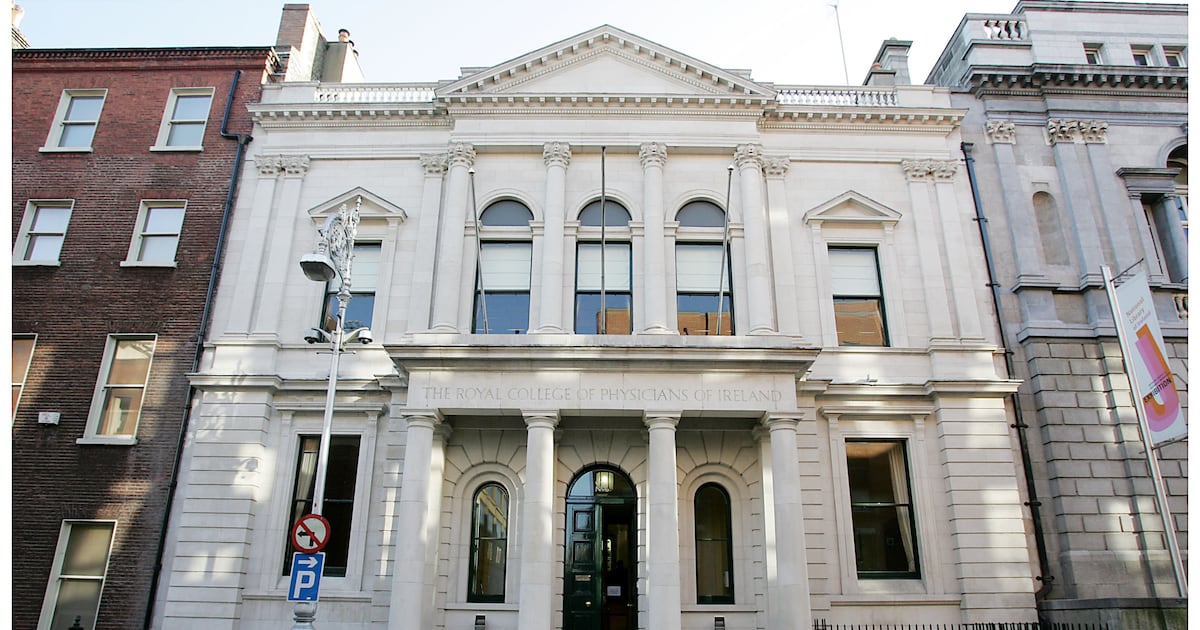
Does Dublin need another museum? The Royal College of Physicians of Ireland (RCPI) believes so and is seeking expressions of interest from “suitably qualified exhibition design firms” for the development of a medical museum in its building on Kildare Street, a stone’s throw from Leinster House.RCPI, which trains doctors and supports their professional development, was formed in 1654 and is the custodian of more than 50,000 “items of national and international significance” that it wants to provide the “widest possible” access to. “This museum will be a story told through objects. Enabling visitors to build on their knowledge of medicine, through the remarkable collections held in the college,” documents published on the eTenders website state. “While we hope the museum will resonate with a broad spectrum of visitors, the key target audience is non-specialist independent adults and families with children 12+.” READ MOREThe would-be exhibits include a padded cell from the Grangegorman Asylum; an iron lung; prosthetic legs; a silver milk jug presented in 1838 “to John Jacob MD by a little girl grateful for his kind attention during a severe illness”; various cures for many disorders collected by Mary Barnewall (1752); and a toothbrush said to have belonged to Napoleon. A toothbrush said to have belonged Napoleon is part of the RCPI collection. Photograph: RCPI The estimated value of the tender is €2.5 million, but the total investment could hit €8 million, comprising €3 million from the college and €5 million generated through fundraising. RCPI received planning permission in 2024 for works required to accommodate the museum across 350sqm at basement level at 6 Kildare Street. The hope is that it would open in 2029 and have an annual footfall of “10,000 visitors per annum by year three”.Irish ram subs in to support Belichick’s side in football classicThousands crossed the Atlantic for this weekend’s Aer Lingus College Football Classic between the University of North Carolina (UNC) and Texas Christian University, but there was a notable absentee from the former’s ranks. UNC mascot Rameses, a 275-pound Dorset Horn ram, stayed in Chapel Hill for the weekend and his shift supporting the team, led by eight-time Superbowl winner Bill Belichick, was covered by a substitute – his “Irish cousin” Seamus. The stand-in is owned by Orla Hogan from Co Clare, whose family line, or so the story goes, can be traced into UNC history. Some Hogans moved from Co Tipperary to the eastern US centuries ago, with one generation reportedly helping to get UNC going by donating some of the land on which the campus was built. Orla Hogan with her ram Seamus, selected to stand in for the University of North Carolina's mascot, Rameses in this weekend's College Football Classic. Photograph: David Clinch/X Brad Bennett, a UNC alumnus, is involved in a documentary project entitled More Than a Mascot, which is following Rameses and the Hogan family that has cared for him (and past incarnations) for more than a century. The film looks at how this voluntary role has impacted the family across generations, and how as his current minders age, they must figure out who takes on the torch.“He’s a celebrity, basically,” Bennett said of Rameses. “He represents tradition, community, pride and joy.”It has been a busy week for Seamus, with his schedule featuring a welcome party in Temple Bar, a visit to a fan event on O’Connell Street, a pep rally at Merrion Square and a trip to meet supporters outside the Aviva Stadium before the game. “Seamus is fun,” Bennett says. “He’s young, energetic ... We hope people feel the same happiness when they see him.”When Parton met Páidí: Clip of singer’s 1990 Ventry visit goes viral Taylor Swift, Beyoncé, Paul McCartney and Donald Trump paid tribute to Dolly Parton after the country musician’s death was announced this week. But it was a memory from a lesser-known source that appeared to resonate most widely in Ireland. Páidí Ó Sé’s Pub in Ventry said it had “a very special memory of Dolly” from when she visited west Kerry with her manager, Walter Hagan, in 1990. The pair went for a drive and stopped at Ó Sé’s shop, where they met Páidí’s mother, Beatrice, who invited them to return that night. “What followed was one of those unforgettable nights that became part of the story of the pub,” the bar said in a Facebook post. A video of Parton’s visit shows her holding a microphone and saying: “Hello and welcome to Ireland. My name is Dolly and I’m here on vacation.” Parton said she had come to be entertained rather than to perform, but local musicians Steve Cooney and Séamus Begley knew her song Coat of Many Colours and asked if she would sing along. Parton obliged, and brought the house down. She recalled her time in Kerry in a 2020 interview with The Irish Times: “I write about it [in the song We Irish], ‘there’s a pub on every corner, and a church to worship in’.”Dolly Parton with Páidí Ó Sé during her visit to his pub in Ventry, Co Kerry in 1990. Photograph: Páidí Ó Sé’s Pub/Facebook Páidí, who died in 2012, presented Parton with the jersey he wore during Kerry’s All-Ireland win in 1985 that night. “There was something very fitting about Dolly and Páidí,” the pub’s post added. “They came from two very different corners of the world, but they had plenty in common. Both larger than life. Both immensely proud of where they came from.”Strong ‘Sleep Score’ can’t help investor McIlroy to another winIt was all going to plan for Rory McIlroy last Sunday. He was tied at the top of the leader board coming down the stretch at the BMW Championship at Bellerive Country Club in St Louis, where a $3.6 million (€3.1 million) first prize was up for grabs. Better again, a graphic on Sky Sports’ coverage showed that the Co Down native’s Whoop “Sleep Score” had been 88/100, which the fitness wearables company’s website would suggest meant he was well-rested and primed to perform. The planets were aligning.The Irish Times previously reported that McIlroy is on course to become Ireland’s first sporting billionaire through a combination of tournament winnings, endorsements and investments. Whoop is part of the golfer’s investment portfolio, and it hasn’t been shy about making use of his personal information. Rory McIlroy wearing a Whoop wristband during a practice round at Augusta National Golf Club. Photograph: Patrick Smith/Getty Images After he retained the Masters, Whoop said McIlroy’s data revealed “how composure, recovery, and strain shaped one of golf’s most high-pressure finishes”. It said his heart rate peaked at 150 BPM as he celebrated the win, he had a 92 per cent sleep score (averaging 8½ hours for the weekend), and took 91,247 steps during the four-day event. [ ‘At least I’m not English’ – How Rory McIlroy and Lee Westwood have traded insults down the yearsOpens in new window ]The company has also detailed how his sleep habits (earlier meals, blue-light control and reading) improve recovery and that alcohol has become “a more deliberate choice” as drinking wine pushes his resting heart rate up. But not even a good sleep score could force McIlroy’s putts to drop during Sunday’s closing holes. Wyndham Clark secured the win and the Northern Ireland man fell back to third, banking US$1.36 million. It was another step towards the billion, but Whoop hasn’t yet revealed if a few glasses of wine were sunk after his near miss.
A padded cell, an iron lung and Napoleon’s toothbrush: wonders await in planned medical museum
Full Article
Original Source
Read the full article at Irishtimes →KhanList aggregates and links to publicly available news content. We do not host full articles from third-party sources. Always verify important information with original sources.