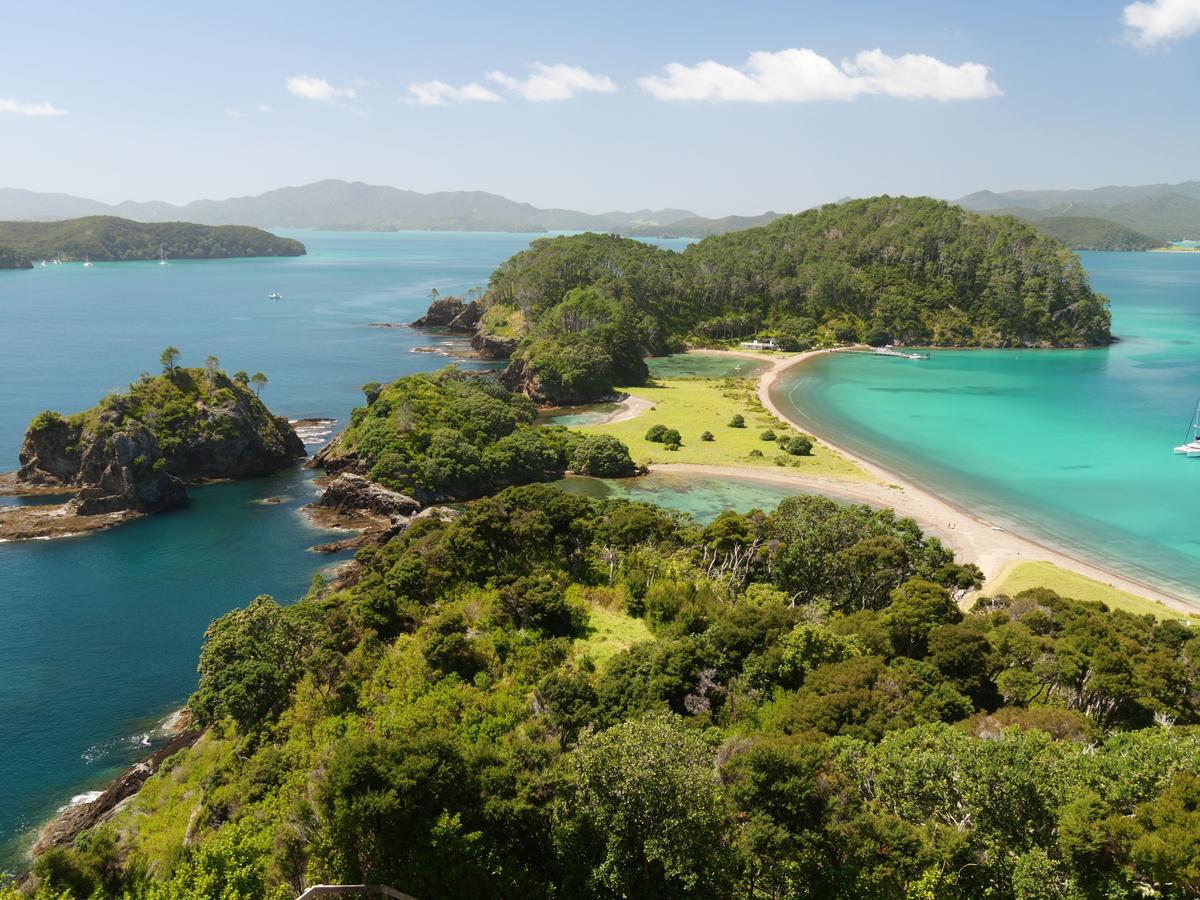
There’s something oddly dismissive about the way people divvy up New Zealand when planning a trip. If you have four weeks to do the whole thing, most people will probably tell you to spend three of them on the South Island and one week on the North Island — which is probably the right ratio, if you’re wanting to maximise your month and capitalise on all the things that make a trip to this magnificent country so unforgettable. The problem with doing so is it leads to the assumption that the North Island is just an add-on: a one-week warm-up before the real deal. The North might be smaller and less dramatic in terms of scenery, but it’s far from a warm-up — it’s a full holiday in itself, and the best bits come when you stop trying to compare it and start seeing it as a destination in its own right. There are tropical beaches, world-class wineries and landscapes straight out of Lord of the Rings (I’m talking about the Tongariro Crossing, one of most popular day hikes in the world). The weather is warmer and generally more reliable, it’s home to some of the most beautiful lakes in the world, and you’ll see more of the Māori culture there than in the South. So if you do only have one week, here’s how to get the best from New Zealand’s North Island, from geothermal wonderlands to morning dips in crystal-blue lakes.Days one and two: Auckland and Waiheke Island AucklandPexelsMany tourists land in Auckland, New Zealand’s busiest and largest international gateway, and head straight up the narrow Northland peninsula to the Bay of Islands. Friends recommend days spent kayaking, sailing and visiting vineyards up there, and it would have been a lovely slow, beachy way to kick-off our trip if we’d had more time. Instead, we booked two nights in Auckland, picked up a hire car at the airport and drove straight to Mount Eden, a dormant volcanic cone just 4km from the city centre. It was a perfect way to kick-off our month in New Zealand, with panoramic views over the city and harbour laid out in front of us like a map. We stayed in Ponsonby, a gorgeous inner-city district in central Auckland, with cute, characterful homes on tree-lined avenues, and cool Asian restaurants mixed in with stylish boutiques. Our first full day was spent on Waiheke Island, which is dotted with award-winning vineyards, million dollar homes and sheltered swimming bays. We had breakfast at Daily Bread, a cool hipster-like cafe close to the ferry terminal in the city centre, before catching the Fullers360 ferry and hopping on one of the island’s dozens of Hop On Hop Off buses. Don’t write the bus off just because it’s what all the hordes of tourists do — it’s not only the cheapest but the most fun way to see the island, with regular buses and plenty of fascinating commentary as you go (plus USB chargers for your phone). Don’t bother packing a picnic – the island boasts endless food options, from bakeries and toastie shacks to high-end restaurants. Just grab a map, pick a few beaches and vineyards using the free guides, and plot a route that seems doable in a day (we picked two wineries so we could fit in some beach stops, but others tick off half a dozen in a day). Mudbrick is probably the most famous winery on the island; we finished there and enjoyed a glass of rosé looking back over the Auckland skyline. Heaven. Days two and three: Coromandel PeninsulaCathedral CovePexelsFor much of the narrow, windy, drive from Auckland to the Coromandel Peninsula, we wondered if it would be worth it, especially as we sat in our third roadwork traffic jam of the morning. It absolutely was. If you haven’t heard of Cathedral Cove, it’s a giant natural rock-arch that reminded me of Durdle Door in Dorset and apparently reminded early European visitors of a cathedral.We did what hundreds of tourists do every day and parked at Hahei Visitor Car Park and took the park-and-ride to Grange Road, before walking the 2.5km coastal track to the cove and dipping in the glorious crystal waters. The backdrop looked so tropical that friends asked if we were in Thailand or the Whitsundays when I put a couple of photos on Instagram. Our only regret was not having all day to swim and sunbathe there, but we had a second famous beach to get to: Hot Water Beach, famous for hot water pools that emerge in the beach itself each tide. Park up in the car park, grab your spade (or rely on borrowing someone’s — bathing there is a bonding experience, you’ll struggle not to make friends) and follow the cries of “wow” and “ouch!” that will inevitably be coming from a crowd of half-dressed sandy bodies halfway down the beach. The reviews don’t exaggerate — the water is genuinely scolding in places, but pick the right pool and you’ve got your own natural hot tub. Brave it if you dare. Read MoreOur night on the peninsula was spent in Whitianga, a sleepy little town with a few bars, restaurants and a lovely waterfront. Our highlight was spotting a couple of orcas close to the shore as we ate our fish and chips in town, before racing back for a glorious orange sunset at our hillside Airbnb.Days three and four: RotoruaThe ‘Champagne Pool’ at Wai o TopuPexelsDay four and another narrow, windy drive back through the lush green forests of the Coromandel Peninsula — this time heading south to Rotorua, the North Island’s so-called ‘bubbly city’ famous for its natural geysers and hot springs that burst out of the ground (and, unfortunately for locals, emit a rather unpleasant sulphuric smell). We gave ourselves an early start to make it to Te Puia, a geothermal park on the edge of the city where visitors can experience Rotorua’s geothermal activity and Māori culture in a safe, accessible way. We signed up to the guided experience and saw some nocturnal Kiwi birds and a Māori cultural performance, before getting a customary snap in front of Te Puia’s geyser, which staff are proud to let erupt naturally as opposed to artificially, like other geothermal tourist spots in the region. Pack the sun cream: much of the tour is spent in the direct sunlight – and that’s before the temperature rises by several degrees as you approach the geysers themselves. The remainder of the afternoon was spent getting even toastier at Rotorua’s Polynesian Spa, where we switched between alkaline and acidic pools ranging between 36 and 41C before being treated to a restorative mud massage right beside the city’s gorgeous turquoise lake. Book an Airbnb on the edge of the lake if you can — lakeside wake-ups and morning dips were one of our highlights of the trip. Day five and it was another early start to see some geysers — this time for the 10.15am geyser show at Wai o Topu. This ‘geothermal wonderland’ is a short drive outside Rotorua, where staff do artificially induce the geyser, using a biodegradable surfactant (soap). It’s all over in minutes, after much more time spent battling hundreds of fellow tourists to get a place in the car park. But it’s an extraordinary sight, and for most people, their only chance to see a live steaming geyser close-up. Hot tip: park at the main car park and walk to the geyser show, as the queues of cars to get out of the geyser car park after can be painful. Then walk back for a quick lap of the main part of Wai o Topu: its geothermal lakes including the famous Champagne Pool, whose orange rim and constantly bubbling surface are created by geothermal gases and mineral deposits. The colours are mesmerising, though like us you’ll probably want to make it a whistlestop tour simply because of the smell. Days four and five: TaupōThe Huka Falls Jet blasts along the Waikato River river to Taupō’s famous Huka Falls waterfallHukafalls JetThen on to Taupō, another lakeside city in the North Island and probably its most famous thanks to Lake Taupō being the largest lake in Australasia. It’s 12 times the size of Sydney Harbour, if you want a sense of its scale. A boat trip, therefore, is compulsory, ideally at sunset. We went with Ernest Kemp Cruises, whose cruise took us to see some Māori rock carvings at the side of the lake, but Chris Jolly Cruises and Sail Barbary’s tours come highly recommended too. Other popular boating experiences in the area include the Huka Falls Jet, a fast and furious blast along the nearby Waikato River river to Taupō’s famous Huka Falls waterfall, featuring 360-degree spins and some deliberately close encounters with overhanging trees and rocks. Non-adrenaline junkies can also park nearby and visit the waterfall by foot. It’s an astonishing natural sight, particularly given the crystal clear waters cascading down the narrow gorge. If you’re lucky, you might spot a brave kayaker taking them on. We stayed in another glorious Airbnb overlooking the lake before an early alarm for the most uncertain but exciting part of our North Island adventure: the Tongariro Crossing. The extent to which you must only do this hike in the right conditions cannot be over-emphasized (for guidance, check the Department of Conservation website), so our action-packed itinerary made this particularly risky given we only had one free day to do it (you very much need a full day including a very early start). Mercifully, we got lucky and had perfect conditions, with barely a cloud in the sky and views all the way to Mount Taranaki around 140km away on New Zealand’s west coast. Friends’ summaries turned out to be spot-on, with a tough 20km of walking and scrambling but landscapes worthy of a lunar landing as your prize (one of the first peaks you see, Mount Ngauruhoe, was Mount Doom in Lord of the Rings). Pack your swimmers for a dip in the lake when you get back to Taupō after. And don’t be embarrassed to take walking poles — all the smartest (and happiest) hikers had them, and by the end we were practically skipping down the mountain compared to many of our fellow hikers as a result. Days six and seven: WellingtonWellingtonPexelsIt’s a five-hour drive from Taupo to Wellington and some tourists choose to break up the drive with a walk in Tongariro National Park. For time purposes, we pressed on in favour of a fun afternoon wandering around Wellington: taking the cable car up the hill for views over the city, posing in front of the Solace in the Wind statue, and watching after-work rowers and run clubs on the harbour before an excellent dinner at Mr Go’s on Cuba Street. The sun came out for our morning drive to the airport along the waterfront, with locals commuting into the city by bike and the outskirts of Wellington reminding us of a Devon fishing village. If we’d had more time, we’d have explored friends’ brewery recommendations (Garage Project and Parrotdog) and Zealandia wildlife sanctuary, but we had a flight to catch. It turns out leaving it until six weeks before your trip to book your ferry between the North and South Islands isn’t nearly organised enough — there wasn’t a single daytime or nighttime slot left all week. Thankfully, Air New Zealand flights turned out to be cheaper than ferrying anyway, and the faff of having to switch hire cars and arrive in Nelson, not Picton, was made worth it with a shorter journey time and magnificent views over the islands off the top of Marlborough Sounds from the plane. If that was just the warm-up, we really must be in for the trip of a lifetime. Bring on the South.
A one-week travel guide to New Zealand’s North Island
Full Article
Original Source
Read the full article at Standard →KhanList aggregates and links to publicly available news content. We do not host full articles from third-party sources. Always verify important information with original sources.