
November 15, 2026 • 7:20 am ET Benjamin L. Schmitt and Uliana Certan I. Executive summaryII. IntroductionIII. The gas systemIV. The Vertical CorridorV. Infrastructure by countryVI. Cross-cutting obstacles to a functional Vertical CorridorVII. Recommended policy actionsVIII. Looking aheadAbout the authors I. Executive summary Energy undergirds the economic landscape of regions worldwide, and central to securing that energy is a well-functioning energy market providing a stable and predictable investment climate. Transparency, infrastructure diversification, market access, physical security, and anti-corruption are a market’s core tenets and remain central to a region’s economic and political health. Since the establishment of the European Coal and Steel Community in the years following Europe’s emergence from the devastating destruction of World War II, the development of energy interconnectivity, trading routes, and critical infrastructure has played a significant role in the continent’s remarkable economic growth, as well as the overarching political integration of the European project. As the European Union has grown in scale in recent decades, the implementation of energy regulatory requirements—along with investments in needed cross-border energy infrastructure—have better integrated the “new” members of the European Union into the energy landscape of the bloc and its common market practices, while laying the groundwork to phase out Russian energy dependence that has been weaponized by Putin’s Kremlin regularly over this period. Such integration has contributed to unprecedented economic growth in nations once bound by the chains of communism and its odious anti-market economic system. However, as successful as regulatory implementation has been across Central and Eastern Europe, the need for further infrastructure diversification investments remained among the region’s greatest challenges over the previous decade, with new north-south interconnectors needed to complement—and forge into a network—the primarily legacy east-west mega energy delivery routes of the Soviet era. The 2010s witnessed an explosion of activity and coordination in corners of Eastern Europe—notably the likes of Poland and Lithuania, among others—with larger-scale cross-border planning beginning in the region between Poland and Croatia with the North-South Gas Corridor project and evolving into the Three Seas Initiative, which combined energy infrastructure planning with that of transportation and telecommunications connectivity proposals and deployments between the Baltic, Black, and Adriatic Seas. Despite the success of individual energy diversification infrastructure interconnection projects across this broader region—such as the Gas Interconnector Greece–Bulgaria (IGB) and the Gas Interconnector Romania–Bulgaria (IRB) and energy import terminals, such as liquefied natural gas (LNG) import terminals at Świnoujście, Poland, and Krk Island, Croatia—much work remains to complete the region’s energy infrastructure integration. Moreover, the focus on individual projects has led to sectoral isolation in some cases, and bottlenecks in others, with opportunities for coordinated development of electricity grid infrastructure, gas transit facilities, and power generation sometimes overlooked. Especially with the proliferation of new energy intensive industries—such as the current artificial intelligence (AI) data center boom worldwide—the coordination between gas import/transport infrastructure, power generation facilities, and electricity transmission lines remains as relevant as ever. Additionally, the lack of cohesion pertaining to cross-border tariffs has created economic constraints, with compounding costs and tariff uncertainty consistently viewed by market participants as a significant barrier to investment. Beyond infrastructure development, regulatory, and market economics, a more insidious threat has reemerged: namely physical threats to energy and critical infrastructure. Once thought to be an anachronism relegated to the dustbin of history and overshadowed by cyber threats, physical sabotage and shadow warfare against European civil infrastructure have returned to the continent for the first time at scale since World War II. This includes brazen Russian clandestine sabotage campaigns targeting civilian energy infrastructure, as well as drone and rocket incursions into NATO airspace near critical infrastructure facilities across the continent, all with increasing regularity since Russia’s full-scale invasion of Ukraine in 2022. And one cannot overlook the apex version of Russian energy weaponization toward Europe: the Kremlin’s tragic, ongoing, and overt kinetic strikes against civilian targets across Ukraine including energy infrastructure destruction intended to foment energy poverty and misery for the citizens of this war-torn nation. To better understand the current state of play related to energy infrastructure, regulatory, and cohesive market development across Eastern Europe, and to develop cross-border solutions that can help better integrate, regulate, govern, and physically protect the energy infrastructure needed for regional economic and national security, the Atlantic Council’s Global Energy Center and Atlantic Council Romania have launched a research project aimed at studying the state and outlook for a well-integrated Vertical Corridor. This report focuses primarily on the geographical region comprising the nine nations that are now officially collaborating as members of the Vertical Corridor: a north-south gas transportation route that, as of November 2026, consists of Ukraine, Romania, Greece, Bulgaria, Hungary, Slovakia, Moldova, North Macedonia, and Serbia. However, the scope of this study has been deliberately broadened to include discussion of infrastructure initiatives that have been completed or are proposed and could impact the development of a robust gas market along this corridor, such as Poland to the north and Turkey to the south. The research has included interviews with dozens of current and former government energy and national security officials, commercial leaders, transmission and storage system operators, experts, and academics from along the entire Vertical Corridor region, as well as those supporting the region and broader European energy security objectives on both sides of the Atlantic. Moreover, over the course of this project, which extends beyond this first report, we study not only the development needed for critical cross-border energy infrastructure—focused mostly on the requirements for the Vertical Corridor gas market, but with an eye on cross-border electricity transmission lines and power-production facilities—but also the regulatory and legal steps that can be taken to ensure a well-functioning energy market across the region. Given the sharply increasing risk of Russia-backed sabotage of energy and critical infrastructure, and drone incursions and targeting of commercial maritime vessels along the Vertical Corridor region’s Black Sea coastline in 2026, we have also integrated a deep-dive discussion on the physical protection of energy and critical infrastructure needed to complete the Vertical Corridor’s energy security goals. These findings are forthcoming. The recommendations below pertain to the first component of this project: policy actions for leaders across the Vertical Corridor region, Europe, and the transatlantic community writ large. For the Vertical Corridor region: The scope of the Vertical Corridor should broaden beyond the current sole focus on gas infrastructure to create a cross-sector energy security platform. Infrastructure development should continue to focus on creating security-of-supply diversification sources of energy and delivery routes with a particular prioritization of those interconnections, compressor upgrades, power lines, storage gaps, and power production facilities that will help alleviate current cross-border discontinuities and bottlenecks. Natural gas transmission system operators along the Vertical Corridor should continue to work on the coordinated reduction and harmonization of regulations, tariffs, and capacity allocations along the route to support the commercial competitiveness of the route, which has previously suffered from the cumulation of tariffs, often referred to as “tariff pancaking.” Russian gas should be eliminated from the energy mix along the Vertical Corridor in line with European mandates to end imports of Russian liquefied natural gas (LNG) by January 1, 2027, and of Russian pipeline gas by November 1, 2027, at the latest. This must include robust gas production screening and know-your-customer oversight to ensure that Russian gas imported by non-EU nations cannot simply enter the bloc under a whitewashed identity. For the Vertical Corridor, Europe, and the United States Europe and the United States should resist any movement away from sanctions and technology export-control measures that have been put in place against the Russian Federation. US policymakers should in parallel take legislative actions that would reinforce transatlantic consensus on maintaining sanctions pressure on Putin’s Kremlin. Energy diplomacy efforts by the European Union and the United States should seize opportunities to further reduce dependence on Russian natural gas as country-level political leadership shifts. II. Introduction Energy undergirds the economic landscape of regions worldwide, and central to securing that energy is a well-functioning energy market providing a stable and predictable investment climate. Transparency, infrastructure diversification, market access, physical security, and anti-corruption are a market’s core tenets and remain central to a region’s economic and political health. Since the establishment of the European Coal and Steel Community in the years following Europe’s emergence from the devastating destruction of World War II, the development of energy interconnectivity, trading routes, and critical infrastructure has played a significant role in the continent’s remarkable economic growth, as well as the overarching political integration of the European project. The need for a diversification of energy sources, fuel types, and transportation routes has been evident, since, especially over the past two decades, the Russian Federation under the leadership of revanchist President Vladimir Putin has utilized the physical structure of the monolithic oil and gas trunklines that were constructed during the Soviet period to create both threatened and enacted security-of-supply threats. Given the hub-and-spoke model of legacy Soviet oil and gas infrastructure, Putin could place political pressure on nations that, although they were now members of the European Union and constituted NATO’s Eastern Flank, still lacked the physical energy and critical infrastructure interconnections needed to build a level of security of supply and market resilience against Russian energy weaponization. Put simply: Whereas the Soviet era saw the construction of hub-and-spoke mega pipelines emanating from Russia along east-to-west axes, Central and Eastern Europe would need to build critical north-to-south and south-to-north energy transport infrastructure to achieve a resilient, secure, and liquid energy market that had decades ago been developed across Western Europe. As the European Union has grown in scale in recent decades, the implementation of energy regulatory requirements—along with investments in needed cross-border energy infrastructure—have better integrated the “new” members of the European Union into the energy landscape of the bloc and its common market practices, while laying the groundwork to phase out Russian energy dependence that has been weaponized by Putin’s Kremlin regularly over this period. Such integration has contributed to unprecedented economic growth in nations once bound by the chains of communism and its odious anti-market economic system. However, as successful as regulatory implementation has been across Central and Eastern Europe, the need for further infrastructure diversification investments remained among the region’s greatest challenges over the previous decade, with new north-south interconnectors needed to complement—and forge into a network—the primarily legacy east-west mega energy delivery routes of the Soviet era. The 2010s witnessed an explosion of activity and coordination to this end in Central and Eastern Europe, beginning with the North-South Gas Corridor project and evolving with the Three Seas Initiative, which combined energy infrastructure planning with that of transportation and telecommunications connectivity proposals and deployments between the Baltic, Black, and Adriatic Seas. Despite the success of individual energy infrastructure interconnection projects across the region—such as the Gas Interconnector Greece–Bulgaria (IGB) and the Gas Interconnector Romania–Bulgaria (IRB) and energy import terminals, such as LNG import terminals at Świnoujście, Poland, and Krk Island, Croatia—much work remains to complete the region’s energy infrastructure integration. Indeed, the realization of many strategic Projects of Common Interest (PCIs) across Central and Eastern Europe occurred just in time following Russia’s full-scale invasion of Ukraine in 2022. After all, after February 2022, longstanding warnings about the potential for Russian energy weaponization against Europe were realized at an even more widespread level than the years before 2022, as Russia began enacting politically motivated gas cuts to most corners of the EU in an attempt to undermine European political support for Kyiv. Some of these project that began operating just in time to thwart Putin’s 2022 natural gas cutoffs, for example, included the Gas Interconnector Poland–Lithuania (GIPL) pipeline that began operation on May 1, 2022, the Norway-Denmark–Poland BalticPipe gas pipeline that was inaugurated on September 27, 2022, and the Gas Interconnector Greece–Bulgaria (IGB) pipeline, which began transiting commercial natural gas payloads on October 1, 2022. While the focus on diversification of energy infrastructure (e.g., the development of the “hardware” of European energy security) and of regulatory implementation and market liberalization measures (e.g., the “software” of European energy security), was and continues to be the primary focus of European policy planners focused on ensuring the energy and related national security goals of the European Union, both before and after Russia’s full-scale invasion of Ukraine, a broader definition of energy security policy was needed. This includes the so-called “five pillar” approach to ensuring Europe’s energy security that has been previously described by the author as a broader-reaching, multidisciplinary approach including: (i) diversification of energy infrastructure (“the hardware of energy security”), (ii) European energy market liberalization and regulatory structures (“the software of energy security”), (iii) cyber and physical security of energy infrastructure, (iv) operational energy security action supporting NATO defense objectives, and (v) countering Russian malign influence, strategic corruption, elite capture, and disinformation trends in the European energy sector. These pillars provide a strategic lens for guiding policymakers in Europe, as well as in the United States, toward the political, security, and economic success of the Vertical Corridor region. Building on the need to reverse the historical Soviet infrastructure legacy that has led to continued vulnerabilities for the ability of Eastern Europe in particular to diversify their energy resources away from Russian energy dependence, Atlantic Council’s Global Energy Center and Atlantic Council Romania in late 2025 launched a research project aimed at studying the state and outlook for a well-integrated Vertical Corridor. This project has included more than sixty expert interviews, a high-level industry and policy roundtable held at the April 2026 Three Seas Initiative summit in Dubrovnik, Croatia, and continues with the publication of this report. The project report focuses primarily on the geographical region comprising the now nine nations that are officially collaborating as members of the Vertical Corridor—a north-south gas transportation route that, as of November 2026, consists of Ukraine, Romania, Greece, Bulgaria, Hungary, Slovakia, Moldova, North Macedonia, and Serbia. While the primary case studies of the report focus on an analysis and set of recommendations for completing a well-integrated gas sector through investments that need to be made in Ukraine, Romania, Moldova, Bulgaria, Greece, Hungary, Slovakia, Serbia, and North Macedonia, the scope of the study also includes mention of cross-sectoral opportunities beyond natural gas (e.g., coupling gas sector policy and project planning with that across the electricity and power generation sectors of the region) as well as the multidisciplinary steps needed to achieve a comprehensive set of energy security objectives. The research has included interviews with dozens of current and former government energy and national security officials, commercial leaders, transmission and storage system operators, experts, and academics from along the entire Vertical Corridor region, as well as those supporting the region and broader European energy security objectives on both sides of the Atlantic. Throughout this probe of the Vertical Corridor region, it has become evident that overly focusing on certain individual cross-border interconnection projects has led to sectoral isolation in some cases, and bottlenecks in others, with opportunities for coordinated development of electricity grid infrastructure, gas transit facilities, and power generation sometimes overlooked. Especially with the proliferation of new energy intensive industries—such as the current artificial intelligence (AI) data center boom worldwide—the coordination between gas import/transport infrastructure, power generation facilities, and electricity transmission lines remains as relevant as ever. Additionally, along the Vertical Corridor region, the lack of cohesion pertaining to cross-border tariffs has created economic constraints, with compounding costs and tariff uncertainty consistently viewed by market participants as a significant barrier to investment. Moreover, we discuss not only the development needed for critical cross-border energy infrastructure, but also the regulatory and legal steps that can be taken to ensure a well-functioning energy market across the region. Beyond the contents of this report, the Atlantic Council’s Vertical Corridor research project will continue with volumes focused on the growing need to physically defend regional energy and critical infrastructure—owing to the Russian Federation’s continued sabotage campaigns and sharp increase in drone incursions and attacks along the Black Sea coastline—as well as further tangible steps that can be made to better integrate the market with a cross-sectoral approach to project planning between natural gas and power sector infrastructure investments. The end state for this vision of the Vertical Corridor region will be one that is politically and economically impervious to Russian malign energy influence (with the elimination of Russian energy in the market), as well as one that can physically protect these critical energy infrastructure investments from growing threats of physical attack. If properly realized, this set of infrastructure projects, regulatory advancements, and defense policies will continue to build the economic and political cohesion across Southeastern Europe in parallel to efforts to this end across the entire European continent. The US-Russia “October Surprise” of 2026 and ending European dependence on Russian energy The development of the Vertical Corridor project is one of many critical regional energy infrastructure initiatives aimed at blunting the ability of the Russian Federation under Putin from weaponizing energy resources to undermine national security and democratic resilience across the entire European Union. To this end, since Russia’s full-scale invasion of Ukraine in February 2022, and subsequent politically motivated natural gas and electricity cutoffs by Moscow toward Europe in the months that followed, significant progress was made by EU member states to rapidly pivot away from Russian energy dependence. This included Germany, which clung to the Nord Stream natural gas pipeline projects—in spite of clear examples of Russian energy weaponization in the years and months before the full-scale invasion—only to rapidly pivot to the deployment of LNG import infrastructure along its North and Baltic Sea coastlines, with the fourth such facility set to come online in November 2026. Despite these transformations, the difficult fact has remained that the European Union has continued to import Russian energy resources, thus providing key revenue streams to Moscow that the Kremlin can use to fund its war machine against Ukraine—not to mention its sabotage campaign against EU and NATO member states. In September 2026 alone, the EU remained the largest importer of both Russian LNG and pipeline gas, in which the five largest European offtakers paid an estimated €1.3 billion to Russia, according to statistics from the Center for Research on Energy and Clean Air (CREA). This is clearly an unacceptable situation from the perspectives of both European energy security and broader national security conditions of the bloc. Despite the aforementioned mandates by the EU to end imports of Russian LNG by January 1, 2027, and of Russian pipeline gas by November 1, 2027, political pressure continues to crop up on the continent, such as from reports that far-right, pro-Russian parties in Europe—such as Germany’s AfD—may be preparing to push for a return to Russian gas imports to Europe via conduits like the currently-defunct Nord Stream pipelines. Such a return to Russia-dominated energy links and resource imports across the continent—including in the Vertical Corridor region—would be a significant setback to initiatives that have been hard fought both over the last two decades, and since Russia’s 2022 full-scale invasion of Ukraine, to allow the continent to fully mitigate Russia’s ability to weaponize energy resource dependence. It has been consistent policy of the United States starting in the hours following the defeat of the Nazi regime in 1945 to support the development of energy and critical infrastructure to aid in the creation of a common economic market and politically resilient bloc to resist first Soviet and then Russian malign influence. US support of the five pillars of European energy security laid out earlier in the section has also been consistent for decades, and especially over the last twenty years, in which every US administration had advocated for an elimination of the national security threats associated with dependence on Russian energy resources—given their threat to the sovereignty of nations across the European continent, the cohesion of the entire bloc, and as a result, the negative security outcomes that would follow for the United States itself as a cornerstone of a strong transatlantic community. That is to say, until what could be called the “October surprise” taken by the Trump administration vis-à-vis a sudden surge of announcements in October 2026 from the White House regarding new energy “deals” with Putin’s Kremlin, and reports of other energy cooperation agreements between the United States and the Russian Federation allegedly being advanced by Trump-connected figures. Among other initiatives, these include: the so-called “Russian diesel deal” for the import of Russian diesel fuel to the United States in an attempt to bring down diesel costs ahead of the US midterm elections; the waiver of sanctions, tariffs, restrictions, and duties related to the Lindsey O. Graham Sanctioning Russia and Iran Act of 2026 that was already passed on a broadly bipartisan basis and signed into law by Trump in September 2026; reports of diplomatic talks between the United States and Russia that would press for a resumption of Russian gas sales to Europe, including through a restored set of Nord Stream pipelines in the Baltic Sea; pressing for “deals” in the Russian Federation for US oil majors; reports of lobbying of the US Department of the Treasury to enable the import of sanctioned LNG export infrastructure from Russia’s Novatek to support the development of an Alaskan LNG export terminal that was revealed to have been backed by Novatek itself, resulting in the resignation of the venture’s US executives. These announcements should be thoroughly rejected and viewed as a concerning anachronism that would support further Russian aggression—overt and covert—against Ukraine and the European continent while undermining US national security interests globally. In the final section of this paper, we outline steps that must be taken by both the European Union to ensure its path to fully eliminate Russian energy imports is binding and final in the coming months, and for both US congressional and European leaders to take to ensure that reports of the Trump administration’s Russian energy “October surprise” of 2026 remain just that—reports that do not transform into policies that would only endanger longstanding energy and national security goals. After all, there are no “extraordinary opportunities” for economic deals that can ever be made with the Putin regime, which continues to wage the largest land war in Europe since World War II, a shadow war of sabotage and subterfuge across the entire continent, and has been exporting war through its now-defunct energy export infrastructure to Europe, in the case of reports showing Russia’s military attempting to outflank Ukrainian defenders by sending its troops through the very gas pipelines transiting Ukraine that Moscow only recently used to politically blackmail the European continent. III. The gas system Natural gas is an important fuel for heating, generating electricity, supporting industrial processes, and creating products like chemicals and fertilizers. Gas must be transported and stored in specific, fixed infrastructure, and demand for it often changes with the seasons. That means that the gas market is dependent on reliable infrastructure. Gas is tracked and reported in terms of volume (million cubic meters (mcm) and billion cubic meters (bcm)) or in terms of the energy it provides (gigawatt-hours (GWh) or terawatt-hours (TWh)). Converting between the two depends on gas quality; in general, 1 bcm is roughly equivalent to 10 to 11 TWh and contains enough energy to supply around one million gas-heated European homes. For a gas route to work, physically the infrastructure must be capable of moving the gas, and commercially that capacity must be available at a price that makes the route attractive for the market to use. A. The main actors Producers extract natural gas from underground fields on their territory and sell it into the market. Gas is sold to traders, wholesalers, utilities, state-owned energy companies, or large industrial buyers. LNG suppliers provide liquefied natural gas, which has been cooled to a liquid state for easier storage and transportation. LNG terminal operators receive LNG cargo from a ship, store, regasify, and inject it into a pipeline system where it can mix with other gas sources in the network. Shippers and traders are the companies that buy and sell gas and arrange its transportation. They book the capacity to move a specific quantity of gas through the transmission systems between the point where it enters the network and the market where it is either sold or stored. One company can play both roles. Transmission system operators (TSOs) operate high-pressure pipeline networks that move large volumes of gas across a country and between national systems. They maintain the network, operate compressor stations, offer transport capacity to shippers and traders, manage pressure and system balance with injections and withdrawals, and coordinate flows with neighboring TSOs at cross-border interconnection points. Storage operators manage underground gas storage facilities and provide storage capacity to traders, shippers, and utilities that choose to inject gas into storage when demand is low and withdraw it later when demand and prices rise. Traders and suppliers can buy gas in the summer, book pipeline capacity to move it into storage, pay the storage operator to hold it, and later book storage withdrawal and transmission capacity to sell or use the gas in the winter. Utilities and suppliers buy gas from producers or traders and sell it to households, businesses, and small industrial consumers. Depending on the country, there can be one state-owned company or multiple private, competing suppliers. Large industrial consumers and power plants can buy gas directly from traders or producers if their demand is large enough for them to participate directly in the market. Regulators oversee the transmission and storage systems (including TSOs and storage operators), approve or supervise network tariffs, and set rules for fair access to infrastructure. B. The physical gas system Gas moves over long distances through high-pressure transmission networks made up of large pipelines that connect production sites or LNG terminals with storage sites, demand centers, and neighboring countries. A route’s capacity is the amount of gas it can move from one point to another. Pipeline size is an important factor that determines capacity. European pipelines are described by the nominal diameter (DN), followed by the approximate diameter in millimeters. A DN300 pipeline is roughly a 300-millimeter or 12-inch branch line, while a DN1400 pipeline is a 56-inch major trunk line. Capacity heavily depends on pressure, which is lost as gas travels long distances because of friction and elevation changes. Compressor stations raise the pressure that moves gas and can be upgraded to be bidirectional. A pipeline can become congested when usable capacity is limited by a smaller pipeline, insufficient compression, or high gas supply. Connected parallel pipelines allow gas to switch from one line to another when one becomes congested. National transmission systems meet at designated interconnection points which have their own technical capacity and can be built or upgraded to be bidirectional. The TSOs coordinate cross-border flows and use metering stations to measure the amount and quality of the gas flowing in and out. Every network has its own quality specifications, and gas that does not meet national standards can restrict cross-border flows. To maintain a minimum amount of pressure and flexibility around gas injections and withdrawals, an amount of gas, called linepack, remains in the system. Pipelines that have very low flows are often not economical to keep pressurized and to use. Gas enters a transmission network directly from production sites, or through LNG terminals. Natural gas in the gaseous phase can be cryogenically-cooled into liquefied natural gas, which takes up about six hundred times less volume, making it easier to store and transport in commercial LNG tanker vessels across large distances. LNG is received, stored, and heated back up to gas form at an onshore terminal or a floating storage and regasification unit (FSRU) before it is sent through a pipeline. When gas from different sources enter the same transmission network, the molecules mix and cannot be tracked through the system to their destination. Gas demand is seasonal, especially when it is used for heating, so gas systems rely on underground storage to balance supply throughout the year. Storage facilities are generally filled during injection season, in warmer months when demand is lower, and drawn down during withdrawal season, usually in colder months or when there is a supply disruption. A storage facility’s working-gas capacity is the amount of gas that can be injected, stored, and withdrawn. Additional cushion gas stays underground to maintain operational pressure. Storage injection and withdrawal rates partly depend on pressure and compression, especially because reservoir pressure often declines when gas is withdrawn, so gas is delivered more slowly when there is less volume. Storage also depends on the surrounding transmission network. A well-connected storage facility with enough pipeline capacity to inject and bring gas back to the market has a lot more strategic value. Ultimately, a gas route’s usable capacity is constrained by its weakest point: a smaller pipeline section, insufficient compression, limited connections, or low-capacity border crossing. Therefore, an existing gas pipeline route is not fully functional or economical to use unless it is supported by sufficient gas volumes, pressure, compression, network connections, and capacity at the next border. C. The commercial gas system Gas flows are determined by the actors who own the gas, who use the infrastructure, and who determine where it needs to go. Gas can be sold with long-term contracts or short-term wholesale transactions. In many European gas markets companies buy and sell gas at virtual trading points, which are not tied to physical locations in the pipelines. Because gas from different sources mix inside a system, a commercial transaction relates to an amount of gas, not to particular molecules. Therefore, a company buys gas at one location and sells an equivalent but different quantity elsewhere. In addition to buying gas, a company must book transmission capacity from the TSO at the entry and exit points. Neighboring TSOs can offer bundled capacity that combines exit-and-entry between their systems. A trader books capacity for intraday, daily, monthly, quarterly, or annual use and submits a nomination for how much gas should move. Booked capacity is the amount traders have reserved, and available capacity is the part that is open for additional bookings within the maximum amount the system can handle. Firm capacity is guaranteed while interruptible capacity can be reduced if the network experiences congestion. European transmission systems use an entry-exit tariff system that requires traders to pay each TSO for entry into their system instead of paying for a route start to end. This means gas transiting several countries accumulates costs at each border, called tariff pancaking. In these cases, reduced or coordinated tariffs across different transmission systems can make a long route more commercially attractive, although that has been contentious. For commercial and physical operations to be compatible, gas within transmission systems needs to remain in balance. That means the amount of gas injected into the system should roughly match the amount withdrawn or sold. TSOs can manage small differences with linepack and compressor operations, and by coordinating across the network. IV. The Vertical Corridor The Vertical Corridor (VC) is an interconnected network of existing and planned gas infrastructure that stretches across Southeastern and Eastern Europe. It strategically connects legacy transit pipelines, national transmission systems, new cross-border interconnectors, LNG import infrastructure, and storage access to multiple pathways for gas to move between Greece, Bulgaria, Romania, Moldova, Ukraine, Slovakia, Hungary, Serbia, and North Macedonia. Its main purpose is to create a more flexible and redundant regional system that can move gas in multiple directions to reduce dependence on a single supplier, route, or flow pattern, and to build security and resilience against disruptions. A. The legacy transit system Most of the legacy infrastructure that makes up the Vertical Corridor was built for the intended purpose to move Soviet gas, and then Russian gas, north to south for export to Southeast Europe. The most important part of legacy infrastructure is the Trans-Balkan Pipeline system, a group of large trunk pipelines that were built to carry gas through Ukraine and Moldova, across Romania, and into Bulgaria starting in 1974. Additional pipelines and compressor capacity continuing from the Trans-Balkan system enabled Soviet/Russian gas to reach Turkey beginning in 1988, Greece in 1994, and North Macedonia in 1995. In the Ukrainian and Moldovan Soviet Republics, the RI (Rozdilna–Izmail) and ȘDKRI (Shebelynka–Dnipro–Kryvyi Rih–Izmail) pipelines created the southbound transit route. The larger Ananiv–Tiraspol–Izmail (ATI) pipeline was added in the 1980s to support increased exports to Southeast Europe. The route enters Romania at the Orlivka–Isaccea interconnection point and continues south through the Isaccea–Negru Vodă system. The first transit line, T1, began operating in 1974, and parallel T2 and T3 lines increased transit capacity in 1989 and 2002, respectively, for Turkey and the Balkan markets. All three transit lines cross into Bulgaria at the Negru Vodă–Kardam interconnection point and are connected to compressor stations including Kardam, Provadia, Lozenets, and Ihtiman. In Bulgaria, the Trans-Balkan route branches out toward three markets: east through Strandzha–Malkoçlar to Turkey from 1988, southwest through Kulata–Sidirokastro to Greece from 1994, and west through Kyustendil–Zhidilovo to North Macedonia from 1995. The Soviet Union also built a large underground gas storage systems in the Ukrainian Soviet Republic from the 1960s to the 1980s to balance domestic seasonal demand and also to support more reliable gas transit toward European markets. The Trans-Balkan corridor was used for a very simple goal: to export large volumes north to south under stable, long-term supply and transit agreements. In fact, some parts of the Trans-Balkan system were only used as transit lines and not fully integrated with national transmission systems that distributed gas to domestic demand centers. Even after the Soviet Union collapsed, Russia’s state-owned energy company Gazprom continued using that same basic flow pattern. The infrastructure was not designed for a fragmented market with multiple suppliers and multidirectional flows. B. The Vertical Corridor buildout The idea of a south-to-north gas corridor was born out of concerns about the region’s dependence on a single gas supplier and supply direction. In January 2009, another Russia-Ukraine gas dispute resulted in a cutoff of gas supply and transit, leaving vulnerable European markets facing shortages. It was clear then that “the threat and reality of Russia cutting off energy supply demonstrates the need for the EU to reduce its energy dependency on Russia and diversify energy supply, concluded a British defense committee report. This vulnerability was highlighted again in 2014 when Russia annexed Crimea and gas disputes with Ukraine resurfaced. The European Commission conducted several gas “stress tests” to understand the impact of interrupted Russian supply or Ukrainian transit. Many countries in central and southeast Europe, especially Bulgaria, were still heavily dependent on Russian gas and did not have the appropriate infrastructure to access or redistribute alternative gas supplies. Then, on December 1, 2014, Russia announced that it would not move ahead with the planned South Stream pipeline intended to carry Russian gas to Bulgaria under the Black Sea. This reinforced the need for alternative supply routes and optionality for the region. In this context, on December 9, 2014, Romania, Bulgaria, and Greece released a joint statement proposing the Vertical Corridor, an effort to link, upgrade, and expand existing infrastructure to move gas in both directions between their markets. They highlighted the need for interconnectors, LNG terminals, storage, and additional pipelines to create a more integrated regional gas market with access to diversified supplies. Vertical Corridor milestones 2009: The Russia-Ukraine gas crisis. 2014: Romania, Bulgaria, and Greece formally propose the Vertical Corridor to connect their systems and create access to alternative gas, LNG, and storage. 2015: The European Commission establishes the Central and Southeastern European Energy Connectivity (CESEC) framework prioritizing gas diversification, security of supply, and cross-border infrastructure buildout. 2016: Hungary joins the Vertical Corridor and the new Giurgiu–Ruse interconnector between Romania and Bulgaria becomes operational and links their national transmission systems. 2017: The TSOs of Greece, Bulgaria, Romania, and Hungary sign a memorandum to coordinate infrastructure investments that will enable bidirectional gas flows. 2020: The Trans-Balkan system gains spare capacity after TurkStream becomes operational and significant Russian gas volumes are redirected across the Black Sea to Turkey and into Bulgaria. The Vertical Corridor is proven to be technically viable after gas is moved north from Greece through Bulgaria and Romania and into Ukraine. The Trans Adriatic Pipeline (TAP) becomes operational and provides Italy access to Azerbaijani natural gas via the Southern Gas Corridor across Turkey, Greece, and Bulgaria. This is a major non-Russian supply source. 2022: The Interconnector Greece–Bulgaria (IGB) directly links Bulgaria and the wider Vertical Corridor with the Greek transmission system, as well as the Southern Gas Corridor and TAP. 2024: The TSOs of Ukraine, Moldova, and Slovakia formally join the Vertical Corridor and Ukrainian underground storage becomes a strategic asset for it. Moreover, the Alexandroupolis FSRU adds another LNG entry point for the corridor in northern Greece, closer to the IGB and Bulgaria. 2026: The TSOs of North Macedonia and Serbia formally join the corridor, reinforcing the initiative to build a web of interconnected routes beyond the original axis. C. The value of the corridor The Vertical Corridor’s strategic value is not in the amount of gas it carries north per year, but in the ability to redirect gas supply and create optionality when needed. The new interconnectors, reverse-flow capability, and multiple supply sources created a more flexible gas network in a region that previously only had a one-directional Russian gas transit system. LNG, Azerbaijani gas, and other sources can flow north toward previously disconnected markets and can access Ukraine’s large underground storage system—to be withdrawn when regional demand is high. February 2025 energy crisis: Demonstrating the corridor’s security value The importance of having a diversity of gas routes was highlighted during the February 2025 Moldova energy crisis. On January 1, 2025, Gazprom’s gas transit agreement with Ukraine ended, and it halted delivery to Transnistria, the pro-Russian breakaway region of Moldova that was still dependent on Russian gas at the time, including to power the MGRES power plant at Cuciurgan. In the middle of winter, Transnistria experienced severe gas shortages and scheduled power cuts for up to eight hours per day. Notably, despite the loss of the Ukraine transit route, Gazprom could have rerouted gas toward Transnistria from the south, through TurkStream and the reverse Trans-Balkan/Vertical Corridor route. At the time, Russian pipeline gas was still permitted in the EU, and there was capacity along the route. It was therefore a commercial and political choice for Gazprom not to book the alternative route. That same regional infrastructure was used to supply Transnistria from the European market. EU financing enabled Energocom to purchase gas in February 2025 on the Romanian and Bulgarian markets and transport it via the Trans-Balkan and Iași-Ungheni pipeline. A significant reconfiguration of regional flows met this demand, including atypical, temporary imports from Hungary to Romania. This effective and successful response demonstrated the value of the interconnected and bidirectional regional system that the Vertical Corridor was intended to create. The VC was proven as a dependable emergency route that could be used to mitigate a supply disruption. Evidently, the value of the VC is not in its annual gas flows, but in the numerous alternative supply options that became available because of the expanded reverse-flow capability, interconnections between fragmented national systems, and spare capacity in the system. And yet, sufficient infrastructure alone is not enough to guarantee that gas will be bought, and capacity will be booked along a specific route. The Vertical Corridor has not yet reached its full physical and commercial potential, and it is not a competitive solution for the regional market. The country sections that follow show the different opportunities and constraints that various countries face, and the next section considers the cross-border obstacles that challenge the corridor overall. V. Infrastructure by country A. GreeceB. BulgariaC. RomaniaD. MoldovaE. UkraineF. HungaryG. SlovakiaH. Serbia and North Macedonia A. Greece Greece: Gas system at a glanceMarket and flows: 131,694 km² area | negligible domestic gas production | 6.06 bcm domestic consumption (2025) | 6.81 bcm gross gas imports (2025) | 0.74 bcm gas exports (2025)Infrastructure: 1,472 km high-pressure national transmission network | (2024), plus the 157 km Western Macedonia line (2026) | Revithoussa LNG terminal + Alexandroupolis FSRU | no operational underground gas storage | two northbound routes to Bulgaria through Sidirokastro–Kulata and IGB | TAP connections at Komotini and Nea Mesimvria | Greece–North Macedonia interconnector under constructionKey actors: TSO: DESFA | Regulator: RAAEY | Revithoussa LNG: DESFA | Alexandroupolis FSRU: Gastrade | Greece–Bulgaria Interconnector: ICGB Greece’s strategic role Greece is the southern supply gateway of the Vertical Corridor and one of the main ways two different diversified gas supplies can enter Southeastern Europe: global LNG delivered by sea and Azerbaijani gas flowing through the Southern Gas Corridor. From Greece, these gas supplies can move into Bulgaria and further north or toward the Western Balkans. Over the past decade, Greece invested significantly in the bidirectional regional network that enabled it to evolve from an endpoint for southbound Russian gas into an entry point for new gas supplies that can serve the larger regional market. The infrastructure now enables diversified natural gas to enter Greece and physically flow into neighboring markets. The main priority now is for enough of these supplies to be bought in the region to justify the infrastructure use and continued investments in expanding capacity for even more use. Gas infrastructure The national transmission network (NNGTS) is made up of one 512 km DN750–900 trunkline running across the entire country and 960 km of branches connecting to demand centers and cross-border infrastructure. In the north, the Sidirokastro (GR)–Kulata (BG) interconnection point (IP) historically carried Russian gas south from Bulgaria to the southern end of the Trans-Balkan corridor. An interconnection agreement between DESFA and Bulgartransgaz allowed for physical reverse flow in 2017 with the first commercial gas deliveries flowing north in 2018. The Revithoussa LNG terminal located near Athens was built in 1999. It has expanded to manage more LNG volumes and keep larger reserves. Its third storage tank and maximum regasification rate have also increased. Revithoussa was built near the capital and largest consumption center because it was initially envisioned as an additional source to serve domestic demand specifically. Gas entering Revithoussa needs to travel through a large part of the Greek national transmission network to be exported to the markets north. The Trans Adriatic Pipeline (TAP) began operation in 2020 as the final leg of the Southern Gas Corridor. The 550 km Greek portion of TAP is a DN1200 pipeline that crosses Greece east-west and connects the Kipoi IP at the border with Turkey and to the Greek-Albanian border near Ieropigi. It was built to carry 10 bcm per year but expanded to 11.2 bcm per year in 2026. TAP connects to the national transmission network DESFA at Nea Mesimvria IP and to the gas Interconnector Greece Bulgaria (IGB) at Komotini IP. Both support bidirectional flows. In 2022, the IGB added a second route between Greece and Bulgaria. This 182 km DN800 pipeline runs from Komotini IP (GR) to Stara Zagora IP (BG) and has 3 bcm per year of technical capacity that can be expanded to 5 bcm. It connects to TAP as well as the transmission system and provides Bulgaria and other markets more direct access to Caspian gas and LNG entering Greece. The IGB was built by ICGB, which remains the certified independent transmission operator (ITO) for the pipeline. The Alexandroupolis floating storage and regasification unit (FSRU) began commercial operations in October 2024, adding another 5.5 bcm per year of LNG regasification capacity in northern Greece near Thrace. It holds 153,500 m3 LNG and is connected by a 28 km pipeline to the national transmission system and will soon connect to the IGB. This location near the border with Bulgaria positions it for northbound exports that require less transportation through the Greek network before reaching regional markets. Infrastructure utilization Greece has essentially zero domestic natural gas production, so its domestic consumption and regional exports depend on imported gas. Domestic consumption reached 6.06 bcm in 2025, with gas-fired electricity generation accounting for more than 70 percent of consumption and industrial users for around 11 percent. Gross imports into the Greek transmission system reached 6.81 bcm in 2025, with 6.16 bcm of net imports covering domestic demand. The largest category was LNG at 2.82 bcm, followed by Russian pipeline gas entering through Sidirokastro IP at 2.38 bcm, and Azerbaijani gas from TAP at 0.96 bcm. Out of that total volume, Revithoussa supplied 2.59 bcm, and Alexandroupolis supplied 0.23 bcm—significantly lower than expected given the latter’s high pressure booster pumps were damaged and the suspension of services between January and August 2025, with full capacity regained only in October. Greek exports have been on a roller coaster as regional dynamics have shifted. They jumped to 2.55 bcm in 2022 and 1.44 bcm in 2023 during the European energy crisis, but fell back to only 0.25 bcm in 2024 as domestic demand rebounded and Bulgaria began sourcing more gas from Turkey over Greece. Exports recovered to 0.74 bcm in 2025 and had already reached 1.17 bcm in the first nine months of 2026. Sidirokastro remains the dominant route, with 90.6 percent of exports flowing through it in 2025. These fluctuations show that the availability of physical infrastructure does not determine export volumes on its own. Despite existing reverse-flow capacity, exports were impacted by changes in Greek domestic demand, availability of competing suppliers and gas prices, changes in downstream buyer demand, and additional regional infrastructure constraints. Between January and September, Greece received 5.49 bcm of gross imports, while it only exported 1.17 bcm. This represents approximately 60 percent utilization of firm import capacity but only 18 percent of potential export capacity over the nine-month period. These numbers are rough because nominal entry and exit capacities cannot be used simultaneously. However, it is still clear that although Greece successfully expanded its ability to receive alternative gas supplies, this effort has not translated into the expected use of its infrastructure for northbound regional exports. Infrastructure projects and developments The 2022 gas crisis led to several investments in Greek infrastructure. Early on, DESFA chartered the GasLog Athens as a floating storage unit (FSU) at Revithoussa to add additional gas storage capacity for the 2022–2023 winter. The vessel added 145,000 cubic meters of floating LNG storage, increasing total capacity from 225,000 to 370,000 cubic meters. It also allowed two LNG carriers to unload simultaneously at the jetty and the FSU. This emergency supply security measure ended in July 2023. In addition to securing its own supply, Greece has continuously invested in its ability to move gas through its system and export to the region. In 2025, DESFA completed the Komotini compressor station and Ampelia Farsalon compression station in central Greece to support increased northbound flows. Together these additional compressors increased the export capacity to approximately 8.5 bcm per year. The Komotini compressor station is an important step toward the IGB reaching its full 5 bcm capacity, which will be possible once ICGB completes the necessary metering works at Stara Zagora (BG). Another infrastructure upgrade that will support increased flows through IGB is the planned Karperi–Komotini looping, a 218 km DN750 parallel pipeline targeted for completion and operation by late 2027. This additional pipeline will address an internal bottleneck, provide firm capacity toward IGB for exports, and move gas from Alexandroupolis westward into the wider Greek system. In addition to improving and upgrading the existing routes, Greece is also investing in a pipeline to support exports to the Western Balkans. The Interconnector Greece–North Macedonia (IGNM) is a 123 km pipeline under construction that will stretch from Nea Mesimvria IP (GR) through the Evzoni (GR)/Gevgelija (NM) IP to Negotino (NM). It will initially have 1.5 bcm per year of capacity, with the ability to expand to 3 bcm. The Greek section is expected at the end of 2026 and the North Macedonian section in 2027. From there, a continued expansion into Serbia would be possible. The main unresolved Greek investment question is whether another LNG terminal is needed. The two most relevant contenders for the Vertical Corridor are Gastrade’s Thrace Independent Natural Gas System (Thrace INGS) and Enerwave’s Thessaloniki FSRU, both in northern Greece. Thrace INGS would add more than 6 bcm per year near the existing Alexandroupolis terminal. It received environmental approval in January 2026 but does not yet have an FID. Its main advantages are its proximity to the IGB for exports and the potential to share infrastructure and operating synergies with Alexandroupolis and the northbound corridor. The proposed Thessaloniki FSRU, with roughly 4.7 bcm per year of capacity, would provide a competing northern entry point and also serve Enerwave’s power-generation portfolio. The project is licensed and an investment decision is expected in 2027. Market participants questioned whether both northern projects can be supported commercially. Other proposed terminals are less likely competitors for a variety of reasons In the end, the deciding factor will hinge on whether Thrace or Thessaloniki can secure enough long-term supply and regional offtake to justify the investment in another LNG terminal in Northern Greece. Supporters argue that the phaseout of Russian gas and the expansion of the Vertical Corridor capacity will create demand, and therefore early investment in necessary additional import capacity. A more cautious perspective considers the limited utilization of the existing infrastructure and the lack of clarity around commercial and regulatory barriers that make regional gas transit less competitive. Why Greece wants the VC to succeed The commercial interest for Greece is clear. It has invested heavily in two LNG terminals, access to TAP, and a number of expanding export routes, but its domestic market is relatively small. The Vertical Corridor connects this infrastructure to a much larger market, and more cross-border flows will utilize the infrastructure, recover the investments, and spread the costs of the transmission system benefiting domestic consumers. Therefore, Greece has been trying to secure the supply for that infrastructure. US producer Venture Global reserved approximately 1 million tonnes or 25 percent of the Alexandroupolis regasification capacity for five years beginning in 2025. It also signed a twenty-year supply agreement with Atlantic SEE LNG Trade for 1 million tonnes or 1.3 bcm per year, beginning in 2030. Additional supply commitments align with the 2027 final transition away from all Russian gas. On November 2, 2026, METLEN and Shell converted their earlier memorandum into a binding five-year agreement for six LNG cargoes per year, approximately 0.6 bcm annually, beginning in 2027. METLEN also signed a separate five-year agreement with PETRONAS in September for another six cargoes, also approximately 0.6 bcm per year, beginning in 2027. These two arrangements will supply Greece and provide METLEN gas to neighboring European markets. However, domestic demand in Greece might compete with exports for the additional LNG. Greece still relied on Russian pipeline gas in 2026 with 1.3 bcm of net imports through Sidirokastro between January and September. Replacing that supply will increase the amount of LNG required for the domestic market. Greek domestic demand will likely increase further as roughly 2.5 GW of new gas-fired generation comes online across projects over the next couple of years. That makes downstream demand equally important for Vertical Corridor success. To justify the investment, another Greek LNG terminal would require customers in markets such as Ukraine, Slovakia, Hungary, and Serbia willing to make long-term offtake commitments. However, those buyers have alternatives and are deterred by high transportation costs and other barriers along the Vertical Corridor. Greek LNG struggles to compete in the inland markets with gas entering through Turkey, LNG terminals in Croatia and Poland, Central European pipeline routes, and soon Romanian Black Sea production. For Greece, a functioning, competitive Vertical Corridor will determine whether the import and transmission infrastructure it has built becomes the foundation of a maximally used regional gas hub or if it will remain a strategically valuable source of diversification and local supply, but one only intermittently used for gas flows farther north. B. Bulgaria Bulgaria: Gas system at a glanceMarket and flows: 10,996.8 km² area | ~0.0023 bcm domestic production (2025) | ~2.57 bcm domestic consumption (2025) | 99.91 percent import dependence | ~2.76 bcm gas imports (2025) | ~18.08 bcm cross-border transmission/transit (2025)Infrastructure: ~3,635 km transmission network | ten compressor stations / ~374 MW installed compression | one domestic underground gas storage facility/0.65 bcm working-gas capacity | Connected markets: Greece, Turkey, Romania, Serbia, North Macedonia | Alternative supply: Azerbaijan via TANAP/TAP/IGB; Greek LNG via IGB/Kulata; Turkish gas via Strandzha/MalkoçlarKey actors: TSO: Bulgartransgaz | Regulator: EWRC | State supplier: Bulgargaz | Storage: Bulgartransgaz/Chiren | IGB operator: ICGB Bulgaria’s strategic role Bulgaria is the geographic and strategic hinge in the region’s changing gas system because the major southern supply routes from Greece and Turkey feed into the Bulgarian network before moving north or west. From Greece, gas enters through two routes, the legacy Kulata (BG)–Sidirokastro (GR) interconnection and the Interconnector Greece–Bulgaria (IGB), which crosses the border near the Nymfaia (GR)–Makaza (BG). Azerbaijani gas reaches IGB through TANAP and TAP. Mixed gas from the Turkish system enters Bulgaria at Malkoçlar (TR)–Strandzha 1 (BG), and Russian pipeline gas enters through TurkStream at Malkoçlar (TR)–Strandzha 2 (BG). From Bulgaria, gas can flow north toward Romania, Moldova, and Ukraine through the reversed Trans-Balkan corridor via Kardam (BG)–Negru Vodă (RO). Gas can also flow west toward North Macedonia (MK) via Kyustendil (BG)–Zhidilovo (MK) and toward Serbia (RS), either through the Bulgaria–Serbia Interconnector at Kalotina (BG)–Dimitrovgrad (RS), or the Balkan Stream corridor at Kireevo (BG)–Zaječar (RS). Gas infrastructure Bulgaria spent the past decade reengineering its transmission system so it could move gas in multiple directions. It effectively hedged its infrastructure strategy by pursuing two parallel and strategically different paths. The first path enabled Bulgaria to receive diversified gas from Greece and move it north and west. Bulgartransgaz modernized its compressor network, including upgrades at Petrich, which allowed for reverse flow from Greece, as well as Ihtiman, Lozenets, and Strandzha. Six new compressor units were added by 2016 and four more by 2021. By 2020, the Trans-Balkan route became usable in reverse, with firm northbound capacity and physical flows from Bulgaria to Romania. Bulgaria also built new bidirectional cross-border infrastructure including: the Ruse (BG)–Giurgiu (RO) interconnector across the Danube, a second connection with Romania (2016); the Interconnector Greece–Bulgaria pipeline from Komotini (GR) to Stara Zagora (BG), which linked Bulgaria to TAP and the Greek gas system (2022); and the Bulgaria–Serbia Interconnector (IBS) from Novi Iskar (BG) to Niš (RS), a new westward route for diversified gas supply (2023). At the same time, Bulgartransgaz built the Balkan Stream corridor, a new east–west route intended to move gas entering through TurkStream from Turkey across Bulgaria toward Serbia and Hungary. This 474 kilometer, high-pressure DN1200 mainline is supported by two new compressor stations at Rasovo and Nova Provadia, with seven compressor units. While the reverse Trans-Balkan route and new interconnectors strengthened access to diversified gas, Balkan Stream has preserved and expanded Bulgaria’s role as a transit state for Russian gas entering Europe to this day. Infrastructure utilization Bulgaria has a large transmission system compared to its domestic gas market. In 2025, domestic consumption was around 2.57 bcm (projected to rise to more than 3 bcm in 2026), and local production was a small 7.1 mcm, leaving the country entirely dependent on 2.76 bcm in imports. However, Bulgaria’s network also transported 18.08 bcm transit volumes to neighboring countries through its network. In 2025, 58 percent of cross-border transmission went west to Serbia and another 2 percent to North Macedonia, compared to 22 percent to Romania and 18 percent to Greece. Still, flows from Greece are increasing. At Kulata–Sidirokastro, around 0.72 bcm entered Bulgaria in 2025, but flows increased to 0.89 bcm in the January–August period of 2026, projecting about 1.33 bcm for 2026 at the current pace. This represents around 42 percent of existing capacity, which leaves substantial room for additional northbound flows. IGB separately carried about 1 bcm, into Bulgaria in 2025, approximately 28 percent of its technical capacity. This included Greek DESFA system gas entering IGB through Komotini, and gas entering directly from TAP, including Azerbaijani supply. Gas also entered Bulgaria through the bidirectional interconnections with Romania Notably, Russian pipeline gas entering through TurkStream at Strandzha 2–Malkoçlar accounted for 16.1 bcm in 2025, with flows increasing in 2026. Strandzha 1–Malkoçlar carried an additional 1.66 bcm of gas from the Turkish system in 2025, though that is decreasing significantly in 2026 (−58.1 percent). Even while there is a sharp decrease in non-TurkStream supply from Turkey, Russian pipeline supply through TurkStream is strong. Current and planned infrastructure projects Bulgaria’s current investments are focused on resolving the internal bottlenecks that limit how much gas can enter and move through Bulgaria. In the south, the recently completed 48 km DN700 Kulata–Kresna looping pipeline (built parallel to the existing line) increased northbound capacity from 66 GWh/day to 93 GWh/day, effective October 1, 2026. The new 53 km DN500 Piperevo–Pernik pipeline, expected in early 2027, will bring additional Kulata entry capacity to 102.8 GWh/day, and increase capacity toward western interconnections, especially North Macedonia. On the north side of the network, the 61 km DN1200 Rupcha–Vetrino looping and the reconfiguration of the Kardam compressor station will support larger northbound volumes into Romania and beyond. Together these projects will almost double capacity at Kardam (BG)–Negru Vodă (RO) from approximately 159 GWh/day to 295 GWh/day during 2027. Bulgartransgaz is also expanding the Chiren underground gas storage (UGS), the only one in Bulgaria. Finished work includes a new connecting pipeline and compressor facilities, and the expected new high productivity wells will increase storage capacity to 1 bcm from 650 mcm by 2027. Daily injection and withdrawal rates will increase to 8 and 10 mcm/day, respectively. Long-term modernization projects planned through 2030 will strengthen the western transmission network with about 40 km of pipeline and a new 20 MW Bogrov compressor station. This plan is intended to increase capacity on the Bulgaria–Serbia interconnector from 1.8 bcm/year to 3.2 bcm/year. Bulgaria’s dual role: diversification hub and Russian transit state As the region’s gas system and politics evolve, Bulgaria maintains one foot in each pond. It is a principal gateway for diversified supply from the south via TAP and IGB, LNG imported to Greece, and additional supply from Turkey. However, Bulgaria is still a major transit state for Russian pipeline gas moving through TurkStream and Balkan Stream into Serbia, Hungary, and other markets. Of the roughly 18 bcm of gas that Bulgaria transmitted to neighboring markets in 2025, about 60 percent was mixed gas from Turkey moving west toward Serbia and North Macedonia. This is significantly more than northbound flows through the Vertical Corridor, even though supporting infrastructure has been developed. A key problem for Bulgaria is the continued entry of Russian gas into the Bulgarian system. Once these supplies enter the interconnected Bulgartransgaz transmission network, they mix with gas from other sources and their destination cannot be verified. Border-flow data tracks where gas enters and exits Bulgaria, but it does not track which source ultimately supplies a particular market. Regulation (EU) 2026/261 recognizes this risk and assumes that gas entering Strandzha 1 has a Russian origin unless strong evidence shows another country of production. The central question is whether Bulgaria will support a real evolution in the volumes and sources of gas moving through the country. Bulgaria’s main interest is to maximize the strategic and commercial value of a transmission network that attracts gas flows from many sources. This generates transmission revenue, preserves maximum route optionality, and keeps all bridges intact. Given that Russian transit makes up a large share of Bulgaria’s network utilization, there is little incentive to reduce Russian supply unless and until they can be replaced with alternative sources; those are increasing, but very gradually. Before the 2027 EU-mandated phaseout of Russian gas imports, if non-Russian gas supplies become commercially competitive and regional demand increases, Bulgaria could preemptively renounce the Russian volumes that underpin a large part of its regional transit role. In the meantime, mixed-origin gas entering the interconnected system allows Russian supply to be embedded in regional trade—and to move north along the same Vertical Corridor that was intended to reduce Europe’s dependence on Russian energy. Later in this report, we discuss EU regulatory developments that will increase scrutiny on Russian gas imports that can support the elimination of mixed-origin Russian gas import concerns. Sizing up the Bulgargaz-BOTAS agreementIn January 2023, state-owned Bulgargaz and Turkey’s BOTAŞ signed a thirteen-year agreement giving Bulgargaz access to Turkish LNG terminals and the BOTAŞ transmission system. On paper, this agreement allowed approximately 1.5 bcm/year of gas to reach Bulgaria through Strandzha 1–Malkoçlar. This was approached as a security of supply measure following Gazprom’s suspension of gas to Bulgaria in 2022 and limited LNG regasification capacity in the region. The agreement structure required Bulgaria to pay BGN 1 million ($579,326) per day for reserved capacity, regardless of actual utilization amounts. It soon became clear that the agreement was unfavorable to Bulgargaz, and the Bulgarian Parliament ordered a renegotiation. The European Commission also reviewed the agreement against EU competition rules but did not find an infringement. In 2025, Bulgaria’s energy minister reported that while only 11 percent of the contracted capacity had been used, more than BGN 500 million had been invoiced. In July 2026 both parties agreed to suspend the existing arrangement while the contract is reviewed and restructured. Access to Turkish LNG gives Bulgaria an additional source of supply, but it also deepens Bulgaria’s reliance on the Turkish transmission system and its significant Russian volumes mixed in with other gas supplies. Ongoing reliance on this route increases the importance, and the cost, of establishing a reliable mechanism to verify the origin and transit of gas. C. Romania Romania: Gas system at a glanceMarket and flows: 238,398 km² area | 9.2 bcm domestic production (2025) | 9.98 bcm domestic consumption (2025) | ~9.9 percent net import dependence | 3.09 bcm gross imports (2025) | ~3.00 bcm cross-border transmission / transit (2025)Infrastructure: 14,366 km transmission network | nine compressor stations | six UGS facilities / ~3.17 bcm working-gas capacity | Connected markets: Bulgaria, Hungary, Moldova, Ukraine | Future supply: Black Sea Neptun Deep (first gas H1 2027, ~8 bcm/year at plateau)Key actors: TSO: Transgaz | Regulator: Romanian Energy Regulatory Authority (ANRE) | State gas companies: Romgaz | Major producers: OMV Petrom and Black Sea Oil & Gas | Storage: Depogaz and Depomureș | Offshore producer/developer: OMV Petrom + Romgaz for Neptun Deep Romania as the transit bridge and supply anchorRomania connects the southern gas routes to Moldova, Ukraine, and Central Europe and is also one of the region’s largest domestic producers. Gas flowing north from Bulgaria enters Romania through Negru Vodă 1–Kardam and Giurgiu–Ruse. Once in the Romanian system, it can flow east through the Trans-Balkan corridor at Isaccea 1–Orlivka 1 toward Ukraine and Moldova; northeast through Iași–Ungheni directly into Moldova; northwest through Medieșu Aurit (RO)–Tekovo (UA) into Ukraine; or west through Csanádpalota into Hungary. These routes are also connected with Romania’s own production and with the Black Sea. The Negru Vodă–Isaccea corridor uses the historical Trans-Balkan system in reverse, and the Bulgaria–Romania–Hungary–Austria (BRUA) Natural Gas Transmission Corridor goes west toward Hungary. The Tuzla–Podișor Pipeline will allow offshore Romanian production to enter the national network and toward neighboring markets. Romania also has roughly 3.0 bcm of underground gas storage capacity across six storage sites. The reengineered gas network To support northbound flows along the Romanian portion of the Trans-Balkan corridor, Romania’s TSO Transgaz upgraded and integrated existing infrastructure in two phases: Phase I, completed in 2018, connected the international T1 Trans-Balkan transit line to Romania’s National Transmission System at Isaccea and rehabilitated about 66 km of the existing DN800 Onești–Cosmești pipeline. Phase II, completed in 2020, upgraded the existing Siliștea and Onești compressor stations and other nodes to allow for flexible and bidirectional flows through the newly interconnected transit and domestic gas systems. Importantly, Transgaz and the Ukrainian TSO GTSOU reworked their operating arrangements to allow for bidirectional flows at Isaccea 1–Orlovka 1, allowing for gas to flow north from Bulgaria through Romania into Ukraine. Given the pressure from the Bulgarian compressor stations and the relatively short Trans-Balkan section in Romania, no new compressor stations were built for this section. Romania also began building out an east–west axis through the BRUA corridor. BRUA Phase 1 was completed in 2020 and added roughly 482 km of DN800 pipeline between Podișor and Recaș as well as three 10 MW compressor stations along the way. This provided bidirectional capacity for 1.5 bcm per year flows toward Bulgaria and 1.75 bcm toward Hungary. Together, reversing this portion of the Trans-Balkan corridor and building out BRUA changes Romania into a multidirectional gas network that connects both the Balkans to Ukraine and Moldova and central Europe with the Black Sea. Going forward, the network is being built with Romanian gas in mind. In 2025, Transgaz completed the 308 km Tuzla–Podișor (Black Sea–Podișor) gas transmission pipeline to connect upcoming offshore Black Sea production with the wider national system and the BRUA corridor. This supply-driven buildout at Podișor made it one of the most strategic nodes in the Romanian system, routing Black Sea gas in every direction. Infrastructure utilization Romania’s gas system is much more reliant on domestic production, which meets more than 90 percent of its domestic demand. In 2025, Romania produced 9.24 bcm, and consumed 9.98 bcm. Nevertheless, it recorded 3.09 bcm of imports and 2.10 bcm of commercial exports, with net imports amounting to approximately 1.0 bcm. A large part of those volumes were cycled through storage or simultaneously exported. Imports overwhelmingly came from Bulgaria through the T1 Trans-Balkan line at Negru Vodă 1, accounting for 96 to 100 percent of total imports during the May–December period in 2025. The second interconnection with Bulgaria at Giurgiu (RO)–Ruse (BG) supplied less than 7 percent of monthly imports. Imports from Hungary through Csanádpalota only began in the January–April period of 2025, comprising 27.6 percent of imports in February, in response to a supply crisis, after which they disappeared. As for outbound flows, in 2025, Transgaz transmitted 3.0 bcm to its four main export points: 1.54 bcm west to Hungary through Csanádpalota (58 percent utilization of its export capacity), 0.78 bcm east to Moldova through Iași–Ungheni (41 percent utilization of the 1.88 bcm/year export capacity ), and the rest south to Bulgaria through Giurgiu–Ruse and Negru Vodă 1–Kardam. Further, 0.81 bcm of gas also flowed north from Romania through Isaccea 1–Orlivka 1 (20 percent utilization of 4.12 bcm/year export capacity). From that amount, 0.71 bcm (nearly 90 percent) transited Ukraine for delivery in Moldova’s Transnistrian region, while almost 0.10 bcm was imported by Ukraine through the Trans-Balkan route. Storage also accounted for a share of Romania’s gas supply, with 3.2 bcm of working storage capacity, almost a third of annual domestic consumption. Depogaz operated the majority of that capacity, was in the 2025-26 heating season 98 percent full, storing the gas for later domestic use or for export to neighbors. Overall, Romania’s cross-border gas infrastructure operated well below its maximum technical capacity in 2025. The 2025 flow pattern therefore points less to a shortage of border capacity than to the availability of gas and commercial demand for additional regional flows. Neptun Deep to boost Romania’s export potentialNeptun Deep is Romania’s offshore gas development in the Black Sea. OMV Petrom operates the project and has 50 percent interest, with Romgaz holding the other 50 percent stake. The partners reached a final investment decision in 2023 and expect the development expenditure to be approximately €4 billion.Neptun Deep targets an estimated 100 bcm of recoverable gas. First production is expected in the first half of 2027, with a target plateau production of 8 bcm per year (around 80 percent of Romania’s current annual consumption) for up to ten years. The project includes ten production wells, subsea production systems, the Neptun Alpha offshore platform, and a 160 km offshore pipeline to Tuzla. Seven of the ten development wells are already completed and the offshore production platform is installed. Once produced, gas will enter Romania’s transmission system and connect to the 308 km Tuzla–Podișor pipeline and flow into the Trans-Balkan T1 pipeline or the BRUA corridor. Given that existing domestic production already meets most domestic consumption, Neptun Deep supply would increase Romania’s ability to replenish storage and export significantly larger regional flows to neighboring markets. Infrastructure constraints and projects Transgaz is planning additional capacity projects to more efficiently move additional gas flows across Romania and into neighboring countries, with an €800 million expansion of the VC as one of its ambitious plans. By 2029, this project would upgrade or loop existing pipelines, add up to five compressor stations totaling approximately 66 to 82.5 MW, and increase transmission capacity to serve Hungary to 4.38 bcm/year and 5.32 bcm/year. This includes reinforcements at Isaccea–Șendreni, Onești–Coroi, and Coroi–Botorca to strengthen the east-west Central Corridor and move more Trans-Balkan volumes west. If the project reaches a final investment decision and moves ahead, it would increase the corridor’s capacity levels to 4.38 bcm/year and then 5.32 bcm/year. A series of other projects target stronger connections with the neighboring markets. The new Romania–Serbia interconnector is designed to connect Petrovaselo (RO) to Comloșu Mare (RO) and then continue across the border toward Mokrin (RS). This 97 km pipeline would create the first direct gas connection between the two countries and feed Serbia’s own planned 150 km pipeline. The Recaș–Horia pipeline and Jupa compressor expansion, targeted for 2027, and the Hațeg–Petrovaselo pipeline would reinforce the western network and support flows to both Hungary and Serbia. In the north, a Gherăiești–Siret interconnector would add another connection with Ukraine, and in the south an expansion of the Giurgiu (RO)–Ruse (BG) interconnection could raise capacity with Bulgaria from 1.5 bcm to as much as 5 bcm/year. Additional flows would also be supported by planned compressor stations at Isaccea and Hațeg. Other projects have been completed recently to improve capacity. Transgaz and Hungarian TSO FGSZ finished a project increasing bidirectional capacity at Csanádpalota, strengthening the VC. Transgaz also completed reverse-flow works on the T2 and T3 Trans-Balkan lines and plans to modernize the gas metering station at Negru-Vodă 1 by 2027, with the vision to eventually increase capacity at Negru Vodă–Kardam from 5.03 to 9.41 bcm/year using the additional T lines. Romania’s interests and role Romania has a clear interest in expanding its role as a regional gas supplier and a transit hub, and its planned expansions supporting flows toward neighboring markets support those objectives. Romania benefits from a more commercially relevant and utilized VC because it strengthens the commercial case for its own transmission investments and reinforces Romania’s strategic position in terms of Black Sea production, southeastern LNG and gas, Central European markets, and Ukraine. However, once Neptun Deep reaches plateau production, Romania’s total gas output could reach 18 bcm/year, which gives it a strong incentive to secure reliable regional markets for that additional supply. This extra production provides interesting context for Romania’s heavy support for the now-expired Route 1-3 special capacity products along the Vertical Corridor. Gas booked under these products moved directly toward Ukraine and could not be delivered into the neighboring markets. This means that southern LNG or gas supply could serve Ukrainian demand or utilize Ukrainian storage without directly competing for customers in other regional markets, leaving those for Romanian gas as Neptun Deep production comes online. If southern northbound LNG and gas is commercially competitive only when using such discounted routes, that is advantageous for Romanian producers. Romania’s interest is not simply to maximize volumes through its system but to preserve attractive markets for its own production while simultaneously benefiting from northbound transit. One possibility is that regional demand grows fast enough to absorb both Black Sea gas and southern LNG and pipeline supplies. But if demand proves slower or limited and those sources compete for the same markets, then Romanian gas has the upper hand due to geographic proximity, lower transport costs, and potentially greater price competitiveness. D. Moldova Moldova: Gas system at a glanceMarket and flows: 33,371 km² area | ~0.00012 bcm domestic production (2026) | ~0.906 bcm domestic consumption (2025) | 100 percent import dependence | ~0.960 bcm gas imports (2025) | ~1.797 bcm total gas transported by the TSO (2025), including ~0.689 bcm delivered to TransnistriaInfrastructure: ~1,683 km transmission network | three compressor stations / 75.5 MW installed compression | no domestic UGS | Connected markets: Romania and UkraineKey actors: TSO: Vestmoldtransgaz in right-bank Moldova; Tiraspoltransgaz in Transnistria | Regulator: ANRE Moldova | State gas company: Energocom | Legacy Transnistria distributor: Moldovagaz | Other relevant actors: East Gas Energy Trading Moldova’s strategic role Moldova is completely dependent on gas imports and cross-border infrastructure and flows given it has no domestic gas production or underground storage. Moldova is a small market; therefore, the value of the VC is mainly in the optionality it creates through diversified supply routes, access to external storage, and a larger regional role for infrastructure that once tied the country to Russia. Gas infrastructure Moldova inherited a Soviet-era gas transmission network that was built as an integrated system with Ukraine’s, and, as a result, major pipelines repeatedly cross the two countries’ shared border. These crossings are not separate commercial interconnection points, so the Moldovan and Ukrainian TSOs, Vestmoldtransgaz and the Gas Transmission System Operator of Ukraine (GTSOU), operate and coordinate flows together on these pipelines. The northern section of the Trans-Balkan system between Grebenyky and Orlivka is made up of three large pipelines that run through southern Moldova and Ukraine, crossing the border eleven times before reaching the Romanian border: RI (Razdelinaia–Izmail), an 820 mm pipeline, approximately 253 km between Grebenyky and Orlivka, with 126 km in Moldova; ȘDKRI (Șebelinka–Dnepropetrovsk–Krivoi Rog–Izmail), an 820 mm pipeline, approximately 252 km between Grebenyky and Orlivka, with 124 km in Moldova; and ATI (Ananiv–Tiraspol–Izmail), a larger 1,220 mm pipeline, approximately 263 km between Grebenyky and Orlivka, with 92 km in Moldova. The designated interconnection points along this route are at Căușeni and Grebenyky, and the RI–ȘDKRI lines are supported by the 20 MW Vulcănești compressor station, which historically supported transit toward the Balkans. Reverse-flow capacity upgrades between 2019 and 2020 enabled northbound flows from Europe to Moldova and Ukraine via this route. Upgrades increased northbound capacity to 4.2 bcm/year. A second major legacy route crossing through northern Moldova is the DN1000 Ananiev–Cernăuți–Bogorodceni (ACB) pipeline, with a design capacity of 9.1 bcm/year, which runs through Moldova between Ananiev and Alexeevca. This route was designed to move gas northwest to meet Moldovan demand and reach Ukrainian underground storage, and it also allowed gas from the storage to flow back southeast to Moldova to meet higher winter demand. It is supported by the 31.5 MW Drochia compressor station and the 24 MW Șoldănești compressor station (currently inactive due to limited projected flows). The ACB pipeline connects with the ATI pipeline in Ukraine and links to the wider Trans-Balkan corridor, which creates a route for gas arriving from the south to continue toward western Ukrainian storage, following the ACB pipeline’s original westward direction, not a reversal. However, that capacity is constrained today because moving large volumes through that route requires large continuous flows to operate the downstream compression, which is not the case today. Under current conditions, roughly 6 mcm/day can flow through it during a season when gas is injected into storage. Other Soviet-era pipelines connected these transit trunks with demand centers in Moldova, mainly the Odesa (UA)–Chișinău (MD) pipeline, passing through the Tiraspol area in current Transnistria, and the Chișinău (MD)–Rîbnița (MD–Transnistria) pipeline connecting the two industrial and population centers on both sides of the Dniester River. The major infrastructure project built after the Soviet Union’s existence was the Iași–Ungheni–Chișinău (RO-MD-MD) pipeline, the first connection with Romania and the EU gas market. Built in sections between 2014 and 2021, this 150 km pipeline has a capacity of 1.5 bcm/year, enough to meet right-bank Moldovan consumption on its own. Transnistria and Moldova have a two-bank gas systemTransnistria is a territory that broke with Chișinău, Moldova’s capital, in 1990 when the Moldavian Soviet Socialist Republic was seeking independence from the Soviet Union. It sits along Moldova’s eastern border with Ukraine, separated by the Dniester River. Moldova gained independence in 1991, and the fracture with Transnistria escalated to armed conflict in 1992. A ceasefire ended the fighting after several months but left Transnistria under its own de facto local government, though still recognized as part of Moldova. Because the Dniester runs broadly north to south, Transnistria is commonly referred to as the “left bank,” while the rest of Moldova under the constitutional authorities in Chișinău is referred to as the “right bank.”For two decades, Moldova and Transnistria operated as two separate gas markets, even though they were both supplied by Gazprom, the Russian state-owned gas company. Moldovagaz contracted gas for the entire territory, but Tiraspoltransgaz oversaw the left-bank network and supplied Transnistrian consumers. There was a separate accounting for gas volumes and payments, and Transnistria was given access to heavily subsidized and effectively unpaid Russian gas.Starting in December 2022, Moldova stopped buying Gazprom gas and began buying gas from the European market. However, Transnistria continued importing Russian gas and was also using the cheap gas to fuel the MGRES power plant, which helped provide electricity for the entire country. In January 2025, Gazprom stopped delivering gas to Transnistria; since then, both banks have been supplied with non-Russian gas, though still under separate arrangements and accounted for separately. Infrastructure utilization Moldova’s gas transmission network carried 1.797 bcm in 2025, a 30 percent increase from 2024. This increase reflects a number of factors: supplying right-bank consumers, supplying Transnistria, transiting northbound gas toward Ukraine, and injecting and withdrawing Moldovan gas from storage in Romania and Ukraine. For the right bank, Moldova imported 0.96 bcm, with about 81 percent, or 0.78 bcm, entering through the Iași–Ungheni–Chișinău pipeline. The recent connection to Romania is Moldova’s primary import route. The rest of the imports entered through Moldova’s interconnections with Ukraine, which provide diversification, route flexibility, and access to Ukrainian storage. This included 0.136 bcm (14.2 percent of imports) via Alexeevca, which primarily supplied gas out of Ukrainian storage; 0.029 bcm (3 percent) via Căușeni, which supplied northbound gas flowing through the Trans-Balkan route; and 0.016 bcm (1.7 percent) via Grebenyky, which was Ukrainian gas. Ukraine offers important seasonal flexibility given that Moldova does not have underground storage. Energocom withdrew about 0.134 bcm gas from storage in winter 2025-26, and 1 mcm of that was stored in Ukraine. Moldova also plays an important role as a transit country for gas flowing toward Ukraine. Ukraine imported 0.097 bcm though the Trans-Balkan system in 2025, with at least 0.070 bcm via the coordinated Route 1 product linking Greece, Bulgaria, Romania, Moldova, and Ukraine. Although far from the route’s 4.2 bcm/year northbound capacity, this proved that gas could be commercially transported from Greece to Ukraine, and Moldova played a role in that final leg of the route. Moldova also supplied the Transnistria region after Gazprom deliveries to the region stopped on January 1, 2025. After a temporary EU-financed emergency measure, an arrangement brought 0.689 bcm gas through the Trans-Balkan system north through Romania and Ukraine, entering Moldova at Căușeni, and supplied to Transnistria—and adding value to the Vertical Corridor. Russian energy influence extends beyond moleculesWhen Gazprom abruptly stopped gas deliveries to Transnistria, it created an opportunity for Moldova’s reconfigured regional infrastructure to replace the old Russian supply route. However, it also demonstrated that infrastructure diversification is not enough to eliminate unwelcome geopolitical influence. When Ukraine ended the Russian gas transit route at Sudzha, Gazprom could have supplied Transnistria from the south through TurkStream and the reverse Trans-Balkan/Vertical Corridor route. At the time, Russian pipeline gas was still permitted in the European Union, and there was capacity along the route. It was a commercial and political choice for Russia not to use the alternative route, not an infrastructure limitation. After the EU-financed emergency supply expired, the EU offered another €60 million in assistance for Transnistria, with a few conditions: align energy tariffs to market levels, exclude energy-intensive industries from subsidized gas supplies, and make progress on fundamental rights and freedoms. Transnistria rejected the offer and chose a different solution that preserved its long-standing economic model based on artificially cheap energy for its households and industry. Beginning on February 14, 2025, European trader MET Gas and Energy Marketing began supplying gas at the Ukraine-Moldova border for Moldovagaz to deliver to Transnistria. The gas was purchased on the European market, although the upstream gas source is not known. MET was paid for these gas purchases and deliveries by United Arab Emirates-based intermediary companies such as JNX General Trading. At the time, Transnistrian leader Vadim Krasnoselski openly stated that the gas was funded through Russian financing and official support, although the financing chain hasn’t been confirmed. Although openly unsupportive, Moldova chose to tolerate this arrangement over financing Transnistrian gas itself or refusing the MET arrangement and allowing another gas cutoff and humanitarian-political crisis. Until proven otherwise, the transaction itself is lawful, there is no evident connection to a sanctioned person or entity, and the gas is purchased through the European market (although that does not mean it is 100 percent non-Russian gas). Russia no longer needed to supply the physical gas directly to Transnistria to influence its energy system. Instead, a shift occurred in the instrument of financing, in political relationships, and in protecting the economic model surrounding gas supply that has kept Transnistria tied to Russia for decades. Moreover, the true financier of this arrangement still has the power to disrupt it.As of fall 2026, this arrangement continues under framework contracts between Moldovagaz and MET, with advance payment for gas and transportation. However, Moldova is trying to reduce continued exposure to another interruption by requiring 135.9 mcm—15 percent of Transnistrian consumption—to be stored for the upcoming heating season, beginning November 1, 2026. The Transnistria case illustrates both the value of the Vertical Corridor and its strategic limitation: Infrastructure diversification can limit Russia’s ability to control supply through one single route, but it does not eliminate political, financial, or commercial leverage. Although Moldova and regional neighbors successfully rerouted gas to Transnistria from multiple directions, they were not able to ensure that the financing and commercial arrangements behind those flows remained transparent and diversified. Current and planned projects To strengthen Moldova’s role in the northbound corridor, Vestmoldtransgaz plans two projects that would reinforce the Romanian entry point and extend it north toward Ukrainian storage. First, a new 11 km Prut–Ungheni–Todirești pipeline would increase Moldova’s capacity to receive and process additional volumes from Romania. From Todirești, the planned 95 km Ungheni–Bălți–Drochia pipeline would run north to the Drochia compressor station and connect to the ACB system, which leads to Ukrainian underground storage. This high-capacity north-south artery would be complementary to the existing pipelines between those points. These projects would increase the role of the Iași–Ungheni interconnection from Moldova’s main supply route to an entry point for a northbound Romania–Moldova–Ukraine corridor that would be complementary to the existing Trans-Balkan path. It is not yet clear if this proposed route would be more commercially attractive than continuing along the Trans-Balkan system or even Romania’s planned Gheraesti–Siret interconnection with Ukraine. This would depend on investment, transport tariffs, available capacity, and compression, which the feasibility studies will help clarify. GTSOU and Vestmoldtransgaz explicitly say that there is currently an absence of physical flow in the Ananiiv–Bogorodchany transportation direction, which is a limiting capacity issue, not an infrastructure problem. A joint Vestmoldtransgaz–GTSOU project will upgrade the reverse Trans-Balkan system for larger capacity and operational flexibility by connecting the parallel RI and ȘDKRI pipelines at Căușeni and Vulcănești to allow gas to be redirected between two. Commercial demand was too low for a larger capacity expansion in 2024, which included making the ATI line bidirectional at Căușeni, but Moldova is moving ahead with these smaller upgrades to maximize the flexibility of the existing pipelines. The commercial demand for this route is limited by its multiple border crossings between Moldova and Ukraine, which adds logistical and commercial costs. This was temporarily addressed by Route 1 special capacity products, but dependence on exceptions and large discounts highlight how much of a commercial complication this creates and why there is enthusiasm for alternative routes like the Ungheni–Bălți–Drochia or Ukrainian routes that move gas entering at Grebenyky via the Ukrainian network. Either of these two entry points could carry gas from Neptun Deep once production begins in 2027, according to the three-year purchase agreement Energocom signed with OMV Petrom in 2025. Moldova is also planning separate investments around Chișinău to remove domestic bottlenecks, especially as cross-border flows increase and constrain the network. Moldova’s interest in the Vertical Corridor Moldova’s primary interest in the corridor is energy security through secure supply, route optionality, and access to storage, especially given it has negligible domestic production and no underground storage so it cannot rely on its own resources. This includes integrating with European energy markets and reducing its exposure to Russian energy leverage beyond molecules. The Vertical Corridor also allows Moldova to be a transit state for gas flowing toward Ukraine and its storage facilities. This has two advantages. First, it creates the strategic importance of Moldova to both Ukraine and the wider region by playing a role in regional market integration and Ukrainian energy security. Second, higher transit volumes generate revenue for the TSO and market actors as well as lower network costs and transmission tariffs. However, Moldova’s routes for moving gas north to Ukraine are not without alternatives and are not heavily used today, which underscores that the priority is for the routes going through its territory to be commercially competitive. That means Moldova will always support regional solutions on tariffs and cross-border coordination to attract flows through its infrastructure. E. Ukraine Ukraine: Gas system at a glanceMarket and flows: 603,628 km² internationally recognized territory | ~17.0 bcm domestic gas production (2025) | ~21.0 bcm domestic consumption (2025) | ~6.47 bcm gas imports (2025) Infrastructure: ~33,000 km gas transmission pipelines | fifty-seven compressor stations, 533 gas pumping units, thirty-three gas metering stations, 1,389 gas distribution stations | twelve underground storage facilities, 30.98 bcm working capacity | Active cross border connections with Poland, Slovakia, Hungary, Romania, and Moldova. Key actors: TSO: Gas Transmission System Operator of Ukraine (GTSOU) | Regulator: NEURC | State energy company: Naftogaz | Storage operator: Ukrtransgaz | Producers: Ukrgasvydobuvannya, Ukrnafta, and private companies. Ukraine’s strategic role Ukraine is the northern end of the Vertical Corridor, but its real value to the region is as a source of flexibility. Its 31 bcm of working storage, most of it concentrated near the EU border, is more than the rest of the corridor countries hold combined, and it could allow neighbors to store gas in the summer for winter withdrawal or in case of supply disruptions. Instead of building out its network, Ukraine is repurposing a system built to move Russian gas westward to serve its new and evolving security and economic needs. These two goals—meeting its domestic gas demand and attracting European markets to utilize Ukrainian storage—reinforce each other. Ukraine needs gas supply from as many different sources and routes as possible for diversification; meanwhile, the opportunity related to Ukrainian UGS makes a stronger demand case for northbound gas capacity that the other regional markets are too small to justify. Gas infrastructure Ukraine holds large gas reserves on its territory, estimated to be around 1 tcm, second in Europe only to Norway. Historically, it was able to produce 18 to 20 bcm, a year before the Russian invasion in 2022. Ukraine also has one of the largest, most powerful gas transmission systems, which was initially built for net gas exports. The first trunkline, Dashava to Kyiv, opened in 1948 with 2 bcm capacity and extended to Moscow in 1951. Additional pipelines were built in the 1950s and 60s to carry Ukrainian gas to major demand centers in the Soviet Union. The direction was set to reverse with the 1967 commissioning of the Bratstvo line, the first export route for Ukrainian and Russian gas west into Czechoslovakia and beyond. Between 1975 and 1986 three more DN1400 transcontinental pipelines made up the Western Transit Corridor that carried Soviet gas to Austria, Germany, Italy, and France: Soyuz; Urengoy–Pomary–Uzhhorod (UPU); and Progress. A Southern Transit Corridor was also built targeting the Balkans, with Soviet gas reaching Bulgaria in 1974. Large trunklines began to carry Siberian gas through the Ukrainian and Moldavian SSRs, through Romania, and to Bulgaria and Turkey in the 1980s, and to Greece and North Macedonia in the 1990s. The local grid grew along these transit lines connecting fields with cities and storage, and Ukraine’s domestic network grew from 11,500 km in 1970 to 30,000 km in 1990. After the collapse of the Soviet Union in 1991, little additional gas infrastructure was built. The Torzhok–Dolyna line added transit capacity from the north in 1994, the Khust–Satu Mare added a second connection to Romania in 1999 through the Tekove–Medieșu Aurit IP, and the Dzhankoi–Feodosia–Kerch stretched to Crimea in 2000. However, the use of the existing infrastructure shifted. Before 2014, the Ukrainian gas network ran 38,600 km, including 22,200 km of trunk pipelines, with seventy-two compressor stations, and a design capacity of 288 bcm at entry points in the east and 178.5 bcm at exit points west and south. Ukraine has more than twenty-five physical interconnection points (IPs) with its seven neighbors, many of them not operational today. The IPs with Russia and Belarus have been inactive, some since 2015 when Ukraine stopped purchasing Russian gas for domestic consumption. The last two Russian IPs to be used were Sudzha, the entry point for the UPU corridor, and Sokhranivka, the entry point for Soyuz. The working IPs are: Poland: the virtual point GCP GAZ-SYSTEM/UA TSO, which consolidates the physical Drozdowicze and Hermanowice IPs and offered reverse flow since 2012. Slovakia: the Uzhhorod/Veľké Kapušany IP was a Russian gas transit exit point and the Bundince IP was created in 2014 for reverse flow into Ukraine. Hungary: the virtual IP Bereg, which consolidates the two Beregovo (UA)–Beregdaróc (HU) points that historically carried gas in opposite directions but have been bidirectional since 2014. Romania: the Orlivka 1 (UA)–Isaccea 1 (RO) IP, where interruptible gas is offered as part of Vertical Corridor flows. Tekove–Medieșu Aurit is not currently used. Moldova: Kaushany/Căușeni IP, Grebenyky IP, Oleksiivka/Alexeevca IP, and Ananiiv IP (which does not have usable capacity currently due to low sustained flows). On the Trans-Balkan route, northbound gas enters Ukraine at Orlivka and travels mainly on the ȘDKRI line crossing into Moldova several times before entering the Ukrainian system at Grebenyky. From there, it can continue on ATI to Ananyiv and on the ACB line (cutting back through Moldova) to western UGS. Ukraine’s underground storage system is the largest in Europe, with twelve facilities across four complexes (Western, Kyiv, Knipro, Southern). Almost 80 percent of the total 30.95 bcm working capacity is in the Western complex, including the massive Bilche–Volytsko–Uherske facility with 17.05 bcm capacity, as well as Bohorodchany (2.30 bcm) where the ACB pipeline connects, Dashava (2.15 bcm), Oparske (1.92 bcm), and Uherske (1.90 bcm). The unique value of Ukrainian underground gas storageWithout Ukrainian storage, northbound flows on the Vertical Corridor would be limited by the region’s demand and what end-users are able to use in the moment. Ukraine’s 31 bcm of underground gas storage (UGS) provides unmatched seasonal balancing for the region. In fact, European traders used this Ukrainian UGS when the “customs-warehouse regime” from June 2017 allowed foreign gas to sit in storage for up to three years without import duties so long as it was reexported. In 2020, Ukraine made storage even more attractive with a discounted “short-haul” tariff that applied a cheaper transit rate for foreign gas that moved directly into storage, and that year 10.2 bcm was stored. Even after Russia’s full-scale invasion, traders held 2.5 bcm in Ukrainian UGS in 2023. In 2024, Russian strikes on Ukrainian storage sites drove foreign traders to withdraw their gas. Bilche–Volytsko–Uherske (BVU) was hit in March 2024 and again in January 2025, and although its surface equipment was damaged, the storage remained secure, with the 2024–2025 withdrawal season running as planned and injection resuming in April 2025. The reason attacks on BVU are not more destructive is because the gas itself is beyond reach in a depleted gas field almost a kilometer underground. Stored gas at BVU is held inside porous sandstone under an impermeable layer of gypsum and anhydrite. So although surface UGS equipment like wells and compressors can be damaged in attacks, the gas itself would not be lost, and the only risk would be an injection or withdrawal interruption. Still, traders are weary. To restore interest for foreign investors in UGS, Naftogaz is offering below-market storage rates and proposing that a third of its storage capacity to be approached as a shared strategic reserve by the European Union, ideally holding US LNG. Infrastructure utilization Russian gas transit through Ukraine peaked at 141 bcm in 1998, and it ran at 115 to 137 bcm a year through 2008. The 2009 Russia–Ukraine gas crisis caused transit to fall to 96 bcm, and in 2014 it fell to 62 bcm again as Crimea was annexed and Gazprom redirected more volumes to the Yamal–Europe pipeline (through Belarus, Poland, and Germany, open since 2006) and the Nord Stream 1 Pipeline (under the Baltic Sea to Germany, open since 2011). Finally, after a short recovery, transit fell to 56 bcm in 2020 when the TurkStream pipeline opened (under the Black Sea to Turkey and Southeast Europe) and Russia committed smaller volumes. Even with the Russian war in Ukraine, transit did not end until January 1, 2025. Ukrainian gas production fell about 7 percent to 17.7 bcm in 2025 as Russian attacks damaged fields and facilities and it entered the winter with low gas inventory. It imported 6.47 bcm that year, nine times more than the previous one. High domestic prices made trade with Ukraine profitable for European traders, even with transportation costs, and yet only 97 mcm, or 1.5 percent of total imports, came through the Vertical Corridor. Hungary supplied 2.94 bcm (45.5 percent), Poland 2.10 bcm (32.5 percent), and Slovakia 1.33 bcm (20.5 percent), all via cheaper routes. In July 2025 Naftogaz purchased modest volumes of Azerbaijani gas from SOCAR through the Vertical Corridor as a test, and 117 mcm or 5.2 percent of Ukrainian imports between January–April 2026 also entered via the VC. However, the discounted Route 2 and Route 3 products did not draw any bookings. Ukraine was still able to inject almost 16 bcm into storage, beyond its own winter preparedness target. This experience highlights how closely tied Ukrainian imports are to war disruptions and how convenient it is for the demand to be met via cheaper western and northern routes. However, the Vertical Corridor offers valuable supply and route diversification, and Ukraine has been supportive of all the efforts to make it more commercially competitive. Still, even with political will and security considerations, high costs and fluctuating demand has kept VC volumes to Ukraine small. The end of Russian gas in Ukraine (2015–2025)Ukraine has been importing some Russian gas for domestic consumption and carrying transit gas to Europe. It stopped buying Russian gas directly from Gazprom in November 2015, after Russia annexed Crimea, and replaced those imports with gas from the European Union via Poland, Hungary, and Slovakia. However, Ukraine continued moving Russian transit gas through Ukraine, meeting European demand and benefiting from the revenue. The 2009 contracts ended in arbitration and in 2017–2018 the Stockholm tribunal awarded Naftogaz $2.56 billion for underdelivered transit gas, which Gazprom refused to pay until the EU brokered talks in 2019. According to the package, Gazprom paid $2.918 billion including interest, both sides dropped additional claims, and a five-year “ship-or-pay” deal guaranteed 65 bcm Russian transit volumes in 2020 and 40 bcm for 2021–2024. For Ukraine, the value of this agreement exceeded $7.2 billion. Transit fell from 55.8 bcm in 2020 and 41.6 bcm in 2021 to about 19 bcm in 2022 following Russia’s full-scale invasion of Ukraine. On May 11, 2022, GTSOU declared force majeure at the Sokhranivka interconnection point, which carried one-third of the flows because Russian troops took control of the compressor station behind it. From that point, only 14 to 15 bcm a year transited through Sudzha until the contract expired on January 1, 2025. The markets at the end of the route felt the impact, but Russian gas continued flowing into the region, mainly via TurkStream and Balkan Stream through Bulgaria and Serbia to Hungary and Slovakia. Ukraine felt a different kind of pain: It lost the transit business whose profits helped maintain and operate its network, all in the same year that Russian strikes on its production fields forced it to import record volumes. Infrastructure projects and developments Ukraine needs existing border IPs to work reliably and competitively. After reverse flow was enabled at the western IPs, Căușeni IP (MD) was reconstructed in 2019 to receive reverse flow on the ȘDKRI line, and Isaccea 1 IP (RO) was upgraded that same year. In September 2024, GTSOU and Vestmoldtransgaz created a firm northbound route of 0.4 bcm/year with minimal investments, and incrementally raised it to 11 mcm/day by October 2025 at Orlivka (RO-UA), Kaushany (UA-MD), and Grebenyky (MD-UA). The remaining constraint is compression upgrades that can push more northbound flows farther. Upgrading Căușeni IP to further support a bidirectional ATI would enable sustained flows through the ACB line toward western Ukrainian storage. And GTSOU plans to add firm entry capacity at Grebenyky as shippers commit long-term flows. Unfortunately, the market is not as supportive. In July 2024, GTSOU along with Transgaz (RO) and Vestmoldtransgaz (MD) proposed expanding northbound capacity at Isaccea 1/Orlivka 1, and Grebenyky IPs. However, there were no binding bookings at the auctions and the economic test was negative, so the investments were placed on hold. A similar outcome took place at the Polish border with the planned new 281 km DN1000 Wronów–Rozwadów–Strachocina pipeline and reconstruction of the Komarno compressor station in Ukraine, a joint project that would support 7 to 10 mcm/day of firm capacity from gas year 2030–2031. Although there is strong nonbinding demand for these gas flows, and Poland supplied nearly half of Ukraine’s imports in early 2026, the July 2026 auction has no bookings and the project was terminated for the third time. Shippers are not willing to underwrite a fifteen-year booking based on gas demand that may not last beyond the Russian war in Ukraine. GTSOU is investing its money in infrastructure protection and repair to keep it running under fire. Its Gas Transmission System Resilience Plan touches on physical shelters for key facilities, gas-turbine generators so compressors can run when the grid is down, and cyber defenses. GTSOU presented these projects and financing requests to the EBRD in June 2026. Although the plan is classified, the General Director Nataliya Boyko shared that it covers “facility preparation and protection, procurement for the linear sections of main gas pipelines, construction of engineering protections, and the formation of emergency stock.” That means fortified structures protecting key energy infrastructure like compressor stations and junctions, and spare pipe equipment and machinery for rapid repairs following attacks. Naftogaz is also focused on investing in domestic production, which is heavily targeted by Russian attacks. Even as Naftogaz drilled a record 140 wells alongside private-sector companies, twelve agreements with US, European, and Japanese partners at the Ukraine Recovery Conference in June 2026, including US Export-Import Bank financing of up to $300 million and a €44.6 million European Bank for Reconstruction and Development grant for gas-fired generators at production sites. A potential offshore project for the Dolphin block in the Black Sea, near Odessa, is under consideration. Naftogaz completed 3D seismic surveys and mapping of the area and is exploring a partnership with OMV Petrom, the company building Romania’s Neptun Deep. However, a massive project like this would require a significant finding of recoverable gas and many years of development, and it would not be put into motion during wartime. Why Ukraine wants the VC to succeed Ukraine has a strong security case for the Vertical Corridor. Before the Russian full-scale invasion, Ukraine covered most of its own demand through domestic production. In a few short years, Russian strikes destroyed or damaged much of its production and forced Ukraine to import record gas volumes. Thus, having access to multiple independent gas routes that carry diversified gas supply is critical. Commercially, GTSOU is also incentivized to generate profit to operate, maintain, and repair its massive network that is currently moving a fraction of the gas volumes it was built to carry and no longer receiving Russian transit income. Sizable foreign gas storage in Ukrainian facilities would be an important source of revenue. Finally, Ukraine is interested in storing foreign gas in its facilities from a security angle. Sizable European gas volumes held in the Ukrainian UGS can act as a deterrent to Russian attacks or a tripwire to European involvement in response to attacks—both in Ukraine’s favor. It would also likely increase European defense and resilience funding for Ukraine. The Naftogaz proposal that one-third of UGS used as a shared strategic reserve with Europe, holding US LNG, is a security idea as much as a commercial one, aiming to strengthen economic ties with the West to reinforce its energy security. The Vertical Corridor offers Ukraine increased energy security and geopolitical value. By diversifying supply sources and transportation routes, it can help meet domestic demand, provide more flexibility, generate much needed revenue, and deepen economic ties with Western partners that would have a bigger stake in Ukraine’s long-term security and stability. As the VC becomes more commercially competitive, it may grow from carrying emergency volumes and small opportunistic shipments to a reliable channel for sustained northbound gas flows, with gas stored in Ukraine and delivered to the regional markets when and where demand and prices make it more valuable. F. Hungary Hungary: System at a glanceMarket and flows: 93,026 km² area | ~2 bcm domestic production (2025) | ~8.8 bcm domestic gas consumption (2025, provisional) | 18.2 bcm total gas transmission (2025), up from 15.8 bcm in 2024 Infrastructure: 5,889 km high-pressure transmission system | eight compressor stations | 28 physical entry points, six of them cross-border | cross-border connections with Romania, Serbia, Croatia, Slovakia and Ukraine (bidirectional) and Austria (entry only) | ~6.75 bcm underground gas storage working capacity Key actors: TSO: FGSZ | Regulator: Hungarian Energy and Public Utility Regulatory Authority (MEKH) | Principal wholesaler: MVM ONEnergy (state-owned MVM Group; formerly MVM CEEnergy) | Universal service supplier: MVM Next | Storage: Magyar Földgáztároló and HEXUM Hungary’s strategic role Given the strategic location of Hungary in the center of the European continent, its role as importer and transit country for international natural gas volumes makes it a key node in the Vertical Corridor. Hungary’s current approach to its Vertical Corridor participation reflects the latest iteration of its relationship with Russian-sourced gas imported to or transiting the country. Gas infrastructure and a changing supply calculus Hungarian gas pipeline infrastructure development began in 1938 with the construction and operation of the first domestic gas transit pipeline—Budafa-Újudvar—that had followed the initial foundation of the Budafapuszta oil and gas production field in 1937—a de facto starting point of the Hungarian oil and gas industry. During the Soviet era, the first cross-border gas pipeline interconnector to Hungary would allow Romanian gas fields to send volumes into the country in 1958 with the establishment of the Csenger-Tiszapalkonya interconnection. Hungary’s role as a transit state would be solidified through the development of the Soviet mega pipeline infrastructure that would bring gas from the Urengoy gas field in Western Siberia via Ukraine, linking Hungary to the Soviet natural gas transmission pipeline network via the Testvériség gas import trunkline. Following the Cold War, Hungary would begin transiting gas onward from the former Soviet bloc, into Western European markets for the first time with the construction and operationalization of the Hungary-Austria (HAG) gas pipeline in 1996. As discussed earlier in this report, the past three decades have witnessed the European Union diversify its infrastructure across the continent. Following Russia’s illegal annexation of Crimea in 2014, Brussels actively pursued policies under the European Energy Union framework to reduce dependence on Russian natural gas. Over the same period, and despite Hungary’s accession to the European Union in 2004, under the leadership of pro-Kremlin Prime Minster Victor Orbán from 2010 until earlier this year, cooperation by Budapest on diversification away from Russian energy dependence was consistently difficult. In spite of the 2026 expiration of a twenty-year gas contract between Hungary and Gazprom in which Budapest received transit volumes via the Ukrainian route established during the Soviet era, the Orbán government largely rejected calls to diversify away from Russian gas imports. It continued to purchase remaining volumes in the take-or-pay provisions from that initial long-term contract. Then in September 2021, Hungary’s MVM signed a new long-term gas transit contract with Gazprom that would provide 4.5 bcm of gas deliveries per year over a fifteen-year period, with renegotiation possible only after ten years under the terms of the contract signed at the time. While the critical dependence on Russian gas resources would be solidified through this 2021 agreement, the routes under which the gas would be delivered reflected a shift in Russian calculus that would ultimately also impact Hungary’s supply strategy. Throughout the 2010s, Putin’s Kremlin increased political pressure on Ukraine by proposing and advancing gas pipeline projects that would undermine Ukrainian economic security and political stability by transferring gas volumes that would traditionally have transited Ukraine through alternative routes. Thus, the Russian Federation pursued both the Nord Stream 1 and Nord Stream 2 pipelines. Nord Stream 1 came online in 2013 and began delivering gas from Russia to Germany via the Baltic seabed, and work on Nord Stream 2 continued. Perhaps ironically, Hungary was one of a growing number of EU member states that opposed the construction of Nord Stream 2. Along with Poland, Latvia, Lithuania, Estonia, Romania, Slovakia, and the Czech Republic, Hungary signed an official letter to the European Commission in March 2016 to oppose the project. The irony stems from the fact that Hungary at the time was not planning to wean itself off Russian natural gas like the remainder of the country signatories of the letter.Hungary was more likely motivated by the pursuit of other Gazprom-led mega pipeline proposals that would target Budapest and the rest of the Vertical Corridor region. This includes the development of the South Stream pipeline to Southeastern Europe, which was openly supported by Hungary, but ultimately cancelled due to challenges from the EU that the project would run afoul of Third Energy Package market liberalization legislation requirements. Hungary would then throw its support behind the TurkStream pipeline project, which was built to bring Russian-sourced natural gas across the Black Sea to Turkey before transiting the volumes to Hungary and the Vertical Corridor region via Bulgaria, starting in January 2020. Ultimately, the 2021 long-term gas contract signed by the Orbán government with Gazprom would supply 3.5 bcm in Russian natural gas volumes to Hungary via an interconnector constructed between Hungary and Serbia that came online in 2021, while receiving 1.0 bcm transited from Austria. Despite European Union mandates to end Russian energy imports, Budapest announced in December 2025 that it would legally challenge this requirement in the European Court of Justice. Hungary’s shifting approach to the Vertical Corridor Hungary’s participation in the Vertical Corridor has taken a new turn with not an energy market or technical shift, but a political one. In April 2026, the Orbán government suffered a massive defeat in Hungarian elections, ending sixteen years of pro-Russian rule in Budapest and bringing to power a government under Prime Minister Péter Magyar that has already taken steps to end Hungarian natural gas dependence on Putin’s Russia. Hungary’s central geographic position in the Vertical Corridor region provides various cross-border opportunities for Budapest to diversify its gas imports away from Russian volumes. FGSZ—the Hungarian transmission system operator—already has bidirectional gas interconnection points with Slovakia, Ukraine, Romania, Serbia, and Croatia, and announced this year (just weeks before Orbán’s electoral defeat) that it would pursue an interconnection pipeline with Slovenia, the last of its seven bordering nations to which it does not yet have a cross-border linkage. If realized, this interconnection would allow the new government in Budapest to import non-Russian gas from LNG import volumes from Italy and add another potential for diversified gas flows into the Vertical Corridor region. The Magyar government has also made significant declarations in recent months that it will now comply with the European Union mandate to end Russian natural gas imports in 2027. It plans first to end Russian LNG imports by January 1, 2027, and then to terminate all remaining pipeline gas contracts with Gazprom by November 1, 2027. Budapest is seeking to replace Russian volumes with internationally sourced alternatives. Romania, for example, would be able to supply significant volumes of domestically sourced natural gas after the planned start of operations for the Neptun Deep offshore Black Sea production project, expected in mid-2027. Supporting this objective is the announcement of an agreement earlier this year between FGSZ and Transgaz to increase the technical capacity for gas delivery of the Csanádpalota interconnection point between Romania and Hungary. Additionally, Hungary has signaled an eagerness to secure import volumes of natural gas sourced via the United States. At an October 29 meeting this year between Hungary’s Minister of Foreign Affairs Anita Orbán and US Secretary of State Marco Rubio, Hungary was formally included in the Trump Peace Pipelines Framework, launched at the April 2026 Three Seas Initiative Summit in Dubrovnik, Croatia, to enable US LNG support for regional diversification across the Vertical Corridor region. G. Slovakia Slovakia’s strategic role Slovakia has been one of Europe’s main east-west gas transit states, with a capacity of about 90 bcm per year. Its large transmission system was designed to receive significant volumes of Russian gas from Ukraine at Veľké Kapušany IP and move them west toward Czechia and Austria. This role changed when Ukraine ended Russian gas transit through its territory on January 1, 2025. By that point, Slovakia had already built interconnections with Hungary and Poland, and upgraded its transmission system to be bidirectional, so it was able to shift to more diverse multidirectional flows once it lost that main source. Slovakia joined the Vertical Corridor initiative in January 2024, at the same time as Ukraine and Moldova. Its location at the north end of the corridor positions it as an important link between southern LNG and pipeline supplies, Northern and Western European markets, and Ukraine’s large gas storage system, expanding the role of the Vertical Corridor for multidirectional, flexible gas flows rather than a purely north-south route to consumers. Gas infrastructure Eustream operates 2,376 km of four to five parallel high-pressure DN1200–1400 transmission pipelines and four compressor stations with 422 MW capacity. The original Slovak system received Russian gas from Ukraine at Veľké Kapušany (SK)–Uzhhorod (UA) IP and delivered much of it in the west to Czechia at Lanžhot IP and to Austria at Baumgarten IP. Following the 2009 gas crisis, Eustream introduced reverse-flow capability from Czechia and Austria. It completed the permanent west-to-east reverse-flow configuration in 2011, allowing gas imports from Western Europe. Then in 2014, the independent Budince IP was opened near Veľké Kapušany IP to create a reverse-flow route from Slovakia into Ukraine; this remains an import route for gas entering Ukraine. Slovakia also expanded its access to alternative supply in 2015 with the Slovakia–Hungary interconnector crossing at Veľké Zlievce (SK)–Balassagyarmat (HU) IP. This is the main route that brings northbound gas supplies from Southeast Europe into Slovakia, and its capacity increased from 3.5 bcm to 4.38 bcm per year in December 2025. In 2022, the Poland–Slovakia interconnector crossing at Výrava IP created access to Polish LNG and Norwegian gas arriving through the Baltic Pipe, with 4.7 bcm per year capacity flowing into Slovakia and 5.7 bcm in the opposite direction. Slovakia notably has two significant underground gas storage facilities: Complex Láb UGS with 2.61 bcm of working gas capacity and POZAGAS UGS with another 0.65 bcm, for a combined 3.26 bcm. This provides a substantial seasonal buffer for the domestic market and supports regional trade and balancing. Infrastructure utilization Slovakia is not fully utilizing its existing infrastructure now that it is not a major transit state for westbound Russian gas. Total gas transmission fell from 57.0 bcm in 2020 to 41.6 bcm in 2021, 26.3 bcm in 2022, 16.1 bcm in 2023, 17.8 bcm in 2024—and only 4.9 bcm in 2025—a shocking 5.5 percent of the system’s technical capacity. Slovakia’s state-owned gas supplier SPP maintains a long-term supply contract with Russian Gazprom through 2034 and historically imported around 3.5 bcm per year. After transit through Ukraine ended, Russian deliveries to SPP resumed through TurkStream and Hungary in February 2025, making the southern connection important for both Russian and diversified supplies. Hungary became Slovakia’s principal gas entry route in 2025, supplying 2.60 bcm, followed by Czechia at 0.97 bcm. Slovakia also exported 1.4 bcm to Ukraine through Budince IP, utilizing its infrastructure to supply Ukraine with gas from the EU. Slovakia’s own domestic consumption demand was 4.6 bcm in 2025 with no meaningful domestic natural gas production. Although Slovakia relies on nuclear power for much of its electricity generation, gas plays a role in generation and balancing. Its primary use is heating, with more than 60 percent of district heating production and more than 66 percent of households relying on gas for heating. Gas is also used for industrial ammonia, fertilizer, and urea production. This domestic demand does not require nearly enough natural gas for greater utilization of the existing national transmission network, which creates a financial challenge. The fixed costs related to maintaining the network are no longer covered by the revenue from large transit volumes, so transmission tariffs need to increase to cover them. A 10 percent transmission tariff increase was approved in May 2026 and Eustream has requested another increase of more than 50 percent. These increases are controversial because high and unpredictable tariffs can make alternative routes more attractive for traders, which would further lower network utilization. Slovakia is stuck between the need to cover costs and avoiding making the network more expensive to use in the meantime, which would undermine its role in regional gas trade. Infrastructure projects and developments Slovakia’s infrastructure priorities aim to increase use of its extensive and highly interconnected network without significant new investments that will create higher costs. In December 2025, the Veľké Zlievce (SK)-Balassagyarmat (HU) IP was upgraded to expand firm capacity from Hungary to Slovakia from 3.5 to 4.38 bcm per year. This is openly tied to the Vertical Corridor and with evolving gas flow patterns. Eustream’s 2026–2035 development plan considers expansion at Veľké Zlievce (HU) and also expanding Výrava (PL) to 10.9 bcm per year into Slovakia and 12.8 bcm toward Poland. However, there is not enough market demand for these additional volumes to justify investments at this time. Slovakia stands to benefit from gas-quality harmonization, coordinated capacity bookings, and closer integration of its transmission and storage capacity, including the ability for traders to book both together. That would allow Slovakia’s network and storage to function as a regional resilience asset, not just as a predictable national winter reserve. It is unlikely that Slovakia will see the large transit gas volumes that its pipelines once carried, which creates an opportunity to repurpose some of that infrastructure. For example, the Slovak Hydrogen Backbone project proposes to use about 500 km of an existing east–west natural gas pipeline for pure hydrogen. Why Slovakia wants the Vertical Corridor to succeed Slovakia has lost its traditional natural gas transit business and has a strong economic interest in restoring flows through its national transmission system. Gas supplies moving north through the Vertical Corridor into and through Slovakia would increase its network utilization, generate transit revenues, and spread infrastructure costs in order to lighten the burden on domestic consumers. With transmission tariffs increasing and less utilization, affordability is closely tied to attracting new flows through the existing network. Affordability also shapes Slovakia’s opposition to replacing Russian gas. As noted earlier, SPP holds a long-term supply contract with Gazprom until 2034, although EU law will prohibit continued Russian imports from autumn 2027. Slovakia historically benefitted from a large long-term contract that delivered gas through a short and direct high-capacity route. Replacing that with alternative gas means absorbing additional border and transit costs. In February 2025, when Russian gas deliveries needed to be rerouted through TurkStream, SPP estimated that the new route would cost about €90 million more than the former Ukrainian route. Although Slovakia has not eliminated its dependence on Russian gas, which was estimated to supply more than half of Slovakia’s imports in 2025, it invested in optionality and is diversifying its supply more with the EU deadline looming. SPP, which supplies roughly 60 percent of the Slovak market, reported that 67 percent of its portfolio was alternative supply in 2025. SPP has flexible supply contracts with major European and global suppliers, including Shell, RWE, Uniper, BP, and Engie. It also purchased Azerbaijani gas under a pilot contract with SOCAR. Slovakia is looking to sign a contract for 1 bcm per year over five to seven years starting in 2027. It is considering LNG supplies from Azerbaijan, Algeria, and the United States that would arrive through terminals in Germany, Poland, Italy, or Greece. In the end, the most economical route will likely determine which option will result in an agreement. Here the Vertical Corridor brings value by providing another supply route and access to new suppliers at a time when Slovakia must diversify from Russian gas. Slovakia could also play a broader regional role as a western access point to and from Ukraine’s underground storage system, helping connect the 10 bcm of storage capacity offered to European and foreign traders with Central European, and potentially even Western European, markets. At the same time, Slovakia can access alternative supplies through Poland, Czechia, and Austria, so it is not dependent on the Vertical Corridor. Slovakia’s interests are pragmatic. It acknowledges that the Vertical Corridor is useful for security of supply and stands to benefit from it, but Slovakia is wary of disproportionate new infrastructure costs. If the Vertical Corridor can move competitively priced supply that far inland, Slovakia will strengthen its diversification and support more flexible gas flows around underground storage. H. Serbia and North Macedonia Serbia: System at a glanceMarket and flows: 88,412 km2 area | ~0.30 bcm domestic gas production (2024) | ~0.45 bcm domestic gas storage (2024) | 2.7 bcm domestic gas consumption | ~5 bcm gas imports (2024)Infrastructure: 3,133 km gas transmission pipelines | one gas storage facility (Banatski Dvor – Gazprom owned) | four principal operational cross-border gas interconnectors (Kireevo, Bulgaria to Zaychar, Serbia; Gas Interconnector Bulgaria-Serbia (IBS); Serbian border to Kiskundorozsma, Hungary; Serbia to Bosnia and Herzegovina at Zvornik)Key actors: TSO: Transportgas Srbija | National Regulator: Energy Agency of the Republic of Serbia (AERS) | Natural Gas Market and Balancing Operator: Transportgas Srbija d.o.o. Novi Sad | Gas Storage Facility Ownership (2025): Gazprom (51 percent) and Srbijagas (49 percent) | Gas Producer: Naftna Industrija Srbije North Macedonia: System at a glanceMarket and flows: 25,436 km2 area | 0.0 bcm domestic gas production (2024) | 0.0 bcm domestic gas storage (2024) | 0.296 bcm domestic gas consumption (2025) | ~0.310-0.350 bcm gas imports (2024)Infrastructure: ~210 km of combined gas transmission and urban gas pipeline networks | one existing cross-border interconnector gas pipeline from Bulgaria (Deve Bair to Kriva Palanka, Kratovo, Kumanovo, and Skopje) with 0.800 bcm nameplate capacity (530 mm diameter) | seven primary gas transmission metering stations | no gas production facilities | no gas storage facilitiesKey actors: TSO: NOMAGAS JSC SKOPJE | National Regulator: ERC—Energy, Water Services, and Municipal Waste Management Services Regulator Commission of the Republic of North Macedonia | Natural Gas Market Operator—in progress of being established by Noth Macedonia National Electricity Market Operator, MEMO Serbia and North Macedonia’s emerging roles Over the previous seven sections, this report has focused on deep-dive case studies for the initial seven members of the Vertical Corridor region: Ukraine, Moldova, Romania, Bulgaria, Greece, Slovakia, and Hungary. While this set of nations defined the initial scope of this Atlantic Council research project, two additional nations formally joined the Vertical Corridor project during the completion of this report: Serbia and North Macedonia. This abbreviated section discusses the work that will need to be completed to fully integrate Serbia and North Macedonia into the Vertical Corridor, and the opportunities that this will have for further developing regional energy security. Serbia and North Macedonia have traditionally depended heavily on the import of Russian natural gas, stemming from reliance on gas pipeline infrastructure developed during the Soviet era and, for decades, a lack of investment in alternative energy routes and infrastructure that would break this dependence. Serbia Despite this dependency, Serbia has begun to work toward diversifying its natural gas imports in recent years. It has already taken initial steps to at least provide itself optionality away from Russia’s current dominant share of its gas market—Serbia imported roughly 75 percent of its gas from Gazprom in 2025, but that already had dropped from more than 90 percent in 2024, owing to increased imports of Azeri gas via Bulgaria and Turkey stemming from the Southern Gas Corridor. Nevertheless, according to the European Union’s ACER, for the first four months of 2026, of all nations receiving gas transited first via EU territory and ending in a non-EU state, Serbia continued to import the largest percentage of the overall volume of gas transited via EU territory to a non-EU state—75 percent—with its Russian gas imports arriving in the country via interconnections with Bulgaria and Hungary. Beyond basic energy resource dependence, Russia’s continued majority ownership of NIS has haunted Belgrade because the US Department of the Treasury Office of Foreign Assets Controls designated NIS as a sanctioned entity in October 2025. While the US Treasury Department has offered multiple sanctions waiver extensions to NIS so it can continue to operate, the uncertainty about its future—including a current bid by Hungary’s MOL to potentially take over Gazprom’s controlling stake in the company—continues to raise concerns about Belgrade’s future energy trajectory. So do the structural vulnerabilities that Serbia will face with the impending EU bans on Russian gas imports to the bloc (i.e., making its future sourcing of Gazprom volumes via Bulgaria uncertain), a district heating crisis across the country, and the push to increase the number of natural gas-fired power production plants in Serbia. These vulnerabilities create a demand signal for new sources of non-Russian gas and demonstrate that Belgrade’s current strategy of Russian gas dependence will prove untenable without encumbering significant energy security risks going forward. Against this backdrop, on October 25, Serbian voters went to the polls and soundly rejected fourteen years of pro-Russian leadership under President Vučić, opting instead to back the candidates of a growing student movement aimed at reforms across Serbian society and focused on restoring rule of law and anti-corruption protections. The Students’ List has thus far stated that it will not reverse the Vučić government’s previous decisions to not join EU sanctions against the Kremlin for its large-scale invasion of Ukraine, while vowing to engage both Washington and Moscow regarding an NIS sanctions resolution and an extension of Russian gas imports beyond the current short-term contract. This indicates that eliminating Russian gas in Serbia could remain a political hurdle for years to come, despite the key diversification efforts represented by Belgrade’s participation in the Vertical Corridor. North Macedonia In North Macedonia, by contrast, the lack of physical infrastructure—rather than political fealty to the Kremlin—has led to continued reliance on Russian gas imported via its single cross-border interconnector, which runs from Bulgaria near Deve Bair, to Kriva Palanka, Kratovo, Kumanovo, and Skopje, North Macedonia through a 530 mm diameter gas trunkline with 0.800 bcm nameplate capacity for gas transit. Given the lack of additional cross-border interconnectors, North Macedonia has long been viewed as a dead end for gas transit in the Western Balkan region. According to the US International Trade Administration, North Macedonia has historically imported nearly 100 percent of its natural gas imports via this single route, with government leadership in Skopje arguing that as of November 2023, there was no capacity available to import non-Russian gas volumes through the Bulgarian route. This import of Russian gas continued despite North Macedonia’s post-Soviet history, in which it has been consistently pro-Western and sought integration with the Euro-Atlantic community, leading to North Macedonia’s accession to NATO in 2020. From a demand perspective, as of 2024 natural gas comprised 11.7 percent of North Macedonia’s energy supply, with combined heat and power production plants and district heating consuming 85 percent of the imported natural gas and industrial consumers comprising 13 percent. Despite the role that natural gas has played in North Macedonia’s electrical power production, Skopje has historically relied on power produced with domestic lignite as a primary feedstock. However, as lignite mining conditions have declined in North Macedonia, Skopje’s reliance on natural gas has increased, jumping from just 2 percent of the energy mix in 2005 to the aforementioned 11.7 percent in 2024. Natural gas serving as the heat and power generation feedstock was just 5 percent of total production in 2012 before rising to about 18 percent by 2025. In 2024, Skopje set a 2030 target to phase out coal from its domestic electrical production. This means that in addition to deploying more renewables—especially plans for photovoltaic plants—across the country, natural gas will play a growing role in the North Macedonian energy mix, making its current gas import dependence on a single cross-border interconnector, with a sole reliance on Russian gas volumes, a particular challenge to the nation’s energy and national security objectives. Moreover, any remaining dependence on Russian gas imports will be a drag on Skopje’s aspirations for EU accession, given the EU’s own Russian gas import phaseout mandate. With these considerations in mind, Serbia and North Macedonia formally joined the Vertical Corridor community with the signing of a memorandum of understanding on September 4, 2026, in Thessaloniki, Greece; the memorandum was aimed at integrating energy diversification, market, and regulatory strategies with those of the other seven nations of the Vertical Corridor going forward. For its part, North Macedonia is taking active steps to build out a diversified energy system by implementing the pipeline interconnectors and regulatory structures needed to successfully push away from its historical reliance on Russian gas imported via a single cross-border pipeline with Bulgaria. On the regulatory front, North Macedonia has taken steps to establish a new entity to operate the growing and well-integrated natural gas market that it is pursing. In September 2026, the country tasked its existing electricity system market operator, MEMO, with utilizing its current structures to build natural gas market capability. Infrastructure projects With respect to infrastructure, North Macedonia is actively constructing a gas interconnector with Greece—which was itself designated an Energy Community Project of Mutual Interest—that is set to come online in mid-2027. The Greece–North Macedonia interconnector (IGNM) will have an initial capacity of 1.5 bcm/year, including a 55 km section from Nea-Messimvria (near Thessaloniki) to Evzoni, Greece, to Gevgelija, North Macedonia, and then a second 70 km section between Gevgelija and Negotino, North Macedonia. This cross-border interconnector could thus finally unlock the dead end for natural gas in North Macedonia and enable transit of non-Russian natural gas from the Southern Gas Corridor pipeline project, as well as globally sourced LNG from Greece’s growing list of LNG import terminals. In August 2026, Serbia and North Macedonia signed an agreement to construct an interconnector themselves, which would allow Serbia to access the diversified natural gas volumes accessible to North Macedonia via the IGNM. The Interconnector Serbia–North Macedonia is envisioned as a 67 km project that would be completed in 2027, with an initial capacity of 1.5 bcm/year. Furthermore, in September the World Bank Group announced $600 of million funding for Serbia’s Gas Sector Development Program, which would support the elimination of system bottlenecks and make investments in the Trupale-Pojate gas transmission pipeline that could also increase capacity to import non-Russian gas (such as volumes imported via Azerbaijan) via the Serbia–Bulgaria interconnector. In October, Serbian and Romanian officials discussed the construction of a 150 km set of gas pipelines that would allow the Romanian and Serbian gas transmission systems to unify and provide Romania with access to the aforementioned gas storage facility at Banatski Dvor. Given the political risk associated with the ongoing US sanctions aimed at ending Gazprom’s majority stake in Banataski Dvor, elimination of this Russian stake is vital for Romania to effectively access this storage facility once the interconnector is constructed. Bracketing the Vertical Corridor—Poland and TurkeyAs of November, the Vertical Corridor consists of nine nations that we have discussed in depth: Ukraine, Romania, Moldova, Bulgaria, Greece, Hungary, Slovakia, Serbia, and North Macedonia. But what of the nations on the northern and southern periphery of the current Vertical Corridor region? Since the fall of the Berlin Wall, Poland has been working on advancing energy diversification projects to ensure Polish independence away from the east-west Soviet-era pipelines that had dominated the region. Warsaw’s official push to ensure energy infrastructure diversification, especially in the natural gas sector, came shortly after Poland emerged from behind the Iron Curtain. Starting in 1991, the Baltic Pipe project—a gas pipeline that would bring non-Russian sourced natural gas from the Norwegian shelf via Denmark to Poland—was envisioned and advanced by then Deputy Interior Minister Piotr Naimski. After several false starts, the project was finally advanced (and after Naimski returned to government in the 2010s as Polish plenipotentiary for strategic energy infrastructure) to the construction phase in 2020, with the project inaugurated on September 27, 2022. As it turned out, the consistent work that Poland completed in the years prior to Russia’s full-scale invasion of Ukraine—in addition to its vociferous public advocacy warning other EU member states against building projects like Nord Stream 2 that would lock in the ability for Russia to weaponize its energy resources against the continent—allowed both Poland and the broader region to weather Russia’s politically motivated gas cutoffs following the invasion. This includes the realization in early 2022 of a capacity expansion of the LNG import terminal at Świnoujście, which had already begun operation October 2015, as well as the cross-border Gas Interconnector Poland–Lithuania (GIPL) pipeline, which became operational in May 2022, and the September 2022 inauguration of Baltic Pipe. All of these projects not only supported Polish and regional resilience to Russia’s energy weaponization strategies but were also constituent systems comprising the North-South Gas Corridor, which was aimed at interconnecting the predominantly Soviet-designed east-west gas pipeline infrastructure with LNG import terminals and cross-border interconnectors between the Świnoujście LNG terminal in Poland and Croatia’s Krk Island LNG terminal. This wealth of gas diversification infrastructure has also allowed Poland to aid Ukraine through gas exports from LNG imported from Poland’s Baltic Sea coastline and from Lithuania’s LNG terminal at Klaipedia via the GIPL pipeline. Over the past year, Poland and Ukraine have agreed to increase the capacity of this route, including Gaz-System’s announcement of a metering station upgrade in 2025 and the January 2026 agreement to increase gas flows from Poland into Ukraine from 15.3 mcm/day to 18.4 mcm/day. Given its role in regional energy security, and its de facto interplay with the market dynamics and physical interconnections of the Vertical Corridor, Poland will need to continue coordinating with the Vertical Corridor project member states, with recent reports suggesting that Poland might attempt to join the European Commission’s Central and South-East European Energy Connectivity (CESEC) initiative. This is especially crucial, as Ukraine is attempting to diversify its gas import routes beyond Poland via sources at the southern end of the Vertical Corridor, though the Poland-only route does not suffer from the compounding cross-border tariff issues currently facing the Vertical Corridor. For its part, Turkey might seem to have a role mirroring that of Poland with respect to the Vertical Corridor project. After all, if Poland is able to provide north-to-south natural gas resource flows into Ukraine, and thus the Vertical Corridor region, then Turkey’s ability to flow gas into Greece and Bulgaria at the bottom of the Vertical Corridor is somewhat analogous. The issue with this view is that unlike Poland—which is an EU member state, has already diversified away from Russian gas imports, and will be bound by the upcoming EU phaseout of Russian gas—Turkey resides outside the EU bloc and has no restraints on Russian gas. In fact, in August 2025, Ankara announced that it would not follow the EU’s lead in phasing out Russian gas by 2027, adding tension to Turkey’s 2025 claims that it would increase cooperation with the Vertical Corridor. Increased EU regulations on any gas volumes originating from Turkey will be useful for ensuring that the origin of Russian gas is tracked and properly accounted for (lest it be not allowed to enter Bulgaria). But scrutiny might add some level of uncertainty to Vertical Corridor nations, which might opt for imports from the increasing LNG import capacity in Greece as an alternative.Nevertheless, Turkey will likely continue to play a significant role in the provision of gas to the Vertical Corridor, including pipeline gas from Azerbaijan via the Southern Gas Corridor, new non-Russian offshore gas production from the Black Sea Sakarya gas field, as well as the import of non-Russian origin LNG volumes from its two fixed import terminals and three floating storage and regasification units, which allow Turkey to have the second-largest LNG import capacity in Europe behind only Spain. VI. Cross-cutting obstacles to a functional Vertical Corridor There are several obstacles that limit the Vertical Corridor to operating as a well-coordinated network of national systems but not quite a seamless regional gas market. A. Commercial competitiveness Although gas is physically able to flow from Greece and Bulgaria to the markets north and west, it must travel through multiple independently operated transmission systems along the way. Shippers pay entry and exit tariffs when they reserve capacity for each national network along the route. These cumulative tariffs, commonly called tariff pancaking, significantly increase the cost of delivered gas. For the Vertical Corridor this creates a significant disadvantage. A 2025 Energy Community study estimated annual transportation costs for gas flowing north from Greece to Ukraine to be €9.65/MWh through the Trans-Balkan route and €11.38/MWh through the IGB. By comparison, transportation costs from source markets to Ukraine are approximately €3.48/MWh via Germany–Austria–Hungary, €3.77/MWh via Italy–Austria–Hungary, and €1.93/MWh directly from Poland. That difference does not mean that the Vertical Corridor is not necessary or should be replaced. The alternative routes are constrained by competing demand for those same supplies in other European markets and by limited cross-border capacity. The infrastructure network provides valuable supply and route diversity and creates the redundancy that protects against supply disruptions and regional emergencies. However, the Vertical Corridor can only provide that value when it is commercially attractive and regularly used in normal conditions, not just activated during a crisis. When transportation costs are too high, shippers do not book the route, TSOs receive low revenues, and that keeps the tariffs high and shifts costs on domestic consumers and other network users. The corridor doesn’t need to match alternative route costs. It is reasonable to pay a premium for diversification and security of supply, but it needs to be a tolerable one. A WECOM study modeled structural reforms that would reduce annual Greece–Ukraine transportation costs using 2025 tariffs for annual capacity products: through the Trans-Balkan, it showed a shift from €9.65/MWh to about €5.34/MWh; through IGB, from €11.38/MWh to about €7.08/MWh; and from the Revithoussa LNG terminal from €10.0/MWh to €5.7/MWh. However, tariff reductions are most effective when coordinated across the corridor, which can be difficult among national regulators focused on recovering the costs of their systems and shielding their network users from unrecovered costs. Six operators attempted to resolve this through temporary monthly products that offered discounted end-to-end capacity across Greece–Ukraine routes. This effort showed that the Vertical Corridor could function as one coordinated transportation route and highlighted the need to reduce transportation costs, although this approach was contentious. Special Products: Routes 1, 2, and 3The importance of having a diversity of gas routes was highlighted during the February 2025 Moldova energy crisis. On January 1, 2025, Gazprom’s gas transit agreement with Ukraine ended, and it halted delivery to Transnistria, the pro-Russian breakaway region of Moldova that was still dependent on Russian gas at the time, including to power the MGRES power plant at Cuciurgan. In the middle of winter, Transnistria experienced severe gas shortages and scheduled power cuts for up to eight hours per day. To make the corridor more commercially competitive, DESFA SA (GR), Bulgartransgaz EAD (BG), ICGB AD, Transgaz SA (RO), VestMoldTransgaz SRS (MD), and Gas TSO of Ukraine created special monthly capacity products designed to move gas from Greece to Ukraine through a coordinated single auction: Route 1 (Jun 2025-Sep 2026): Greek transmission system including Revithoussa LNG → Sidirokastro/Kulata → Negru Vodă 1/Kardam → Isaccea 1/Orlivka → Căușeni → Grebenyky → Ukraine. Route 2 (Dec 2025-Sep 2026): Alexandroupolis FSRU → Amfitriti → IGB → Kardam/Negru Vodă 1 → Isaccea 1/Orlivka → Căușeni → Grebenyky → Ukraine. Route 3 (Dec 2025-Sep 2026): TAP → IGB → Kardam/Negru Vodă 1 → Isaccea 1/Orlivka → Căușeni → Grebenyky → Ukraine. The special products offered significant tariff reductions for the three routes which helped ease the compounding tariff costs, familiarize traders with the corridor, and make a stronger case for Ukrainian storage as a regional destination. Moreover, it allowed TSOs to sell unused capacity, generate revenue, and support more sustained use of the route. The products were approved by the national regulators along the route, but they remained contentious. They restricted gas flows to a prescribed end-to-end route that could not be diverted to domestic markets or virtual trading points along the route. The Energy Community Secretariat found that Route 1 diverged from aspects of the EU Capacity Allocation Mechanism Network Code (CAM NC) and Transmission Tariff Network Code (TAR NC), while Routes 2 and 3 were also not fully aligned with the standard regulatory framework. Therefore, although these products simplified the process and lowered costs, they also caused fragmentation and constrained the free flow of energy across borders that is critical for energy security and affordability. The discounts had limited success. A December 2025 snapshot by Ukrtransgaz shows estimated transportation costs for moving gas to Ukraine reduced to €7.86/MWh from €12.51/MWh along Route 1, down to €10.16/MWh from €15.65/MWh along Route 2, and down to €7.99/MWh from €13.37/MWh along Route 3. These products were not utilized evenly or consistently. Route 1 attracted no bookings for January 2026 and only about 4,500 cubic meters per day for February, before all 2.41 mcm/day offered for March was booked—nearly 75 mcm over the month. Routes 2 and 3 received no bookings for March. Routes 2 and 3 were not at all, and during other months the routes were consistently underutilized. All three products expired on September 30, 2026 before the start of the 2026-2027 gas year. On March 27, 2026, the TSOs reached an agreement with the European Commission, the EU’s Agency for the Cooperation of Energy Regulators (ACER), and the national regulators on a new framework for reduced tariffs and coordinated capacity allocation in compliance with EU gas-market rules: Starting on October 1, 2026, operators along the Vertical Corridor began to offer standard annual, quarterly, monthly, daily, and intraday capacity products with unique measures implemented within each national system: Bulgaria reduced cross border capacity tariffs by 11 percent at the borders with Greece and Romania. Romania implemented a 60 percent discount on exit capacity tariffs at Isaccea when paired by entry capacity at Negru Vodă, meaning that the gas does not enter the Romanian market. Moldova reduced Căușeni entry tariff by 90 percent when paired with an entry booking at Grebenyky into Ukraine. Ukraine introduced bundled cross-border capacity auctions under EU rules. This approach addressed the cumulative tariffs through standard national capacity structures and gave shippers flexibility over booking, even though some of the discounts applied to transit capacity. The July 2026 annual auction supported this new commercial framework with significant capacity booked at the southern end of the route: 46 percent of the export capacity offered at Sidirokastro was booked for each gas year from 2026–2027 through 2029–2030, with additional reservations extending further into the future. Although these bookings in Greece do not guarantee flows toward Ukraine at this stage, they send an important commercial signal. Cheaper transportation does not guarantee gas buyers or sufficient supplies, but it makes the corridor more competitive and may allow the physical redundancy to translate into more consistent use. B. Regulatory fragmentation and corridor-wide coordination Another obstacle is the need to coordinate across different national regulatory systems. Shippers need to match entry and exit capacity at each border, comply with different bookings and balancing rules, and meet the different licensing, customs, and tax requirements of the countries involved. Even when there is available capacity at individual IPs, it may not be for matching volumes, directions, or booking periods. This makes it hard to secure a continuous route from Greece to Ukraine. EU network codes harmonized many of these rules across the European Union but there are gaps at the borders with Energy Community markets. Significant progress has been made in 2026. The nine participating TSOs established a joint working group on technical and commercial issues this year. In Moldova, traders need to qualify separately in Moldova and Romania before trading at the Ungheni interconnection, although recently some licensing barriers were removed and a bundled product was introduced for matching entry and exit capacity. Ukraine also introduced bundled auctions and aligned its capacity allocation to European standards, although there are additional customs and a value-added tax for gas entering the domestic market (as opposed to transiting to storage). Still, progress is uneven across the wider region. In April 2026, ACER recommended temporary exemptions from certain capacity booking requirements at Bulgaria’s borders with Serbia and North Macedonia, where joint booking systems are not ready. This illustrates that aligning the rules in one country does not make a border more accessible without neighbors making corresponding changes. The September 2026 Energy Community Gas Forum praised recent improvements but still highlighted the need to pursue consistent gas network codes, capacity allocation and balancing rules, and fair access across the entire region. This should also include compatible nomination procedures, coordinated maintenance schedules, and transparent information on available capacity. Ultimately, the corridor needs more than separate national systems following similar rules. Shippers must be able to book and use capacity across the entire VC without encountering a new set of commercial or administrative obstacles along the way. C. Technical interoperability and the weakest link Beyond commercial and regulatory barriers there are also technical constraints that limit how much gas can move through the interconnected networks, including differences in gas-quality requirements, insufficient pressure and compression, and congestion inside a national transmission system. Gas quality When gas-quality requirements are different for neighboring countries it can restrict cross-border flows even where there is enough pipeline capacity available. These requirements cover characteristics such as calorific value, the Wobbe index (which indicates whether different gasses will burn similarly in the same equipment), gas composition, and impurities. These characteristics determine if gas can be safely transported and used. A clear example is the Isaccea (RO)–Orlivka (UA) IP. Romanian gas production has a different composition from gas traditionally transported through Ukraine and mixing it with other supplies can change the quality of gas delivered at the border. Ukraine must also maintain gas quality that is compatible with its own consumers and neighboring networks, including Slovakia. Although Transgaz identifies 4.12 bcm/year of export capacity toward Ukraine at Isaccea 1, it offers this capacity on an interruptible commercial basis because the gas-quality annex to the interconnection agreement has not been signed. This means that physical pipeline capacity exists, but shippers cannot rely on it in the same way as firm capacity. Transgaz and GTSOU are working on a revised bilateral gas-quality annex that would emphasize energy content over gas component limits to resolve this issue. The revised European standard EN 16726 provides a common framework for gas-quality specifications, including the Wobbe index and other key parameters. Greater alignment with this standard could help resolve differences between neighboring systems. However, agreements at individual borders must also account for the requirements farther along the route. Gas accepted into one country’s network must remain suitable for transportation and use in the countries that follow. Pressure, compression, and network congestion Gas also needs sufficient pressure, supported by compressor stations, to travel through pipelines in the intended direction. The availability of a physical connection does not necessarily mean gas can move through it at the volumes required. For example, gas entering Moldova from the south at Căușeni could theoretically travel north toward Oleksiivka and Ukrainian storage. However, pressure constraints prevent it from reaching that interconnection point directly through Moldova’s transmission network. Instead, it must exit Moldova at Grebenyky and travel through Ukraine via Ananiv, where the transmission system can support its onward movement. This longer route illustrates how insufficient compression can limit the use of existing infrastructure without any shortage of pipeline connections. Another constraint arises when different gas flows compete for the same pipelines or compressor stations. In Romania, the Trans-Balkan system cannot provide maximum firm exit capacity simultaneously at Negru Vodă and Isaccea because both rely on shared transmission capacity. Domestic consumption and storage injections or withdrawals can also compete with cross-border transit, reducing the capacity available to shippers at particular times. These constraints mean that expanding capacity at one point along the corridor does not necessarily increase the amount of gas that can travel through the entire route. Investments in pipelines and compressor stations need to be planned together, taking account of gas quality, pressure, competing flows, and the capacity of neighboring systems. Otherwise, removing one bottleneck may simply shift the constraint to the next section of the corridor. D. Demand, investment signals, and the risk of overbuilding The commercial future of the Vertical Corridor depends on the region’s gas demand and whether enough of it will travel through the network to justify continuing to invest in it. Lower tariffs and better interconnections can make the route more attractive but that will not create new demand on its own. The challenge is that the region is a relatively small gas market, future consumption remains uncertain, and much of the planned infrastructure will compete to serve the same customers. A small market The nine countries participating in the corridor consumed roughly 59 bcm of natural gas in 2025, less than Italy alone. Ukraine accounted for more than one-third of that total, while Romania, Hungary, and Greece (combined) consumed 44 percent. If the necessary infrastructure upgrades eventually increase the Vertical Corridor’s northbound capacity to Ukraine to 10 bcm a year, that would be one-sixth of current regional gas consumption and a third of their combined net imports. It would be a substantial diversification route, but the comparison also shows the limits of the market it would serve. Even without significant consumption growth, the region will soon need alternative supplies to replace Russian gas. Even without Russian gas transit through Ukraine, 16.8 bcm of Russian gas entered Bulgaria through TurkStream at Strandzha 2 in 2025, and another 13.2 bcm entered during the first nine months of 2026. About 13 bcm of that went to Hungary, Slovakia, and Greece in 2025. Under the EU’s legally binding phaseout in Regulation (EU) 2026/261, adopted in January 2026, Russian pipeline gas imports must end by September 30, 2027, with a possible extension to November 1 for unmet storage requirements. Some Russian gas will continue to supply non-EU markets, where the prohibition does not automatically apply. Replacing these volumes creates an opportunity for LNG delivered through Greece, Croatia, Poland, and other European terminals, for Azerbaijani gas and Norwegian supplies, and for additional regional production from Romania’s Neptun Deep project. However, replacing Russian gas does not necessarily mean higher regional consumption or greater overall pipeline utilization. It may simply change the source and route of supplies already being purchased. The Vertical Corridor could capture part of this market, but it would compete with established transportation routes through Central and Western Europe. Factors impacting gas demand Residential and district heating account for a significant share of gas consumption across the region and is responsible for much of the winter demand peak. Some countries, including Bulgaria and Romania, are expanding distribution networks and connecting additional households, which could increase consumption. However, building insulation, more efficient heating systems, and electrification could offset some of that growth. For EU members, the introduction of carbon pricing for fuels used in buildings under a new emissions trading system, known as ETS2, and scheduled for 2028 could also make gas heating less attractive over time. Power generation is likely to be the most important source of new gas demand with serious plans for gas-fired plants to replace coal, provide flexible generation alongside renewables, and strengthen electricity supply. Romania has the largest projects, including the 1.7 GW Mintia plant and the delayed 430 MW Iernut plant. Greece is adding more gas-fired generation (which makes up 70 percent of its natural gas consumption, and Hungary, Serbia, and North Macedonia are pursuing additional gas-fired generation. Some projects are operating or close to completion, and others are in the planning stages. Sources: CEEnergy News (Minitia); Hill International (Iernut); Enerdata (Turceni); Gek Terna (Komotini); AFRY (Alexandroupolis); CEEnergy News (Tiszaújvúros); Enerdata (Mátra); Energy and Climate Index (Niš); CEEnergy News (Bitola) and Balkan Green Energy News (Negotino). The potential gas demand depends on how much these plants will operate. For example, 8 GW of combined-cycle capacity running at 40 percent utilization would consume approximately 4.5 bcm of gas annually, assuming 58 percent electrical efficiency and a calorific value of 10.7 kWh/m³. This is gross fuel consumption, not necessarily additional regional demand. Some of these projects are already operating, others would replace existing generation, and others may not even be built. Moreover, actual consumption will depend on electricity prices, competition from renewable energy, and whether plants provide baseload power or only operate as “peakers” during high demand. Ukraine has made significant investments in gas-fired generation to keep electricity, heating, water, and essential services operating in the face of Russian attacks. Some of this infrastructure will be valuable after the war, but its projection really depends on reconstruction and other generation sources. Data centers could add another source of electricity demand. There are many ambitious projects planned for the region, including the proposed 300 MW data center near Kozani (GR), with a possible expansion to 1 GW, the 800 MW AI campus in southwest Romania, and a 1.5 GW data center project near Cernavodă. These facilities could increase the need for reliable power and flexible generation, but the projects may also use a combination of energy sources alongside baseload gas-fired generation, like renewable electricity and batteries. It is therefore too early to estimate how much additional gas they would consume or whether that gas would come through the VC. Industry is another important source of demand, especially for chemicals, fertilizers, steel, metals, glass, ceramics, and food processing. Ukraine’s industrial consumption fell by nearly half since 2022 because of war-related destruction, closures, and reduced economic activity. Reconstruction would likely bring much of that back, though the timeline is unclear. In other countries, recovering idle existing production could create additional gas demand without requiring major new industrial facilities. Romania’s transmission operator estimates that restarting the Azomureș fertilizer plant and the chemical plant at Piatra-Neamț could together require more than 2 bcm of gas a year. Romgaz acquired Azomureș in September 2026, with plans to restart operations on Black Sea gas. Other drivers include a new CATL battery factory in Debrecen, Hungary, and a Zijin Mining-controlled copper smelter in Bor, Serbia, which switched from coal and fuel oil to natural gas. Fertilizer production is particularly important because it consumes natural gas as fuel and as a raw material for ammonia. Several large producers in Romania, Slovakia, Hungary, Bulgaria, and Serbia suspended production because of high gas costs and import competition. The EU’s Carbon Border Adjustment Mechanism (CBAM), which began applying to fertilizer imports in January 2026, could improve the competitive position of European producers and would increase gas demand. Expansion of European defense manufacturing, such as Rheinmetall’s new propellant-powder facilities in Romania and Bulgaria could also support demand for ammonia-derived chemicals used in explosives and ammunition production, but this would likely create less additional gas demand than fertilizer production. Underground storage also creates demand for gas transportation, especially during the summer injection season, but it does not create additional final consumption. Stored gas generates transportation business, and it can be withdrawn later for domestic use or reexported to another market. At the same time, several developments could limit future gas consumption. Renewable electricity and battery storage are expanding and reducing the number of hours gas-fired plants may need to operate. Hungary’s Paks II, Romania’s Cernavodă Units 3 and 4, and Bulgaria’s Kozloduy expansion could eventually provide substantial additional nuclear generation as replacement baseload power. Improvements in energy efficiency, electrification, and EU climate policies also put downward pressure on longer-term gas demand. These developments do not rule out near-term growth of gas consumption but they make it difficult to predict how long that growth will last. Demand projections A rough calculation based on national TSO forecasts, climate plans, and Ukraine’s energy strategy puts gas demand across Vertical Corridor countries at roughly 60 to 80 bcm a year by 2035, up from approximately 59 bcm in 2025. The higher end assumes that major power and industrial projects are launched, coal-to-gas switching increases consumption, and a postwar Ukraine is rebuilding its economy. The lower end assumes slower development, greater competition from nuclear and renewable generation, improvements in energy efficiency, and weak Ukrainian demand. Ukraine is the largest uncertainty. In 2025, because of Russian attacks and low stored reserves, it produced less than 17 bcm of gas and imported about 6.5 bcm. Reconstruction could revive industrial activity and increase demand for gas-fired generation and heating, but domestic production could also recover and offset some of the need for imports. For example, if consumption eventually returned to 28 to 30 bcm of gas annually and domestic production reached 20 to 22 bcm, the resulting gas import requirement would be approximately 6 to 10 bcm. That scenario would create a real potential market for imported gas, although not necessarily just for the Vertical Corridor. Beyond 2035, many national decarbonization scenarios anticipate weaker gas demand as nuclear and renewable generation expands, buildings become more efficient, and industrial processes are electrified. These projections depend on investments and policies being implemented as planned. Project delays could extend the use of gas, while faster technological change could reduce it sooner. Regarding the corridor, the concern is that much of the expected growth may be concentrated in a relatively short period, whereas new transmission infrastructure is expected to remain in service for several decades and infrastructure investment is not economical unless it has a significant runtime. The risk of overbuilding The region is planning a substantial expansion of gas supply and transportation infrastructure, beyond the current market. Greece has two operating LNG terminals and several proposals for more. Bulgaria is upgrading its transmission network and expanding underground storage. Romania is preparing for new offshore production and investing in gas-fired power generation. Each project is strategic and responds to a real national or regional need. However, being built altogether assumes that the market will have enough buyers for increased LNG, Azerbaijani gas, Turkish re-exports, Romanian Black Sea production, and other supplies—and that is not guaranteed. The scale of planned supply does not necessarily match projected consumption growth. Neptun Deep, for example, is expected to produce approximately 8 bcm annually at full capacity, beginning in 2027. Additional LNG terminals would create more ways to import gas, but not necessarily more customers. And bringing project into operation is difficult: Bulgaria’s Chiren expansion increased working storage capacity to about 650 mcm in 2025, but further expansion toward 1 bcm has faced procurement delays. The market has sent mixed signals. The July 2026 auctions attracted bookings for approximately 46 percent of the export capacity offered at Sidirokastro for each of the 2026–2027 and 2029–2030 gas years, suggesting genuine interest in moving gas north from Greece. However, other investments struggled to attract commitments. At the Poland–Ukraine border no incremental capacity was booked in the July 2026 auction despite positive demand signals. Neither example makes a case about the entire corridor. Bookings at one border do not guarantee flows to Ukraine, just as a failed capacity test at another border does not mean the region has no need for alternative supplies. The risk is that countries build infrastructure on the assumption that the same limited future demand will support several competing projects. The truth is that underused capacity still must be maintained, paid for, and can raise tariffs for the shippers and consumers who use those networks. This outcome could make the Vertical Corridor less competitive and discourage the gas flows needed to support further investment. There is an important distinction between commercial demand and security of supply. In a region exposed to war, infrastructure attacks, and supply disruptions, alternative routes are critical for resilience and security even when they are not consistently used. Some redundancy is justified simply for strategic reasons, but its costs need to be calculated and funded accordingly, without assuming commercial bookings will cover them. The important questions are: which investments are necessary, which can attract enough business to pay for themselves, and which are justified primarily by their security value. Without that distinction, expanding the corridor could make it more expensive to use rather than more commercially attractive. E. The Russian gas problem There is a fundamental contradiction with the Vertical Corridor because it is framed as an effort to reduce the region’s dependence on Russian gas yet continues to transport Russian supply. First, significant volumes of Russian gas openly continue to enter Southeast Europe through TurkStream and Balkan Stream. Although that Russian gas is formally transiting through Bulgaria to other markets, it mixes with gas from other sources inside the interconnected network. Depending on the direction of flows and how the system is operated, Russian gas molecules can also be carried north through Romania, Moldova, and Ukraine. Even when the northbound gas is purchased as US LNG or Azerbaijani gas, the physical origin of individual molecules cannot be tracked once supplies are mixed. Therefore, purchasing non-Russian gas does not mean only non-Russian gas is traveling through the pipelines. Another challenge is establishing the origin of gas sold through Turkey and entering at the separate Strandzha 1-Malkoçlar IP. Turkey imports Russian gas alongside Azerbaijani gas and LNG from several countries, and its transmission system allows these supplies to be mixed as well. It then reexports that gas into Bulgaria, where contracts and documentation can claim or even credibly establish the commercial origin of a supply, but they cannot distinguish individual molecules and guarantee that Russian gas is not flowing alongside other supplies. This means Russian gas is continuing to reach European markets through intermediaries even as direct purchases are phased out. Regulation (EU) 2026/261 is targeting the issue head on with a required full Russian gas phaseout that will require importers to document the origin of their gas and will specifically treat gas arriving through Strandzha 1 as Russian unless its non-Russian origin can be demonstrated. This is intended to prevent Russian gas from simply being resold through Turkey under a different commercial arrangement. However, this is not a comprehensive solution. Origin verification is used to identify where gas was produced and if a shipment complies with EU rules, but it cannot guarantee that a pipeline delivery contains certain molecules if it carries mixed supply. Establishing commercial origin also requires reliable documentation and cooperation among suppliers, traders, and national authorities, which is not a given. Moreover, the EU’s prohibition will not apply to Russian gas transiting EU countries to get to non-EU markets like Serbia, and that will create more opportunity for Russian gas to mix within European transmission networks if the EU oversight barring such mixing in of Russian gas volumes is not airtight. Additionally, while Bulgaria has previously stated that it would eliminate transit of Russian gas en route to Serbia, thus far no action has been taken by Sofia and it remains to be seen what dynamics will ultimately emerge following the phaseout of Russian pipeline gas imports to the EU in 2027. Russia’s energy influence also extends beyond the gas itself. Hungary and Slovakia maintained substantial Russian supply contracts, and Serbia is highly dependent on Russian gas, which creates an incentive to preserve existing supply routes. For example, after Gazprom stopped supplying Transnistria directly in January 2025, the country began receiving gas purchased on European markets through intermediaries, with financing that is likely linked to Russia. The gas itself was no longer necessarily Russian (though some is likely mixed in), but Moscow retained influence over the region’s energy supply through its financing arrangements. In Ukraine, repeated Russian attacks on gas production and energy infrastructure have reduced domestic supply, increased import requirements, and raised the risks associated with using Ukrainian underground storage. Infrastructure cannot end Russian gas imports on its own. The region can establish reliable, competitively priced alternatives, verify the commercial origin of traded gas, and give buyers a strong commercial reason to move away from Russian supplies. Even a successful phaseout of Russian gas imports would not eliminate Russia’s wider energy influence. Continued supplies to non-EU countries, supplies of other types of energy, financing arrangements, and attacks on Ukraine’s energy infrastructure would still need to be addressed through closer scrutiny of energy trade and financing, diversification beyond EU borders, and stronger protection of critical infrastructure. And while it is physically impossible to guarantee that every molecule in the region’s interconnected networks will be non-Russian, it is entirely possible to reduce the revenues and political leverage that Russia derives from supplying the region. Energy security comes at a cost, but that cost is often underestimated, ignored, or gambled against until a crisis makes it impossible to avoid. It would be unreasonable to expect governments, buyers, and consumers to consistently choose security over cost when they may not be able to withstand that pressure. The goal is to make diversification commercially attractive, affordable, and convenient enough that the more secure option is chosen even when there is no immediate crisis. VII. Recommended policy actions The energy infrastructure diversification and regulatory market liberalization steps that have been described as completed and underway throughout this report for the Vertical Corridor region are emblematic of the push that Europe as a whole has made toward increasing energy resiliency over the past several decades. Historically, this first phase of energy solidarity in Western Europe has enabled it to become a resilient partner of the United States and has also catalyzed the creation of a transatlantic community sufficiently robust enough to stand as a bulwark against Soviet influence and expansionism in the mid-twentieth century. So too, have we seen that the investment steps in physical energy infrastructure, and related cross-border regulatory actions, have allowed three decades of growing integration and economic success among those nations that escaped the Soviet yoke more than three decades ago. Clearly, these investments have paid dividends to better bind European nations from west to east; however, the project remains in progress, with the Vertical Corridor a primary area of current focus. The following recommended policy actions support this forward-looking spirit and aim to continue to solidify the entire transatlantic community—from the Vertical Corridor region to the entire European continent and to the United States—against the authoritarian threats and malign influence campaigns that now emanate from Putin’s revanchist Kremlin regime. As such, these recommended policy actions are organized into suggested actions to be taken by policymakers within geographical scopes; the Vertical Corridor region in Southeastern Europe, the European continent (e.g., European governments and the European Union), and those steps that should be taken by Europe and the United States together on both sides of the Atlantic. Thus, based on our findings across this report, we recommend several multidisciplinary policy actions. For the Vertical Corridor region: The scope of the Vertical Corridor should broaden beyond the current sole focus on gas infrastructure to create a cross-sector energy security platform. Infrastructure development should continue to focus on creating security-of-supply diversification sources of energy and delivery routes with a particular prioritization of those interconnections, compressor upgrades, power lines, storage gaps, and power production facilities that will help alleviate current cross-border discontinuities and bottlenecks. Energy infrastructure development along the Vertical Corridor is a requirement to construct cross-border infrastructure that can link regions and nations for the first time, but this infrastructure must also alleviate existing bottlenecks that are hindering the implementation of a well-functioning energy market across the region. The report section titled “The cross-cutting obstacles to a functional Vertical Corridor” describes the impediments to increasing the functionality of the corridor in detail. To foster the conditions for energy-route diversification along the corridor in the natural gas field, some infrastructure priorities should include: Continuing to increase investment in the physical protection of Ukrainian gas transit and storage infrastructure; Completing Bulgarian gas transmission pipelines including the, and Piperevo-Pernik project; Completing the Rupcha-Vetrino gas pipeline and Kardam compressor station upgrade that would support increased northbound transmission capacity to Romania; Upgrading internal transmission pipeline and compressor stations across Romania to allow transit route optionality along bordering nations of the corridor; Resolving gas-compatibility issues that currently limit traded volumes at the Isaccea-Orlivka interconnector between Romania and Ukraine; Completing the recently announced gas transmission line interconnector between North Macedonia and Serbia that would enable regasified volumes imported at Greek LNG terminals to enter the region. Continuing cross-border technical planning to address gas quality mismatches between neighboring countries along the corridor, which will help to alleviate bottlenecking in the system. Coordinating the development of the entire corridor gas system in tandem with power production and electricity transmission line infrastructure proposals, which can help to manage market demand expectations and optimize expected demand signals from industrial growth across the region. Romanian plans for AI hub and data center deployments are key examples of the need for this type of cross-sector planning. Natural gas Transmission System Operators along the Vertical Corridor should continue to work on the coordinated reduction and harmonization of regulations, tariffs, and capacity allocations to support the commercial competitiveness of the route, which has previously suffered from the cumulation of tariffs referred to as “tariff pancaking.” Regulatory fragmentation across the Vertical Corridor region continues to be an impediment that must be overcome to ensure the proper technical and economic functionality of the route. In the natural gas sector, further cross-border discussion must lead to the harmonization of gas quality regulations, which can help overcome bottlenecks to flowing gas internationally when bordering nations have regulations on gas quality with differing characteristics of acceptable calorific value, Wobbe index, gas composition and impurities, which should include utilization of the revised European standard EN 16726. Additionally, issues related to the tariff economics of the route need to continue to be addressed closely. For example, from the perspective of Ukraine, which hosts the largest strategic underground gas storage facilities along the route (despite the energy security optionality provided by the Vertical Corridor), the cumulation of tariffs as gas transits several nations can lead to concerns about the economics of the route when gas flows longer distances. The Vertical Corridor nations need to work to eliminate this phenomenon of tariff pancaking along the route, which can support competition with transit routes entering Ukraine featuring the imposition of fewer cross-border tariffs, such as LNG imported into Poland and transited to Ukraine. While officials and operators along the route may remind consumers that these tariffs are needed to support the construction of diversification infrastructure along the route, these projects should be further supported through, for example, EU funding via vehicles like the Connecting Europe Facility and related infrastructure development programs. Russian gas should be eliminated from the energy mix along the Vertical Corridor in line with European mandates to end imports of Russian LNG by January 1, 2027, and of Russian pipeline gas by November 1, 2027, at the latest. This effort must include robust gas production screening and know-your-customer oversight to ensure that Russian gas imported by non-EU nations cannot simply enter the bloc under a whitewashed identity. The Vertical Corridor continues to build out infrastructure investments and make regulatory advancements that aim to ensure both security of supply and a robust market economy across Southeast Europe, and must comply with these EU mandates to end Russian gas imports. Despite this clear-cut set of deadlines, the potential for suppliers outside of the EU and offtakers within the EU to attempt to circumvent their implementation remains a growing concern. This especially pertains to import-control restrictions that the EU has put in place to ensure that schemes such as the Turkish Gas Hub, through which concerns have arisen that Russian gas imported into Turkey could be simply re-exported into the EU with claims the gas is in fact Turkish. In response, the European Union passed regulation EU2026/261 in February 2026 that included provisions on origin screening to ensure that Russian gas is kept out of the EU to the greatest extent possible. This includes regulatory oversight at the Strandzha 1 gas interconnection between Turkey and Bulgaria which entities attempting to transit volumes of gas into the EU must “provide unambiguous evidence establishing that the country of production is not the Russian Federation and sufficient verification time should be granted to authorities to ensure that gas imported via the interconnection point Strandzha 1 does not originate in or is not exported, directly or indirectly from the Russian Federation.” The regulation also aims to ensure that gas transiting the Russian Federation is excluded, as well as LNG originating from Russian “shadow fleet” vessel schemes. Ensuring that these Russian gas import loopholes remain shut will take rigorous enforcement and oversight both at the EU and member state level, and should be supported by increasing the capacity of sanctions and technology export controls personnel across EU jurisdictions. For the Vertical Corridor, Europe, and the United States: Europe and the United States should resist any movement away from sanctions and technology export-control measures that have been put in place against the Russian Federation. In parallel, US policymakers should continue its messaging and legislative actions that would reinforce transatlantic consensus on maintaining sanctions pressure on Putin’s Kremlin. Earlier in this report, we described an “October surprise” of 2026 as a sudden surge of Trump administration announcements regarding new energy “deals” with Putin’s Kremlin and reports of other energy cooperation agreements between the United States and the Russian Federation. Among other initiatives, these include: the “Russian Diesel Deal” for the import of Russian diesel fuel to the United States in an attempt to bring down diesel costs ahead of the US midterm elections; the waiver of sanctions, tariffs, restrictions, and duties related to the Lindsey O. Graham Sanctioning Russia and Iran Act of 2026 that was already passed on a broadly bipartisan basis and signed into law by President Trump in September 2026; reports of diplomatic talks between the United States and Russia that would press for a resumption of Russian gas sales to Europe, including through a restored set of Nord Stream pipelines in the Baltic Sea; reports of lobbying of the US Department of the Treasury to enable the import of sanctioned LNG export infrastructure from Russia’s Novatek to support the development of an Alaskan LNG export terminal that was revealed to have been backed by Novatek itself, resulting in the resignation of the venture’s American executives. Reacting to these US-led developments, European Commission President Ursula von der Leyen on October 21, 2026, unequivocally stated that the European Union will not go along with the waiver of any Russia energy sanctions, reminding policymakers across the EU that “Russia is not a trusted supplier of energy because it would, this is our experience, at any time weaponize energy dependencies to blackmail others […] that is a lesson Europe certainly will not forget.” On the US side, outrage at these pivots by the Trump administration to support Russian energy have led to bipartisan statements from seven US senators stressing the dangers of these moves, hinting at potential legal challenges to come; in the US House of Representatives, several Democrats and Republicans vowed to push for a full implementation of the Russia sanctions codified in the Graham Act. Amid reports of Russian diesel tankers en route to the United States to offload cargoes as a part of the Trump diesel deal, a bipartisan coalition of lawmakers in both houses of Congress began sending letters warning US port authorities, banks, and potential offtakers of the potential questions of legality of importing Russian diesel cargoes, and hinting at further oversight to come through the request of these entities to retain any and all documents related to any potential import of the Russian fuel. As of mid-November 2026, these initial bipartisan Congressional efforts appear to have succeeded as reports have emerged that the several diesel tankers carrying the Russian fuel toward the United States have been diverted to other global offtakers. The “diesel deal” ultimately had domestic impacts in the Russian Federation as well, as reporting has focused on a growing shortage of diesel volumes available to consumers in the St. Petersburg region as a result of the hasty export of these volumes to the United States. These are prudent and proactive steps, and regardless of the balance of power across Capitol Hill in 2027, bipartisan actions need to continue to statutorily halt any ongoing push by the White House to weaken energy restrictions on the Russian Federation, which persistently engages in overt kinetic warfare against Ukraine and clandestine sabotage and drone attacks against critical infrastructure across the remainder of Europe, including the Vertical Corridor region. Energy diplomacy efforts by the European Union and the United States should seize opportunities to further reduce dependence on Russian natural gas as country-level political leadership shifts. On October 25, 2026, Serbian voters soundly rejected fourteen years of pro-Russian leadership under President Aleksandar Vučić, opting instead to back the candidates of a growing student movement advocating reforms across Serbian society to restore rule of law and anti-corruption protections. A Students’ List representative said the movement does not plan to reverse the Vučić government’s decision to refrain from applying sanctions on Russia. Yet the focus on domestic rule of law and anti-corruption reforms may nevertheless be the opening necessary for coordinated engagement by the United States and the EU to help Serbia’s new leadership to implement good governance and regulatory reforms that could encourage more de facto alignment with Brussels. From an energy diplomacy perspective, Serbia has already taken initial steps to at least provide itself optionality away vis-à-vis Russia’s current dominant share of its gas market. The United States and the EU should back these efforts through Serbia’s plans to diversify pipeline infrastructure that have been forwarded in recent weeks, including the Serbia and North Macedonia pipeline interconnector that would enable LNG imported to the Greek port of Alexandroupolis to reach Serbia and points north. Diplomatic engagement should emphasize the continued growing risks to regional energy and national security posed by the Russian Federation, while also underscoring the economic benefits that energy diversification can bring to the Serbian market. VIII. Looking ahead Since the emergence of the European continent from the collective trauma of World War II, European leaders have often spoken of a vision of the need to engage in the “building of Europe” as a common rhetorical construction. As demonstrated through the discussions and analysis of this report, it is clear that the European project not only required the conscious “building” of governance and regulatory structures at both the nation-state and supranational levels to foster quasi-theoretical concepts of shared political identity and cross-border cohesion. Indeed, the building of Europe has also consistently been a practical one, from the sharing of energy and industrial materials via the European Coal and Steel Community, to the physical construction of energy infrastructure and related installations aimed at better integrating Western Europe as a functional economic bloc under the US-backed Marshall Plan and European programs that followed. The strategy extends to the European Union’s work over the past two decades to build critical energy diversification infrastructure to reduce the Russian Federation’s ability to weaponize energy. This report underscores the contemporary relevance of this sort of energy security path as a means of European integration—one of infrastructure diversification and regulatory optimization—and identifies the development and steps still needed to be taken across the Vertical Corridor region. Through the physical deployment of vital cross-border pipeline interconnectors, compressor stations, and related gas infrastructure—in coordination with cross-sectoral investment in electricity transmission trunklines and power production facilities—the bottlenecks and discontinuities from which the Vertical Corridor region still suffers can be overcome. Likewise, further steps are needed to achieve the coordinated reduction and harmonization of regulations, tariffs, and capacity allocations along the route to support commercial competitiveness and, ultimately, as a well-functioning liquid energy market across the region. Looking ahead, the Atlantic Council’s Vertical Corridor project will continue to build out research related to achieving overarching energy security objectives across Southeastern Europe. Crucially, our focus will next turn to better understanding the scale and scope of physical threats to energy and critical infrastructure across the region given the ever-increasing scourge of Russia-backed sabotage incidents, drone overflights, and offshore drone strikes that continue to menace infrastructure and shipping along the Black Sea littoral region. The project will also continue to probe additional infrastructure deployments in a cross-sectoral setting that can support regional energy security—from timely additions to NATO military-security pipelines for bringing oil and refined products to bases across the region, to the development of well-coordinated power sector installations that can bootstrap the steps taken already in the gas sector, and to support new industrial growth in the region, including those driven by AI infrastructure deployments. Ultimately, Europe must continue to do the difficult work to ensure a comprehensive posture for energy security across the region, which will blunt the worst risks associated with Russian energy weaponization at a time of growing national security threats from Moscow across the European continent and the transatlantic community writ large. about the authors Benjamin L. Schmitt is a senior fellow at the University of Pennsylvania, where he holds a joint academic appointment with the Kleinman Center for Energy Policy, Perry World House, and the Department of Physics and Astronomy. He also serves as the director of the Perry World House Graduate Program at Penn. In his role with the Kleinman Center, Schmitt pursues research and teaching related to European energy security, critical infrastructure protection, export controls policies, and modern sanctions regimes. At Perry World House, Schmitt focuses on national security analysis focused on the transatlantic community and the Indo-Pacific region, as well as emerging space security challenges. Previously, Schmitt served as European energy security advisor at the US Department of State, where he advanced diplomatic engagement vital to the energy and national security interests of the transatlantic community, with a focus on supporting the resilience of NATO’s eastern flank and Ukraine in the face of Russian malign energy activities. Before entering government service, Schmitt served as a NASA Space Technology Research Fellow while pursuing doctoral research in experimental cosmology at the University of Pennsylvania. For this work, Schmitt received both MA and PhD degrees in experimental physics from the University of Pennsylvania. Schmitt has also previously served as a US Fulbright Research Fellow to the Max Planck Institute for Nuclear Physics in Heidelberg, Germany. Uliana Certan is an assistant director for European engagement at the Atlantic Council’s Global Energy Center, with a special focus on the Atlantic Council’s Romania Office. She advances the Council’s strategic regional focus in Central and East Europe, driving engagement related to energy security, infrastructure connectivity, regional stability, and democratic resilience. Her work focuses on building transatlantic partnerships with government and private-sector stakeholders, with particular interest and emphasis on US-Black Sea cooperation and enhancing regional security. Prior to joining the Atlantic Council, Certan supported the Eurasia and Europe programs at the National Endowment for Democracy, coordinating grantmaking, contributing to strategy development, and managing stakeholder engagement in English and Russian. Previously, at the Center for a New American Security, she conducted research on economic statecraft, coauthored work on energy sanctions against Russia, and supported crisis simulations and expert discussions. Her additional experience includes administrative and operational support at Effective Ventures Foundation, research on autonomous weapons at the Global Catastrophic Risk Institute, and work in international education at Zinkerz. Certan holds a BA in international global studies, politics, and economics from Brandeis University and studied international security abroad at the London School of Economics. She is fluent in English, Romanian, and Russian. related content explore the program The Atlantic Council Romania office bolsters US cooperation with Central and Eastern Europe on the world’s most pressing challenges at a decisive moment for the transatlantic relationship. Image: Excavators work on the site of the construction of the Vertical Gas Corridor, near the village of Mikrevo, Bulgaria, May 29, 2025. REUTERS/Stoyan Nenov
A new vision for the Vertical Corridor: European energy security through infrastructure optimization
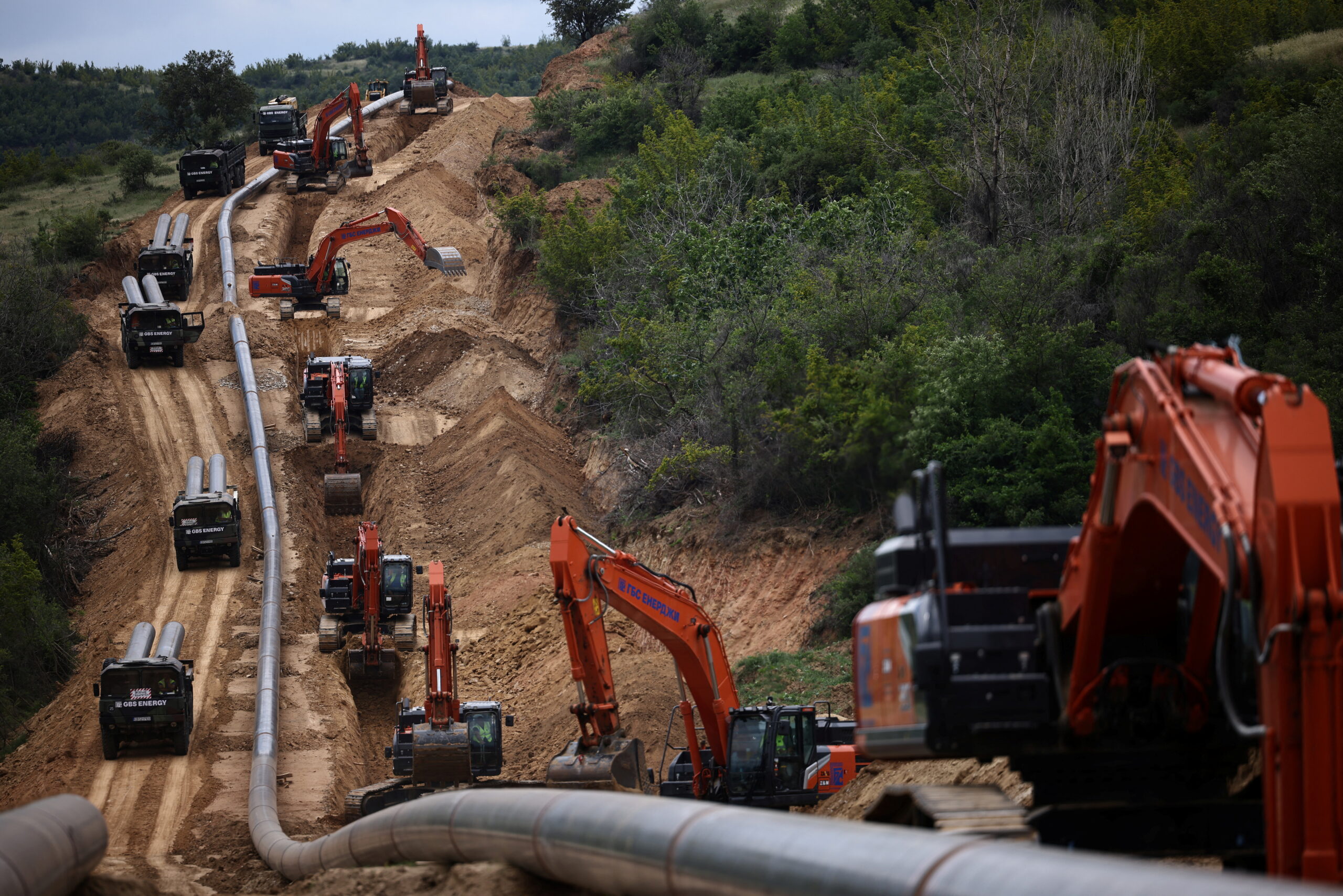
Full Article
Original Source
Read the full article at Atlanticcouncil →KhanList aggregates and links to publicly available news content. We do not host full articles from third-party sources. Always verify important information with original sources.