
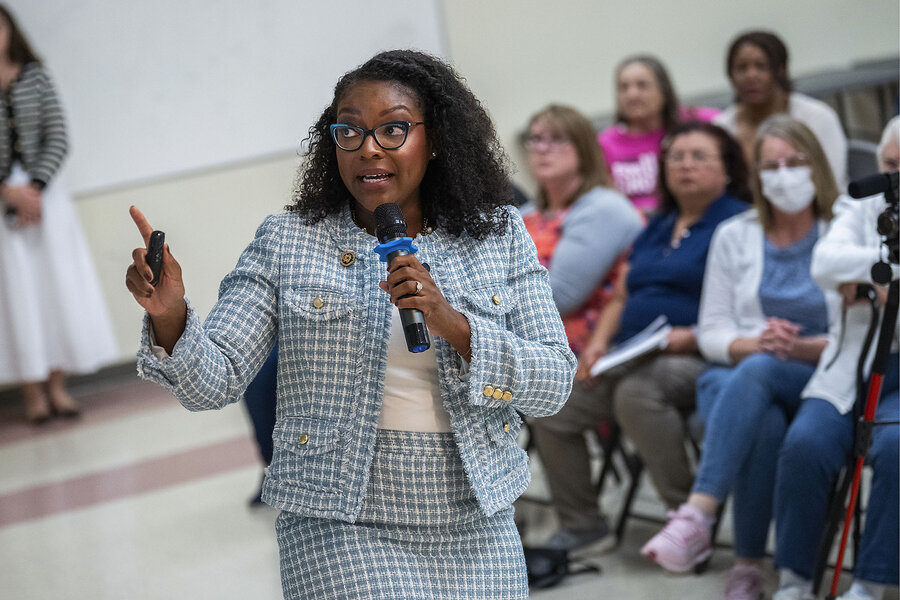
Like many people, members of Congress ease off on work during their August recess – but not entirely. That time has also traditionally been an opportunity to listen to voters back home – often through town halls. This summer, however, the number of legislators scheduling such events has declined 75% from a decade ago.In 2016, more than 170 lawmakers held August town halls, The Washington Post has reported; this summer, only 42 scheduled one.These civic encounters have been part of American life since well before the United States existed. At some gatherings, recorded as early as 1633, residents voted on decisions affecting their communities; at others, they shared views and debated issues.Visiting the U.S. nearly 200 years ago, French philosopher and writer Alexis de Tocqueville likened these events to “primary schools” for learning about democratic governance and freedoms. Such gatherings, he observed, “bring [liberty] within the people’s reach, they teach men how to use and how to enjoy it.”“Most people never get a chance to set foot in the Capitol. ... A town hall erases that distance,” Lee Hamilton, a 17-term congressman from Indiana, wrote last October. Such events, the late Mr. Hamilton observed, help “ordinary citizens ... discover shared concerns” and “turn politics from an abstract process into an actual relationship.”But that relationship has become increasingly hostile, as evidenced by town hall shouting matches, ejection of audience members, and physical attacks on elected officials. Lawmakers’ staff members are wary of situations in which a 60-minute session can be reduced to a 16-second video on social media that focuses on heated words or verbal stumbles, devoid of context.Both Democrats and Republicans manage the frequency or pacing of town halls in similar ways: Data shows that the party that does not hold the presidency tends to hold more town halls – as Democrats are doing now, and as Republicans did during the Biden administration. This, researchers say, is to “counteract the messaging advantages of the presidency,” which typically garners extensive media exposure.At the same time, legislators are exploring how to make town halls more productive. The Select Committee on the Modernization of Congress has collaborated with civil society organizations to test out “deliberative” town halls – events focused on a single topic, where participants receive nonpartisan background information and engage in facilitated discussions with each other and elected representatives.Such reconfigured town halls, according to the National Civic League, “create places where agreement and collaboration become visible options.” And, it notes on its website, “people discover common ground they already shared with one another.”This approach seems to be working. According to the Institute for Democratic Engagement and Accountability at Ohio State University, deliberative town halls substantially increased participants’ trust in their elected representative – and in Congress as a whole. They also reduced hostility between citizens from opposite parties, by more than 50 percentage points in some cases.What Tocqueville observed two centuries ago can still hold true today: “Local assemblies of citizens constitute the strength of free nations.”
A new civic tone for America’s ‘town halls’
Full Article
Original Source
Read the full article at Csmonitor →KhanList aggregates and links to publicly available news content. We do not host full articles from third-party sources. Always verify important information with original sources.