
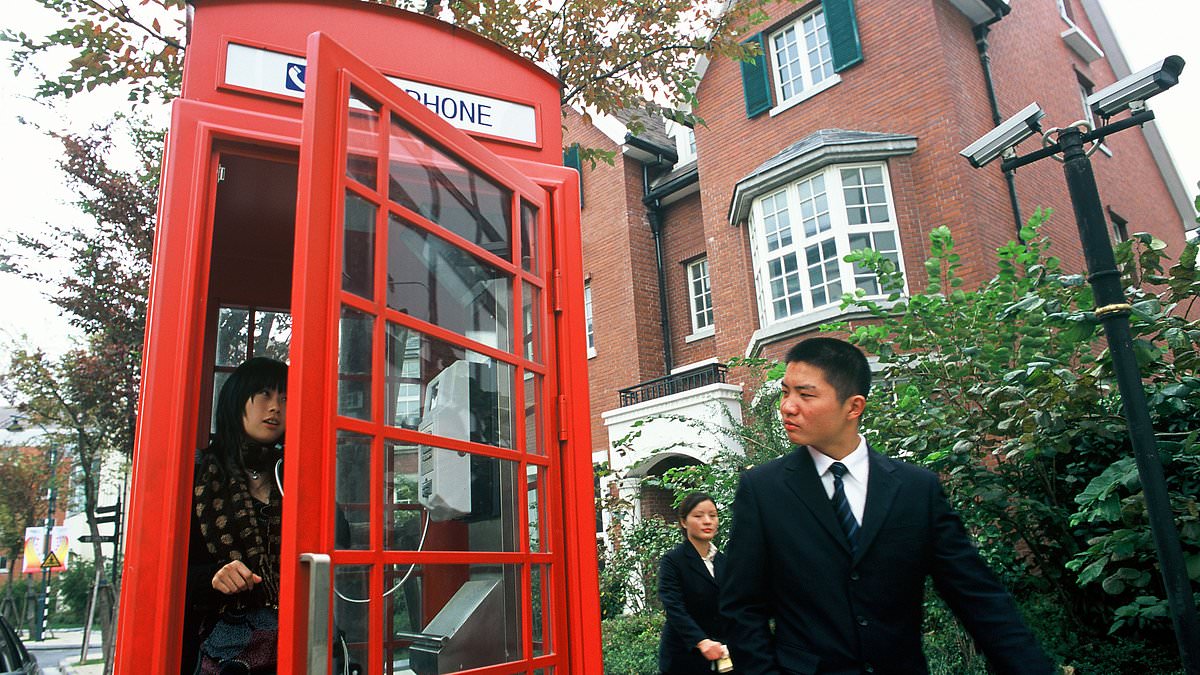
Some of the world’s strangest places sound as though they belong in a work of fiction – but they are very real, and thousands of people call them home.In one Arctic town, it’s illegal to be buried. In an isolated Alaskan settlement, almost the entire population lives in a single building. And in the Australian Outback, entire communities have carved out an underground existence.While these destinations might seem unusual to outsiders, many have fascinating histories and attract curious tourists keen to experience something completely different.We take a look inside some of the world’s weirdest towns and cities, including destinations in Myanmar, New Mexico and beyond…Longyearbyen, Norway First up in the ranking of weird destinations is Longyearbyen, NorwayLongyearbyen is a Norwegian town that appears ordinary, if on the small side. But here, it's illegal to die – or rather, to be buried.Home to only 2,400 residents, Longyearbyen is a small Arctic town in Svalbard, Norway.They live in harsh, cold conditions during the Northern Lights winter, when the area is in darkness for four months.Indeed, for two and a half months of the year, during the 'Polar Night' period, it's hard to tell the difference between daytime and night time.But you can't be buried there because the town sits on frozen ground – so bodies would not naturally decompose, Men's Health reported.Manshiyat Naser (Garbage City), Egypt Manshiyat Naser, also known as 'Garbage City,' is located in eastern CairoWith mountains of rubbish towering over children and endless bin bags bulging from high-rise flats, shocking images show Cairo's 'Garbage City' – where thousands of Egyptians live amongst piles of stinking rubbish.Manshiyat Naser, or Garbage City, as it is known by locals, is a slum on the outskirts of Cairo, just a short drive away from luxury five-star resorts.It is home to the Zabbaleen, so-called 'Garbage people', up to 70,000.The majority are Coptic Christians. The community here manually sorts and processes up to 85 per cent of Cairo's waste.The community has been living in the slums for hundreds of years surrounded by rats and rotting rubbish. Naypyidaw, Myanmar Naypyidaw is often considered one of the strangest capital citiesNaypyidaw first became the capital of Myanmar in 2005, after the government decided to move it from Yangon (also known as Rangoon) without much explanation. Construction began in 2002, with the location picked in the middle of a jungle that hadn't been lived in for more than 2,000 years. It spans 7,054km sq (2,723 sq miles) – six times the area of New York City.But built mainly for government staff, people only come to live in the city if they need to for work. As such, the supposed booming metropolis looks more like a ghost town.The super-sized motorways have up to 20 lanes and are built to be big enough for government SUVs, although images showing them totally empty are not uncommon.The streets are also barren, with just a handful of individuals spotted walking or cycling through the secluded capital at any given point during the day.Thames Town, China A London-style black cab at the English property project Thames Town in Shanghai, China Chinese residents stroll around the streets of Thames TownAbout 20 miles south-west of Shanghai sits Thames Town, built as a replica of a British market town.Expect cobbled streets, Victorian-style terraces, a mock-Tudor pub, red telephone boxes and a fish and chip shop. The British-themed mock-Tudor and Victorian style development was completed in 2006.Tourists have commented on the bizarre visit – with one writing on Tripadvisor several years ago: 'Feel like I’ve stepped back into the UK.'Another added on Google reviews: 'In some ways it actually felt a little strange feeling, seeing these vague reimagining of old style British buildings and streets, but everything feeling empty and abandoned made it feel a little ghostly.'Neft Daşları, Azerbaijan Located in the Caspian Sea, Neft Dashlari is a functioning industrial settlement built on waterA Soviet-era city that broke records for being the site of the world's first offshore oil well is now slowly crumbling into the sea. Oil Rocks, also known as Neft Dashlari, is on its way to becoming a modern-day Atlantis.Located in the Caspian Sea, the vast floating city is about 55km (34 miles) from Azerbaijan's coast and 120km (75 miles) from Baku, falling within the capital city's limits.It was built by the Soviets in 1949 after engineers discovered black gold, thousands of feet beneath the Caspian's seabed. The artificial archipelago also boasts a nine-storey apartment complex for its workers, as well as other facilities to complete the city, including a park, restaurants, hotels, a museum, a bakery, a cinema and even a football pitch. Whittier, Alaska, US In the Alaskan wilderness you'll find small city known as 'the town under one roof'In the heart of the Alaskan wilderness lies a small city that is dubbed 'the town under one roof' – as most of the population live in just one spectacular building.The town of Whittier, located on the edge of Prince William Sound near Anchorage, is mainly used as a port for cruise and cargo ships.Almost all of its 275 residents live in Begich Towers, a military structure that was converted into housing.The town is accessible via car ferry at the harbour, or by car or train on land through a solitary, somewhat eerie one-way tunnel that closes overnight and opens at 5am, further enhancing the town's mystique. Coober Pedy, Australia An abandoned underground dwelling is seen cut into the side of a hill in Coober Pedy, AustraliaStep into the eerie world of underground living, where residents have built their very own homes and businesses into the chalky clay rocks in the Australian Outback.The mining town of Coober Pedy in South Australia's far north, comes complete with churches, museums, art galleries, a bar and even hotels for travellers to get the underground life first-hand.Underneath the moon-like landscape, around 2,000 residents are living in dugouts or mud caves, with all amenities of a home above ground, including walk-in closets, modern kitchens and televisions, according to LadBible.The culturally diverse town is known for supplying the world with the majority of gem quality opal, which is their main source of income.Living in one of the world's most inhospitable regions, the stony desert has climbed to extreme temperatures of up to 50 degrees in the day and dropped to zero at night.Roswell, New Mexico, US The iconic welcome sign with a UFO theme at the entrance to Roswell, New MexicoRoswell has a status as the UFO capital of the world – and it certainly embraces this.The alleged Roswell cover-up has been one of the most famous UFO cases in history, with the military initially releasing a statement on July 8, 1947, saying a 'flying disc' had been recovered before changing their story to claim the wreckage came from a weather balloon. It was later revealed to be debris from a top-secret surveillance project during the Cold War. Nowadays, leaning into the theme, streetlights are shaped like alien heads, while signs and petrol stations are covered in green aliens and UFO paraphernalia. There's even a UFO-shaped McDonald's.Hashima Island, Japan Hashima Island, now a popular tourist destination, is commonly called Gunkanjima (Battleship Island)Fans of James Bond might recognise Hashima Island, also known as Battleship Island (Gunkanjima), as it served as inspiration for the lair of 007's enemy, Raoul Silva, in Skyfall.Exterior shots of the island were used in the 2012 blockbuster.More than 5,000 people lived here until April 1974, when a coal mine shut down and the concrete island was abandoned.In the decades since then, towering industrial and residential buildings have been battered by the elements and left to crumble.Many buildings, as well as the seawall, have been negatively affected by typhoon damage.
A neighbourhood drowning in rubbish, an oil city crumbling into the sea and a UFO-obsessed desert hotspot: Inside the world's weirdest places
Full Article
Original Source
Read the full article at Dailymail →KhanList aggregates and links to publicly available news content. We do not host full articles from third-party sources. Always verify important information with original sources.