
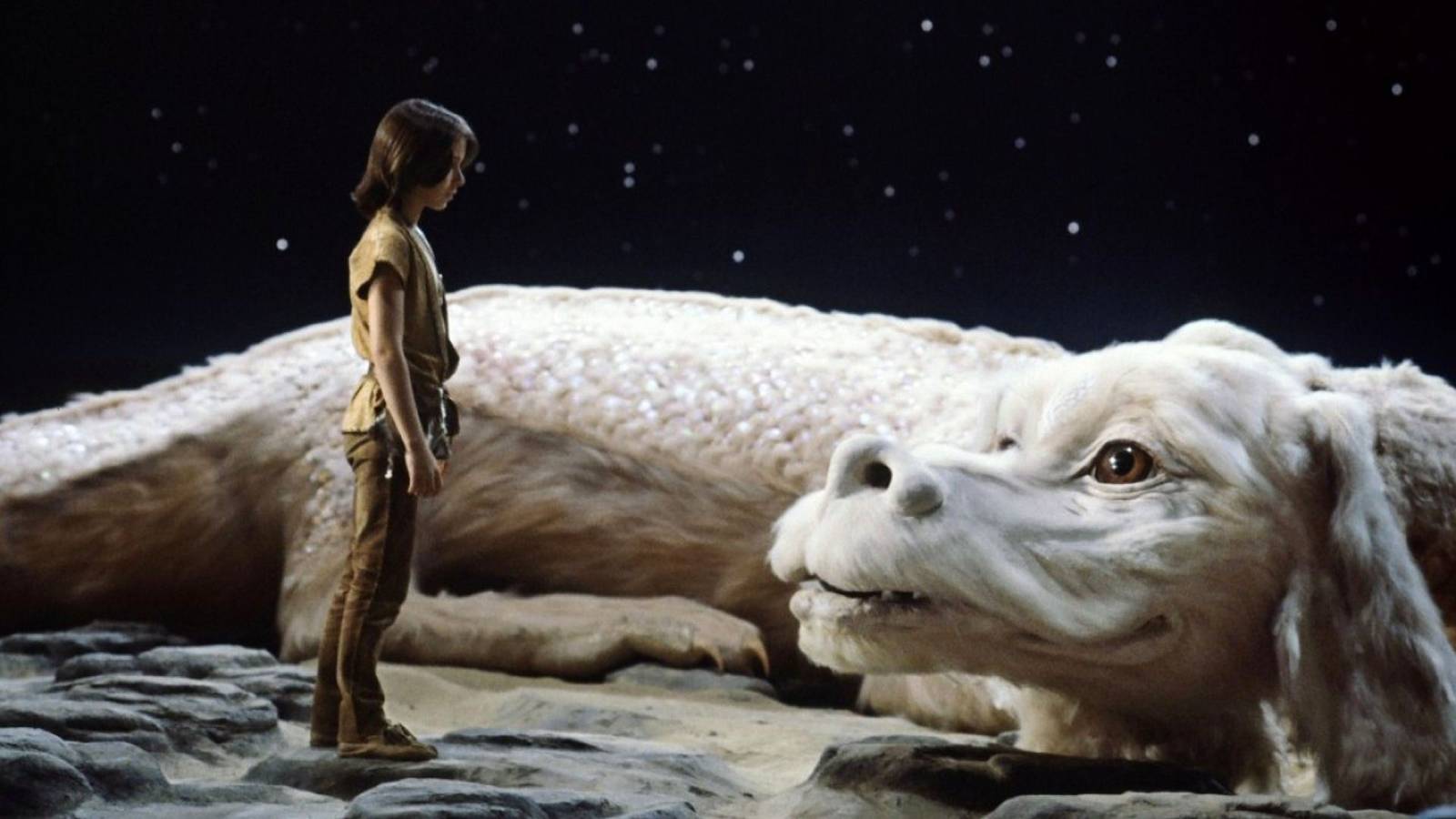
Published Sep 23, 2026, 4:30 PM EDT Sky Blanton is a Movie Contributor at ScreenRant with professional experience covering movies, television, and pop culture. Her published work spans news, interviews, features, and opinion pieces, with a focus on film, franchise storytelling, and the entertainment industry. She earned her bachelor's degree in Communications with a concentration in Professional Writing and a minor in Business Writing from Southern New Hampshire University. Some children's movies are designed to entertain kids. The great ones, like The NeverEnding Story, understand that children can handle being scared, confused, heartbroken, and completely overwhelmed by a story. That is a big reason so many 1980s fantasy movies remain beloved. They were not afraid of making their worlds strange or their villains frightening, and they trusted their younger audience members to follow stories that did not always stop to explain every little thing. Wolfgang Petersen's 1984 fantasy adventure throws its young characters into a world where a giant turtle complains about everything, a luck dragon looks like a massive flying dog, and a creature called the Gmork lurks in the darkness. Then it has the audacity to make one of those characters, Atreyu's horse Artax, the center of one of the most upsetting scenes in children's movie history. The NeverEnding Story's practical effects obviously look different from the computer-generated scenes audiences are used to today. Falkor has visible fur, Rockbiter looks like a giant puppet, and Fantasia has the unmistakable look of something built by hand. None of that makes the movie less enjoyable. Those details are exactly what give the movie's creatures and setting so much personality. With The NeverEnding Story now available to watch for free on YouTube, it is the perfect time to return to Fantasia. The NeverEnding Story Typifies 1980s Fantasy The NeverEnding Story fits comfortably alongside the fantasy movies that came out during the same era. The Dark Crystal had its elaborate puppets and strange creatures. Labyrinth sent a young protagonist into a strange new place where nothing worked out quite the way it should. The Princess Bride mixes adventure, comedy, romance, and danger without deciding that a movie for younger audiences needs to stay in one tonal mood. The NeverEnding Story pulls pieces of all three together. Atreyu has all the makings of a young hero popular in this genre for the decade. He is a child given a task that would overwhelm most adults, then left to figure it out as he goes. He crosses the Swamps of Sadness, faces the Southern Oracle, loses Artax, and eventually confronts Gmork. Nobody older steps in to finish the quest for him. Atreyu has no choice but to keep going, even after everything he loses along the way. Like The Dark Crystal, The NeverEnding Story lets its creatures interact directly with the main characters. Atreyu rides on Falkor, talks to Rockbiter, and stands beneath the enormous Southern Oracle. They are not just background details there for decoration. Falkour, Rockbiter, and the Southern Oracle are directly involved in the story, which contributes to Fantasia feeling like a world the characters actually exist in. The soundtrack is just as tied to the decade. Limahl's "The NeverEnding Story" is pure 1980s pop, while Giorgio Moroder's electronic score gives the movie that unmistakable synth-heavy sound. It dates the movie immediately, but it also fits Fantasia so well that the 80s influence is just apart of the films identity. Taken together, these factors make The NeverEnding Story a great example of what 1980s fantasy is. Nothing about it feels disconnected from the other film releases from that time, or from the child hero and the enormous world-building of its creatures, sets, and very 80s soundtrack. The NeverEnding Story Still Holds Up Today What keeps The NeverEnding Story from feeling like a dated movie that only works because of nostalgia is how much of its story is about things that never really go out of date. Bastian is grieving for his mother, struggling to connect with his father, and dealing with classmates who make him feel powerless. The book gives him somewhere he can escape and matter, but it also forces him to confront feelings he has been trying to escape. That becomes even clearer as Bastian watches Fantasia fall apart. Atreyu is brave, but he is still a child who gets scared, makes mistakes, and has to keep going after losing Artax. His journey does not become easier because he is the hero. The movie lets him struggle with fear and grief instead of rushing him past either one, which makes his journey feel much more personal than a simple quest to check off of a list. The effects have aged much more noticeably than those ideas. Falkor looks like a giant animatronic creature, some of the sets have an unmistakably handmade quality, and the Nothing can look simple by modern standards. None of that changes what happens when Artax disappears into the swamp or when Fantasia starts vanishing around Atreyu. The emotional weight comes from the characters, not from whether every effect still looks convincing. Stranger Things brought The NeverEnding Story back into the conversation years later. In the Season 3 finale, Dustin needs a number from his girlfriend Suzie to help the group, but she will not give it to him until he sings “The NeverEnding Story” with her over the radio. Their duet plays out while the rest of the characters are in the middle of a crisis, turning the '80s theme song into one of the episode's funniest moments. For viewers who had never seen The NeverEnding Story, the scene also served as an introduction to the movie and its now-iconic song. The NeverEnding Story may look like a movie from 1984, but the reason to watch it has little to do with nostalgia. The effects have aged, the soundtrack is very '80s, and some of the fantasy looks wonderfully strange by today's standards. But the idea at the center of the movie still works very well. Sometimes getting lost in a story is exactly what helps someone find their way back to the real world. Release Date July 20, 1984 Runtime 94 minutes Director Wolfgang Petersen Writers Herman Weigel, Wolfgang Petersen
A Near-Perfect Kids Movie From The 1980s Is Free On YouTube, And It's Still An Essential Watch
Full Article
Original Source
Read the full article at Screenrant →KhanList aggregates and links to publicly available news content. We do not host full articles from third-party sources. Always verify important information with original sources.