
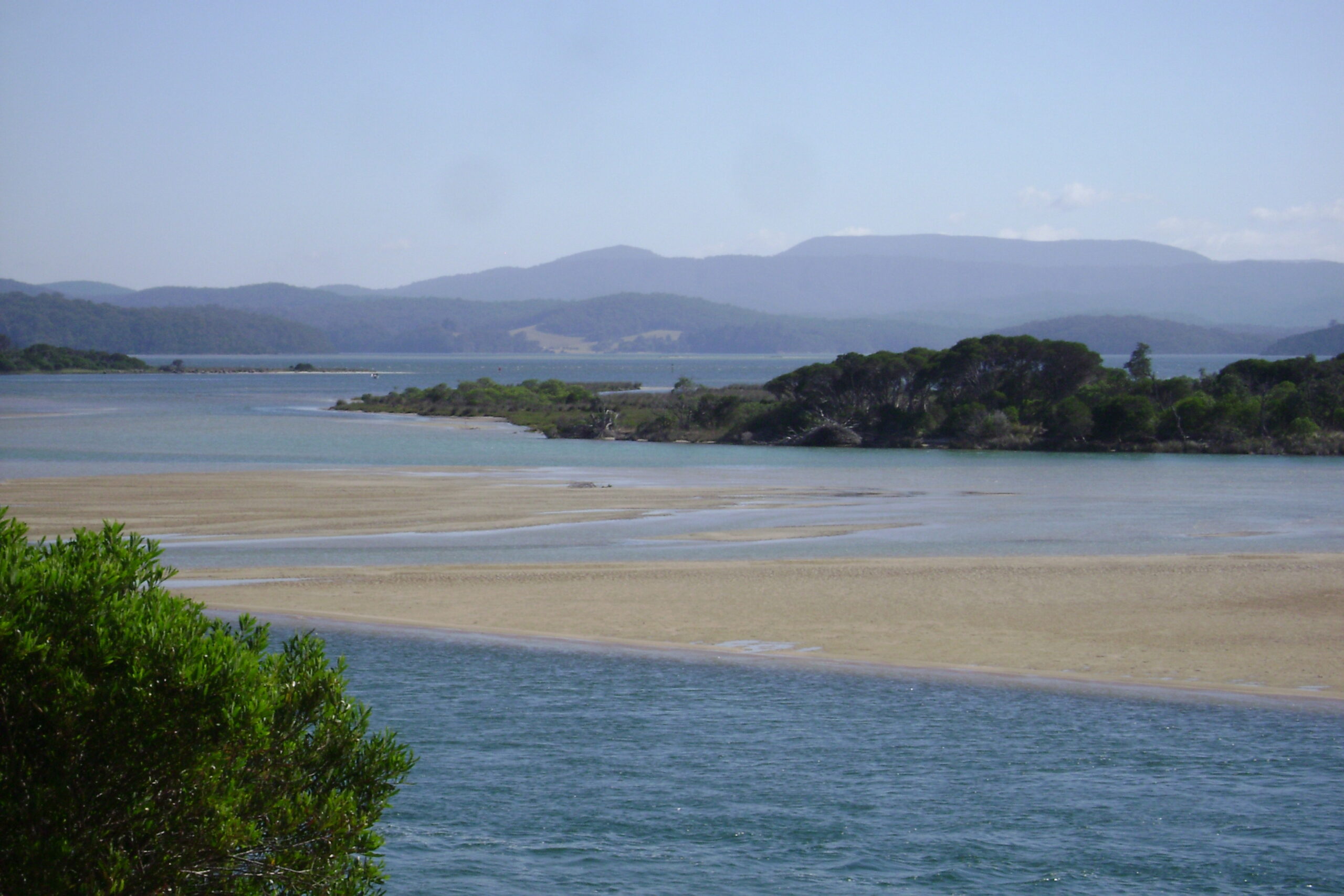
A 1,000-year ecological reconstruction reveals that Australia’s ongoing wildfire crisis stems from the colonial disruption of Indigenous fire management rather than climate change alone, according to a study published in Nature. For more than 800 years prior to British colonization in 1788, the Indigenous Gunaikurnai people maintained stable, open eucalypt woodlands across southeastern Australia using frequent, low-temperature “cool” burning, the study says. Researchers analyzed sediment cores from Purghagoolah (also known as Lake Elusive) in the East Gippsland region of southeastern Australia and found tree cover averaged roughly 10% under Indigenous stewardship. High-temperature crown fires and severe soil erosion were virtually nonexistent, according to the researchers. However, that long-term stability collapsed after colonization in the 1840s forcibly severed Indigenous care for Country, the Indigenous concept of a holistic, living entity encompassing the physical land, waters, skies, and all living things. Without cultural burning, woody fuels accumulated and eucalypt tree cover — oily and highly flammable — roughly quadrupled to 34% by the 1970s. Once-open woodlands thus became dense, flammable forests, the study says. Evidence of more intense burning emerged alongside this transition, in the form of high-temperature charcoal, whose abundance doubled or even tripled. Its presence indicates a shift to canopy-consuming crown fires that also destroyed ground vegetation and exposed the topsoil to erosion. Crucially, these changes occurred long before modern human-caused climate warming began, suggesting that the buildup of woody fuels under colonial forestry practices had already rendered the region more prone to severe fires, according to the study. “The starkness of the before and after” stood out most in the findings, lead author Michael-Shawn Fletcher, an Indigenous Wiradjuri geographer at the University of Melbourne in Australia, told Mongabay by email. “Cared-for Country did not carry catastrophic fire,” Fletcher said. Hot, dry conditions were common in Australia long before the European invasion, but they didn’t trigger the severe bushfires seen today, he added. “After colonization severed that care, the record flips: hot fires appear, eucalypt cover roughly quadruples, open woodland thickens into dense forest, and soil starts washing into the lake,” Fletcher added. The authors said unmanaged postcolonial forests have created a “catastrophic wildfire loop,” where severe fires trigger dense eucalypt regrowth, boosting fuel loads and amplifying future climate-driven fire risk. Contemporary national vegetation baselines treat these postcolonial dense forests as “natural reference points,” which entrenches wildfire vulnerability, according to the study. To break this cycle, the study says fire management must look beyond climate adaptation and hazard reduction to empower Traditional Owners to restore Indigenous fire stewardship. “Climate change is amplifying a vulnerability [that] colonization created,” Fletcher said. “Managing fire in southeastern Australia has to go beyond hazard-reduction burning and climate adaptation to restoring Indigenous land management, with Traditional Owners resourced and supported to lead. Where Country is cared for, climate does not dictate how it burns.” Banner image: Mallacoota foreshore in Croajingolong National Park, which encompasses the study area. Image by ElPhantomero via Wikimedia Commons (CC BY-SA 4.0). Credits Topics
A millennium of evidence reveals colonial roots of Australia’s wildfire vulnerability
Full Article
Original Source
Read the full article at News →KhanList aggregates and links to publicly available news content. We do not host full articles from third-party sources. Always verify important information with original sources.