
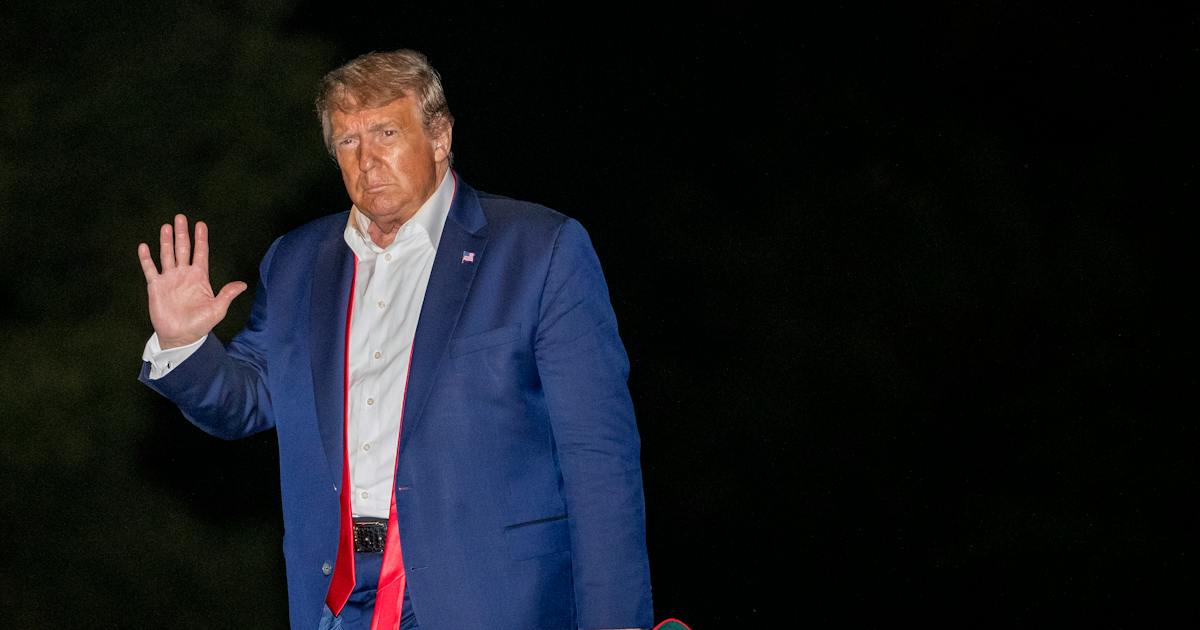
In the course in international relations I took with him as a Harvard undergraduate in the early 1960s, when he was still a mere professor of government, Henry Kissinger had certain personal observations that he would frequently reiterate, a main one of which was, “In retrospect, everything looks inevitable.” President Donald Trump, halfway through his second term in office, suddenly—and, I would guess, to a certain extent unexpectedly, to him—finds his political power severely circumscribed. Was this midterm election outcome, more extreme in its repudiation of his government than virtually anyone anticipated, foreordained by Trump’s egomaniacal approach to business, politics, and other people in general?An argument could be made that the undoing of his presidency was bound to happen. Another concept I picked up in my undergraduate studies was that of “omnipotence of thought.” This is the conviction that one’s thoughts or beliefs can not only influence the external world but control it. Trump came into the business world and later political office with a set of misguided and inflexible beliefs and habits, instilled in him first by a stern and un-loving father, which were extended and fortified by the man who became not only his attorney but his political mentor, the notoriously ruthless and unprincipled Roy Cohn, chief counsel to Senator Joseph McCarthy’s communist witch-hunt hearings in the 1950s. In the three books that his niece, Mary L. Trump, has written about him, she has made clear that her uncle was raised by a cold, ruthless, mercenary father and a largely absent and sickly mother. The lack of love in the household, to Mary, is the most telling aspect of Donald’s upbringing. The film The Apprentice (2024), which highlights Cohn’s mentorship of him, makes clear the essence of Cohn’s tutelage of Donald: No matter what, no matter how wrong you might be or turn out to be about a given matter or issue, you must never bend, never give up your adherence to a position, no matter how misguided it might turn out to be. And incidentally, the film also highlights the instance in which “The Donald,” as his first wife, Ivana, called him, allegedly raped her as she was spurning his unwanted conjugal advances.It should come as no surprise, therefore, that Trump would stake out positions that are autarkic in nature, for himself as an individual as well as for the country. Autarky is a state of self-sufficiency and self-absorption that is as complete as possible. Trump does not brook advice from other people as to what he should or should not do in a given circumstance. Therefore, in his first term as president, when anyone in the government or the White House of high caliber—say, for instance, his first chief of staff, retired Marine General John Kelly—tried to offer advice contrary to his own inclination, he would chafe against it in annoyance. In his second term, he stacked his Cabinet with pliant, mediocre individuals who would never dare challenge his inclinations, no matter how wayward or bizarre they might be. Over his entire adult life, he had nurtured the notion that tariffs were paid by businesses exporting goods rather than by the consumers in importing countries purchasing them, a delusion I ascribe to a belief instilled in him early on that other people are invariably out to undermine or savage you. Having managed to kidnap the president of Venezuela, which has an estimated population of 28.6 million and no more than 150,000 military personnel, he then fantasized that he could similarly subdue the vastly larger nation of Iran, with its estimated population of 93.4 million and approximately 610,000 military personnel, including its notoriously brutal Revolutionary Guard. In this latter case, U.S. bombardment killed the nation’s supreme leader, Ayatollah Ali Khamenei, and subsequent strikes did away with many of the country’s top leaders, including, it is believed, many of the identified moderate leaders, those who U.S. analysts believed would have been open to striking a reasonable deal with the United States over the issue of nuclear weapons.But now let’s look at the positive side of Trump—and yes, there is perhaps a positive side to focus on. During his 2024 campaign, this magazine ran a picture of him with a faint mustache and short haircut that suggested he might be an American Hitler. We were far from alone in making such a comparison. But as it has turned out, he was not such. He is a tyrant, no doubt, but one whose nefarious program has been to attenuate America’s most commendable aspects without turning the country upside down and destroying it. He did not cancel the 2026 political elections, or make any serious moves to undermine them, much to the surprise of many. His reaction to the election results, so far, has been muted, and it appears that he may content himself with pursuing his various construction projects during the rest of his second term. Which is not to say that he won’t get up to some forms of mischief. His top priority, clearly—and one doomed to failure—is and has been trying to turn the United States back into an overwhelmingly white country; hence his attacks on all programs involving affirmative action and his relentless efforts to deport as many noncitizen residents of color in the country as possible as rapidly as possible (which may well amp up with Stephen Miller now elevated to chief of staff).Beyond that, I think he aspires to reduce every aspect of excellence in the country to a level of mediocrity, which is to say, down to his very own level. And at this, I confidently predict, he will woefully fail, as he has failed so often at his major endeavors throughout his miserable life.
A Mediocre, Miserable Man
Full Article
Original Source
Read the full article at Newrepublic →KhanList aggregates and links to publicly available news content. We do not host full articles from third-party sources. Always verify important information with original sources.