
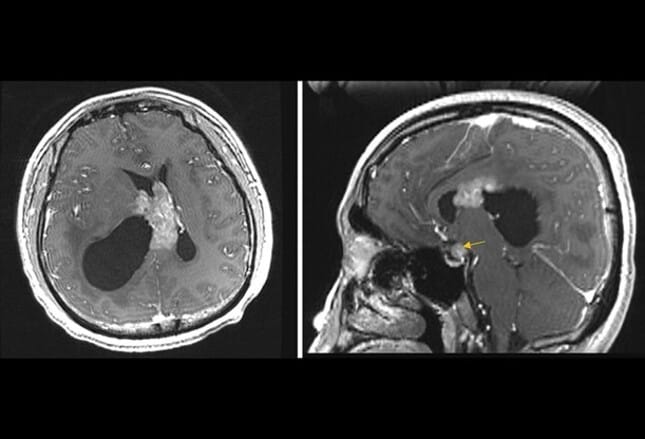
Key TakeawaysPineal germinoma may present with headache, vomiting, diplopia, and obstructive hydrocephalus. Beta-human chorionic gonadotropin (beta-hCG) and alpha-fetoprotein are useful markers in diagnosis. Although radiotherapy can achieve remission, patients may still develop late endocrine complications or rare metachronous germ cell tumors, making long-term surveillance essential.The case report by general practitioner Ariadna Perea Gill, MD, and colleagues from the Universidad de Guanajuato in Guanajuato, Mexico, shows the value of comprehensive, long-term, multidisciplinary follow-up.The Patient and His Medical HistoryA 22-year-old man presented to the emergency department of a hospital in Guanajuato, Mexico, with holocranial, pulsating headaches that had persisted for 2 months, with an intensity of 10/10. He also reported photophobia, phonophobia, nausea, vomiting, diplopia, weakness in the legs, and urinary incontinence.There were no known relevant preexisting conditions.The patient reported that he had been smoking approximately one pack of cigarettes per month since the age of 12 and had been consuming alcohol occasionally since the age of 13.The patient’s medication, family, social, travel, and allergy histories were unremarkable.FindingsUpon admission, the patient’s vital signs were measured. Respiratory and heart rates, blood pressure, oxygen saturation on room air, and body temperature were within their respective normal ranges.Inspection, auscultation, palpation, and percussion of the patient’s body revealed no significant findings.A neurologic examination showed a Glasgow Coma Scale score of 15, isocoric and light-reactive pupils, intact cranial nerves, and no motor or sensory deficits.Laboratory tests revealed elevated beta-hCG levels.A CT scan of the skull revealed a pineal mass and obstructive hydrocephalus. A ventriculoperitoneal shunt was placed, and a lumbar puncture was performed. The latter showed elevated beta-hCG and normal serum alpha-fetoprotein levels.Based on the overall findings, a pineal germinoma was diagnosed.TreatmentFractionated radiation therapy was administered and resulted in a complete clinical and radiologic response. Follow-up examinations, including serum and cerebrospinal fluid tests for tumor markers as well as MRI, showed no evidence of tumor recurrence for 12 years.At 9 years after the initial diagnosis, the patient developed radiation-induced pituitary insufficiency, necessitating lifelong hormone replacement therapy with levothyroxine, prednisone, desmopressin, growth hormone, and testosterone.At 13 years after the initial diagnosis, a follow-up MRI revealed irregular, nodular contrast enhancement in periventricular and ependymal regions, including the corpus callosum. Cerebrospinal fluid cytology was negative for malignant cells. Over the next few months, the patient developed memory impairment, inattention, photophobia, phonophobia, episodic moderate headaches, gait disturbances, and progressive hydrocephalus, which necessitated shunt revision. The cerebrospinal fluid samples remained unremarkable.A PET scan revealed increased metabolic activity in the right periventricular region at the occipital horn of the lateral ventricle as well as in the left centrum semiovale. A biopsy was performed to rule out a primary central nervous system lymphoma. Histopathologic examination revealed a malignant germ cell neoplasm consistent with a germinoma.Discussion“This case illustrates the typical initial course of a pineal germinoma while emphasizing that, even after complete response to radiotherapy, patients remain at risk for late endocrine sequelae and, in rare cases, metachronous germ cell tumors,” wrote the authors of the case report. The appearance of a new lesion more than a decade later in this case strikingly highlights the limitations of short-term surveillance strategies.This article was translated from Univadis Germany, part of the Medscape Professional Network.
A Man’s Rare Late Complication After Brain Tumor Therapy
Full Article
Original Source
Read the full article at Medscape →KhanList aggregates and links to publicly available news content. We do not host full articles from third-party sources. Always verify important information with original sources.