
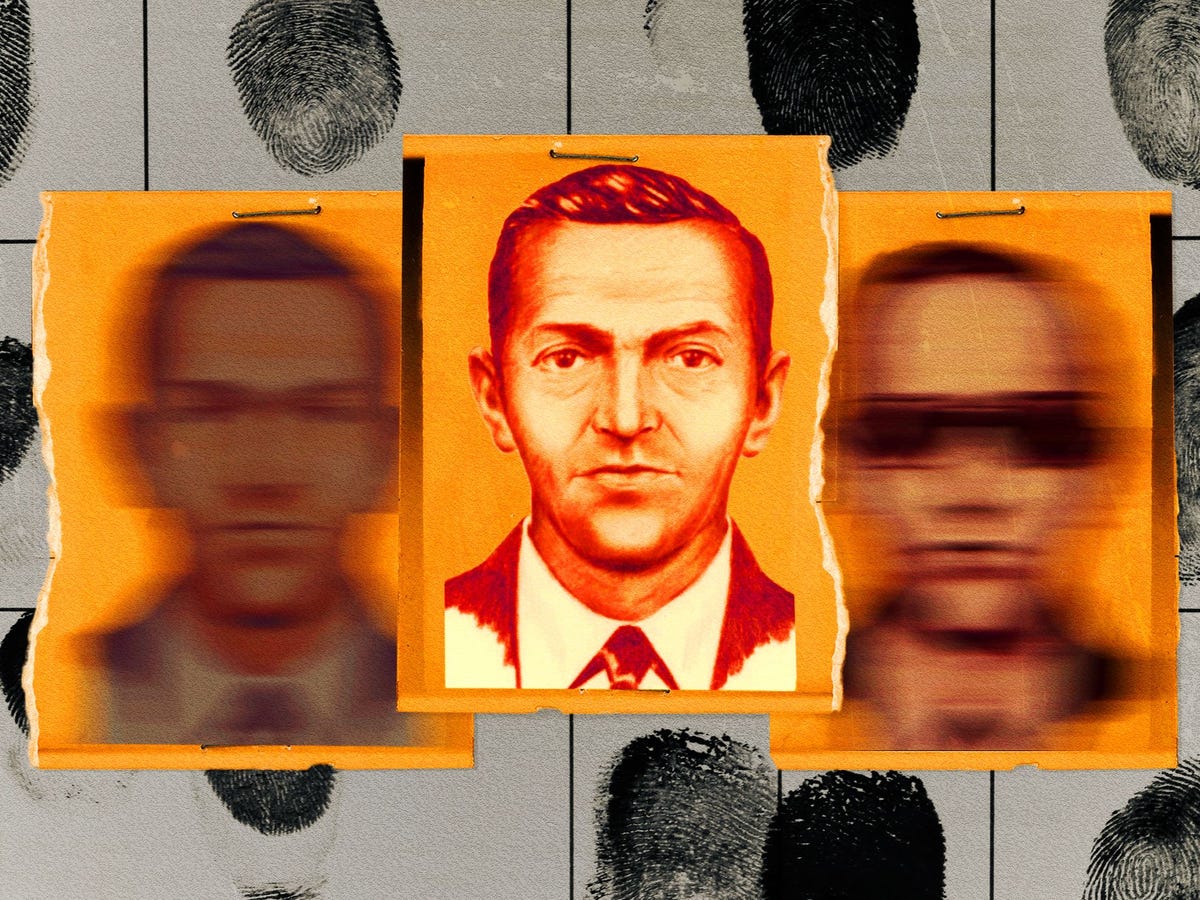
9 min readTHE MAN IN the tavern told his extraordinary story to anyone who would listen. The problem was they had heard it all before.It was June 1973, about a year and a half after a guy who called himself Dan Cooper hijacked Northwest Orient Flight 305, bound from Portland to Seattle, and parachuted into the night with $200,000, never to be seen again. At the Dog House Tavern in Langley, Washington, James Richard Daily—a 37-year-old with curly black hair and a ruddy complexion who visited the bar almost every evening, according to owner Daisy “Ruth” Desdier—was at it again. He drank too much, and he talked too much when he drank too much, so the Dog House regulars took it with a grain of salt when he casually revealed his true identity: He was Dan Cooper—better known as “D.B.” in the papers—and the FBI was looking for him.Daily was wrong about the first part, but right about the second. He just didn’t know it.In 2026, a newly released batch of FBI files included a run of 1973 memos showing just how seriously the feds pursued Daily in the still-fresh Cooper case. Across several months, agents interviewed Daily’s connections, including Desdier and people at his labor union and electrical service provider. They checked his criminal record, financial history, habits, appearance, and even what kind of clothing he had been seen wearing.Then the file took Daily apart, detail by detail. He didn’t especially look like Cooper, and his stutter didn’t match what passengers and crew remembered about the mysterious man. Daily was also behind on his bills, which didn’t suggest someone sitting on a spare $200,000. And while Cooper was described as neatly dressed in a business suit and black tie, Daily was more casual: One witness told the FBI that they had “never seen Daily wearing a suit” and doubted he owned one.So much for that. Daily wasn’t D.B. Cooper. But he was a lesson in how the case worked: While the FBI never found the man who vanished from Flight 305, the files show just how good the Bureau became at finding everyone else.“It’s the coolest crime there is.”IN THE 55 years since the skyjacking, the Cooper case has attracted barroom braggarts, dying men, self-promoters, family legends, and candidates promoted by people who badly wanted their suspect to be the guy.Two people understand that pattern better from opposite sides of the search for Cooper. Larry Carr was the FBI case agent assigned to the investigation in the Seattle Field Office from 2007 to 2010. Ryan Burns is a lawyer, podcaster, YouTuber, convention organizer, and citizen sleuth who lives inside what Cooper obsessives call “the vortex”—the point at which curiosity becomes commitment.Carr saw the confession cycle firsthand. “Every time an article would come out,” he says of new waves of coverage, “people would try to confess to it.” Burns thinks the reason is partly mythological. Cooper’s crime is remembered less as a violent threat than as a disappearance from an action movie: the suit, the sunglasses, the ransom, the jump, the vanishing act. “It’s the coolest crime there is,” Burns says. In the popular imagination, he argues, it can feel like “a safe crime to confess to.”That’s what made this a problem investigators couldn’t ignore. Every confession had to be treated as a potential lead, but every lead had to survive the same question: Did this person know anything only D.B. Cooper would know?When Carr inherited the case, he knew he didn’t want to start from scratch. “There were literally thousands and thousands of FBI agents that investigated this case, and they came up with nothing,” he says. “How is one person going to reevaluate what thousands of agents did?” So he tried to make the case visible again. He spoke publicly, engaged with amateur researchers, and encouraged renewed media attention in the hope that something real might surface: money in an attic, a family story attached to physical evidence, some overlooked link to the night of November 24, 1971.FBIIn 1980, an 8-year-old boy discovered these decaying bundles of cash along the Columbia River. The serial numbers matched D.B. Cooper’s ransom money—one of the few pieces of physical evidence ever recovered in America’s most famous unsolved hijacking.That openness helped make Carr an unlikely ally of citizen sleuths. Burns has hosted Carr on his podcast, and Carr has appeared at CooperCon, the annual gathering that Burns manages where vortex dwellers trade theories about a mystery the FBI couldn’t close. “I never would have thought 20 years ago I’d be friends with the guy,” Burns says of Carr. “But so be it. I am. He’s a nice guy.”Carr’s strategy, however, came with a cost. Publicity brought tips, but it also brought a wave of wannabes. By the time Carr took over, the FBI had already developed a kind of D.B. Cooper captcha: a set of questions designed to separate people who knew the case from those who merely knew the legend. Burns recently came across the list while working through the 50,000-plus pages of Cooper files now available to the public. The questions were simple, but they were designed to test knowledge that a faker would not necessarily have. Did Cooper buy his ticket from a man or a woman? Was that person young or old? When he boarded the aircraft, was he among the first passengers, in the middle group, or one of the last to board?This wasn’t meant to be trivia, but rather contamination control. By the 1970s, newspapers had already spread the broad outlines of the hijacking. A persuasive liar could know the ransom amount, the parachutes, the flight path, and the mythology. The FBI needed details that had not been flattened into legend.The FBI didn’t know who D.B. Cooper was, but the files show that agents knew the case well enough to recognize who he wasn’t. For Carr, the first question was brutally practical. The number one question Carr says he asked himself: Was there any way they were connected to the case? “No one can place them in Portland. No one can say, ‘Hey, I found money.’ There’s nothing linking them actually to the case.”That standard explains why so many Cooper claims collapse. Some suspects looked wrong, others sounded wrong. Some had the wrong timeline, parachute gear, and knowledge. Some had no trace of the ransom money. The FBI’s files can read like a casting call, except the Bureau wasn’t casting a Cooper. It was eliminating everyone who couldn’t possibly be him.“No one can place them in Portland. No one can say, ‘Hey, I found money.’ There’s nothing linking them actually to the case.”ONE KIND OF Cooper confession tried to turn the myth into money. Bryant “Jack” Coffelt (listed in the files as Jack Bryant Coffelt) may have been the first major example. In 1974, he told his former cellmate, James Brown, that he was the hijacker. According to Burns, Coffelt wanted Brown to sell the story to Hollywood. Coffelt had a history as a fabulist and con man, but the FBI still investigated him. More than 100 pages of Bureau files were devoted to the lead, including testimony that Coffelt couldn’t have been Cooper because he was in a Washington, D.C., treatment facility for alcoholism at the time of the hijacking.Walter Reca is the Cooper con artist who bothers Burns more. “The biggest insult to the entire community of people who are dedicated to researching this case,” he says, “is the Walter Reca grift.” Reca, a former paratrooper, had an audio recording made of his confession that was later published by the U.K. tabloid the Daily Mail. His story was juicy: He revealed where he jumped, where he landed, and how he pulled off his escape. The problem? Most of the details were wildly inaccurate. Most glaringly, Reca said he landed near Cle Elum, Washington—more than 150 miles from the area where Cooper is generally believed to have come down.Over the years, some of the most compelling Cooper confessions didn’t come from the alleged hijacker himself, but from spouses and children who believed they had inherited a bombshell family secret.Duane Weber’s alleged confession was like something out of a movie. On his deathbed, Weber, a World War II veteran with a criminal history of burglary and forgery, reportedly told his wife, Jo, “I’m Dan Cooper.” Burns says the FBI prioritized the claim because law enforcement tends to take deathbed confessions seriously. Jo Weber later described a sleep-talking nightmare in which Duane worried about leaving fingerprints on a plane. But the problem was forensic: The fingerprints and DNA associated with the Cooper case didn’t match Weber’s, and the FBI ruled him out.Getty ImagesThe FBI’s composite sketch of D.B. Cooper became one of the most recognizable images in American criminal history. Since the 1971 hijacking, thousands of people have been interviewed, including men who “confessed,” family members who came forward, and sleuths who were convinced they had the answer. But more than 50 years later, Cooper’s true identity remains unknown.WILLIAM GOSSETT’S SONS also believed their father had fessed up. In a 2008 ABC News report, Greg Gossett said that on his 21st birthday, his dad showed him two keys to a safety deposit box and claimed it contained the Cooper ransom money. While Gossett had colorful credentials—he wrote short stories and hosted a paranormal radio show—he lacked any kind of criminal activity worth pursuing further. “There is not one link to the D.B. Cooper case other than the statements [Gossett] made to someone,” Carr told ABC News.Then there are the Cooper suspects who look just convincing enough to trap people into believing them—especially one in particular. Unlike most confessors, Richard Floyd McCoy Jr. unquestionably had the capacity to commit a Cooper-like crime: On April 9, 1972, he hijacked a commercial airplane in a strikingly similar skyjacking and was arrested three days later. But to believe McCoy was Cooper, the timeline has to stretch. It requires McCoy to jump from Flight 305 on Thanksgiving Eve in 1971, survive the landing in Washington state, travel hundreds of miles back to Provo, Utah, and host a Turkey Day dinner the very next day for students at Brigham Young University.In the case of McCoy, every possible connection creates another problem. Supporters point to a parachute found in the McCoy family shed; skeptics say the parachute had D-rings, a feature FBI records indicate Cooper’s parachute did not have. Some believers have even spun McCoy’s 1974 death in a shootout with the FBI into a conspiracy. Burns finds that logic backward: If the Bureau wanted to close the Cooper case by making McCoy the answer, it could simply have said he was Cooper. Instead, the FBI ruled him out, citing the physical descriptions provided by two flight attendants.Some Cooper claims were less direct confessions and more performances that the storytellers came to regret once they realized the government was listening. Robert Rackstraw spent years making allusions to his involvement in the hijacking, conceding that he “could have been” D.B. Cooper. This was useful when it meant attention and possible quick paydays—he was reportedly offered $20,000 for the storytelling rights to his life—but late in life, Rackstraw said the notoriety may have cost him work. Before his death in 2019, he denied involvement in the hijacking.Barbara Dayton’s story was equally dangerous. Dayton, a World War II veteran and former merchant marine, was reportedly the first person to undergo gender reassignment surgery in Washington state. She later told friends Ron and Pat Forman that she had carried out the Cooper hijacking as revenge after being denied a commercial pilot’s license. But the details didn’t square with the FBI’s evidence, and Dayton ultimately recanted after it became clear that the government remained “ready, willing, and able” to prosecute the hijacker. Another dead end.Of course, what happened to the real Cooper remains one of the great unsolved true-crime mysteries of the 21st century. Carr, for his part, believes the hijacker didn’t survive the jump. Burns is more open to the possibility that Cooper lived, but he doubts a man careful enough to disappear would later risk it all by exposing himself with a sloppy confession.And that’s the fatal flaw in the Cooper confessions. The people who claimed to be him seemed to want what he got away with: the money, the mystery, the fame, and the chance to attach themselves to a story everyone already knew. But Cooper’s crowning achievement was his disappearance. The moment someone stepped forward to claim the legend, they started to look less like the man who vanished and more like everyone else trying to be him.If Cooper died in the woods, the confessors were only chasing a ghost. If he survived, his most important decision may have come after the jump. He kept his mouth shut.Michale Natale is a News Editor for the Hearst Enthusiast Group. As a writer and researcher, he has produced written and audio-visual content for more than fifteen years, spanning historical periods from the dawn of early man to the Golden Age of Hollywood. His stories for the Enthusiast Group have involved coordinating with organizations like the National Parks Service and the Secret Service, and travelling to notable historical sites and archaeological digs, from excavations of America’ earliest colonies to the former homes of Edgar Allan Poe.
A Man Walked Into a Bar and Told Everyone He Was D.B. Cooper. What If He Wasn’t Lying?
Full Article
Original Source
Read the full article at Popularmechanics →KhanList aggregates and links to publicly available news content. We do not host full articles from third-party sources. Always verify important information with original sources.