
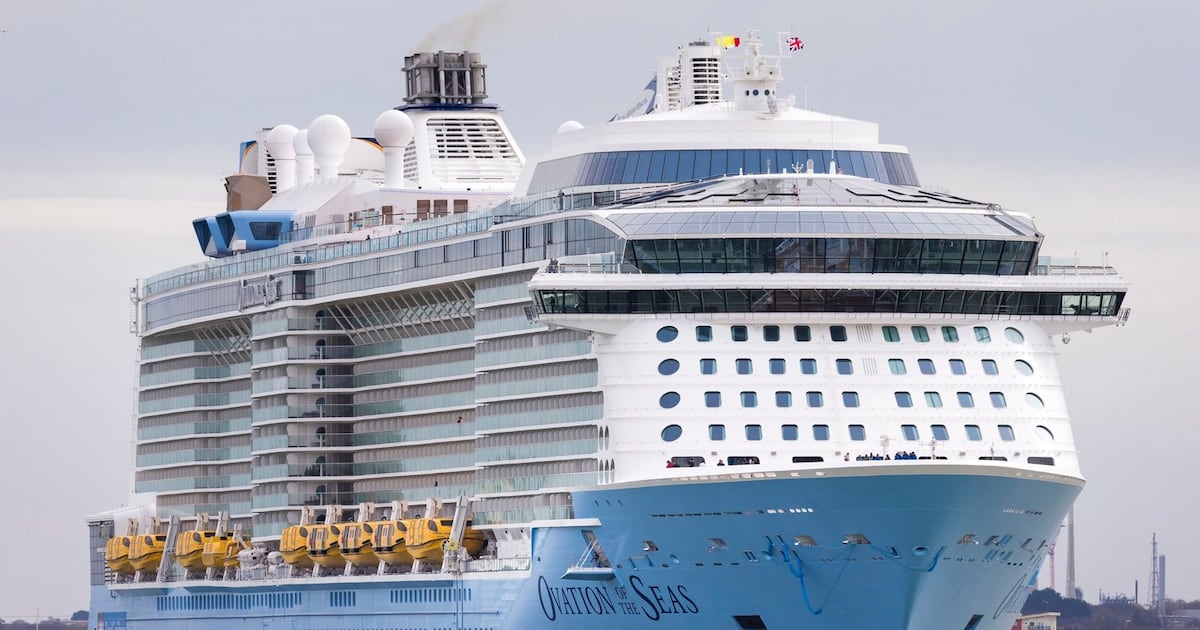
Earlier this month, two fishermen off Newport Beach in California spotted a man treading water roughly 30 kilometres offshore. He had fallen from the Royal Caribbean cruise ship Ovation of the Seas and survived for nine hours in the Pacific Ocean. His rescuers credited the freakishly warm water for keeping him alive: the sea temperature was around 24 degrees, five to six degrees warmer than normal for November. Along parts of the California coast this year, water temperatures reached values of 5.5 degrees to 8 degrees or more above seasonal norms; readings one scientist described as “astonishing”.The warm waters may have saved one life in California, but the Climate Impact Lab at the University of Chicago estimates that the 2026-27 El Niño may result in more than 450,000 additional heat-related deaths. National Oceanic and Atmospheric Administration data is currently showing a temperature rise of up to 4 degrees in parts of the tropical Pacific, an anomaly that is widely regarded by climate scientists and meteorological agencies as exceptional, even by the standards of strong El Niño events.While the naturally occurring El Niño phenomenon is the driving factor behind this year’s ocean temperature anomalies, the warmth of ocean currents travelling from the central Pacific up to the Californian coast is being amplified by human-caused climate change. READ MOREIn their most recent climate change indicators report for the EU Copernicus Services, a consortium of 50 scientists warned that the pace of human-induced global heating (now roughly 0.27 degrees per decade) has more than doubled since the 1976–1995 period. [ Food Where do your fruit and vegetables come from?Opens in new window ]This rate of warming is driving up the frequency of marine heatwaves, defined as a discrete spell of unusually warm temperatures, which are also increasing in extent as the heat is moving even deeper into the ocean than it used to. The number of days experiencing marine heatwaves has more than tripled between 1991 and 2025.We tend to associate climate change with extreme weather events such as flooding, wildfires and droughts on land. But devastating changes are also occurring out of sight in the oceans. The Earth’s seas absorb roughly 90 per cent of the excess heat trapped by carbon pollution. This buffer has spared the atmosphere from far faster heating. But for marine ecosystems, the effects of heatwaves and acidification (as carbon dioxide is absorbed by the seawater) are dramatic.For example, fish are ectotherms whose internal body temperatures and metabolic rates are dictated directly by their surrounding waters. When ocean temperatures rise, even temporarily, mobile species such as mackerel, tuna and hake move poleward or into deeper waters, disrupting migratory corridors and spawning grounds. [ The nerd elite of Silicon Valley have a plan to save the world from climate changeOpens in new window ]The Irish Marine Institute’s annual Stock Book for 2025 discussed ocean climate trends and marine heatwaves for the first time, noting that fish recruitment and stock performance are increasingly affected by ecosystem pressures and warming waters, and not just by overfishing.Warming waters can disrupt marine food webs, reducing food availability for young fish and affecting spawning success, growth and survival. What this means for Irish fisheries is that cold-water species such as cod, haddock and whiting could be less productive, while warmer-water species such as Atlantic bluefin tuna, squid, anchovy and octopus are likely to expand their ranges to the south of Ireland.[ Greta Thunberg looks more and more like an ideologue in search of an ideologyOpens in new window ]Those species that move in search of cooler waters face an uncertain future. The entire marine food web, starting with tiny phytoplankton, is affected by warmer temperatures. These tiny cells act as the foundation of all marine life. Through photosynthesis, they absorb and draw down carbon dioxide and nutrients through the water column. If their life cycles are disrupted by marine heatwaves, this will have knock-on effects on all the species up the food chain.Perhaps the most existential threat posed by climate change is that facing coral reefs, which support a quarter of all marine species on Earth. In October 2026, the International Union for Conservation of Nature released its first-ever Global Red List of Coral Reef Ecosystems. The report classified 96 per cent or 122 out of 127 ecoregions across 80 countries as Critically Endangered and at extremely high risk of collapse within 50 years. One ecoregion in the Western Galápagos, which inspired Charles Darwin’s theory of evolution, has already collapsed. The report warned that the collapse of reef ecosystems threatens global food security and coastal stability alike.The cold-water reefs that are common in Atlantic waters may be less vulnerable to heat but are acutely vulnerable to other environmental pressures, especially bottom trawling, deep sea mining, oil and gas exploration (should that be permitted) and nutrient run-off in coastal areas. Last week, the Department of Climate, Energy and the Environment launched a marine planning policy statement, which aims to set out planning principles for activities in the marine environment. But it fails to mention the synergistic threats to the marine environment posed by climate change, overfishing, bottom trawling and plastic pollution, all of which require a much deeper commitment to resourcing marine conservation and, above all, tackling the root cause of climate change.Sadhbh O’Neill is a climate change and environmental researcher
A man is rescued after nine hours in the sea. That’s not necessarily good news
Full Article
Original Source
Read the full article at Irishtimes →KhanList aggregates and links to publicly available news content. We do not host full articles from third-party sources. Always verify important information with original sources.