
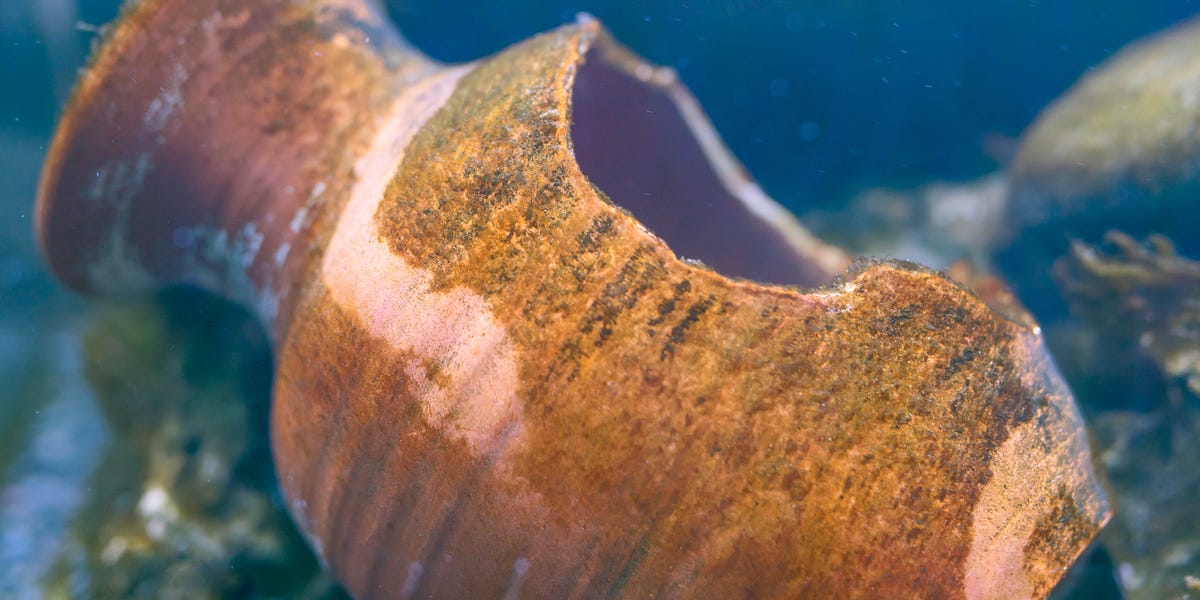
5 min readSeveral years ago, I travelled to North Carolina as part of a research trip for a story about the famous Lost Colony of Roanoke. Trying to leave no stone unturned, I explored the former colony’s dedicated National Historic Site, poured over archives of antique maps, and even took in a lavish outdoor stage production.Ultimately, trying to wrangle all the many tendrils of that leviathan proved too unwieldy, and many of the ancillary elements have remained confined to my notebooks. Yet one moment from that trip has never been far from my mind, and it reshaped how I thought about our quest for answers about early human history.It came about during a conversation with Dr. Eric Klingelhofer, a respected scholar and Vice President for Research with The First Colony Foundation. Dr. Klingelhofer had overseen several excavations that yielded remnants of Roanoke, but he was worried that many once-buried artifacts had already been claimed by a much more powerful force.“Before my retirement,” he told me, “I attended a UNESCO-backed conference on Bonaire in the Dutch West Indies. These causes, rising sea levels and storm surges, plus coastal overdevelopment, endangered every island, as most prehistoric and early colonial sites lie close to the sea.” As we sat there on tranquil, federally protected land, it was hard for me to feel the urgency at the time, but he stressed that we were in a race against time. “At Fort Raleigh,”—the name the National Parks Service gave the National Historic Site—“coastal erosion has already swallowed up excavation units we had dug in 2007. The rate of loss is about twenty feet in twenty years—and it may be increasing.”After our conversation, I walked along the island’s shoreline, struck by the thought that although I might be walking the same land as those colonists, the landscape wasn’t really the same. Their shoreline likely sat yards farther out than the one I strolled, and as the water swept that land away, it took with it our chance to learn more about the people who once stood there.In the study of history, we too often focus on the preservation or replication of what was once on a certain parcel of land, taking it as a given that the land itself stayed constant. We spend all our time debating whether the proverbial Ship of Theseus is still the same after centuries of repairs, never stopping to question if the shoreline of Delos on which he landed still remains.Yet, recent studies have emerged to remind us that even in the absence of human intervention, the world looked different to the peoples of the past than it does to us today.The scale of this dilemma, the problem of our submerged history, is far greater than a single island in North Carolina, or a single colony from the 1500s. Our whole understanding of early humankind may be built on faulty ground, due specifically to how much of that ground is now underwater. But don’t let your thoughts drift to that Platonic idea of Atlantis; the proper term, as The Atlantic recently reminded us, is Aquaterra.In 2014, the geographer Jerome E. Dobson mounted a case for the recognition of a global landmass he dubbed Aquaterra, a term he first proposed in 1999. In “Aquaterra Incognita,” Dobson argued that “all landmasses are defined by time as well as space,” and therefore, since “so little is known about the seacoast where a significant portion of humankind surely dwelled for the better part of 120,000 years,” we should properly recognize and name the 22.5-million-square-kilometer landmass that once hosted the earliest human civilizations.When we think about the ice ages that have cycled across Earth’s history, we can easily picture the glaciers and ice sheets that formed, but we rarely consider where all that water came from. During an ice age, sea levels drop, exposing land that’s now underwater. As a result, the shorelines early humans knew looked very different from the ones we see today.The lowlands these glaciers exposed were not bereft of life, either. The ecosystems they once supported varied, from grasslands to wetlands, forests to estuaries. They attracted wildlife, and later, early human civilizations. “Compare the most recent curve of sea level rise against the timeline of cultural innovations,” Dobson writes, “and you will find that much human progress occurred while seacoasts were still quite low.”When the glaciers melted and sea levels rose again, naturally, early humans abandoned their soon-to-be-submerged settlements. But that doesn’t mean we should simply ignore what once stood there. “It would not change the timeline of human progress if, for instance, cities were found as low as -50 meters, since Jericho is known to have existed when sea levels were that low,” Dobson notes. What could revise that timeline, he notes, is “the possibility that precursors of major innovations may exist at even lower depths.”“One intriguing possibility is pottery,” he proposes:“It would not be surprising to find shards as low as -120 meters, since pottery first appeared 18,000 years ago. It would be remarkable, but not unreasonable, if precursors were found as low as -125 meters since the Venus of Dolní Vĕstonice, Czech Republic, the first fired clay object of any kind, dates much earlier at 27,000 years ago.”All this talk about “possibility,” of course, makes the benefits of recognizing Aquaterra seem entirely theoretical. Yet in just the last few years, the archeological world received a stirring reminder that the land we can see is not the only land there ever was, and that whole chapters of our history may have been claimed by the sea.In 2021, Michael K. Faught and Morgan F. Smith published “The magnificent seven: Marine submerged precontact sites found by systematic geoarchaeology in the Americas.” The study documented not one or two but seven projects, in North America alone, that had found traces of precontact life now drowned beneath the continental shelf. Each of the seven projects worked “from the terrestrially known, to the submerged unknown.” Using methodical but varied mapping and modeling techniques, researchers predicted where people might once have lived, then searched for proof with underwater surveys, sediment cores, and even hands-on excavations.One of the research efforts happened in the Gulf of Mexico’s paleo-Sabine River. Over the course of a decade, from 1976 to 1986, it turned up “charred wood and vegetation, nut hulls, seeds, fish scales, and bone from fish, reptiles, birds, and small mammals,” some of which dated back 9,000 years. Soon after, researchers in Belize found the drowned outlines of pole-and-thatch buildings, which turned out to be Classic-period Maya salt works now sitting underwater. Other research discussed in the study uncovered stone tools, campsites, and even a stone artifact more than 12,000 years old.To truly understand human history, we can’t keep digging only in the land we can see. We also have to search for the land our ancestors knew, much of which now lies beneath the waves. That calls for a change in mindset and a rethinking of how archaeology works. As seas keep rising, how many more once-inhabited places will slip beneath the surface, taking with them secrets as recent as Roanoke’s? If we don’t change course now, the sites we have yet to excavate may be written off by tomorrow’s scholars as mere seafloor.Michale Natale is a News Editor for the Hearst Enthusiast Group. As a writer and researcher, he has produced written and audio-visual content for more than fifteen years, spanning historical periods from the dawn of early man to the Golden Age of Hollywood. His stories for the Enthusiast Group have involved coordinating with organizations like the National Parks Service and the Secret Service, and travelling to notable historical sites and archaeological digs, from excavations of America’ earliest colonies to the former homes of Edgar Allan Poe.
A Lost Landmass Nearly the Size of North America Is Hiding Under the Sea—and It Could Rewrite Human History
Full Article
Original Source
Read the full article at Popularmechanics →KhanList aggregates and links to publicly available news content. We do not host full articles from third-party sources. Always verify important information with original sources.