
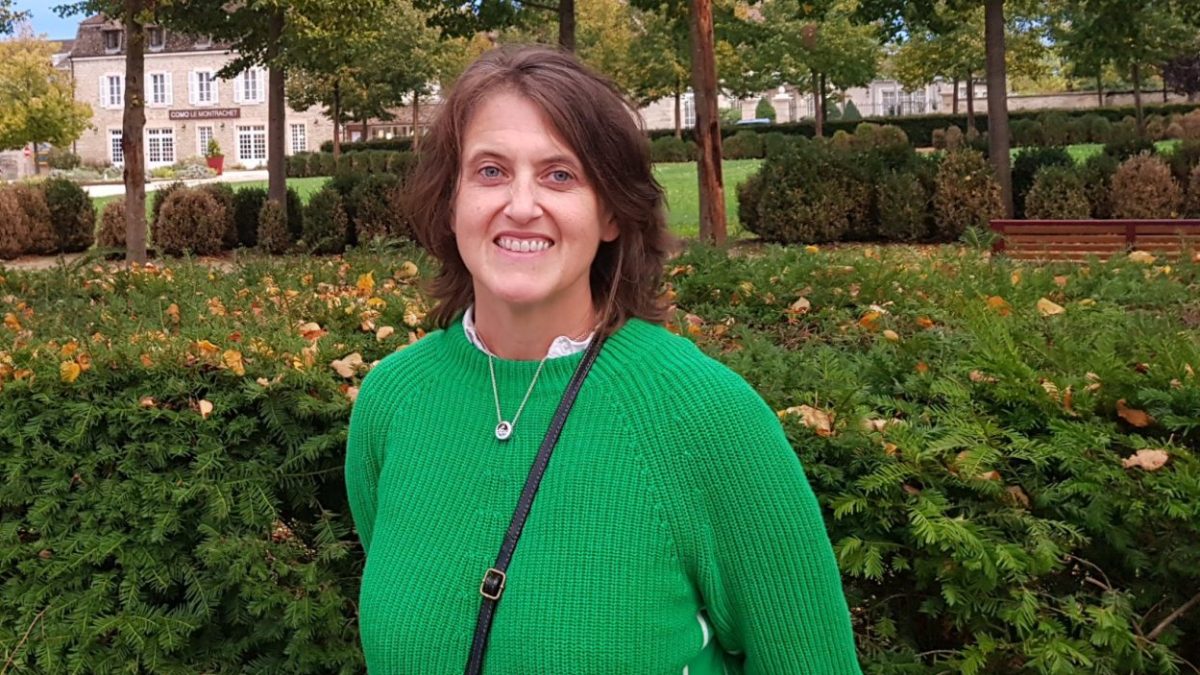
Cancer has always been present in my life. It pretty much wiped out most of my father’s side of the family – my grandfather in his 50s, my grandmother in her 70s, one aunt when she was in her 30s and a second one before she turned 60. So, when my dad was diagnosed in 2015 with pancreatic cancer, I knew, from the outset, that the news was not good. He was a larger-than-life, strong-as-an-ox character and, within a few weeks of diagnosis, was a shadow of himself. He died just eight weeks later and it left us all in a state of utter shock. I hadn’t really joined up the dots before losing my dad, but it now felt clear that cancer was a disease which was prevalent in the family and we might have an inherited risk. I tried to be proactive. I went to see my GP, who referred me for a series of scans. I was relieved to discover that nothing sinister was lurking beneath the surface. Shorts Then, one morning, while working, I got a message from a stranger on LinkedIn who said that she believed we were related and asked for my email address. Naturally, I was suspicious at first, but when further probing revealed that she knew the name of the town I grew up in, I figured she must be legit, so curiosity got the better of me, and I duly gave her my contact details. She revealed that, due to the public nature of my work and the fact that I had written an article in the past which referenced my small village, she was able to track me down online to let me know she was the daughter of one of my deceased uncles. She never met her father and was, in her own words, “the product of a one-night stand”; her mother died when she was a child, and she was brought up by relatives in Ireland before she moved to London in her late teens. ‘I have eliminated my risk for at least three types of cancer and, hopefully, by taking this action, will be around for a lot longer than some of my family members were,’ writes Arlene She had been recently diagnosed with ovarian cancer and subsequently tested positive for the BRCA1 gene mutation. She was informed by medics that the gene was likely paternal and was advised to let relatives know they may be at risk. And so, she began an online search, which led her to me – a selfless act for someone who was receiving treatment for terminal cancer and had nothing to gain from trying to find a stranger. We struck up a virtual friendship, and I shared photos of her paternal family – she told me that she cried when she first saw the picture of our grandmother – and I felt the weight of guilt at the enormous fortune I had been bestowed – with grandparents, aunts, uncles, cousins on both sides, not to mention the immeasurable gift of having children of my own – while she had none of these things. She was still living in London, and we made plans to meet, but as I had moved to Ireland and she had a busy schedule of treatment, it wasn’t as easy as just hopping on the Tube. I was determined to make it work, and we had made a loose plan, but tragically, her health deteriorated, and she died before we had the chance to meet – she was just 47 years of age. Thanks to her intervention, my extended family and I were eligible for free genetic testing, which would determine the presence of a faulty gene. Fortunately, test results revealed that I did not have the mutant BRCA1 gene, but after further testing and an appointment with a genetic specialist, it was deemed that I had a higher risk of developing ovarian cancer and was advised that I should undergo an oophorectomy and (due to a history of uterine cancer on my maternal side) a hysterectomy once menopause had started. In my mid-40s at the time, I decided that nothing needed to be done for a while – life was too busy, I didn’t have time for menopause symptoms, let alone major surgery. I’m self-employed, with three sons who were living at home at the time and a husband who works long hours. Any thoughts of surgery could wait. If I’m being honest, I totally compartmentalised the whole thing, because really I didn’t want to do it. I reasoned with myself that it was very unlikely that I would get ovarian cancer, as I didn’t have the faulty gene and what if, by going through the operation, I unwittingly caused more trouble for myself? What if things went wrong or I was left with lasting side effects? I envisaged issues during the surgery itself and a whole host of varying crises, physical and emotional, which could unfold afterwards. So, I put it out of my mind. But when menopause started to rear its head during Covid (more joy to add to those strange times), the genetic specialists’ advice crept back into my thoughts. I was about to turn 50 and had three aunts who died before their time – did I want my kids to be telling a similar story because I was too afraid to face up to the challenge? I had been to see various specialists over the years for check-ups and ovarian scans, but it wasn’t until I was referred to a consultant gynaecological oncologist, who was so insightful, measured and reassuring that I finally felt comfortable enough to agree to surgery. She laid out the facts and told me that if she was in my shoes, she would do the same thing. She was so open to questions and even when I dithered about the date, told me that I could change my mind at the last minute if I needed to. She was going to be operating on me herself and I really trusted her, so I locked in the date for admission and decided to just get on with it, knowing that I was so fortunate to be able to have the opportunity, unlike my poor long-lost cousin and the various members of my family who were no longer with us. On the day itself, I made my way to the hospital and, following a pre-op chat where she went through everything again in detail, I gave myself up completely to the expert staff and, following a 30-second chat with the anaesthetist, I was gone and the next thing I knew, I was in recovery. The surgery lasted around three hours. I was dreading waking up to bad news, but although I was sore, uncomfortable and attached to a plethora of different tubes and devices, I felt fine. The nurses came and went – fixing, adjusting, administering and assuring – as did my surgeon, enquiring as to how I was feeling and letting me know that everything went well. Having been dreading the moment for so long, it was a case of ‘the anticipation being worse than the execution’, so to speak. I was discharged two days later with a lengthy prescription and a long list of instructions about taking care of myself, which included getting lots of rest, remembering to do physio, going for gentle walks and not lifting anything heavier than a cup of tea. This all occurred last year and I can honestly say that it was one of the best decisions I have ever made. When I went back for my six-week post-operation check, I told my surgeon that if it wasn’t for the small puncture wounds (which have since disappeared) on my stomach, I would have no idea that she had removed my uterus and ovaries. I had no side effects, either physical or mental, helped by the fact that menopause had already started before my surgery. Instead, I have eliminated my risk for at least three types of cancer and, hopefully, by taking this action, will be around for a lot longer than some of my family members were. And this is all thanks to the selfless woman, who I never met, who made it her last mission to alert a stranger (me) to the potential risk of developing cancer – allowing me and other family members the luxury of taking pre-emptive and potentially lifesaving measures. Cancer is something which touches all of us – on average, someone in the UK is diagnosed with cancer at least every 75 seconds – and there can’t be many of us who haven’t lost a loved one to the disease or been diagnosed with it themselves. This is a reminder that early intervention is crucial, and while far from pleasant, it sometimes involves facing the fear and doing it anyway – as the alternative is not worth thinking about.
A long lost cousin who was dying of cancer found me online and saved my life
Full Article
Original Source
Read the full article at Inews →KhanList aggregates and links to publicly available news content. We do not host full articles from third-party sources. Always verify important information with original sources.