
There’s a celebratory mood in Belgrade, the Serbian capital. For almost two years protest has shaped everyday life as a student-led movement demanding accountability and an end to corruption gathered momentum after a concrete canopy at Novi Sad’s newly renovated railway station collapsed in November 2024, killing 16 people.Demonstrations grew into a nationwide challenge to the government and finally, last month the student-backed list won an outright majority in parliamentary elections – a dramatic shift in Serbia’s political landscape. Crowds gathered in Slavija Square, and celebrations spilled into the streets and bars. The formation of a new government still lies ahead, but the city feels full of possibility.One of Europe’s oldest cities, Belgrade sits at the confluence of the Sava and Danube rivers. With a large student population and a thriving creative scene, it has informal, sociable energy: cafe terraces fill during the day, while DJ bars and clubs keep the city moving late into the night. Historic streets, neoclassical and art nouveau buildings sit alongside modernist architecture, former industrial spaces and new waterfront developments. As founder of Still in Belgrade I’ve spent more than a decade exploring the city’s art, culture and music scene – here are some of my favourite things to do. What to doCafe culture at the Skica cafe in Kosancicev Venac. Photograph: Soma/AlamyI love walking around Belgrade’s old town and inner-city neighbourhoods. Dorćol is my favourite area. Its historic buildings and former workshops now house independent galleries, speciality coffee shops, lively bars and contemporary restaurants. Graffiti and murals animate its walls, there’s always an exhibition, gig or something happening.I also enjoy wandering through Kosančićev Venac, stopping for coffee on its cobbled streets. Then there’s Savamala, on the banks of the Sava, with its waterfront restaurants at Beton Hala. Vračar, another historic inner-city neighbourhood, draws me back for its restaurants, elegant old villas and the Nikola Tesla Museum.For a taste of everyday life, head to the food markets: Zemun Market at Masarikov trg 17, Kalenić Market at Maksima Gorkog 2B, and Palilula Market at Ilije Garašanina 5A. In and around the markets, coffee shops and street-food counters offer everything from roast pork, champagne and artisan bread at Pretop to traditional Serbian dishes such as ćevapi (kebab).For art and history, start with the National Museum. Its collections span prehistoric finds from Lepenski Vir and the Vinča culture, artefacts from Roman sites across Serbia, and an extensive selection of Serbian and European painting.The Museum of Contemporary Art. Photograph: AlamyDon’t miss Galerija Kula at Cetinjska 15, housed in a tower within the former brewery complex. It showcases local artists and designers, and its shop is worth browsing for striking posters and design objects. The Museum of Contemporary Art (MoCAB) is worth visiting for its architecture alone. A modernist gem designed by Ivan Antić and Ivanka Raspopović, opened in 1965, its rich collection traces the development of Yugoslav modern and contemporary art. For shopping, I’d recommend Jane Doe, a vintage and design shop offering everything from former Yugoslav labels to high fashion and pieces by local designers. There’s also a tattoo studio.ToursThe art-adorned grain silos of Silosi. Photograph: Frantic/AlamyFor a closer look at Belgrade’s street art, take a walking tour and street art workshop with Ljiljana Radosević. It’s another way into the city’s history, revealing neighbourhood loyalties, political tensions and the humour that runs through everyday life. To explore a different side of the city, join a Yugoslav architecture tour by bike with Still in Belgrade Tours taking in the scale of New Belgrade, where broad boulevards, residential blocks and monumental buildings reflect the ambitions of the socialist era. You can trace the influence of Le Corbusier’s planning principles in the freestanding blocks, generous green spaces and separation of homes, workplaces and traffic.Where to eat and drinkFor traditional comfort food, Stara Hercegovina is the sort of place to arrive hungry and take your time. I usually order čorba, a hearty soup, followed by kolenica (pork knuckle) or pljeskavica, a grilled minced-meat patty, with a šopska salad of tomatoes, cucumber, peppers and grated white cheese. Leave room for tufahija, a walnut-stuffed poached apple, or a knedla, a sweet dumpling.For a contemporary take on Balkan cooking, try Dragoljub. Familiar regional dishes get a creative twist, with plates made for sharing. There’s also an excellent indoor cocktail bar that gets going in the afternoon.I love Koordinata, a fine-dining restaurant, next to the National Theatre, which takes a farm-to-table approach. The menu ranges from baked cabbage to river fish, octopus and duck, alongside alcohol-free cocktails and wines from across the Balkans.Another favourite is Stories, a small, cosy restaurant on Pjarona de Mondezira, beside Kalemegdan Park. The focus is on Georgian cooking, including khinkali – dumplings with fillings such as veal, lamb or cheese and mint – and khachapuri, the wonderfully indulgent cheese-filled bread.For cocktails and finger food, try the tiny Ćilim bar. It makes some of the best whisky sours and pornstar martinis in the city. Take a seat outside and feel the street vibe unfold. Oliver’s, a wine bar in the old town with a New York feel, is great, too.NightlifeA night out at Esthectic Joy Embassy.Electronic music has been central to Belgrade’s nightlife for more than two decades. This is a city that likes to socialise, and visitors often warm to the locals’ hospitality as much as the music.One of my current favourites is Esthetic Joys Embassy, with its retro Yugoslav-inspired interiors. A sister venue to a vinyl bar and restaurant in Armenia, it combines Japanese food with DJ sets. Another is BIFE, a cocktail and DJ bar tucked away in a former shopping centre in the city centre. Signature cocktails range from €8 to €10.For a proper night of dancing, my favourite is Karmakoma. Its programme brings together internationally acclaimed DJs and producers with local talent, spanning techno, house and disco.StayFor a base in Dorćol, Pavilion Hotel & Social Club on Dobračina Street has doubles from about €89 a night. For a central base with a history of its own, Hotel Balkan, on the corner of Terazije and Prizrenska Street, dates back to 1860, although the building you see today replaced the original in 1936, with doubles from about €100 a night.Things to knowPublic transport in Belgrade is free, including buses, trams and trolleybuses. There’s no metro, but visitors can combine public transport with walking to explore the city.Researcher and consultant Dragana Kostica documents the Serbian capital’s art, culture and music scene through her platform, Still in Belgrade
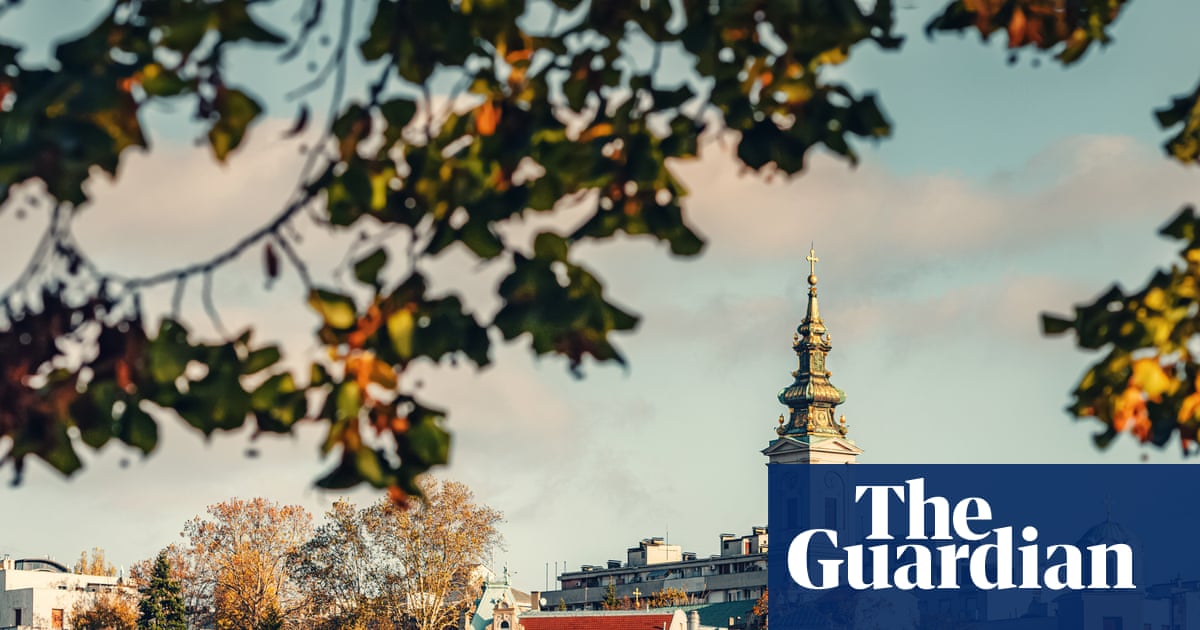
A local’s guide to Belgrade: the best sights, restaurants and nightlife in a city in flux
Full Article
Original Source
Read the full article at Theguardian →KhanList aggregates and links to publicly available news content. We do not host full articles from third-party sources. Always verify important information with original sources.