
This has been a middling year for Middle Eastern cinema. With Palestine continuing to dominate the region’s cultural discourse and festivals growing increasingly narrow-minded in their selections, critics and audiences alike have found it difficult to get excited about films that offer little surprise and more of the same habitual subjects. There’s a growing disjunction between local audiences for Middle Eastern films and their international counterparts. Middle Eastern viewers crave seeing their lives represented truthfully, insofar as censorship allows. The incessant stream of familiar fest-bait stories about poverty, war, illegal migration, and toxic patriarchy has little of value to them. International viewers, by contrast, are often drawn to the region precisely because of their familiarity with such representations. New MEE newsletter: Jerusalem Dispatch Sign up to get the latest insights and analysis on Israel-Palestine, alongside Turkey Unpacked and other MEE newsletters The decades-long indoctrination of identical narratives and unchanging archetypes into the minds of international viewers has left many with little capacity to accept and enjoy straightforward genres with social commentary delivered in a purer form than that typically catered to by festivals. Preserving artistic integrity while channelling different forms to suit the politics being addressed is the biggest challenge facing visionary artists. What is exceptional about the Middle Eastern films of the autumn and winter seasons is their desire to rework genres into new hybrids that offer ample rewards for both international and local audiences. The overall results may not be entirely successful, but the sheer enterprise of the attempt should be celebrated. Furies For the past seven years, Lebanese cinema has been waiting for a bolt of energy to jolt it out of its doldrums. The debut feature of Beirut-born, Los Angeles-based Rami Kodeih could very well be the film to revitalise a stuttering Lebanese film scene: angry, frantic, uncouth, Furies is a heist thriller realised with a rare mix of panache and perceptiveness. Inspired by the bank robberies carried out in 2019 by ordinary citizens seeking to retrieve their frozen life savings in the wake of the Lebanese economic crisis, the story centres on sisters Maro (Rym Mroue), a hairdresser and single mother, and Dalia (Maria Nakouzi), an employee at a water-truck company and occasional sex worker. When Dalia is diagnosed with uterine cancer, Maro attempts to withdraw her money from the bank, but an apathetic manager turns her down, informing her that under such extraordinary circumstances, the bank is not legally bound to serve its clients. With her sister’s life on the line and no justice system she can turn to, Maro decides to take the law into her own hands and rob the bank with the aid of Sunshine (Issam Bou Khaled), an elderly former Phalangist fighter turned neighbourhood helper, and Hamza (Hasan Akil), a co-worker of Dalia’s who is in debt to a local mobster. 'Mugged and robbed': Worried Lebanese turn to buying guns amid soaraway crime Read More » Few films have managed to convey the pulse, colours, and soul of the Lebanese capital as vividly and lovingly as Furies. Kodeih paints Beirut as a decaying city with a population on perpetual steroids: shouting, quarrelling, embracing, exploiting, and supporting one another. In his astute characterisation and keen eye for capturing the minute details of Beirut life - the food, the blaring pop music, the unmaintained architecture, the distinctive fashion - Kodeih brilliantly conveys the spirit of a city. It is a Beirut defined by glaring contradictions: communal solidarity and sectarian discord; the breakneck speed of daily life and the stagnation of its corrupt politics; the childlike hope for a better tomorrow and the resignation to a state that will never change. No other film in the post-2019 mass-uprising era has captured the depth of frustration and fury over what government-backed banks did to the Lebanese people, or the unbearable injustice inflicted by a failed and fractured political system that has never been held accountable. For those who have experienced a similar indignity at the hands of their impotent governments, Furies offers a cathartic experience, fronted by jaded characters who can no longer take it. Kodeih does not shy away from the uglier facets of Lebanese reality - the hyper-realistic skirmish between Christians and Sunnis serves as a reminder that sectarian affiliation continues to shape social interactions 35 years after the end of the civil war. Furies is not perfect. The relationship between the two sisters lacks depth, and the car chase in the final stretch of the picture is awkwardly staged, but these are minor quibbles for an ambitious project that entertains, provokes, and emotionally immerses with a confidence and unassuming quality rarely glimpsed in Lebanese cinema of the 21st century. It is highly commendable and possibly the best Arab film of 2026. A Bit of Light Ali Asghari is swiftly becoming one of Iran’s most internationally acclaimed filmmakers: a bold voice documenting the impact of new and old political maladies on a diverse populace in perpetual change. His latest production - miraculously written, shot, and edited in the immediate aftermath of the burgeoning war - is the opposite in tone and aesthetics to last year’s incisive satire, Divine Comedy: a reimagining of Abbas Kiarostami’s iconic Taste of Cherry, set in Tehran in February 2026, days before the American and Israeli strikes on the country. Unfolding over the course of 24 hours, the film follows Arash (Misagh Zareh), an idealistic physician who decides to kill himself. Still haunted by the treatment of protesters during the 2025-26 demonstrations and the repressive measures the government forced upon him while he was attempting to save them, Arash has been struggling with unbearable guilt and a terminal sense of futility he can no longer live with. A Bit of Light was filmed in the aftermath of US-Israeli strikes on Iran (Seven Springs Pictures) In Arash’s spry city odyssey, Asghari shows a city and a people determined to carry on despite the looming devastation. Torn between the brutality of the Islamic Revolutionary Guard Corps and the barbarism of the American-Israeli siege, Tehran’s middle class finds refuge in art, empathy, solidarity, and resilience with one another. The forthcoming attack acts as a recurring comic motif in the story. Arash’s doorman volunteers to put adhesive tape on his office’s windows to protect him from the strikes - an ironic act that several other characters also adopt. The doorman reassures Arash that the US will only target strategic locations and will not harm civilians because “Trump won’t lie!”. Asghari’s perfectly calibrated mix of gallows humour and pathos provides a deeply humanistic and grounded view of a society on the brink of apocalypse. As worn-out individuals like Arash reach their wit’s end, the director poses a central question facing every free-thinking person residing under an authoritarian regime: in the midst of this pervasive violence, how can you carry on? Asghari doesn’t offer any easy answers, but in the brief moments of consoling interactions - a dinner, a reading, a touch, a dance - this bit of light can maybe, just maybe, get you through the night. Falling House Less convincing is Mohsen Gharaie’s domestic thriller Falling House. Farhad Aslani plays Rachid, a veteran low-level prison guard who gets suspended after being accused of taking bribes. His small family, consisting of his wife and two daughters, is being forced to evacuate their current home, which faces demolition because of a municipal redevelopment project. Fighting on multiple fronts, the depleted Rachid is shocked when he learns that his daughter Ensi (Laleh Marzban) is plotting to leave Iran and relocate to Turkey to pursue her modelling career. On hope: What Iranians hold on to in uncertain times Read More » As his paranoia intensifies, Rachid locks up his family and turns his doomed home into a small prison. A cat-and-mouse game between Rachid and his daughter ensues as the family bonds begin, like their home, to unravel. Affecting in its first half, the unsubtle symbolism of the narrative later grows increasingly tiresome and obvious. Rachid is the palpable, well-intentioned but dim-witted. He is the unwavering embodiment of the terribly familiar toxic patriarchy the women of the story must battle in order to win their freedom. Falling House is a recogniseable allegory for toxic patriarchy (Seven Springs Pictures) The message is on the nose and the drama is largely one-note; the successive revelations do not disclose unseen dimensions of the characters so much as pile on more details that do little to intensify the suspense. Solid performances and plight of the female characters make for an intermittently engaging watch. The contrivance of the plot, however, renders Falling House an oversimplified and derivative interpretation of Iranian reality that has been tackled in the same formulaic fashion countless times before. No Paradise If You Are Killed by a Woman The fifth feature of Iraqi-Norwegian director Halkawt Mustafa is the Kurdish answer to American Sniper, with a female protagonist. On paper, it sounds like a recipe for disaster, but the film ultimately works, emerging as a competent action thriller with a delicious feminist twist. Vyan (Avan Jamal) is a young Kurdish-Norwegian woman who travels to Iraq in 2014 with her family to connect with her roots. Before long, the Islamic State group (IS) captures Mosul, kills her parents, and kidnaps her along with her younger sister. Vyan and her sister are sold into slavery. After some time, Vyan murders her captor, escapes, joins a Peshmerga unit, and transforms herself into the most skilled sniper in the unit after killing more than 100 IS fighters. Scarred, injured, and traumatised upon her return to Norway, Vyan learns that her sister is still alive and has been forced to marry an IS commander. She quickly decides to return to Mosul to save her. Anyone expecting new insights into the fraught subject of IS will be disappointed, for No Paradise is a classical action yarn through and through, albeit a compelling and well-executed genre exercise. But by placing Vyan at the heart of the action, Mustafa restores agency to the women victimised by IS, upending the pendulum of power by pitting Vyan against every male aggressor she encounters. No Paradise counters and defies mainstream Middle Eastern cinema’s dominant conception of the alpha-male action hero, offering a fresh and invigorating twist that nonetheless remains largely confined to rigid narrative conventions that leave little room for greater dimension or depth. Elbaraneya The debut feature of Danish-Egyptian director Ashgan El Hamus is a family drama set in the Egyptian countryside that initially appears to be a documentary, thanks to its naturalistic performances, realistic backdrop, and lack of artifice. But Elbaraneya is a work of fiction, featuring a scripted narrative performed by a cast of mostly non-professional actors and shot in the manner of cinema verite. Hamus’s chosen aesthetic grounds the story in a relatable Egyptian reality - a rarity amid censorship this decade - yet it also exposes the limitations of the director’s filmmaking. The film centres on Amal (Reem Amer), a young pregnant woman residing with her family overlooking a jasmine and wheat farm that has been their main source of livelihood. Elbaraneya was filmed with a cast of largely non-professional actors (Ashgan El Hamus) Their traditional life is threatened when an investor offers Amal’s father money to buy his land in exchange for a more comfortable modern house in Cairo. Vehemently resistant at first, the family begins to entertain the possibility of this transition as they gradually reflect on what the land means to them: a deep-rooted part of their identity, an unsustainable old way of life, or a minor facet of their unshakable family connection. Hamus zeroes in on exceptionally observed details, showing an Egyptian life on the brink of extinction: the old-fashioned 1980s furniture, the open-air, if sparse, hangouts, the absence of private spaces. This is a vision of an impoverished yet self-contained world miraculously untouched by President Sisi’s sweeping neoliberal “progress”. With the absence of work opportunities and the impossibility of class mobility, the youngsters of the village find refuge in TikTok and social media. The virtual world becomes the sole vehicle for unloading the youth’s unrealised dreams. Equally shrewd is Hamus’s employment of music. The phony jubilation of Amr Diab’s manufactured pop is relegated to the background, rendered as listless clamour detached from the reality of Amal and her generation. The unruly electronic shaabi beats of Mahraganat, by comparison, provide the primary soundtrack to their lives: a disordered sound for a discordant generation. Only when Amal ventures into Cairo - a cacophony of disharmonious noises and sights and relentless commotion - in the closing stages of the film do we recognise the grave loss marked by this inevitable transition. For Amal’s family, their fortunes will not change, but their lives, and the simple dynamics of their relationship with one another, may never be the same again. There’s undeniable richness in both the themes and characterisation, yet the unjustifiable adherence to a form rendered so rigidly ends up becoming a straitjacket for the film’s unrealised potential. Different parts of the picture offer ample opportunities for magic, for visual splendour that could have pushed the material to soar. Alas, Hamus’s cinematic timidity robs the film of the fundamental poetry needed to augment both the themes and emotional makeup of the story. There’s lots to admire and laud in Elbaraneya, yet the frustration that has entrapped this writer stems from the conviction that the film had a realistic shot at greatness with more imagination and adventurousness. Instead, it settles for a middle ground that leaves a lot to be desired.
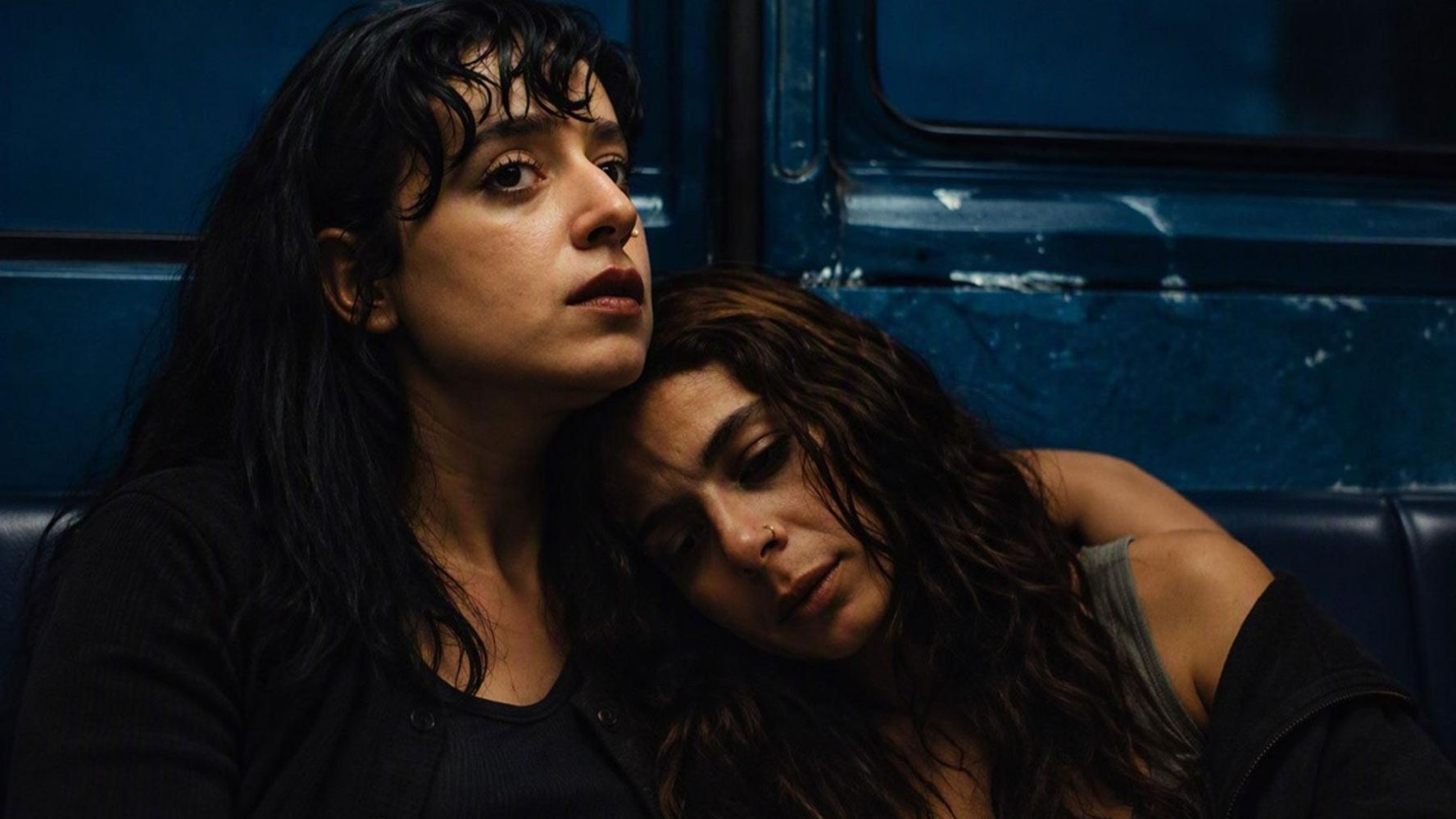
A Lebanese bank heist towers over this winter's Middle Eastern film offerings
Full Article
Original Source
Read the full article at Middleeasteye →KhanList aggregates and links to publicly available news content. We do not host full articles from third-party sources. Always verify important information with original sources.