
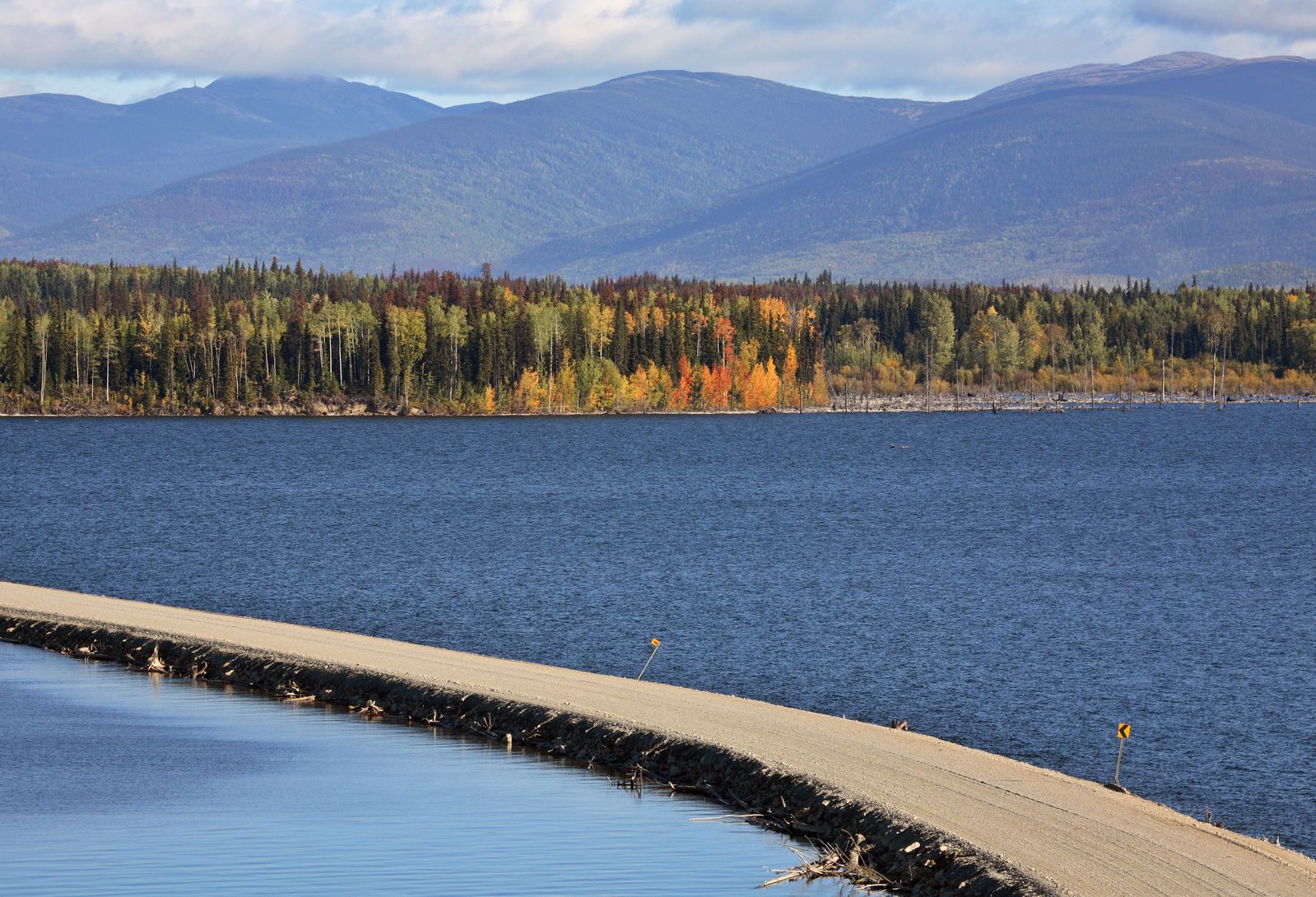
The floating forest appeared in a well-mapped reservoir in British Columbia. Its presence and vanishing act have puzzled locals and officials at the power utility that operates the lake, but other similar islands exist elsewhere September 3, 2026 3:15 p.m. Williston Lake is the seventh-largest reservoir by volume in the world. Bobloblaw via Getty Images In late July, a boater on the West Coast of Canada noticed something strange. A huge, forested island was floating in British Columbia’s Williston Lake, one of the largest human-made reservoirs in the world. The mass—full of trees, birds and other animals—puzzled locals, who had never come across it before, and it was not on any maps. “It was a pretty amazing sight to see, never seen anything like that in my 40 years in this country,” says Rocky Avery, a friend of the boater and local resident, to Matt Preprost at the Canadian Broadcasting Corporation. In August, he posted photos and a video of the island on social media to notify people of its presence ahead of an upcoming fishing derby. They soon went viral. Bob Gammer, a spokesperson for B.C. Hydro, the government-owned power utility that runs the reservoir, initially thought the photos and video were a hoax created with generative artificial intelligence. “In the days of A.I., you really needed another form of verification or evidence like a corroborating eyewitness account,” he tells Leyland Cecco at the Guardian. “And soon, we got that.” A satellite image snapped on July 21 confirmed that the island was, in fact, real and in the reservoir. The picture shows a green mass about 150 yards long and 75 yards wide—nearly the size of two football fields—floating in the water. The island then disappeared in mid-August. But just days ago, on August 31, B.C. Hydro found it floating nearly 20 miles northwest of its original location.Update: we found the island.After briefly becoming one of Canada's most famous islands and making international headlines, the floating island on Williston Reservoir has been found.Turns out it wasn't missing. Just drifting. All told, it travelled about 30 km in 15 days… pic.twitter.com/h1GSvEcV25— BC Hydro (@bchydro) September 2, 2026 So, what exactly is this vanishing island? Gammer tells Adeel Hassan at the New York Times that the island may have formed from logs and woody debris that accumulated over many years along the shoreline. As the materials gradually decomposed, plants and trees took root and created a habitat. The mass of plant and animal life may have moved away from the shore because the reservoir is at its highest in 14 years, due to high winter snowpack and heavy summer rain, Gammer tells the Guardian. “Suddenly, there are all of the right conditions to potentially lift this kind of little island from where it was and bring it out into open water.” However, not everyone is convinced by this explanation. Geologist John Joseph Clague of Canada’s Simon Fraser University tells the Canadian Press’ Nono Shen that “there is erosion occurring, and trees do collapse into the lake, but they don’t kind of form this very large mat of forested material.” For now, he remains perplexed by the mysterious mass. Whatever its origins, it’s “a phenomenal sighting,” says Rebecca Helm, a marine ecologist at Georgetown University, to Rebecca Dzombak at National Geographic. Similar floating islands have been spotted elsewhere in recent years, including a well-known one called the Forty Acre Bog in Wisconsin’s Lake Chippewa. They used to be more common before widespread logging and damming, which blocks the flow of wood downstream. “This island feels more like an old ghost than a shocking new occurrence, something humans used to see much more regularly,” Helm says. Fun fact: Bog pushers The floating “islands”—technically, bogs—in Lake Chippewa often drift toward a bridge. So nearly every year, locals use boats to push the navigational hazards away from the structure. While the island is generating a lot of buzz across Canada and beyond, Gammer warns people to keep their distance. He notes to the Guardian that the base is probably a “delicate, thin layer of logs.” “It’s just naturally unstable,” Gammer tells the Canadian Press. “So, it’s unsafe to climb onto the island or land a boat on it. It would be dangerous to do that.” You Might Also Like Get the latest stories in your inbox every weekday. More about: Canada Ecology Environment Forests Geology Plants Trees Water
A Lake in Canada Got a Mysterious New Island. Then, It Disappeared—and Now It's Back
Full Article
Original Source
Read the full article at Smithsonianmag →KhanList aggregates and links to publicly available news content. We do not host full articles from third-party sources. Always verify important information with original sources.