
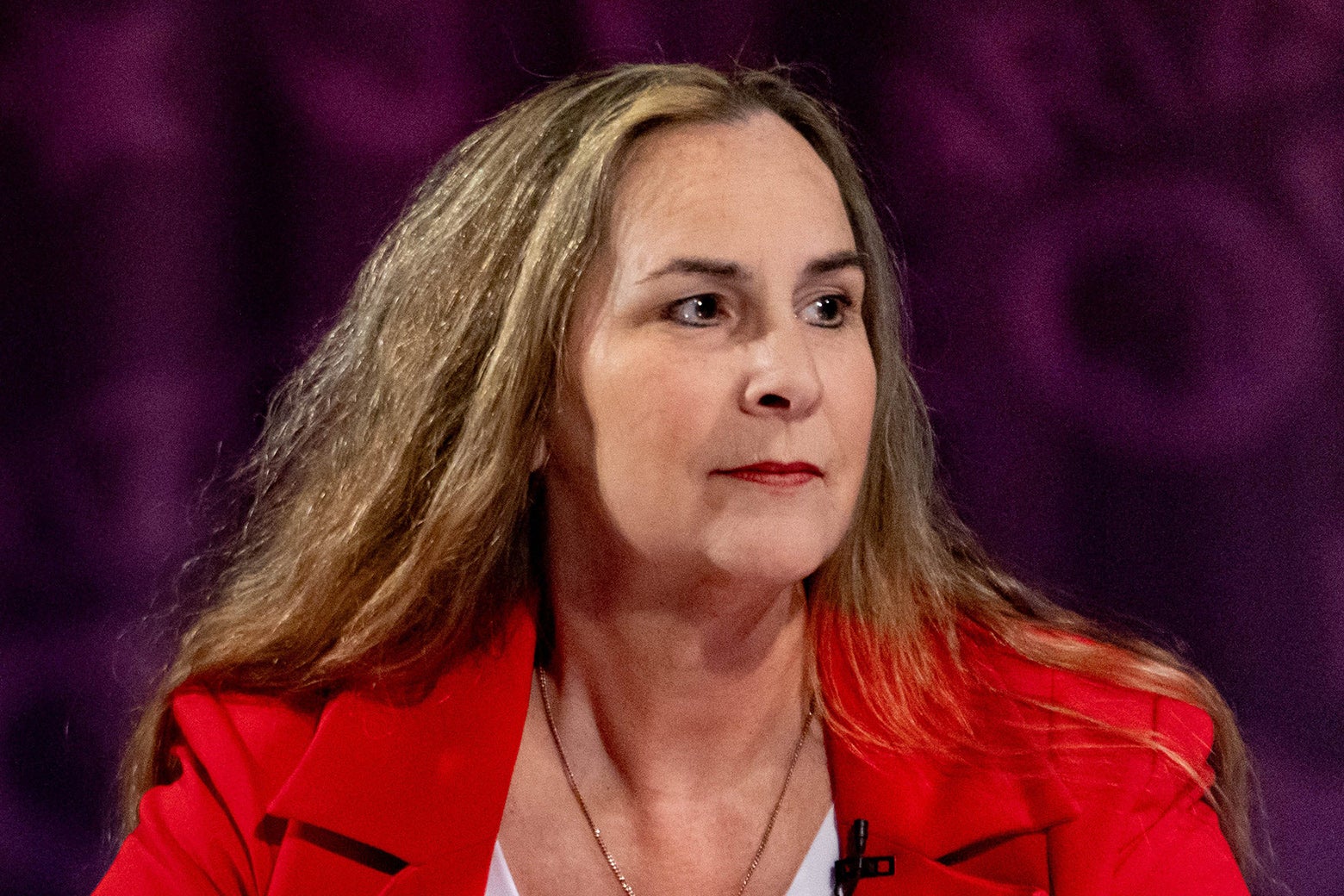
Politics A Shocking, Painful Reminder of Why It Matters to Have Women in Office Bernadette Greene-Placentia says she was raped while campaigning, a horrific story that reminds us about the importance of representative democracy. Bernadette Greene-Placentia at a debate in Phoenix on May 12. USA Today Network via Reuters Connect Sign up for the Slatest to get the most insightful analysis, criticism, and advice out there, delivered to your inbox daily. The story Bernadette Greene-Placentia has told reporters and constituents about what happened to her on an early August morning is the exact kind of thing women are raised to fear: a stranger rape, with violent and terrifying men coming out of the darkness and attacking a lone woman. Greene-Placentia, though, isn’t an average woman. She’s running for Congress, and as she campaigns for Arizona’s 8th Congressional District Seat, she’s also speaking out about what happened to her. Doing so is brave. But it’s also a reminder of why representative democracies have to be representative. Women the world over live with the white noise of threatened sexual violence, a reality so pervasive it becomes nearly invisible. That threat shapes how we move through the world, who we trust, and where we go. And it shapes our politics. Greene-Placentia says that she was attacked while out repairing campaign signs around 2 a.m. Two men snuck up behind her, hit her over the head, and raped her. Her memory of the events, she says, are spotty—she believes she was concussed. It took her some time to even tell her own family, let alone the police. Eventually, though, she began talking about what happened. And now she’s gone public. Nearly every woman, I suspect, has had the kind of heart-pounding moment in which we fear being attacked in the way Greene-Placentia says she was. It’s the reason so many of us walk to our cars with our keys poking through our fingers, why we tense up when someone walks too closely behind us on a dark street. It’s the reason so many of us make our lives smaller, or at least more expensive: Why we pay for taxis instead of walking home, why we attend self-defense courses or forgo night shifts, why we leave parties early or skip solo trips, why we carefully plan running routes and hiking paths, why the unluckiest among us wind up with thousands of dollars in therapy bills and lost wages. One in five American women will either be raped in her lifetime or survive someone attempting to rape her. I think it’s safe to say that close to five in five will fear being raped. Young women—the group most at risk for being raped—are also the country’s most pro-choice voters. That isn’t to say that the prospect of sexual violence is the single deciding factor for making young women particularly supportive of abortion rights. But it stands to reason that the possibility of getting pregnant pushes many young women into the pro-choice camp. And realizing that many abortion opponents want to criminalize the procedure even in cases of rape—something so many women fear—no doubt influences many women’s politics. Greene-Placentia is running against MAGA incumbent Abe Hamadeh, who had, in an earlier run for Arizona attorney general, said he would prosecute abortion providers under Arizona law. At the time, that law was among the harshest in the nation and had no exceptions for rape or incest. Hamadeh’s comments were controversial, and he narrowly lost the election; Arizona’s abortion law has also since been liberalized. But Hamadeh is clear he opposes abortion. There are of course plenty of women who oppose abortion, too; some even head the nation’s most influential anti-abortion groups. But it also doesn’t seem a coincidence that as the Republican Party has become more male, it has also become much more anti-abortion. And while women have surged into elected office, it’s largely been as Democrats. Even women who embrace traditional conservative principles (small government, free markets, the family as the primary organizing unit of society, a muscular foreign policy) or MAGA conservative ones (whatever Trump says) cannot escape the reality of living in a female body, which is that even if you make all the “right” decisions, you can still be subjected to extreme male violence—and if that violence is rape, it can be compounded by a pregnancy you do not want to bear. Many of the women of today’s conservative movement, even those who once found hyper-masculine and cartoonishly misogynist MAGA antics to be funny and edgy, are coming to the realization that they are not the exception to the MAGA woman-hating rule—that even if you’re a cool girl, you’re still a woman surrounded by misogynists, and you’re the object of their hate. Ten years ago this week, a tape came out of then–presidential candidate Donald Trump boasting about grabbing women’s genitals, and then his administration went to great lengths to withhold the Epstein files, attacked abortion rights, and intervened on behalf of the Tate brothers, arguably the world’s the most famous and virulent misogynists, who are also criminally accused rapists and sex traffickers. (They deny the accusations.) It’s no wonder Trump’s support among women is tanking. Women are not inherently virtuous, and we certainly aren’t inherently liberal. The country should have more female legislators because the country’s legislatures should represent the country. But the country should also have more representative—and more female—legislatures because women really do have life experiences that are different than men’s, and that shapes how we understand politics, policy, and the law. Central to those differences are our ability to get pregnant, our physical vulnerability to crimes including rape, and the shadow of fear that follows us as a result. Greene-Placentia’s story is an experience that, heartbreakingly, millions of women have also survived—and that some haven’t. She describes an experience that nearly all women fear. That she’s speaking out about it puts one more crack in the lie that women who are raped should carry any shame. And it is another reason more women should be making the laws that shape women’s lives. Congress House of Representatives Sexual Assault Women Democracy Arizona
A House Candidate Says She Was Raped While Campaigning. It’s a Horrific Account—and an Urgent One.
Full Article
Original Source
Read the full article at Slate →KhanList aggregates and links to publicly available news content. We do not host full articles from third-party sources. Always verify important information with original sources.