
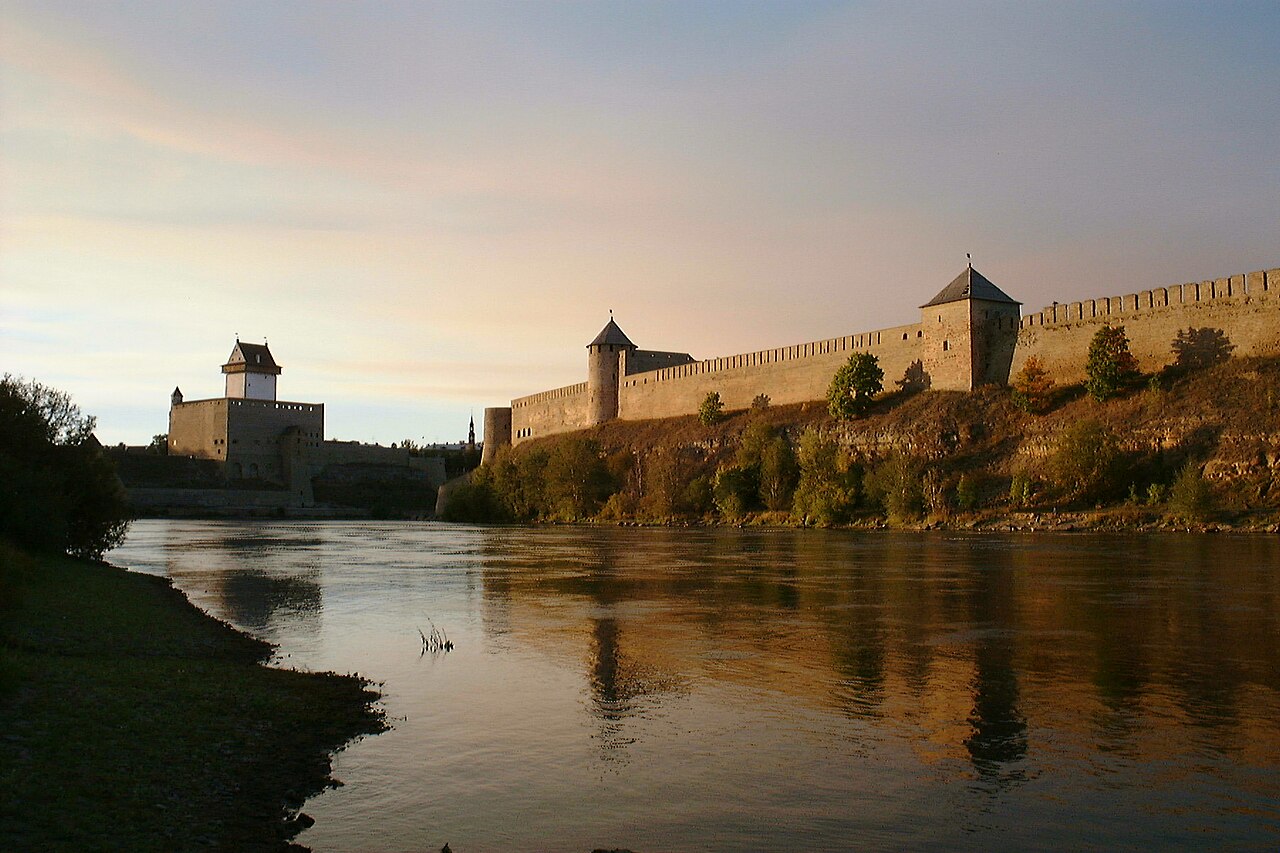
“Narva is next.” That short sentence encapsulates Western scaremongering and the pernicious recycling of Kremlin talking points about the Baltic states’ supposed vulnerability. The Estonian foreign ministry has pushed back, with a snappy 30-second video highlighting the eastern frontier city’s attractions and urging people to make it their “next” tourism destination. Also catching the headlines is a new survey by Rumavi, a Singapore-based advisory group, which says that Estonia is the best place in the world to relocate to, closely followed by Lithuania. The Czech Republic is also in the top ten, along with Taiwan. The survey ranks countries on 24 topics including public administration, tax-friendliness, comfort and healthcare, all from the point of view of different categories such as digital nomads, retired people and entrepreneurs. Precise rankings in these surveys should not be taken too seriously, not least because a tiny difference in the score has a big effect (Lithuania, in sixth place, is only two points ahead of Latvia, in 19th place; the real conclusion is that all three Baltic states are great places to live). But it is striking that perceptions of geopolitical risk do not affect the survey’s outcome. Persistent sabre-rattling from the Chinese mainland does nothing to harm Taiwan’s rating. Estonia scores poorly only on “climate comfort” and scores particularly highly on “safety”. Perhaps even more important is the potential effect. Attracting foreigners is vital for countries that are still trying to catch up with the damage done by communism. As Marcin Piątkowski, a Polish economics professor, points out in a chapter in a newly published book, “The Future of European Integration” the “golden age” of post-1991 transition is coming to an end. The EU-11 countries of central and eastern Europe have done fantastically well, not least thanks to their membership of the European Union. Never in their history have they been closer to the continent’s western half, measured in income and quality of life. But the rate of convergence is set to slow in the next decade, he argues, because of ageing populations, poor-quality universities, intensifying competition from China, weak research and development, and low public investment. “By 2040 or so,” he writes, “the whole region may even stop converging and never reach the EU-27 level of income.” Piątkowski argues for fresh emphasis on five factors: institutions, investment, innovation, inclusiveness and immigration. I am not fully convinced by his thesis. I doubt the existence of a “region” stretching from Estonia to Romania, particularly if it excludes Ukraine, the continent’s security bastion, bread-basket and new defence-industrial superpower. And the countries of “western” Europe have so many problems of their own.
A Golden Age in central and eastern Europe, which became one of the best places in the world to live
Full Article
Original Source
Read the full article at Euobserver →KhanList aggregates and links to publicly available news content. We do not host full articles from third-party sources. Always verify important information with original sources.