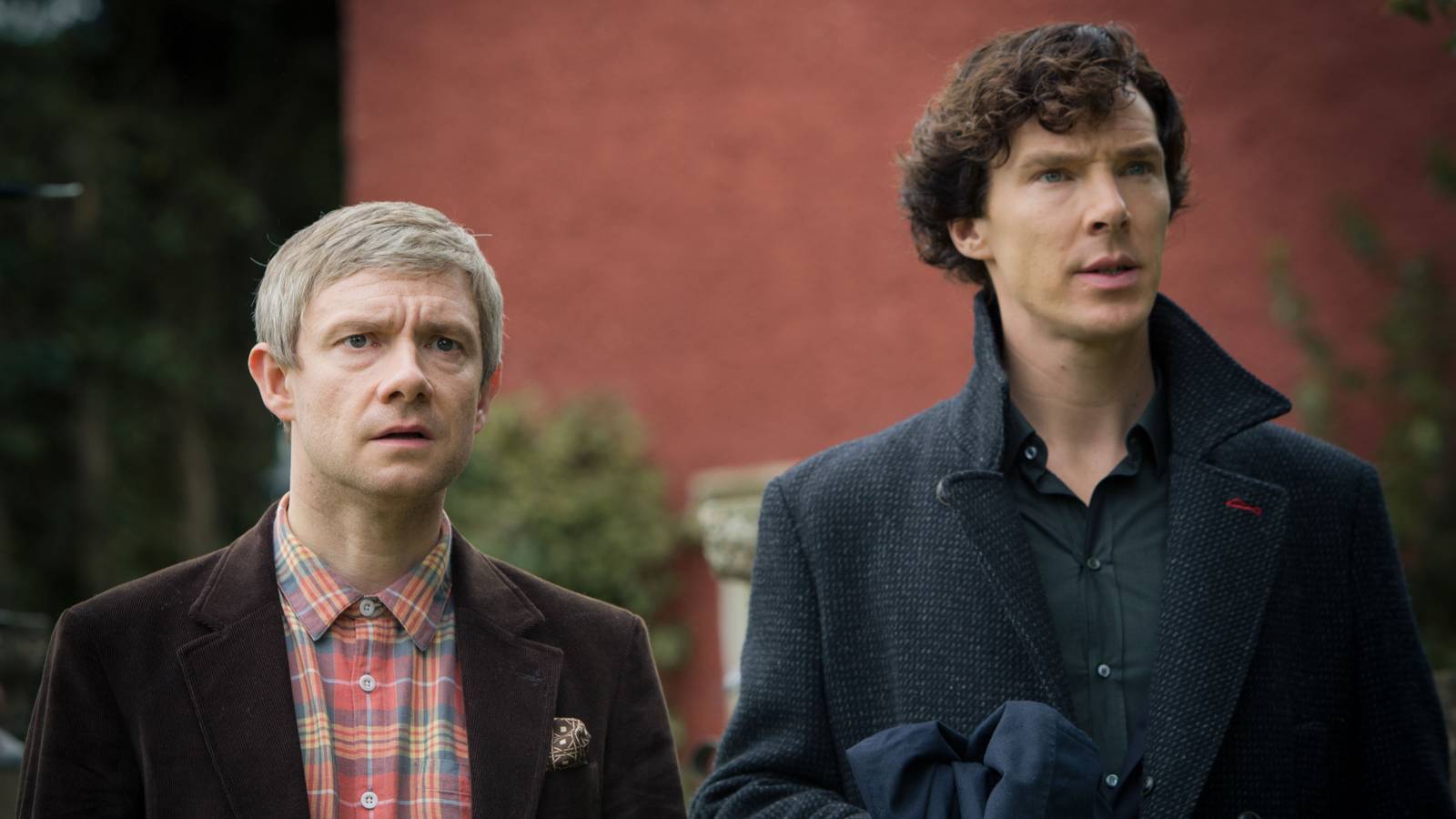
Published Aug 9, 2026, 10:00 AM EDT Adrienne Tyler is a movies & TV features writer, with a focus on horror. She has written for Netflix, FanSided, & more. She was a regular guest on the Netfreaks podcast and was a YouTuber at some point. Guillermo del Toro said “hi” to her once. The BBC’s Sherlock has some great quotes, and one of its best ended up foreshadowing the show’s chaotic downfall. The list of the best detective TV shows of all time has many that were inspired by Sherlock Holmes, as well as some adaptations of the Great Detective. Among them is the BBC’s Sherlock, created by Steven Moffat and Mark Gatiss, and which brought a modern version of the characters from Sir Arthur Conan Doyle’s stories. Set in modern-day London, Sherlock followed Holmes (Benedict Cumberbatch) and John Watson (Martin Freeman) as they took on different cases, adapting some of Conan Doyle’s mysteries to modern technology and more. Sherlock’s first two seasons were a big success with critics and general audiences, but the show crashed and burned in its final two seasons. Still, Sherlock is widely regarded as one of the best TV shows of all time. The first two seasons of Sherlock delivered some of the show’s best quotes, many of them through Andrew Scott’s Jim Moriarty, but seasons 3 and 4 also had some great ones, amid the mess. Sherlock season 4 has not only the show’s toughest episode to watch but also one of the best quotes (and in that same episode), which ended up foreshadowing the chaotic downfall of the show, which started at the end of that episode. Sherlock's "People Always Give Up After Three" Was A Frustratingly Straightforward Twist The second episode in Sherlock season 4 is “The Lying Detective”, based on the story “The Adventure of the Lying Detective.” The episode takes place after the death of Watson’s wife, Mary (Amanda Abbington), for which he blames Holmes, leading them to distance themselves from each other. While Watson deals with Mary’s death, Holmes has isolated himself and started consuming drugs again. One day, Faith Smith arrives to ask for Holmes’ help after her father, the wealthy entrepreneur and philanthropist Culverton Smith (Toby Jones), confessed to her and others that he would kill someone, but he also used a serum on them that inhibits memory. Holmes takes the case, and it also drags Watson back into action, but the case takes some unexpected and disturbing turns. When all seems to be lost, Holmes pulls a brilliant trick on Smith, revealing he recorded his confession with a hidden recording device in Watson’s walking stick. Before that, Smith tells Watson, Holmes, and a police officer that he got rid of the three recording devices hidden in Holmes’ coat, believing he has won. Holmes reveals the one in the walking stick by saying that there must be something comforting about the number three, as “people always give up after three.” It’s a great quote and reveal, very on-brand with the character and reminiscent of the Holmes from the first two seasons, but the show ruined the line with the twist at the end of the episode. The episode ends with Watson at a therapy session, with his therapist being revealed to be Mycroft and Sherlock’s sister, Eurus Holmes, who escaped from a high security prison. Holmes’ quote takes a new meaning after the Eurus reveal, which might have been a genius move when the episode came out but not anymore after the show’s final episode and after meeting the secret Holmes sibling. People Gave Up On Sherlock After Three Too Funnily enough, Holmes’ quote about giving up after three also applied to the audience after the reveal of Eurus Holmes. This is widely regarded as the moment that officially killed Sherlock, more so as it pretty much came out of nowhere. Eurus’ existence was casually alluded to in “His Last Vow” in a comment by Mycroft that the audience didn’t care much about, and she later appeared in disguise in “The Six Thatchers” before her full reveal in “The Lying Detective.” Eurus was the big villain in Sherlock’s final episode, where she was supposed to show that her intelligence was superior to that of her siblings, and I say “supposed” because her big, evil plan made no sense. Of course, she was ultimately outsmarted by Sherlock, and she was re-institutionalized. Everything about Eurus was heavily criticized, and it stands as one of the worst twists of the decade. At least Sherlock made such a terrible narrative decision right at the end of the show, as had there been more episodes after that, the audience would have fully given up on the show, fulfilling Holmes’ words of giving up after three. Release Date 2010 - 2017-00-00 Network BBC One Showrunner Steven Moffat Directors Paul McGuigan, Nick Hurran, Euros Lyn, Jeremy Lovering, Rachel Talalay, Colm McCarthy, Toby Haynes Writers Steve Thompson Franchise(s) Sherlock Holmes Creator(s) Mark Gatiss, Steven Moffat
A Genius Sherlock Quote Foreshadowed The BBC Show's Own Downfall
Full Article
Original Source
Read the full article at Screenrant →KhanList aggregates and links to publicly available news content. We do not host full articles from third-party sources. Always verify important information with original sources.