
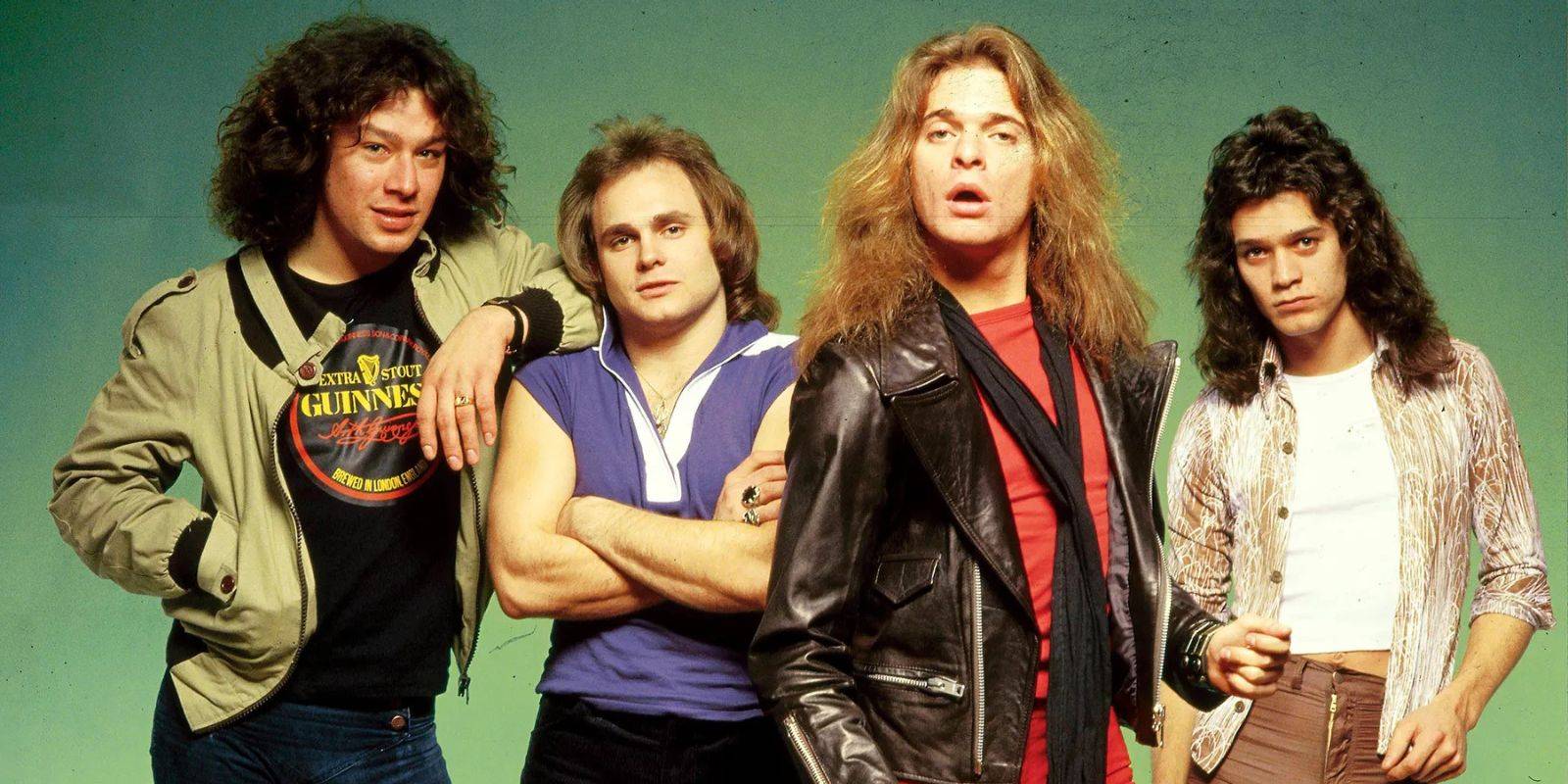
Image via Rolling Stone Published Sep 4, 2026, 5:59 PM EDT Michael Christopher is a music journalist, author, and historian who has spent years interviewing artists, covering concerts, and writing about the stories behind the music. His work focuses on rock, metal, alternative, post-punk, indie, and pop music, with an emphasis on artist interviews, music history, and cultural trends. Whether he's talking with a new artist or digging into the legacy of a legendary band, his goal is to provide readers with context, perspective, and a deeper understanding of the music they love. Sign in to your Collider account Thirty years ago this week, Van Halen had a chance to pull off one of the greatest rock reunions imaginable. The original lineup – Eddie and Alex Van Halen, David Lee Roth and Michael Anthony – stood together at the 1996 MTV Video Music Awards, marking the first time the four had appeared publicly together since Roth left the band in 1985. For a few minutes, it looked like the impossible had finally happened. What followed was one of the strangest moments in the band's history, with Roth apparently convinced he was about to be back in the band while the siblings Van Halen had other ideas. The reunion quickly went from triumphant to uncomfortable, and Roth and the brothers were barely on speaking terms again by the time the night was over. In retrospect, it was almost a harbinger for everything that followed, though no one could’ve predicted just how bad it was going to get. Over the next three decades, every move by Van Halen has been tainted by missteps both egregious and trivial. From picking the wrong lead single to excluding a beloved member from a long-awaited reunion to puzzling decisions concerning reissues, it’s been a frustrating road for fans and one that’s sufficiently damaged the legacy of one of America’s greatest rock bands. 12 The Roth Reunion That Wasn’t: Part I Image via Everett Collection. Van Halen had already survived Roth's departure and thrived with Sammy Hagar. But things soured with the Red Rocker as the tour to support 1995’s Balance wound down, and when the record label came calling for a couple of new songs to tack onto a Van Halen greatest hits collection, Hagar wanted nothing to do with it. Tensions escalated, and it ended with the singer’s exit. Whether he left or was fired still depends on who is telling the tale. Coincidentally, Roth was sniffing around the VH camp, wanting to know how his era was going to be represented on the compilation. He had reached out to Eddie, and the two got on so well that the guitarist invited him to the studio and work on a track or two. To the frontman, that signaled he was back in the band. The MTV VMAs appearance on September 4, 1996, where they presented the award for Best Male Video in front of cheering peers and dozens of artists influenced by Van Halen, all but confirmed it. Not so fast. Minutes after coming off the stage, Roth and Eddie got into it verbally and, if you believe the latter, told his one-time singer, “You ever speak to me like that again, you better be wearing a cup.” While the awards show appearance was the lead story at the watercooler the next day, the rekindled flame was already extinguished. Roth soon put out a press release saying he was lied to, an unwitting participant in a publicity stunt, and Van Halen countered with a promise to make music with a new singer. One month to the day of the MTV Video Music Awards fiasco, Extreme’s Gary Cherone was named the next Van Halen singer. 11 Leave It to Van Halen to Screw Up a Greatest Hits Image via Warner Bros. Records Best Of – Volume I, the compilation that many point to as the flashpoint to the whole mess in 1996, came out in late October of that year. In a particularly Van Halen twist, neither frontman represented on the collection was actually in the band when it was released. Out of 17 tracks, 10 were from Roth’s tenure – including two new songs – and seven from Hagar’s. “Runnin’ With the Devil” was an obvious choice for the anthology: It opened Van Halen’s 1978 debut, was one of the few songs Roth performed at virtually every show, and even served as the band’s walk-on music at the VMAs. Yet the wrong mix was used on the first pressings, flipping the second and third verses. The same error resurfaced on the Detroit Rock City soundtrack three years later and remains on streaming services. 10 Lightning Strikes Twice…Not Three Times Many might consider the selection of Gary Cherone for the third Van Halen singer as a misstep, but that’s too easy. There wasn’t a better choice at the time than the Extreme vocalist in terms of who could pull off any era of the band. He wasn’t a complete unknown, but he wasn’t a household name either. Interestingly, he wasn’t the first choice. Skid Row’s Sebastian Bach was considered, as was bluesy songstress Sass Jordan. Nashville-based singer/songwriter Mitch Malloy had even been offered the gig, but once he saw the Video Music Awards and the reception Roth received, he wisely backed out. And despite the circuitous route the clown car took to get there, the Cherone experiment had the potential to be at least marginally better had things been done differently. When he entered the soap opera, the band went right into recording mode as fans seethed for more than a year over the Roth hoodwinking in favor of the “More Than Words” guy. The band came out of hiding with Van Halen III in March ‘98, which debuted at No. 4 on the charts but ultimately tanked. “Without You” was a strong first single, but beyond that, nothing else connected. It didn’t have enough of that classic, carefree Van Halen attitude and was too abstract and esoteric on the whole. Critics trashed it. It quickly became clear the LP was an Eddie Van Halen solo album by all intents, as he not only handled guitar, but played most of the drums and bass on the record – he even sang on a track. “It was basically Eddie’s baby,” Cherone said. “The songs, if we nurtured them, I think there was a few gems on that record. It was rushed in a sense that we didn’t write enough material for it. We really became a band after the tour. If I was to do it all over again, it woulda been great if I joined the band, went on tour and played some hits, maybe a new song or two – and then do a record. Then maybe, maybe there woulda been a better chance for an audience to embrace the third singer.” Instead, as they entered the studio in 1999 for a second try with Cherone, the expectations had plummeted. 9 The Roth Reunion That Wasn’t: Part II Image via Fryderyk Gabowicz/DPA/Cover Images Three years and one month after Gary Cherone had been announced as the third frontman for Van Halen, a joint press release quietly went out saying he would be leaving the group to pursue “new musical ventures.” No amount of spin, however, could cloud the fact that the move was a total failure. Musically, it’s one the band would never quite recover from, and they wouldn’t release a new studio album for almost a decade and a half. In the immediate wake of yet again being without a lead singer, Eddie Van Halen finally got his hip replaced. Then, in 2000, he received a hush-hush cancer diagnosis and began to receive outpatient treatment. Around this juncture, Van Halen began quietly working with David Lee Roth on new music unbeknownst to anyone outside their close-knit inner circle. Nobody wanted a repeat of the 1996 debacle, and all agreed it was best to keep it clandestine. Roth’s vocals were good as they’d been in some time, as he’d spent much of 1999 on the road. Once the tracks were completed, the plan was to head out on the road under the banner, “Van Halen with David Lee Roth,” with the idea of winning back a dissatisfied fanbase. By all accounts, the music was on par with the best material they’d ever made, as Roth revealed in the spring of 2001 via his official website, “the hands fell off the clock, ladies and gentlemen, and we wrote three astonishing tunes.” He added he was “in the shape of my life” and “ready to go.” One week later, Eddie broke the news that he was indeed battling cancer, effectively shutting down any sort of reunion talk, which he blamed on lawyers for not coming to pass. “These cats had me so beat down and confused, it made the cancer seem like a tiny zit on my ass,” he told Maximum Golf. “Everything seemed to fall apart after these guys got involved. I mean, we used to do it on a handshake. At this point, I don't have a clue what's going on.” He declared himself cancer-free just over a year later, but there was still no movement on the Van Halen front, leaving the unthinkable to happen as Roth and Hagar joined forces for a 2002 co-headlining tour. It was a predictable mismatch, with Hagar looking at it as a collaboration and Roth viewing it as a competition, though some good shows came out of it, with audiences going home the winners and getting to hear some of the best of both eras of VH. 8 The Catastrophic Reunion with Hagar Image via Sarah Conrad/startraksphoto.com Early in 2004, news spread that Van Halen was hitting the road; the dates were locked in, as were the venues. What wasn’t reported with any level of certainty was who was singing. Would it be Roth? Hagar? A fourth singer? No one seemed to know. It was still, for the most part, the Wild West in terms of the internet, and speculation on mailing lists and message boards ran rampant. There was no press release, no fanfare whatsoever, just a news item on the band’s website in late March with an updated picture and the caption: “Eddie, Alex, Mike & Sammy Hit the Road” followed by a list of dates that began in June. It was an incredibly bizarre way to announce the return of Hagar after eight years. The plan had been to record a full album, but Eddie was in no shape for that. His drinking and drug use had escalated to new heights, and he had taken to always having a cheap, $5 bottle of wine on - and in - hand. It was so bad that Roth, who seemingly would’ve sold his soul to be officially back in the band, declined to reunite due to the guitarist’s condition. “He looked like he hadn’t bathed in a week,” Hagar would later say in his tell-all memoir Red: My Uncensored Life in Rock. “He certainly hadn’t changed his clothes in at least that long.” A trio of new tracks was all the guitarist could muster, and even they left a lot to be desired. “It’s About Time” was a heavy but disjointed number with lyrics that read like a jingle for the tour. “Up for Breakfast” had lyrics so bad, it honestly felt like Hagar was getting his revenge for 1996 and trolling the group. Never the strongest writer, especially when it came to writing about sex, the frontman was barely punching the clock with “Pump it up, pump it up, baby make it bigger” and using cherries and bananas as metaphors for his genitals. The obligatory ballad “Learning to See” was the best of the lot, but for the first time with Hagar, Van Halen was making forgettable music. The songs appeared on a hastily thrown-together two-disc hits collection, The Best of Both Worlds, with a tracklisting that haphazardly ping-ponged between the two main eras of the band. None of the new material featured Michael Anthony, as Eddie decided he would play bass on them. In fact, he didn’t even want Anthony on tour, but Hagar threatened to walk otherwise. “Disastrous” is the phrase most often used when people describe the 80-date 2004 tour. Ticket sales were softer than expected in many markets, and many reviews were negative. Eddie looked like a mess most nights, and his playing reflected as much. He and Hagar were especially at odds. "[Management] kept us apart as much as they could,” Hagar said. “We flew in different jets. We stayed at different hotels. We had our own limos. They had their bodyguards. Mike and I had ours. I stayed in my own dressing room on the other side of the hall. The only time I saw that guy was when we stepped out onstage." Everything that had bottled up came to a head on the final date of the trek in Tucson, Arizona, on November 19. Reports said Eddie kept repeating, “That’s it, it’s over” during the show. He also smashed two of his guitars onstage – something he’d never done before – destroyed his dressing room and looked out of sorts in general. Neither Hagar nor Anthony would ever step onstage with Van Halen again. 7 Eddie Van Halen Scores…A Porn Flick While fans were anxiously awaiting something new from Van Halen after the Hagar reunion went sideways, those who had hopes for fresh music were dismayed when it was revealed in the summer of 2006 that Eddie was contributing two instrumentals and videos to an adult film titled Sacred Sin. The guitarist, who performed all the music himself, referred to director Michael Ninn as “like a Spielberg to me,” and allowed parts of the movie to be filmed at his house. At public appearances throughout the year, the guitarist seemed to give up on caring about how he was perceived, dressing in what could only be described as “bum chic.” He took to wearing motorcycle boots at high-profile events that were held together with gaffer tape, with his unkempt toes and feet sticking out. His disheveled red carpet displays launched dozens of memes. Van Halen, the band, seemed to be the last thing on his mind. 6 The Roth Reunion That Wasn’t: Part III Image via Everett Collection. A reunion with Roth was reported in outlets coast to coast at the tail end of January 2007 and was officially announced February 2. Though the cities and dates would ostensibly come later, 40 shows were planned for the summer. “I am having a blast playing songs we wrote with Dave, and I can’t wait to get on stage and get it on with and for the fans!” Eddie said in a statement. “I am very excited to get back to the core of what made Van Halen.” Two weeks after news of the tour broke, on February 16, Rolling Stone ran the first picture with the current Van Halen. Roth looked smart in a striped blazer and jeans. Alex looked like he always did, stoic and in sunglasses. Eddie was smiling, wearing a striped stocking hat and holding his iconic red, white, and black guitar. As for Michael Anthony, he had been excommunicated by the band in favor of Eddie’s 15-year-old son, Wolfgang Van Halen. The irony wasn't lost on fans: The guy often called the nicest man in rock was the one being left out. But the uproar never reached a full boil, as four days later, the tour was “indefinitely postponed.” And by the time it was back on, six months later, another chapter in the tragic comedy of Van Halen was already written. 5 The Rock & Roll Hall of Fame Induction Ceremony Image via Debra L. Rothenberg/startraksphoto.com Had music fans in the early ’00s been asked which band they’d most want to see inducted into the Rock & Roll Hall of Fame just to see what would happen, Van Halen would have been at the top of the list. But just days before the March 12, 2007, ceremony, it was revealed Eddie had checked himself into rehab. "I have always and will always feel a responsibility to give you my best,” the guitarist said in a statement. “At the moment, I do not feel that I can give you my best. That's why I have decided to enter a rehabilitation facility to work on myself, so that in the future I can deliver the 110% that I feel I owe you and want to give you.” The Hall of Fame ceremony scorecard for Van Halen read like a sports team game day roster report. Eddie was out. Alex was a healthy scratch – he wasn’t going if his brother wasn’t going to be there. Roth and Hagar were confirmed, along with former bassist Michael Anthony. Then the producers of the event decided the three could accept their award and speak, but supergroup Velvet Revolver, made up of ex-Guns N’ Roses members and ex-Stone Temple Pilots singer Scott Weiland, would perform a song from each era after inducting the group. That didn’t sit well with Roth. “I don’t make speeches for a living; I sing and dance for my dinner,” he told the Los Angeles Times, adding that the choice “rips my heart out” to skip the event. “It’s just not an option for me to go and watch some other band – who are only performing because they have some new record coming out – do our music,” Roth said. “I have nothing against Velvet Revolver – I’m not familiar with their music – but that was my three minutes and 22 seconds up there.” The resulting Rock Hall spectacle at the Waldorf-Astoria was quintessential Van Halen. Velvet Revolver gave a speech with cookie-cutter, cue-card aplomb, and the two people who went up to accept the VH induction weren’t even in the band anymore. Velvet Revolver played “Ain’t Talkin’ ‘Bout Love” and an unrecognizable snippet of “Runaround” in a heavily criticized performance. Then Hagar and Anthony got up onstage with the house band for a rough version of "Why Can't This Be Love." 4 Rewriting the Past with Photoshop Robert Bell/INSTARimage At long last, in August 2007, a press conference featuring the retooled Van Halen took place to announce a 25-date reunion with Roth. A glowing, clean-cut, healthy-looking Eddie beamed that it was “a whole new beginning.” Apparently, for someone in the band’s camp, that meant changing the past. Two days after the press conference, not only were all traces of Michael Anthony removed from the band’s official website, but on the album cover of the 1978 self-titled debut, Wolfgang was Photoshopped in his place. The cover of 1980’s Women and Children First, which featured a group photo, had been excised completely, replaced with text of the band and album name. It all returned to its original artwork in short order, but it didn’t sit well with fans, especially as there was no clarification for why it was done ti begin with or even an acknowledgement that it happened. Did they really believe three decades of history could be deleted with a few digital alterations and no one would notice? And what in the world were they thinking, replacing Anthony with someone who was 13 years away from being born when the LP was released? Years later, Wolfgang addressed the move when he was asked about it on Twitter, saying, “Yeah, and that was some dumbass on the website that did that dumb Photoshop shit. Not a band decision. We were never cool with that. It was ridiculous. Which is why when we found out about it, it was undone immediately.” Why there was no explanation given at the time was simple: Van Halen wasn’t talking. Jovial and forthcoming as they were at the press conference, that was it. No Rolling Stone cover story. No in-depth MTV or VH1 mini-documentary with behind-the-scenes footage. Aside from the occasional interviews given by Eddie to pimp new guitar equipment, the only talking done would be by the music. 3 An Explosive New Album with a Dud Lead Single By 2012, after the 75-date wildly successful tour, most fans had gotten used to the idea that the reunion with Roth was going to be one short of an original member. And while Michael Anthony’s presence – especially on backing vocals – was missed, it was soon obvious that without Wolfgang in the fold, there might not even exist a Van Halen. He provided the incentive for his father to get and stay clean and continue to be interested in making new music. A Different Kind of Truth, the first VH album with Roth in 29 years, was released in February 2012. It received near-universal praise across the board from critics, who noted the fiery playing of Eddie and witty lyricism of Roth. But the lead single, the poppy, keyboard-heavy “Tattoo,” immediately turned off many fans. The worst part was that the record had easily a dozen more superior choices ignored in favor of something much less appealing. The rumor that the group literally pulled "Tattoo" out of a hat when making the decision was just another in a long career of head-scratching moves.
A Dozen Ways Van Halen Damaged Its Own Legacy
Full Article
Original Source
Read the full article at Collider →KhanList aggregates and links to publicly available news content. We do not host full articles from third-party sources. Always verify important information with original sources.