
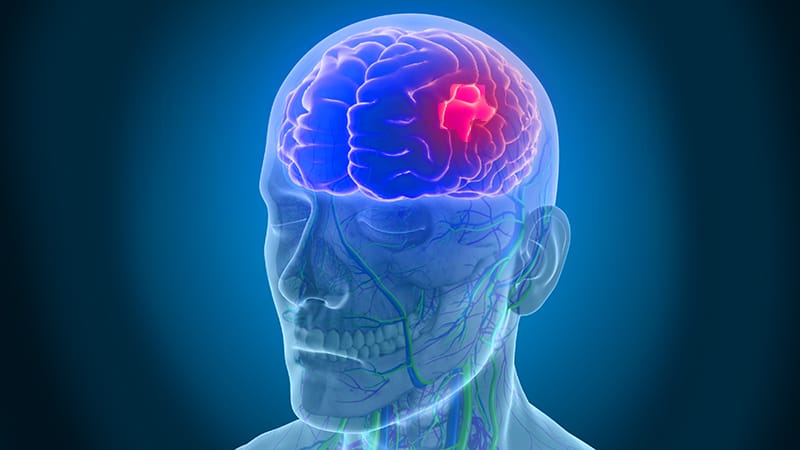
During the COVID lockdown, the glial cell scientist Hyun Kyoung Lee, PhD, was searching for something she could study from home. Her lab had recently examined ischemic stroke and brain tumors, but separately. Meanwhile, her mentor, M. Laura Feltri, MD, had been diagnosed with glioma, and the topic was on Lee’s mind. She started reading some epidemiologic papers about the interconnectedness of stroke and brain tumors. Hyun Kyoung Lee, PhD“That was the initial idea — how can two different origins of disease have this much interaction but no one knows the mechanism?” Lee said. “Ischemic stroke and brain cancer are very different diseases mechanistically.”Until this point, her lab had been using mouse models to study how astrocytes respond after ischemic injury and had shown that stroke can disrupt the brain’s ability to regulate acidity, which affects inflammation and the blood-brain barrier.Lee is quick to say she is not a cancer biologist, but during her postdoctoral fellowship she developed a cancer model using a technique called in utero electroporation that allows the creation of a high-grade brain tumor in a mouse within a rapid 2-month window. Despite developing the model, she had never used it in her own lab…until this study.Her team found the brain’s repair process following a stroke may be repurposed by the body to drive glioma tumor growth, illuminating the paradox within the understanding that genetic mutations drive cancer — despite evidence of a mismatch between mutation prevalence and cancer prevalence.What They FoundUsing multiple human- and mouse-derived glioma models, the researchers showed that following induced stroke, mice implanted with patient-derived glioma stem-like cells developed bigger and faster-growing tumors. Prior stroke also significantly affected survival. Mapping revealed tumor infiltration in regions adjacent to the stroke-affected area (the isocortex or striatum), but not in distal regions such as the hippocampus. The researchers then sought to characterize the tumor microenvironment with single-cell RNA sequencing and spatial transcriptomic analysis, which linked calcium signaling to existing tumor growth. Lee characterized it as “tightly related.”“When we measured astrocytic calcium activity when the tumor was growing, nearby astrocytic calcium activities decreased. When we activated this calcium activity, tumor cells were actually suppressed,” said Lee, an associate professor in the department of pediatric neurology at Baylor College of Medicine and an investigator and endowed scholar at Texas Children’s Hospital in Houston.The link to stroke, she said, is that “when the stroke is happening, astrocytic calcium activities decrease, and that can lead to tumor cell growth.”The team also identified a related molecular mechanism — a pH regulator called SAC4A4 — that contributes to calcium activity. The findings were published recently in Nature Cancer, which included in the acknowledgments a dedication to the memory of M. Laura Feltri, who passed away in 2023.Fine-Tuning the ConnectionLee cautions that this research does not say that stroke leads to glioma, but her team is working on a follow-up study examining that question after issuing a nationwide request for tissue samples from patients who experienced a stroke prior to glioma diagnosis.The findings highlight the expanding understanding of intrinsic biological drivers of cancer, such as injury that triggers wound-healing and tumor promotion via impacts on the tumor microenvironment.Sui Huang, MD, PhD“It is now widely appreciated that chronic inflammation plays a central role in tumorigenesis,” said Sui Huang, MD, PhD, professor at the Institute for Systems Biology in Seattle, who wasn’t involved in the paper.He called Lee’s work a “neat” and “stark” example of how chronic tissue injury and associated inflammation promote tumorigenesis.“Typically, when people talk about the tumor-promoting effect of chronic injury, they think of such injury being inflicted by some external factor that, albeit not mutagenic or genotoxic, has been shown to be associated with increased cancer risk,” Huang said.He cited known external factors such as acids in the esophagus, noncarcinogenic irritating compounds in smoke, food additives, pesticides, and nonmutagenic wavelengths in ultraviolet.“In the case of stroke, we have an internal pathology — the ischemia — that causes the tissue injury. Thus, it is surprising in some ways, but not fundamentally,” he said.Researchers continue to explore the “wounds that never heal” theory, particularly at the fundamental science level. A key area in this research with translational medicine potential is the cell death process, which is critical for therapeutics but also implicated in recurrence. The Révész effect, for example, was first identified in 1956 and linked tumor stimulation to dead and dying cells as a result of treatment.A ‘Philosophical’ UndertakingEarlier this year, an Israeli team published findings identifying a tissue regeneration molecular mechanism that may explain aggressive, treatment-resistant tumor recurrence. Following irradiation, fruit flies used their programmed cell death enzymes to help a pair of newly named cell types become resistant to death. Called DARE and NARE cells (Dronc-activating and nonactivating cells), they helped rebuild damaged tissue and make it resistant to future injury, but the scientists reported that cancer cells may exploit the mechanism.Eli Arama, PhDThe findings stemmed from research that pivoted after unexpected results. Senior author Eli Arama, PhD, professor at the Weizmann Institute of Science in Rehovot, Israel, said the project turned into a “philosophical” undertaking.He wanted to figure out why animals sometimes don’t use the traditional cell death program, in which enzymes called caspases destroy a cell from the inside out. It’s become a bit of a hot topic in cell death circles lately and is referred to as alternative cell death. Lab experiments have recently revealed a handful of regulated cell death methods by manipulating genes, mostly in Drosophila, Arama said.He wanted to know why alternative cell death due to gene manipulation happens.“So we were thinking, ‘Let’s rewire the fly genetically in a way that every time a cell is programmed to die by apoptosis during development, also if you irradiate the flies or cause damage, they will activate an alternative cell death of our choice,” Arama explained. They thought that taking advantage of the signaling pathway that leads to apoptosis (cell death) would redirect activation toward alternative cell death. Their first trial didn’t work. Their second trial didn’t accomplish it, either, so he and lead author Tslil Braun, a graduate student, started asking why.“It was very strange,” Arama said, because their genetic reporter systems couldn’t detect the cells they expected would die by apoptosis, and instead graduate student Nadav Ben-Tsvee identified a particular population of cells that survived and regenerated.“We tried again and again until I just thought, ‘What if these cells are the cells that 50 years before us, people predicted that they exist, but couldn’t actually detect them?’” Arama said.Huang said the work of Lee’s and Arama’s teams illuminates the shortcomings of precision oncology today and demonstrates the need to question the gene-centric paradigm that focuses on increasing the efficacy of killing cells.“Clinical oncologists associate mutations with malignant tumor properties, which is not wrong but a very incomplete, simplistic model,” he said.Targeting tumor properties with precision drugs “works, but poorly,” Huang said. “These two articles are part of the message that explains why that is.”Huang reported serving as a scientific advisor for Thetis Pharmaceuticals, in which he holds stock options regarding “a drug in development that simulates the antitumor immune system while not causing overt counterproductive inflammation and regenerative activities.” Disclosure information for study authors is available in the original study publications.
A Disturbing New Connection Between Stroke and Brain Cancer
Full Article
Original Source
Read the full article at Medscape →KhanList aggregates and links to publicly available news content. We do not host full articles from third-party sources. Always verify important information with original sources.