
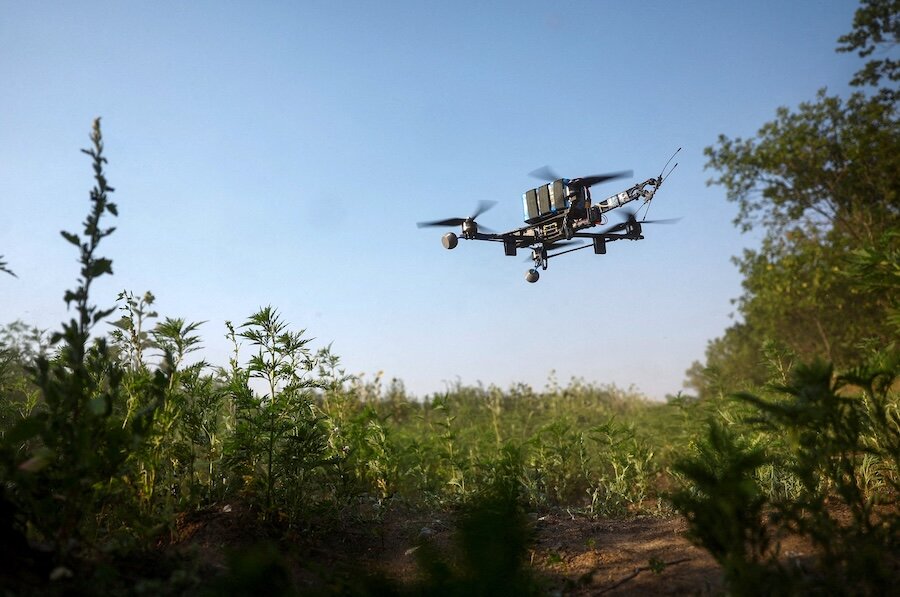
Among the potential impacts of artificial intelligence on humanity, perhaps no greater concern has been raised than AI-guided weapons that are completely beyond the active control of human judgment. On Saturday, 128 nations finished up five days of talks on what to do with these “lethal autonomous weapon systems,” or LAWS.Given the wariness by a few countries to take any bold action, the assembled diplomats were able to agree on tasking a panel of government experts to come up with possible rules within two years that might lead to restraints or even a ban on such weapons.Julien Thöni, the Swiss diplomat presiding over the United Nations conference, said the compromise was a “significant step forward” after more than 10 years of discussions and showed that “multilateral diplomacy can still deliver.” Many countries have bemoaned the slow pace in setting guardrails on a technology already in limited use in a few battlefields. Others, such as the United States, prefer creating voluntary, nonbinding international norms built on existing humanitarian laws that govern protection of civilians during an armed conflict. Russia appears to be the most reluctant to do anything.Yet at the least, the diplomatic momentum to develop restraints will now continue, building on the models of agreements for a few types of conflict. These include a ban on the use of blinding lasers, curbs on land mines, and pacts on avoiding deliberate confrontations between military vessels on the high seas.On one side of the debate is the notion that LAWS might reduce casualties of both soldiers and civilians, or perhaps even deter war. The other side points to AI systems making mistakes or operating on their own in a conflict, escalating violence that triggers more violence. “Maybe in some distant future, humans will embrace the idea of missile-less conflicts adjudicated by impartial algorithms,” wrote Krystyna Marcinek, a researcher at Rand. “Perhaps we will even realize that, as a species, we have more shared than diverging interests and will give up wars altogether. But until then, the study of incentives and disincentives for wars remains relevant.” Deepen your worldviewwith Monitor Highlights.Politics with respectGet political stories with respectful analysis.There‘s a world of new ideas in everyBooks newsletter.There‘s more to life, enrich yours withCulture & Learning weekly.Follow humanity‘s discoveries withScience & Nature stories in your inbox.Gain a spiritual perspectivefrom the stories in your inbox.Want to understand the deeper impact of critical events? Learn the Monitor‘s insight.Already a subscriber? Log in to hide ads. There are possible futures, she added, where the AI revolution could either “incentivize conflict” or “strengthen stability.”The next two years of negotiations could determine the nature and extent of warfare for the rest of the 21st century. “The consequences of not having a strong [diplomatic] instrument are very clear,” U.N. disarmament chief Izumi Nakamitsu told reporters. Yet now, “the path to, or possibility to, have a legally binding instrument is still open.” ALREADY A SUBSCRIBER? LoginReal news can be honest, hopeful, credible, constructive.The Christian Science Monitor was founded in 1908 to lift the standard of journalism and uplift humanity. We aim to “speak the truth in love.” Our goal is not to tell you what to think, but to give you the essential knowledge and understanding to come to your own intelligent conclusions. Join us in this mission by subscribing.
A diplomatic breeze shrinks the fog over AI weapons
Full Article
Original Source
Read the full article at Csmonitor →KhanList aggregates and links to publicly available news content. We do not host full articles from third-party sources. Always verify important information with original sources.