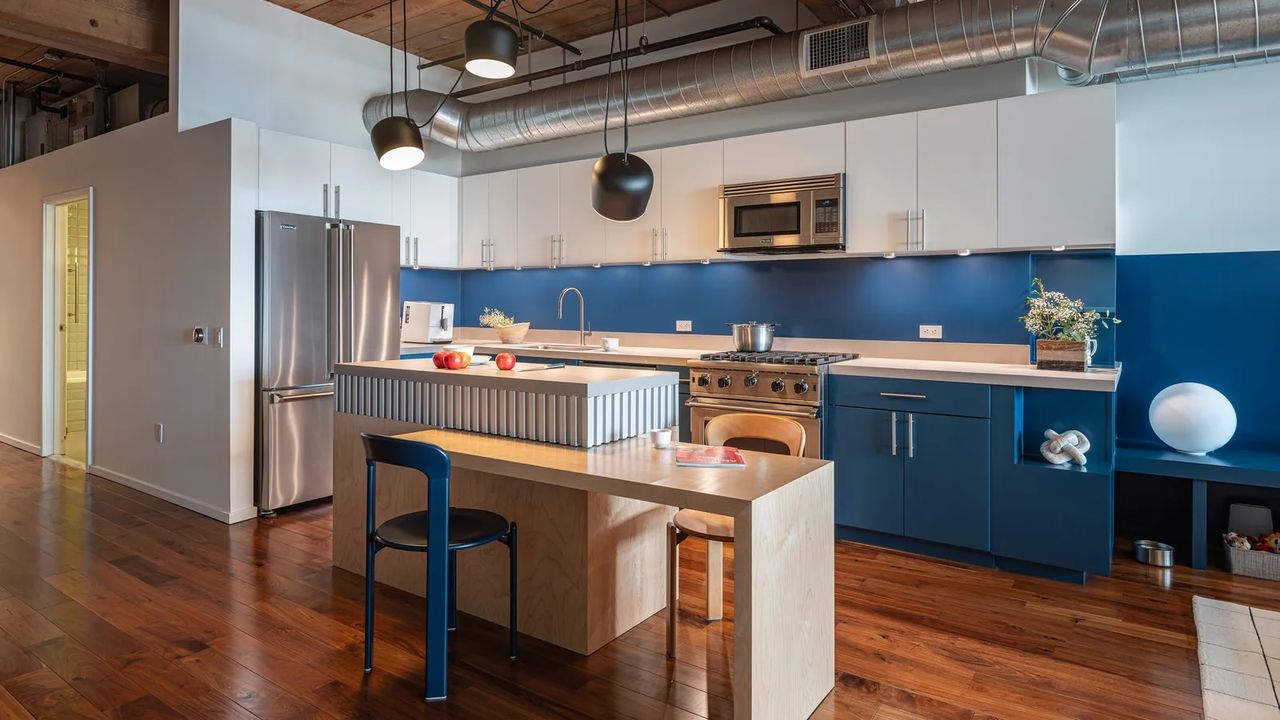
A few years ago I was asked to share my thoughts on the future of the dining room. At the time I argued that the traditional space had become almost obsolete. Not because people had stopped gathering, but because they had stopped gathering there. With its polished china, carefully positioned buffet, and table reserved for holidays, the formal dining room had given way to something more fluid. Meals were migrating to kitchen islands and oversized tables that shifted from dinner to homework, Zoom meetings, art projects, or late-night conversations.As a trained architect and interior designer, I saw homes evolving around flexibility rather than ceremony. The kitchen had become the heart of the home in a new way—not because we entertained more formally, but because cooking, eating, working, and living had become inseparable.I even designed furniture that reflected this evolution. One project centered around a custom piece that was simultaneously a prep island, a breakfast bar, and a dining table. It slid, pivoted, and expanded depending on the moment. More than just furniture, I saw it as an acknowledgment that modern life resists rigid definitions. The table had become an instrument of everyday life rather than a monument to special occasions.As weight-loss drugs reshape American life, they’re also sparking a surprising behind-the-scenes transformation of our homes, from med-station bathrooms to ghost-town kitchensLooking back I realize that even as I declared the traditional dining room obsolete, I never questioned the importance of food itself. Food remained the ritual. The kitchen remained the hearth. The home still revolved around nourishment, conversation, and the quiet choreography of preparing a meal together. Today I’m no longer sure that’s true.I recently read the AD article by Elyse Moody exploring how GLP-1 medications are beginning to reshape our homes. It argues that these drugs are changing us not only physiologically, but ideologically—altering our relationship with food, routine, and ultimately the spaces we design around them. The implications are surprisingly architectural.Moody reports that for many users, kitchens are becoming less central because cooking occupies less of their daily life. Large walk-in pantries stocked with ingredients are being replaced by compact smoothie stations filled with protein powders and supplements. Bathrooms and closets are evolving into wellness hubs, complete with refrigerated medication drawers, discreet millwork concealing syringes, or dedicated GLP-1 bars. The home is reorganizing itself around a different daily ritual.Perhaps even more fascinating to me is the psychological transformation I observed in protagonists of the article. People describe newfound confidence. They entertain more often. They buy clothes they’ve never imagined wearing. Closets expand and wardrobes evolve. Mirrors become features to embrace rather than avoid. The architecture of the home begins to mirror an internal shift in identity.None of this is insignificant. For many people, these medications are genuinely life-changing. They improve health, extend lives, and offer hope where diets and exercise alone have failed. For those who need them for medical reasons, GLP-1s represent one of the most significant breakthroughs in decades. But reading about these spatial transformations made me wonder whether architecture is quietly documenting another story altogether.For centuries the kitchen has been humanity’s laboratory. It’s where raw ingredients become nourishment, where children learn by watching grandparents stir a pot without measuring, where conversation unfolds naturally over chopping boards and simmering pans. Cooking is one of our oldest acts of creation, a daily form of alchemy that transforms food into culture, memory, and care. If that ritual begins to disappear, what replaces it? We often talk about GLP-1 medications as though they simply reduce appetite. But perhaps they also reduce the amount of life organized around appetite itself.What happens to a culture when eating becomes an inconvenience rather than a celebration? When dinner becomes nutrition management? When a protein shake replaces the slow preparation of a shared meal? When the room once designed for gathering quietly gives way to one designed for pharmaceutical storage?Architecture has always reflected our values. Open floor plans reflected a desire for connection. Home offices reflected the digital economy shaped by COVID. Wellness rooms reflected our pursuit of longevity. Perhaps the next chapter of domestic architecture will reflect something entirely different: optimization. Less cooking. Less lingering. Less ritual. Instead, more efficiency, more measurement, more management. What unsettles me is the possibility that our homes are beginning to reorganize themselves around pharmaceuticals rather than around people.A century ago the hearth defined the home. Today the kitchen island has become its social successor. Tomorrow will it be the refrigerated medicine drawer?The question isn’t whether GLP-1s are changing architecture. They already are. The more profound question is whether our homes will continue to be places that celebrate the beautiful, messy rituals of being human—or whether they will become exquisitely designed machines for optimizing the human body. There is a subtle but important difference between a home that reflects life and one that manages it.As designers, perhaps that is the question we should be asking next.
A Designer’s Take on the GLP-1 Home
Full Article
Original Source
Read the full article at Architecturaldigest →KhanList aggregates and links to publicly available news content. We do not host full articles from third-party sources. Always verify important information with original sources.