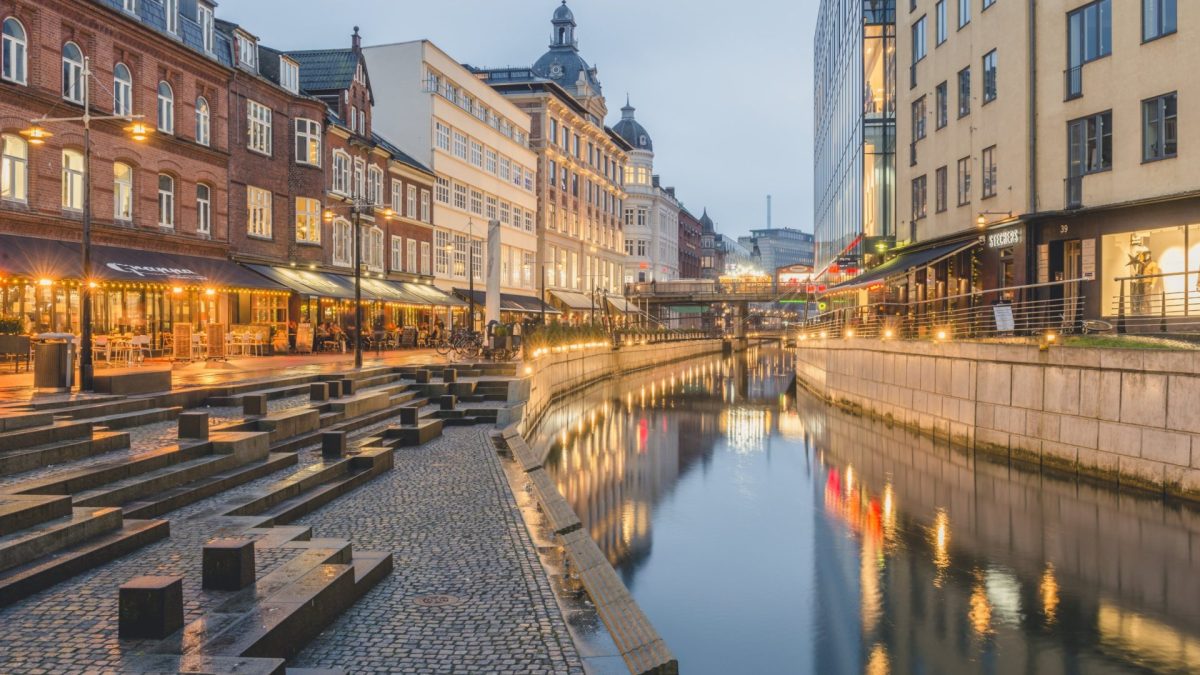
So there I was, having just had a swim in the clear, blue, and – let’s just say – bracing waters of the Baltic Sea off the eastern coast of Denmark, and I noticed something rather remarkable. On the stony beach, an elderly Danish gentleman, who had also just braved a dip in the sea, was walking up and down with a small bucket, picking up the odd piece of litter or anything that made the beach look untidy. It turned out that what he was doing was nothing more than what he considered to be his civic duty. He’d enjoyed the invigorating exercise, and he felt it incumbent on him to do something in return, which in this case was to help keep the beach clean. This was not by order of the municipality: it was just what you do if you live in a society which is based on collective responsibility. This is the character of Denmark in microcosm, and could be a reason why the nation is, every year, positioned close to the top of the Global Happiness Index. Like seeing people in Aarhus, the country’s progressive second city, leave their bicycles unlocked, it is all very peculiar to English eyes: the sense that obligation and trust are fundaments of a purposeful society. Aarhus, wonderfully ordered and ineluctably cool, is known as the “City of Smiles”, and to the casual observer, it does appear to be accurate. Everyone seems happy going about their business, the working, walking, talking, eating, drinking embodiment of civic contentment. They do, you have to say, look very pleased to be Danish. And why not? For a start, they don’t have to cope with the ever-present fear of crime that blights the lives of the average British city dweller. My partner lives in suburban north London and she is a member of a few local residents’ WhatsApp groups. All day long, her phone is beeping with messages about cars being stolen, houses being broken into and reports of men in balaclavas scoping out potential targets. She has had her car stolen twice from outside her door, so you can hardly blame her for being on constant alert. It is a depressing, debilitating and pervasive state of mind, and one that, if somehow alleviated, would immediately make you feel more cheerful. Denmark has the second lowest crime rate in the world (after Iceland), so no wonder its citizens can walk around with smiles on their faces. I am making an observation rather than a political point, but nonetheless there is little doubt that politics, personal and corporate, does come into play here. Our two nations are not in the least comparable – the challenges faced by British governments are much more complex, multi-layered and, in many cases, intractable, not least because our population is roughly 11 times the size of Denmark’s – but that’s not to say there aren’t things we can learn from the way Danish society is organised. Take the question of transparency in public life. The workings of the Danish parliament are open and easily accessible, tax information is freely available so there is full disclosure on what people earn. Even when you see an estate agent’s information on a house for sale, there, alongside the price, are the details of what it was last sold for, and when. These are just some relatively simple measures which increase trust among citizens, and could, if adopted here, improve our national mood. The acme of all this is the confidence that Danes have in government to spend their money wisely. Taxes are high – the biggest earners pay around 60 per cent of their salaries in tax – but so is satisfaction in the efficient delivery of public services. In contrast, we in Britain appear to have gone in the opposite direction – our belief that the state has the answers to our problems has never been lower, and consequently, we resent being asked to pay more in tax. This is not intended as a counsel of despair, and it’s not to proclaim that Denmark is an egalitarian nirvana (in choosing cohesion rather than integration, elements of their immigrant population have clearly been discriminated against). Neither do I believe that a higher tax regime in the UK would fly, politically speaking. Still, I came back from my short visit to Denmark enthused, stimulated and optimistic. Even cursory and superficial exposure to Danish civic society was enough to renew my faith in the finer qualities of humankind to work together and create equitable and functioning structures. As a break from the horribly divisive rhetoric that infects our public discourse, it was as refreshing as a dip in the Baltic.
A Danish litterpicker taught me an unforgettable lesson about Britain
Full Article
Original Source
Read the full article at Inews →KhanList aggregates and links to publicly available news content. We do not host full articles from third-party sources. Always verify important information with original sources.