The urban poor in Nigeria. …as population increase continued and a significant youth bulge developed in the population profile, the poor youths in the rural areas also moved to urban centres. In this context, these cities have become the new focal point for the aggregation and aggravation of poverty, amidst massive accumulation of wealth by a tiny elite. The most profound poverty has therefore been moving from the rural to the urban centres. The era of post cosmopolitanism has arrived. In August 2017, I addressed today’s theme in one of my columns. Since then, the situation has worsened considerably. We do not spend sufficient time reflecting on the rapid deterioration of our culture and we bask in the ignorance that our culture and tradition reflects long held values inherited from our forebears. Meanwhile, Nigerian culture has transformed considerably and become extremely troubling and indeed frightening. Over the past three decades, millions of private citizens have acquired arms, top-level combat arms, and are using them to kill other private citizens to steal their possessions or to avenge their god from whatever harm they believe had been done to him. They kill without thinking or consideration because they actually have little or no understanding of the faith they espouse. Cults have continued to grow and strengthen, and people kill others to remove their body parts for sale or the performance of rituals. Jihadi groups have been able to sustain and indeed expand their actions for decades. Boko Haram insurgents have been killing people praying in mosques and churches. Lucky victims are blown up by bombs and the unlucky ones are subjected to ritual killing in which their throats are slit. Hundreds of girls have been murdered while being used as suicide bombers. The current social life is marked by the massive and national growth of kidnapping for ransom as an equal opportunity threat to citizens. Money has become the new object of worship for the new entrepreneurs operating in the social, religious and political terrains. Those who run the Nigerian State are very much part of this new culture. One of the reasons why this new rising culture of barbarism is confusing is that a series of polls, including respected surveys by the Pew Centre have shown Nigeria to be one of the most religious countries in the world. Virtually all Nigerians affirm to be believers in Christianity or Islam. There are no significant numbers of self-confessed adherents of traditional religions. In addition, Nigeria holds the world record in terms of time and money devoted to prayers and religious activities. The expectation would then be that Islam and Christianity, which are based on the precepts of love, honesty, good and moral conduct, respect for the other and for human life, would dictate the culture and conduct of Nigerians. Read any newspaper or the social media and you will be inundated with stories of massive corruption, the raping of children, even babies, stealing, including the theft of money collected for religious work and so on. The cultural evidence today is that there is a huge lie about what many Nigerians say they are and what they really are. The reality is ugly and frightening. Life has become very precarious and ephemeral. Rural banditry, mass kidnapping, insurgency, secessionists violence, militancy, widespread paganism, and wanton killing characterise daily life. It is the new culture. Since the 1990s, therefore, urban poverty has been growing more rapidly than rural poverty. Indeed, the main feature of urban life in contemporary Nigeria has been its precarity. Daily subsistence needs such as food, housing, healthcare and education are lacking for a large proportion of the population. There is serious pressure on livelihoods, both formal and informal. More and more people are being pushed into the informal sector. What does the future hold for Nigeria? We appear to be modernising. More Nigerians have been having access to education. Cities have grown all over the country. Today, over 60 per cent of Nigerians have abandoned their villages and moved to cities and towns. Since then, the conditions for future development in Nigeria have been dictated by rapid urbanisation. The pattern of urbanisation has developed along major corridors – Lagos-Ibadan, Port Harcourt-Enugu, and Kaduna-Kano. Over and beyond these corridors of mega cities, the development of states and local governments have led to the development of over one thousand state capitals and provincial towns. As urbanisation has grown, the signifier of social trends has been the growth of informality at the level of the economy, society and, above all, in religion. Nigerian informality is located in poverty for the masses and obscene wealth for a vocal and crass minority. The most important contemporary problem for Nigeria is the lack of opportunity for the youth. We have developed a huge youth bulge that has been growing and is indeed galloping. This is happening at a time in which formal opportunities for employment are declining, and most industries have closed down. Having a job has become a minority experience for Nigerians, and opportunities only exist in the informal sector. Nigeria’s youth has been seeking to negotiate with a society in which poverty is growing and the future looks bleak for the majority. Meanwhile, the marginalised youth who are glued to social media know we have massive wealth for a few, and conspicuous consumption of obscene wealth is what they see every day. They have decided to take their own cut. Understanding Nigeria’s dark culture today reveals a disturbing truth. The reality is that opportunities for the majority exist mainly in the sphere of darkness, the underworld, the criminal networks and above all, in occult arenas where the devil can help the bold and needy. So, blood continues to flow as violence grows and is democratised, or rather popularised. Orthodox religious practices are displaced, and new, as well as old interpretations that offer faster routes to wealth and satisfaction, become the order of the day. Our sociology has been transformed profoundly. From the 1950s to the 1980s, migration to urban centres was based on the acquisition of modern education and skills. That was the era of cosmopolitanism. The pattern of migration therefore left the poorest in the rural areas and the adoption of urban life signalled social mobility. However, as population increase continued and a significant youth bulge developed in the population profile, the poor youths in the rural areas also moved to urban centres. In this context, these cities have become the new focal point for the aggregation and aggravation of poverty, amidst massive accumulation of wealth by a tiny elite. The most profound poverty has therefore been moving from the rural to the urban centres. The era of post-cosmopolitanism has arrived. Since the 1990s, therefore, urban poverty has been growing more rapidly than rural poverty. Indeed, the main feature of urban life in contemporary Nigeria has been its precarity. Daily subsistence needs such as food, housing, healthcare and education are lacking for a large proportion of the population. There is serious pressure on livelihoods, both formal and informal. More and more people are being pushed into the informal sector. The breakdown of the social fabric and family bonds is producing a lumpen culture characterised by delinquency, violence and religious extremism. On the economic front, the informal sector with all its incertitudes is the basis of precarious livelihoods. The precariousness of life has created ideal conditions for the proliferation of informal, as well as formal religious activities. Sufi and Wahabi orders and Pentecostal churches provide many survival functions – shelter, medical support and economic networks – that neither the family nor the state can secure in these times of crisis. The conditions created by urbanisation and social transformation are producing a new post-cosmopolitanism. It is not based on the spread of modern education and the development of knowledge and refined culture. Diversity and multiculturalism have limited impact, as many of the slums in the cities are characterised by the aggregations of the village in urban centres. Globalisation is a major player for these communities. The village is transferred to the new urban centres but it’s a new village whose culture is being transformed through satellite television, cassettes, then video and now the social media. Cell phones have applications with ring tones that call the Muslim faithful to prayer and the Christian to the latest fiery sermons of pastors. The Hausa villager in the city has a worldview that is daily informed by complex news analysis in their language from the United Kingdom, Iran, Egypt, France, Germany and China. Global conflicts and interpretations of religion, politics and social life are constantly in the ears of the people. Objectively, what our government is saying, doing, and above all, not doing, becomes a small part of the universe. Yes, it’s small, but it is important because it produces anger. On the economic front, the informal sector with all its incertitudes is the basis of precarious livelihoods. The precariousness of life has created ideal conditions for the proliferation of informal, as well as formal religious activities. Sufi and Wahabi orders and Pentecostal churches provide many survival functions – shelter, medical support and economic networks – that neither the family nor the state can secure in these times of crisis. Increasingly, it is the religious actors who are the social agents that provide meaning for the new and difficult conditions of life in the squatter towns. It is true that the village has been transplanted into the city but at the same time, new forms of bonding and differentiation are being created – new social networks are needed to provide comfort and emergency relief to those in distress; new lucrative spheres for accumulation, both legal and criminal, are being created – and for all of these and more, the religious sphere provides the most effective framework. As this new sociology takes root, I wonder who is watching and studying, not to talk of planning and acting? Definitely not the political class which is clearly part of this new culture. A professor of Political Science and development consultant/expert, Jibrin Ibrahim is a Senior Fellow of the Centre for Democracy and Development, and Chair of the Editorial Board of PREMIUM TIMES. Discover more from Premium Times Nigeria Subscribe to get the latest posts sent to your email.
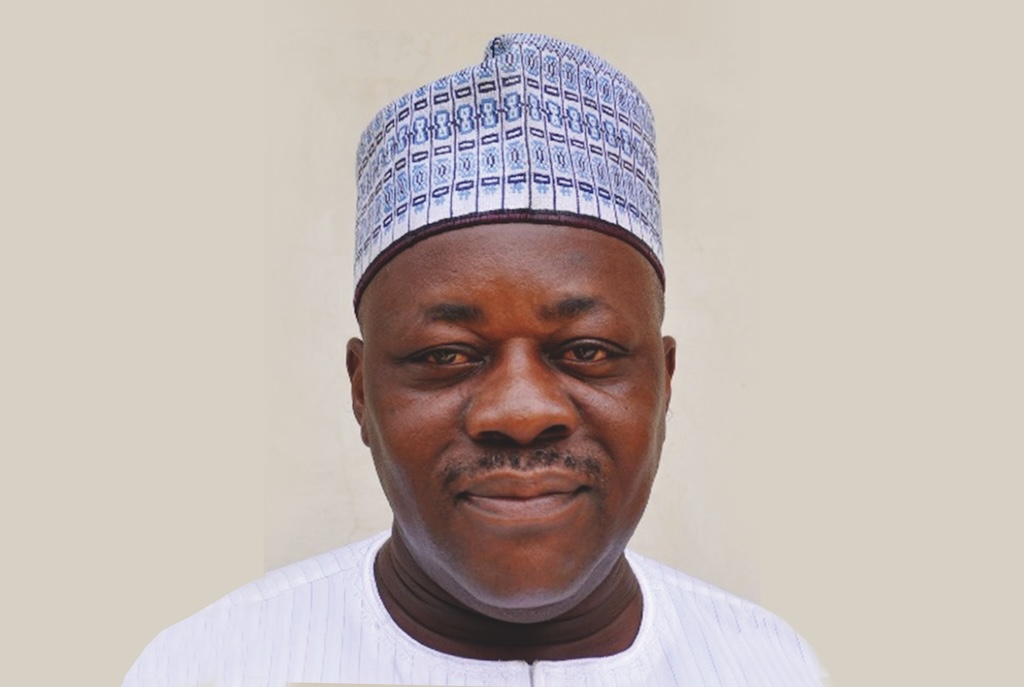
A culture of dread: Nigeria’s post-cosmopolitanism, By Jibrin Ibrahim
Full Article
Original Source
Read the full article at Premiumtimesng →KhanList aggregates and links to publicly available news content. We do not host full articles from third-party sources. Always verify important information with original sources.