
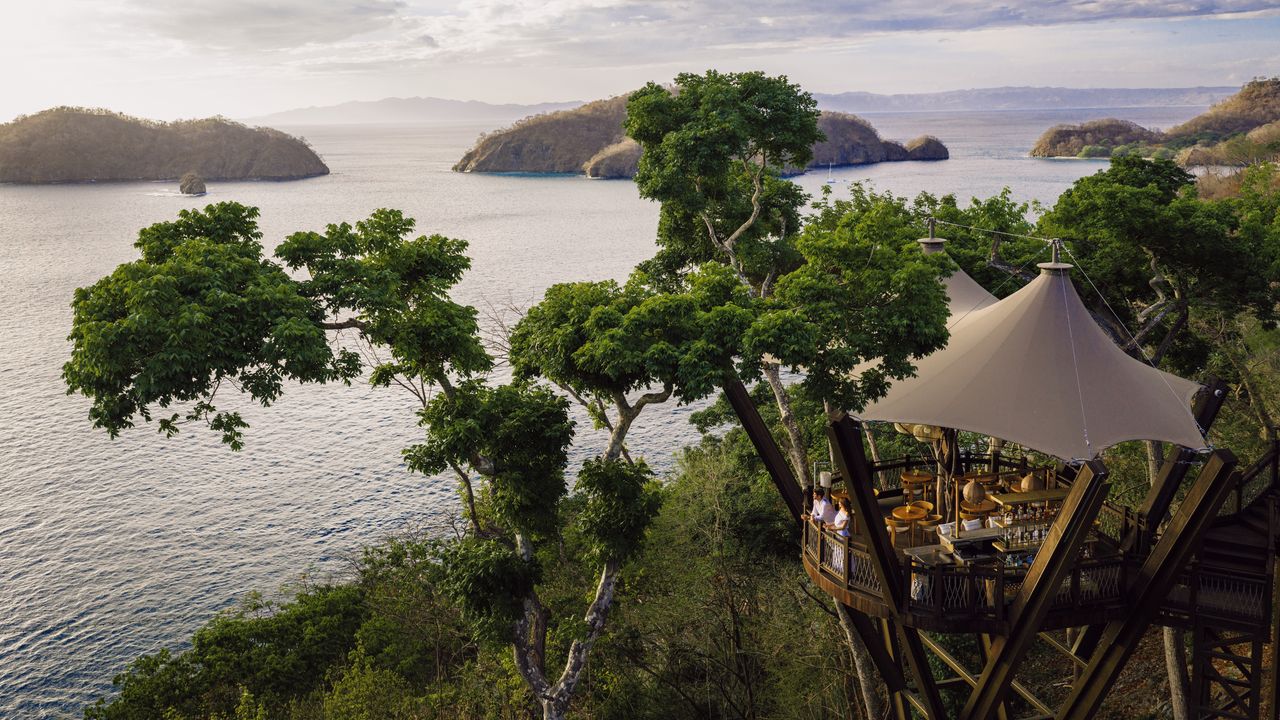
In Hotels With Great Taste, we’re pulling back the curtain for a peek at the “special sauce” that hotels use to create memorable, meaningful culinary experiences for their guests.The property and roomsThe restaurants and dining experienceThe inside scoopBook the Nekajui Peninsula Papagayo, a Ritz-Carlton ReserveCheck-in at Nekajui on Costa Rica’s verdant Papagayo Peninsula happens inside a sparsely furnished bungalow the staff call La Casita. But walk across the drive, past a massive ceiba tree hung heavy with lanterns, and all humility vanishes. The whole property sweeps out before you: an endless green lawn, pools cascading down two levels, and, finally, the serenely sparkling bay beyond.Nekajui is Ritz Carlton’s first Reserve resort in Central or South America. The Reserve’s are Ritz Carlton’s nod to the idea of complete escape, often in the far flung retreats—the Chinese Himalayas, or the Saudi Arabian desert.Now, the recently opened Nekajui allows you to unwind on the lush Costa Rican coast teeming with wildlife like capuchins, coatis, and iguanas. Hidden away at the remote property, you’ll also find a local coffee program that’s on par with the best big city cafes in the world.Photo by Nekajui, a Ritz Carlton ReserveThe property and roomsSprawling over 1400 acres, Nekajui is a dreamy jungle beach resort that opened its doors on the secluded peninsula in February 2025.Each of the 107 rooms and suites peeks out onto treetop and ocean sunset views. Inside, the decor features outdoor access and carved wood motifs typical of the Guanacaste region.Many rooms also have access to patios large enough for morning yoga sessions and private plunge pools (take note: if a guest above you has one, you may see water splashing down your way). For larger parties, treetop tents and villas on the property afford even more space than standard rooms.The main campus includes rooms, restaurants, and a spa, but the property’s grounds extend: a funicular (like a tiny cable car) runs dramatically down the cliffs, past howler monkeys, to the beach with water warm as a pleasant bath and a cave to explore.Photo by Nekajui, a Ritz Carlton ReserveThe restaurants and dining experiencePeruvian chef Diego Muñoz, whose career includes stints at world-renowned Spanish restaurants El Bulli and Mugaritz, leads the culinary program at the property’s main restaurants Puna and the tiny, six-seat chef’s counter within, Paruro.At Puna and Parura, Muñoz’s menu is filled with dishes with the layered flavors and artistic compositions that helped push Peruvian cuisine into the spotlight on a global stage. Puna has a fusion feel , sliding flavors and spices from Munoz’s international travels into Peruvian classics like a robust sudado, and zippy ceviche. Paruro, the chefs counter located inside Puna, is an East Asian experience with bites like a nori-cured tenderloin and a seabass curry. You’ll find one of Munoz’s best creations, a deboned, prawn-stuffed chicken wing, on both menus.It’s important to Muñoz that Puna uses local ingredients that are uncommon on Costa Rican menus. Fresh seafood, for example, can be a particular challenge to source, even as the overwhelming majority of Costa Rican territory is marine.Aspirations are high for the beverage program as well. Cooper’s is a moody, mysterious cocktail space with a menu full of unexpected Guanacaste ingredients. It leans into the speakeasy style, and as such, is invite-only, but don’t be intimidated—schmooze your server a bit, or ask your personal concierge to score you an invite.Inside, the menu is ambitious, dotted with some adventurous local distillates—goat cheese, cascara, mango leaf—which find their way into thrilling riffs on classics like the martini-esque Turrialba using fino sherry and the aforementioned goat cheese distillate.Elsewhere on the property, you can dine at Niri Beach Club, with an Iberian-focused menu, and the all-day Cafe Rincon which has sandwiches, bowls, and pastries.Photo by Nekajui, a Ritz Carlton ReserveThe inside scoopNekajui’s commitment to on-the-ground ingredients shines brightest in its coffee program atCafé Rincon. Fabi Rojas operates the micro-roastery at Nekajui, which features always updating selections from each of Costa Rica’s seven coffee growing regions.For a country about the size of West Virginia, Costa Rica produces an impressive diversity of coffee: easy-drinking crowd pleasers in the lower elevations of the coastal west, bright acidic pops from Valle Occidental in the north, fruity, prize-winning geishas—one of which fetched over $300 per pound at auction—in the mountainous Los Santos region of the south central. And Fabi has nurtured personal relationships with farmers all over the country to ensure she has access to all of it.And while she’ll make your coffee however you want it, the move is to have it brewed in a vandola. The one piece clay carafe and pour-over cone looks like something that might date back hundreds of years, but the design actually came from Costa Rican coffee roaster and barista Minor Alfaro in 2015. Brewing in clay helps maintain aroma longer, and the valve into the base of the dripper allows more gentle oxygenation according to Alfaro. Oxygen is usually the enemy of coffee, but allowing a small amount in through the valve can sweeten the flavor.Besides brewing coffee better than my Chemex, each vandola is a handmade work of ceramic art—an apt vessel to showcase coffees grown, roasted, and brewed with exquisite care.Nekajui Peninsula Papagayo, a Ritz-Carlton ReservePhoto by Nekajui, a Ritz Carlton Reserve
A Costa Rican Beach Resort with a World-Class Coffee Program
Full Article
Original Source
Read the full article at Bonappetit →KhanList aggregates and links to publicly available news content. We do not host full articles from third-party sources. Always verify important information with original sources.