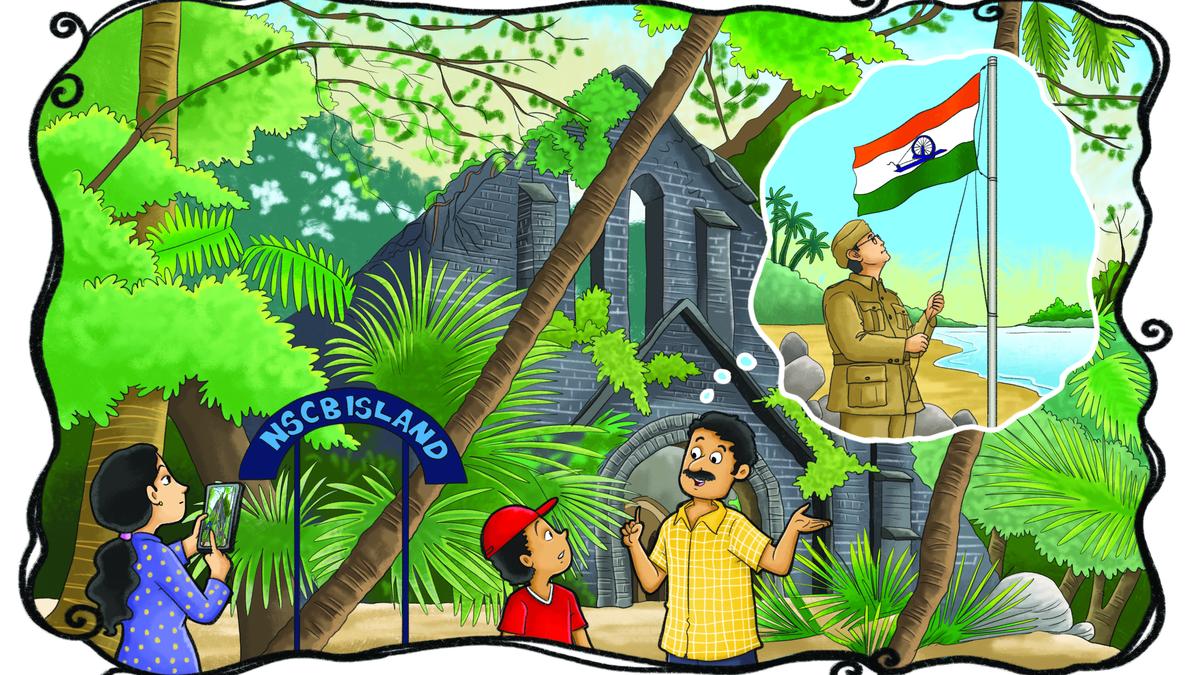
“Wow! Amma, did you see the deer? So many!” Taran pointed to a herd of spotted deer, as he got off the boat at the jetty. A board said: “NSCB Island”.“Netaji Subhash Chandra Bose Island, as it known today. It was called Ross Island by the British,” said Appa.“Taran, the deer you see running around were brought here by the British. When they eventually abandoned the island in 1943, the deer and the buildings stayed,” pointed out Amma.“The deer seem to be thriving; not sure about the buildings,” observed Taran. They had stopped at the Chief Commissioner’s Bungalow, which had been almost completely swallowed up by large ficus roots and foliage. Taran walked around what was left of the massive opulent bungalow. “What were the British doing here?”Luxury in the jungle“Long story short. After the First War of Indian Independence in 1857, the British imprisoned many of those captured in Port Blair. They did not want to stay very close to the prisoners. So, they picked another little island as the administrative hub. Houses, a bakery, a printing press, a church, a club house with swimming pool and tennis courts ... luxury was force fitted into the tropical jungle.”“How did they build all that?”“Good question. Areas of jungle that seemed impenetrable were cleared by the sweat of convicted prisoners. This paradise was built on torture and cruelty.”Taran was pensive. There was something extremely desolate about the place. “I can’t imagine this as luxurious for some reason.”Appa sighed. “Nature had the last laugh. There was a massive earthquake in 1941. Many of the buildings collapsed and many people died. The Japanese invaded Andaman and Nicobar Islands during World War II. The British fled the islands. Many buildings were disbanded to build bunkers. In 1943, Netaji Subhash Chandra Bose, who was friends with the Japanese, hoisted the Azad Hind flag on the Government House on the island. This was a message to the British that India would soon be independent.”“Hence the name,” deduced Taran.“Yes! Also, while other places on the Andaman and Nicobar were reoccupied after the war, this Island was permanently abandoned.”Taran and his family were at the last stop for the day: a cemetery. Most of the epitaphs were of young people including women and children.“Many died due to malaria,” said Appa. “However dark the history, it couldn’t have been easy for the people: Indian, British or Japanese.“Not to mention the indigenous people of the region who were killed or driven away,” reminded Amma. A deer jumped into their path almost like it had something to say. On the boat ride back, the family stayed silent. Sometimes, there are simply no words. Published - July 17, 2026 09:02 am IST
A colonial haunt
Full Article
Original Source
Read the full article at Thehindu →KhanList aggregates and links to publicly available news content. We do not host full articles from third-party sources. Always verify important information with original sources.