
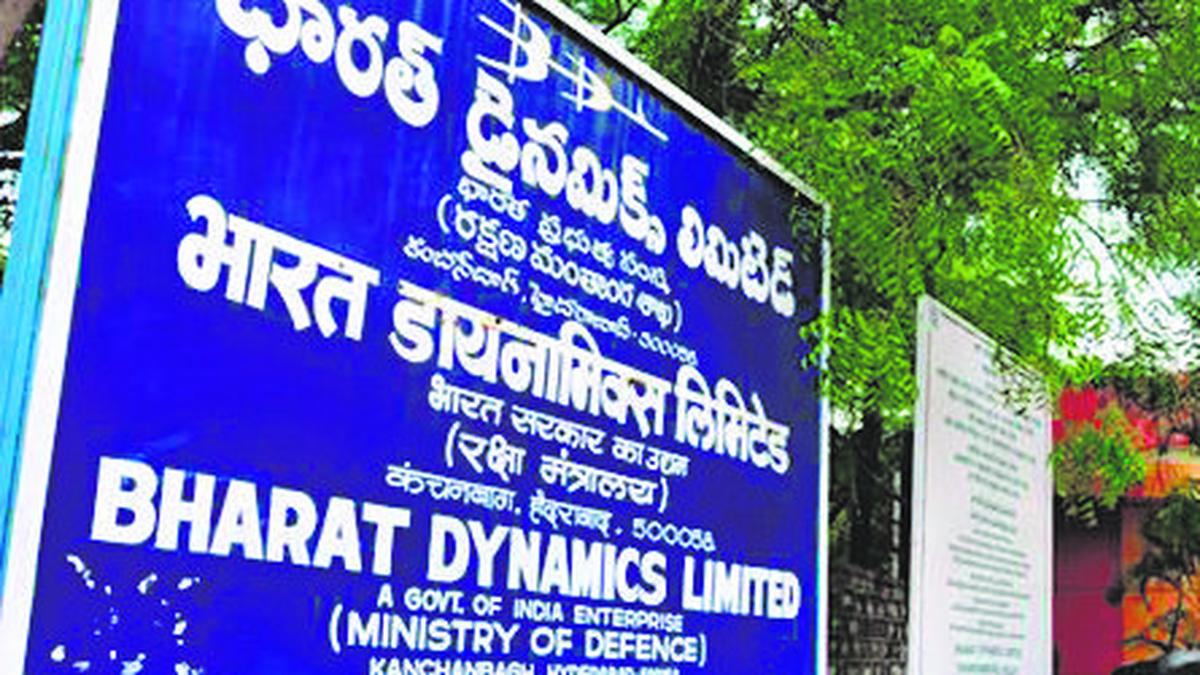
Hyderabad’s industrial development has been a story of continual reinvention. From the sprawling facilities of public sector enterprises and industrial estates dotted with factories to the rise of pharmaceutical giants, IT parks and, more recently, AI and spacetech, the city has adapted to shifting economic realities over the decades like few other cities.There was rarely a dull moment as the industrial landscape morphed from shop floors to AI factories, driven by an indomitable entrepreneurial spirit even as challenges emerged, some external and others of the industry’s own making.Though Hyderabad was not new to industries, the foundation for a structured industrial transformation was laid during the State-led planning era and the industrialisation drive that marked the initial decades after India became a Republic. Bharat Heavy Electricals Ltd. (BHEL), Indian Drugs and Pharmaceuticals Ltd. (IDPL), Electronics Corporation of India Ltd. (ECIL), Bharat Dynamics Ltd. (BDL), Hindustan Aeronautics Ltd. (HAL) and HMT were among the public sector undertakings that made Hyderabad their home., establishing large manufacturing bases around the city.Alongside defence laboratories under the Defence Research and Development Organisation (DRDO) and research institutions under the Council of Scientific & Industrial Research (CSIR), these enterprises provided much-needed employment while laying the scientific and technological foundations for future industrial growth. The PSUs spawned a network of ancillary units, which in turn paved the way for industrial estates and engineering clusters in several areas, including Balanagar, Uppal, Jeedimetla and Patancheru, which remain popular industrial destinations to this day.Forging and castings became key strengths, paving the way over the years for Hyderabad-based enterprises to become suppliers of critical components to globally leading original equipment manufacturers (OEMs).If the PSUs sought to build scale and accelerate industrial transformation, the economic liberalisation of the early 1990s marked a turning point. As government control over industry eased and private capital emerged as a force, a generation of entrepreneurs seized new opportunities. Nowhere was this transformation more evident than in the pharmaceuticals and chemicals sector.Some of the pioneers who built Hyderabad’s pharmaceutical industry had roots in public sector enterprises and research institutions. Among them was K. Anji Reddy, founder of Dr. Reddy’s Laboratories. Before establishing the company in 1984, he had worked at IDPL. His success with Dr. Reddy’s inspired a generation of entrepreneurs and helped establish Hyderabad as a global manufacturing hub for generic drugs and active pharmaceutical ingredients (APIs).When scientists and technocrats left public institutions and established their own ventures, the knowledge gained through public investment travelled with them. It also helped them avoid common pitfalls and pursue innovative approaches. What now appears to be private-sector dynamism was thus built, in part, on decades of investment in scientific infrastructure and human capital. Their never-say-die spirit came to define a generation of entrepreneurs who explored new horizons and helped build Hyderabad into a globally recognised pharmaceutical hub.Telangana government’s Invest Telangana says Hyderabad is the Life Sciences capital of India producing 40% of the country’s pharmaceutical output and about a third of the world’s vaccine output. It has nearly 270 U.S. Food and Drug Administration (U.S. FDA) approved facilities and more than 2,000 Life Sciences companies.The city is home to some of the world’s best-known vaccine manufacturers, from Bharat Biotech, Biological E., and Shantha Biologics and a long list of generic drugmakers, including Dr.Reddy’s, Aurobindo Pharma, Natco Pharma, Granules India, Gland Pharma and Divi’s Laboratories.Over time, Hyderabad on the back of its famed bio sciences cluster Genome Valley, which officials say became India’s first organised research and development (R&D) and clean manufacturing cluster, established itself as a leading life sciences hub.The economic reforms of the 1990s, or the policy of Liberalisation, Privatisation and Globalisation, coincided with the technology revolution sweeping the globe. The City of Pearls’ ability to constantly reinvent itself saw it move quickly to identify and capitalise on emerging trends. Aiding its embrace of new-age companies was the manufacturing sector, which was facing increased competitive pressures and struggling to achieve scale. The emergence of a vast pool of engineering talent made the transition easier.Policymakers of the day lost no time in recognising the benefits of reorienting the city towards technology and services. The construction of the iconic Cyber Towers, development of HITEC City, investments in road infrastructure, especially the Outer Ring Road, and the establishment of an international airport transformed the city’s investment landscape. Tech giant Microsoft’s decision to establish its India Development Centre in Hyderabad proved to be a watershed moment, attracting global technology companies and cementing the city’s status as a technology hub.A steady stream of engineering graduates and a relatively lower cost of living further strengthened Hyderabad’s appeal. Unlike many competing cities, it had abundant land for expansion, rapidly developing social infrastructure and, to the relief of many, relatively lower congestion, allowing it to scale quickly.Different governments in erstwhile Andhra Pradesh and, after the formation of Telangana in 2014, have contributed to industrial development in their own ways. Among these initiatives, the Telangana Industrial Project Approval and Self-Certification System (TG-iPASS), which provides time-bound clearances or deemed approvals, gained widespread recognition.The city’s industrial journey has not been without challenges. Industrial pollution, pharmaceutical effluent management, workplace safety concerns, power shortages and the decline of several legacy industrial units have tested Hyderabad’s ability to grow sustainably. Factories occupying large tracts of industrial land, where some well-known brands once flourished, stood as silent reminders of a bygone era as swanky high-rises emerged on rocky terrain, reflecting a broader structural shift in the economy.Pollution was also cited by the government as a reason for unveiling the Hyderabad Industrial Land Transformation Policy, aimed at moving eligible industries occupying thousands of acres of land in multiple industrial estates within the Outer Ring Road to locations beyond the ORR. Pharmaceutical manufacturing and land acquisition for large projects have faced strong opposition, generated controversy and remain under scrutiny. The ambitious Hyderabad Pharma City project is a case in point. Notwithstanding the ups and downs, Hyderabad’s defining characteristic remains its ability to reinvent itself. Today, the city is no longer defined merely by pharmaceuticals or information technology products.Whether in the life sciences sphere, especially Contract Development and Manufacturing Organisations (CDMOs), electric mobility, spacetech, aerospace and defence, data centres or Global Capability Centres (GCCs) of multinational companies contributing to the AI transformation, or through efforts to encourage startups via initiatives such as T-Hub, Hyderabad is increasingly positioning itself at the intersection of manufacturing, innovation and frontier technologies.(ravikumar.n@thehindu.co.in)
A city that keeps reinventing its industrial DNA
Full Article
Original Source
Read the full article at Thehindu →KhanList aggregates and links to publicly available news content. We do not host full articles from third-party sources. Always verify important information with original sources.