
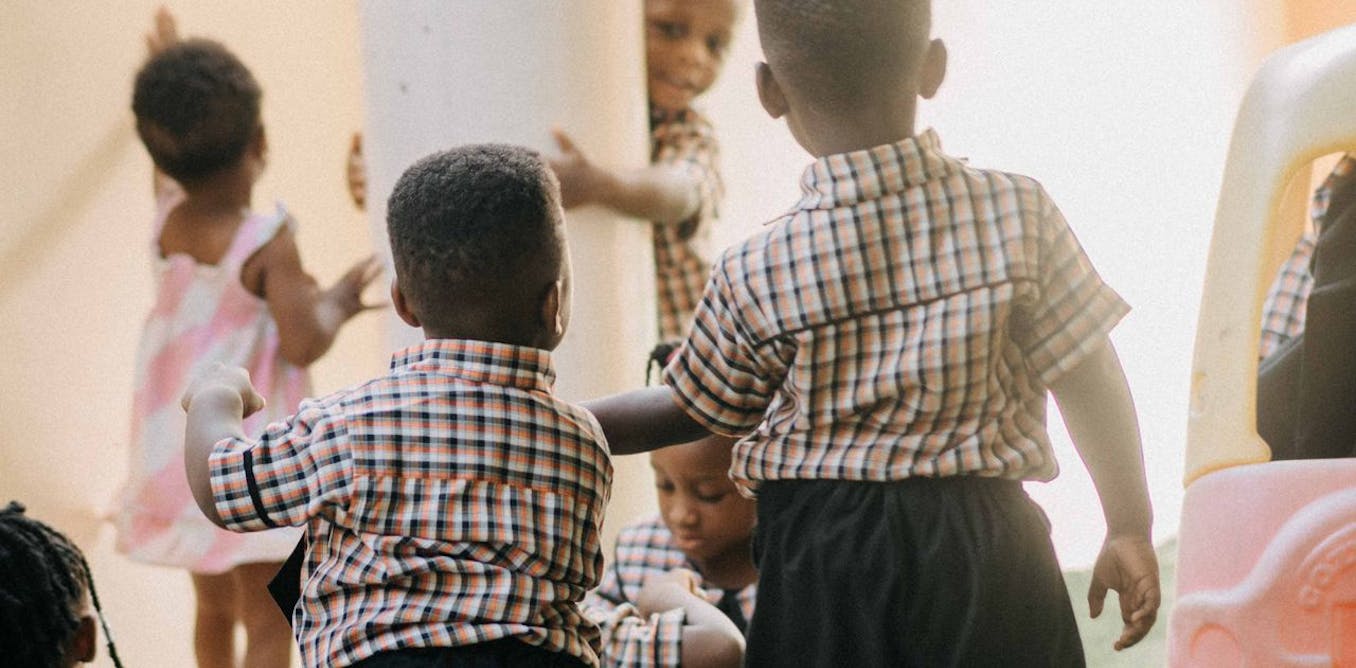
The first five years of life lay an important foundation for children’s future schooling, health and earnings. Yet over 77% (table 2) of children in sub-Saharan Africa don’t have access to early childhood care and education. This places them at risk of not reaching their development potential. In response, governments across Africa are increasingly committing to expanding enrolment in pre-primary school. But research suggests that expanding enrolment is not enough. It’s also important to create healthy, nurturing learning environments that help prepare children for primary school. Economists like us have an interest in this because we want to be able to help design effective and scalable early childhood education programmes and policies. We need to know: what types of pre-primary education programmes are offered? what effects do these programmes have on children’s developmental outcomes? which components of pre-primary education bring about these effects? We set out to answer these questions by reviewing the most recent evidence available on pre-primary education programmes in low- and middle-income African countries. Our research examined why some pre-primary education programmes may be more successful than others. Our study identified and reviewed the findings from six programmes carried out by local governments in The Gambia, Ghana, Kenya, Malawi and Mozambique. Most were in poor, rural and remote areas. We found that most programmes focused on play-based learning. And, on average, they generated positive effects on children’s development. The research also suggests that programmes that offer support for parents may generate the largest impacts on children’s development outcomes. This points to the need for programme planners to recruit high-quality teachers and personnel who can effectively engage with both children and parents. Studies of child development To address our research questions, we began by searching for studies on the effects of pre-primary education programmes in low- and middle-income countries in Africa. We only reviewed studies with large enough populations to be meaningful and that used rigorous ways of evaluating the results. Six programmes met our inclusion criteria. There was one each in four countries – The Gambia, Mozambique, Kenya, and Malawi – and two in Ghana. In particular, we examined the effects on two categories of children’s development: cognitive and socioemotional. Cognitive development. This refers to a child’s thinking process. This outcome is measured by assessing children’s numeracy, literacy, spatial ability, language, communication, and executive function skills, such as attention and working memory. Socioemotional development. This encompasses a child’s social and emotional competence, temperament and behaviour regulation. It is measured by assessing children’s awareness of other people’s feelings and how they behave towards others. On a broad level, we focused on the quality of the classroom environment and the quality of instruction. In particular, we looked at interventions designed to improve teaching practices and teacher-child interactions through play-based learning. All programmes included teacher training. Some also provided teachers with resources such as basic play and learning materials or teacher guides. In addition, two programmes offered a monthly stipend to teachers who completed training. Teachers did not typically earn a salary. Most also engaged with parents about school-related activities or educated parents about positive caregiver practices. For example, they encouraged parents to read and play with children, reduce harsh discipline and understand their influence on child development. Success of programmes On average, the programmes were successful in improving children’s cognitive, social and emotional development. This finding is important because improvements in these skills early in life are associated with better educational, employment and economic outcomes later in life. These longer-term benefits can be substantial. For example, in the United States, every dollar invested in the Perry Preschool Program, an early childhood education programme targeted to low-income youth, is estimated to have generated approximately US$7–US$12 in benefits to society. Read more: Kenyan approach holds promise for boosting early childhood education To explain the positive effects in low- and middle-income African countries, evidence points to the importance of both the classroom and the home environment. First, successful programmes generally improve teacher practices and classroom quality. Our research shows that teacher training can decrease teacher burnout, increase the use of appropriate instruction materials, and improve the quality of teacher-child interactions. For example, in Ghana, training encouraged teachers to consider children’s ideas during lessons and create opportunities for children to reason and solve problems. Second, programmes that engage parents may be even more effective in improving children’s development. For example, a programme in Malawi that integrated group-based parenting education sessions into pre-schools with trained teachers brought about even greater gains in children’s language skills and prosocial behaviours. This programme focused on teaching parents tools for stimulating children’s development and promoting health, such as reading and playing with children and washing hands. Read more: Parents who believe their children can have a better future are more likely to read and play with them – South African study Third, the quality of implementation matters. Recruiting high-quality, experienced teachers is important for the success of the programme. Where the researchers didn’t find positive programme outcomes, it may have been attributed to inexperienced staff (in The Gambia) or the difficulties personnel (in Ghana) experienced in communicating with parents about new approaches to early childhood education. Implications for policy and practice The findings suggest that positive caregiving practices should be delivered by qualified personnel who can effectively communicate and engage with caregivers who may have low levels of education or limited access to resources. Read more: Child care centres in South Africa need more support: principals tell of pandemic impact Our research has implications for Sustainable Development Goal 4.2. The goal is to provide all children with access to quality pre-primary education by 2030 so that they are ready to enter primary school.
A child’s first 5 years set them up for life. African study explores how to target education spending
Full Article
Original Source
Read the full article at Theconversation →KhanList aggregates and links to publicly available news content. We do not host full articles from third-party sources. Always verify important information with original sources.