
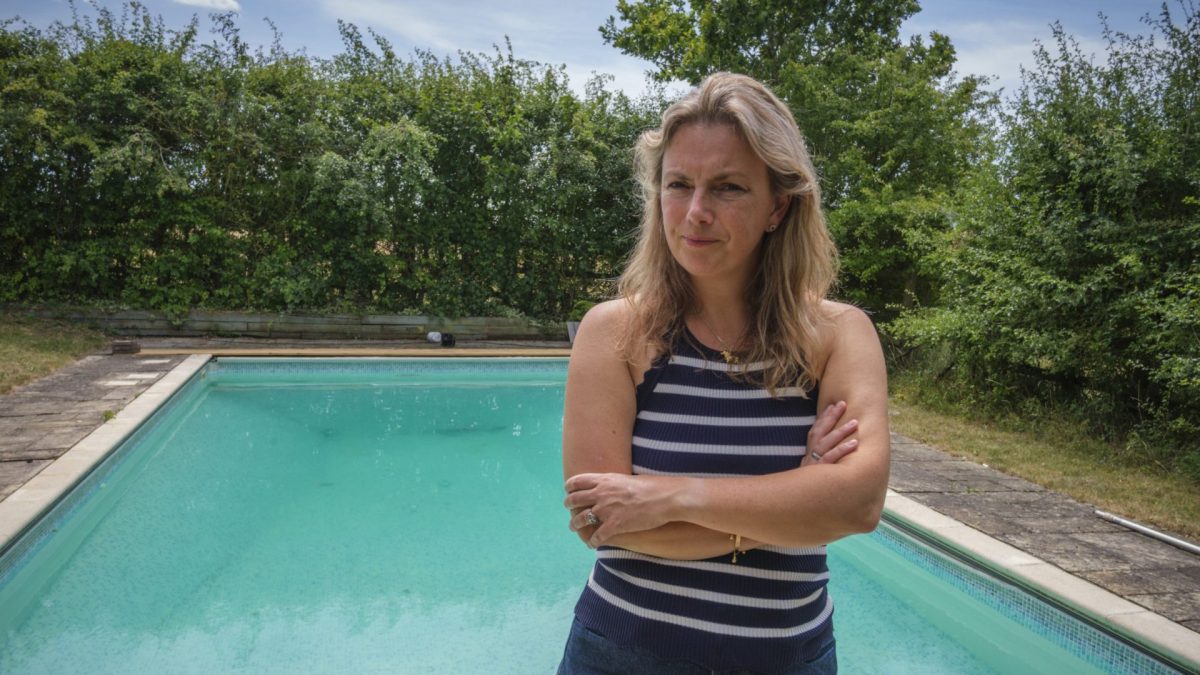
When I heard on the news this week that one in three children can’t tread water, I wasn’t surprised. Last week, my seven-year old son and his friend ran into difficulty in our pool which resulted in me jumping in fully clothed to rescue them. His father thanked me and hoped that I didn’t ruin my watch; as far as I was concerned the only things that were of any value were flailing around in the pool. Both boys have swum a lot together in our pool this summer with my supervision and no issues. As we have a swimming pool, our son Benjamin has had plenty of practice and can swim confidently – he will happily jump in with no swimming aids. But his friend has not received as much exposure to water and has not had any swimming lessons. He explained afterwards that he sometimes struggled to tread water. The terrifying episode occurred when my son’s friend called him over in the water and proceeded to use Benny’s shoulders and head as a buoyancy aid in an effort to stay afloat. Both boys were shouting and Benny was intermittently coming up for air whilst his friend was using him as life support. Shorts I first thought they were play-fighting. I shouted at his friend to stop and when he didn’t, I realised they were struggling, and jumped in fully clothed. I know every second counts and I wasn’t taking any risks. They were in the middle of the pool, out of their depth but comfortable for me to stand in. I managed to extricate my son from his friend (he was underwater) and then grab them both and get them to safety. Cue a lot of tears and coughing and bellies full of water. Both boys were incredibly rattled – as you might expect. Afterwards, severely castigating myself for not noticing earlier – I had been on the phone to my son’s dentist but the children were in my sight – I started looking into exactly how long it takes for a child to drown and CPR for children. It wasn’t pleasant reading. It transpires that there are several stages of drowning. The first is the struggle which is often silent. I think we all assume that drowning is some dramatic noisy event but it is quite the opposite – often a hand in the air is the only sign. The first stage of drowning lasts 30 seconds. So, if we assume that I jumped in at six seconds, I had 24 more seconds before my son would have reached stage 2. The second stage of drowning is two minutes of full water immersion when a child loses consciousness as oxygen stops reaching the brain and heart. Four to six minutes is the point that irreversible brain damage and cardiac arrest can occur, making revival unlikely without immediate attention. For children under 12, an emergency CPR procedure involves checking the airways, calling for help, followed by 30 heart compressions, five breaths whilst pinching the nose and continuing in that order until the emergency services arrive. I am always present when my son is swimming but this incident was a reminder that it’s no good just being present – you must have your eyes on them at all times, just like a professional lifeguard. However, it also shone a light on the woeful provision of swimming lessons in our country. The national curriculum states that all pupils should be able to swim competently over 25 metres, use a range of strokes and perform safe self-rescue (for example, tread water). But recent research by the BBC shows huge disparities in children’s swimming: 72 per cent of year 6 children in England left school able to swim, but this dropped to 55 per cent for schools with a higher proportion of disadvantaged students. Years of austerity, cuts to education and a cost of living crisis means fewer and fewer children are having access to swimming lessons and pools. Richer families pay for private lessons outside of school hours. ‘In my opinion, schools should be getting on the front foot and teaching children to swim from the age of four and five, rather than nine or ten,’ says Sybilla (Photo: Jason Bye) In England, there is no national minimum number of swimming lessons provided in schools and more than a third of state primary schools provide less than 10 lessons a year. The number of public swimming pools fell by 400 from 2010 to 2025, in England alone. This affects schools as there are fewer pools for them to use for lessons. In my opinion, schools should be getting on the front foot and teaching children to swim from the age of four and five, rather than nine or 10. Around 33 children die every year in the UK as a result of drowning according to the National Child Mortality Database. We should not rely on parents, who may not have the means nor the infrastructure, to give their children swimming lessons. Michael Gunning, a former Team GB swimmer who has been involved in the Love Swimming campaign this year says: “For children from less affluent and marginalised communities, swimming can be a very different experience because they may not have the same access to lessons, pools or opportunities to spend time in the water. I’ve experienced barriers myself throughout my swimming career, so I know how important access and representation can be. “Swimming is a life skill, not a privilege. School swimming can be a real equaliser because, for some children, it may be their only opportunity to learn and understand how to stay safe around water. What gives me hope is that the appetite is there, children want to swim. I’d much rather see these statistics as a call to action: making sure every child, whatever their background, has the opportunity to discover the enjoyment of swimming and develop the skills that could one day save their life.” The need for children to learn to swim could not be more vital. Our increasingly warm weather has led to more tragedies in the water – since May there have been at least 35 drowning deaths in the UK, including five children. Those frightening few seconds in the pool with my son and his friend were a stark reminder that swimming lessons must be a necessity, not an optional extra for the well off.
A child nearly drowned in our pool. It gave me an alarming realisation
Full Article
Original Source
Read the full article at Inews →KhanList aggregates and links to publicly available news content. We do not host full articles from third-party sources. Always verify important information with original sources.