LAKEWOOD, Ohio — For the fourth time this week, a body was pulled from Northeast Ohio waters. The body of a man washed up on the shores of Clifton Beach Thursday afternoon, Lakewood police said. Capt. Frank Eschweiler said police are waiting for the Cuyahoga County Medical Examiner to rule on the cause of death before providing more information. The man was between the ages of 45 and 65, police said, but they weren’t able to identify him. He joins three others — ages 5, 19 and 55 — who were pulled from bodies of water in the region in recent days.Alissa Magrum, executive director for the nonprofit National Drowning Prevention Alliance, or NDPA, said drowning doesn’t discriminate. Magrum said water safety knowledge could prevent many of these deaths, but she believes many people don’t take it seriously. “So many people think drowning is someone else’s issue,” Magrum said. “Sometimes your swimming ability doesn’t matter. Nobody is drown-proof.”In 2025, Cuyahoga County had 15 drowning deaths. So far in 2026, only two deaths have been formally ruled drownings, but that doesn’t account for other cases in which rulings haven’t yet been issued. Summit County recorded one drowning death so far in 2026 and 10 drowning deaths in 2025, the Summit County Medical Examiner said. Last Saturday, a 6-year-old boy went missing near the East 55th Street Marina after he was playing near a breakwall, designed to curb waves and high tides as they wash toward the shore. Witnesses reported hearing a splash. Authorities found the child’s body Sunday morning after a lengthy search involving a police drone. The Cuyahoga County Medical Examiner’s Office hasn’t yet ruled on a cause of death. Drowning is the leading cause of unintentional death for children ages 1 to 4 and the second leading cause of unintentional injury death for children ages 5 to 14, according to the Centers for Disease Control and Prevention. The majority of these deaths happen in bathtubs, pools and ponds when children are left unsupervised and wander out to these areas. It doesn’t look like the way it’s portrayed in film and television, Magrum said. It’s often quick and silent, rather than loud and slow.Recent incidents are a reminder adults are not impervious to drowning. Justin Wilson, 19, fell into the Grand River Wednesday night in Painesville and his body was recovered not long after rescue teams dove into the water to try and save him. Authorities in Summit County pulled 55-year-old Michael Ocepek from the east reservoir of Portage Lakes after a resident found a boat partially submerged in the water Wednesday. The Summit County Medical Examiner ruled his death a probable drowning. Magrum said many people will choose not to wear life jackets while boating or recreating in large bodies of water or believe they are strong enough swimmers who would be able to save themselves in the event of an emergency in the water, but that isn’t always the case. Strong tides, hazardous weather conditions or alcohol and drug consumption can increase the likelihood of drowning, even if someone is a good swimmer. Magrum, a triathlete, recalls competing in an open water swim during a triathlon in Hawaii and was tossed around by the waves. “I’m a strong swimmer,” she said. “And I was scared I was going to drown.”Dave Benjamin, executive director of the Great Lakes Surf Rescue Project, said there is a lack of education about the dangers of water and how to handle a drowning emergency -- something the nonprofit teaches. When his organization conducts water safety trainings and other educational seminars, he likes to ask people three questions: what to do if your clothing catches on fire, what number to call in the event of an emergency and what to do if caught in a dangerous current.Rarely do audience members know how to answer his final question, Benjamin said. “Everyone plays in water, but very few people know a drowning survival strategy,” Benjamin said. “In schools, in standard to have fire, school shooter, tornado drills and earthquake drills in some states. Why don’t we have a water safety school curriculum?”Knowing how to swim won’t always be enough, Benjamin said. A person’s ability to tread water or swim one lap is different than surviving in treacherous waters. “Swimming is an endurance sport,” Benjamin said. “Often when people go to the pool or beach, they don’t swim—they go knee high, waist high, chest high. They don’t swim strokes. They believe this myth that they’re protected and they’re not.”The strategy embraced by the Great Lakes Surf and Rescue Project is the flip, float and follow method. If caught in a current, flip onto your back, float to keep your head above water and conserve energy, and follow the safest path out of the water. Magrum said the NDPA suggests five methods to prevent drowning: have barriers and alarms around pools or bodies of water, designate a ‘water watcher’ who can step in or get help if someone shows signs of drowning, wear a life jacket in a large bodies of water, become competent in water safety and learn what to do in the event of an emergency. “All those layers of protection work together,” Magrum said, “So if one fails, the others are in place.”
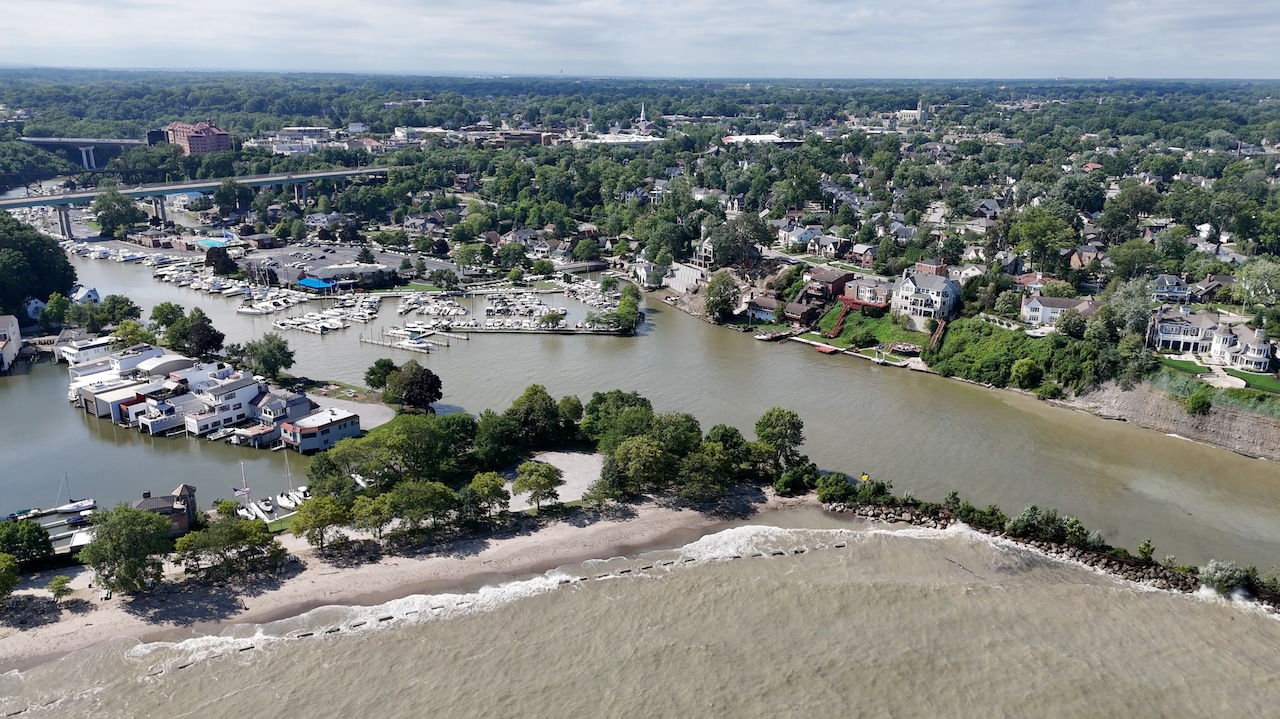
A body washed ashore in Lakewood. It was the fourth pulled from Northeast Ohio waters this week.
Full Article
Original Source
Read the full article at Cleveland →KhanList aggregates and links to publicly available news content. We do not host full articles from third-party sources. Always verify important information with original sources.