
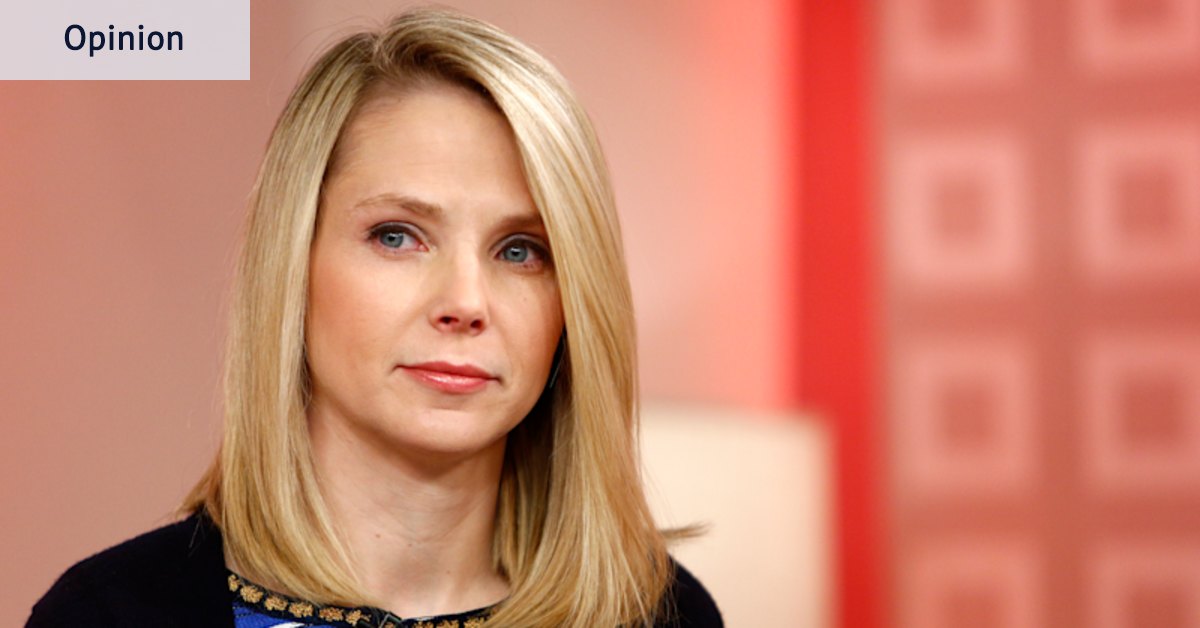
OpinionWriterNovember 1, 2026 — 7:00pmNovember 1, 2026 — 7:00pmLadies and gentlemen, prepare to be dazzled! From the same brilliant tech minds that brought us pervert glasses and chatbot-induced psychosis comes the latest AI-powered product: a range of AI personal assistants that are wooing us with the utopian promise of never needing to have human contact with our children or spouses again.Marissa Mayer, the US tech billionaire and former chief executive of Yahoo, announced the launch of Dazzle, an AI assistant aimed at women, in a recent interview with The New York Times. How will Dazzle improve your life? I’m so glad you asked. Let’s hear Mayer’s own personal experience:“Mayer’s daughter Marielle was turning 10, and Marielle’s teacher wanted three bullet points summarising what made her special. Mayer felt overwhelmed by the range and complexity of potential answers. So she asked her personal AI assistant, Dazzle. Within a few seconds, Dazzle delivered an answer. “It came back and was like, your daughter is empathetic, creative and an animal lover,” Mayer said. She thought it was perfect.”Former Yahoo boss Marissa Mayer is now spruiking an AI device to run your family. APMany of us already have a few niggling concerns around AI. These include the risk of AI escaping human control and wiping out humanity (as helpfully outlined in Anthropic’s recent IPO filing) and the terrifying impacts of data centre construction globally.As AI companies set their sights on our personal lives, another fundamental problem is emerging: AI’s practical applications for our personal lives are being conceptualised by life forms that are carbon-based and people-shaped but otherwise don’t seem to experience being a part of the human race the way the rest of us do. This is the only possible explanation for why Mayer seemingly thought her story about needing AI’s help to describe her own child was a heart-warming anecdote or why, in the same interview, she “mused enthusiastically about the potential efficiency gains of having her AI assistant talk directly to her husband’s AI assistant”.The widespread backlash to Mayer’s tone-deaf interview was swift and ferocious but she’s not the only tech billionaire certain that we’ll all open up our phones to AI and let the digital scraping of our personal information continue apace. In September, Mark Zuckerberg celebrated the North American launch of Muse, Meta’s AI personal assistant. Zuckerberg radiated confidence that in the near-future: “Everyone will have an exceptionally capable personal [AI] agent that understands you, your goals, and everything you care about. You’ll be able to interact with your agent through any device, including your [AI] glasses to keep you present in the moment with the people you care about.”Muse is not yet available in Australia, which gives you some thinking time to consider whether “I love you and I’m present in this moment” is best conveyed to your family via a stream of code containing interpersonal behavioural directives, while AI glasses simultaneously record all of the definitely-real-bonding action taking place. If your answer to this is “Yes”, please proceed to question two, which is “Are you comfortable having all of your family’s personal data strip-mined by the same company that agreed to pay $US17 billion ($24 billion) to settle claims that it intentionally designed Instagram and Facebook’s algorithms to turn children into social media addicts, misled the public about the harm and improperly collected data from children under 13?” If your answer is still yes then please ready your bank account details, passport number, passwords and contacts, as Muse will request access to all of these and more.Over 10 million users have already signed up to Muse, so many people clearly believe that the benefits an AI assistant will bring to their personal lives outweighs issues such as a child’s inability to give informed consent to their information being handed over to Meta. Some of these users may also have been swayed by Zuckerberg’s recounting of the fun times his family have with AI. These include Muse offering suggestions while Zuckerberg bakes with his family (way to stay in the moment, Zuck!) and his eight-year-old daughter using AI to code her ideas and produce videos.Meanwhile, beyond the gates of the billionaire’s compound, other people’s daughters are being covertly filmed, stalked and harassed by AI-enabled glasses. The harassment is then amplified when the videos are posted to social media sites like Instagram. The integration of personally invasive AI-powered products to maximise profit is seamless.Why the tech oligarchs are so desperate for us all to embrace AI in every aspect of our lives is hardly a mystery. As reported in this masthead: “The world is in the midst of an AI building boom that dwarfs anything it has seen over the past two centuries. This year alone, an estimated $1 trillion will be spent on data centres and the computer servers to fill them.” The circular financing model propping up the AI industry (chip companies invest in data centre construction companies, which then buy chips from their original investor) is also inherently unstable and has led to widespread fears of an AI bubble.This is why the AI industry doesn’t just want our data and our buy-in to their products, they need it. But around the globe, people are increasingly wondering if the roll-out of AI into every area of our lives is really in our best interests. We understand its value in areas such as defence and medical research. But an opt-out button when it comes to school classrooms, the creative arts and our personal lives now feels urgent.When the New York Times reporter asked Mayer if it was depressing to imagine a future in which birthday celebrations, holiday gifts and family vacations are all planned by AI, Mayer replied, “I haven’t really thought that through.”Perhaps now is the time to think through how, and to what extent, we want to bring AI into our lives and the people doing the thinking should be us.Melanie La’Brooy is a novelist who writes on politics and social justice issues.The Opinion newsletter is a weekly wrap of views that will challenge, champion and inform your own. Sign up here.From our partners
A billionaire tech boss shared a story about her 10-year-old daughter. It gave the world the chills
Full Article
Original Source
Read the full article at Smh →KhanList aggregates and links to publicly available news content. We do not host full articles from third-party sources. Always verify important information with original sources.