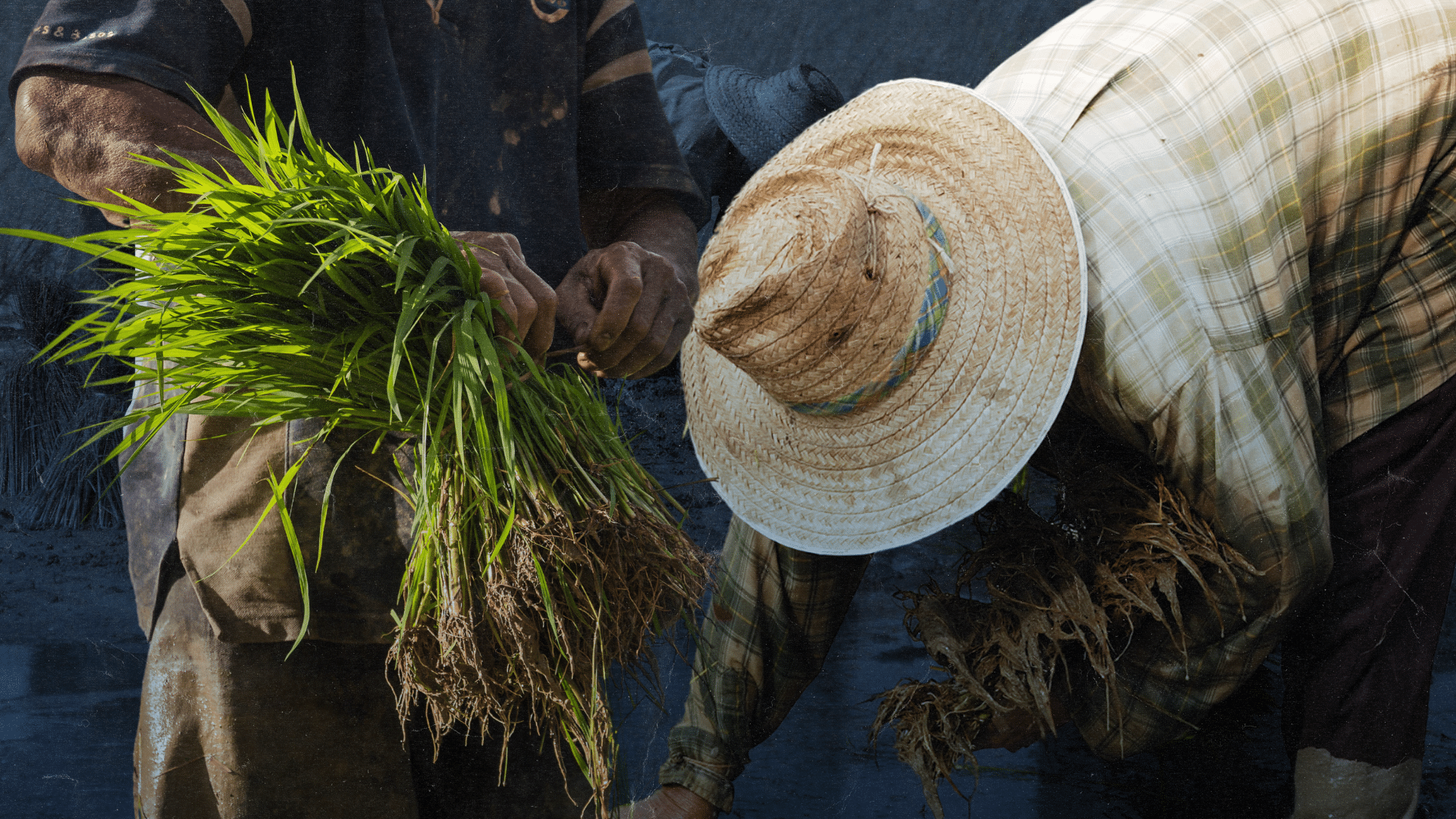
FARMING composite image from Inquirer file/stock photos The Federation of Free Farmers, the country’s oldest national farmers’ organization, gives the Marcos administration a grade ranging from “barely passing” to “failing” for its performance in agriculture and fisheries since President Ferdinand Marcos Jr. took office on June 30, 2022. Despite successive increases in the Department of Agriculture’s budget, an unprecedented roster of 14 undersecretaries and a hyperactive press office, the agriculture and fisheries sector has remained largely stagnant. It has alternated between contraction and slight growth while barely keeping pace with the country’s population growth rate of about 1 percent. Article continues after this advertisement Rice offers a telling example. Although about 60 percent of the DA’s budget goes to the rice program, average yield per hectare barely increased, from 4.11 tons in 2022 to 4.14 tons in 2025. That remains well below the modest target of 5 tons per hectare. Except for coconut, some fruits and fish, the Philippines has become increasingly dependent on imports to meet rising consumer demand. Since 2022, the country has imported about 30 percent of its staple rice requirements, compared with less than 10 percent a decade ago. The Philippines now bears the dubious distinction of being the world’s largest rice importer. The government’s import-driven approach has also failed to deliver meaningful relief to consumers. Article continues after this advertisement Following the issuance of Executive Order No. 62 in June 2024, tariffs on rice, corn, pork and poultry were sharply reduced. Yet the resulting influx of imported commodities failed to significantly lower retail prices. Instead, the policy caused severe income losses among local producers and discouraged planting, livestock raising and domestic production. Article continues after this advertisement For the country’s 3 million rice farmers, incomes have declined by an estimated P50 billion annually in real terms since the Rice Tariffication Law took effect in 2019. At the same time, the drastic decline in tariff collections — including about P44 billion from rice alone — has deprived farmers of much-needed revenue earmarked for programs intended to improve their productivity and competitiveness. Despite these consequences, the administration continues to rely on trade liberalization and importation. It is rushing to complete free trade agreements with the European Union, Canada and Chile even as local pork and poultry producers worry about having to compete with cheaper imports from these markets. Our fisherfolk face an equally serious threat: the continuing encroachment of commercial fishing vessels into municipal waters, which the law reserves for municipal fishers. Unfortunately, the Marcos administration and the DA’s Bureau of Fisheries and Aquatic Resources are perceived to have fumbled their responsibility to protect the exclusive rights of municipal fisherfolk in the Mercidar Fishing Corp. case, which has been pending before the Supreme Court for several years. On agrarian reform, the President deserves credit for spearheading the enactment of the New Agrarian Emancipation Act in 2023. The law condoned the unpaid land amortizations of agrarian reform beneficiaries. But much remains to be desired from the Department of Agrarian Reform. The DAR has been slow to respond to illegal land conversions, long-pending agrarian disputes and violence against farmers fighting for social justice. Among the victims were Federation of Free Farmers leaders Gerriel Tadeja and Josephine Tadeja, who were killed in Alacaak, Sta. Cruz, Occidental Mindoro, in December 2024. The department has also remained silent despite calls from landless farmers for a legal pathway to gain access to and ownership of land after the 2014 deadline under the Comprehensive Agrarian Reform Program Extension with Reforms Law. Such a pathway would be consistent with the Constitution’s provisions on agrarian reform and social justice. During his State of the Nation Address a year ago, the President made several commitments. He promised to pursue profiteers who prey on consumers and traders who exploit farmers. He said 15 million new coconut trees would be planted during the year. He also pledged to prioritize amendments to the Coconut Farmers and Industry Trust Fund Act of 2021 so that about 3 million coconut farmers and farmworkers could gain effective access to the more than P100 billion coconut levy fund. Today, the fulfillment of those promises remains devoutly to be wished. Your subscription could not be saved. Please try again. Your subscription has been successful. [Leonardo Q. Montemayor is chairperson of the Federation of Free Farmers and a former secretary of the Department of Agriculture.] Visit our Sona 2026 live coverage to stay updated with the latest #SONA2026 news and stories.
A barely passing — if not failing — grade for Marcos on agriculture
Full Article
Original Source
Read the full article at Newsinfo →KhanList aggregates and links to publicly available news content. We do not host full articles from third-party sources. Always verify important information with original sources.