
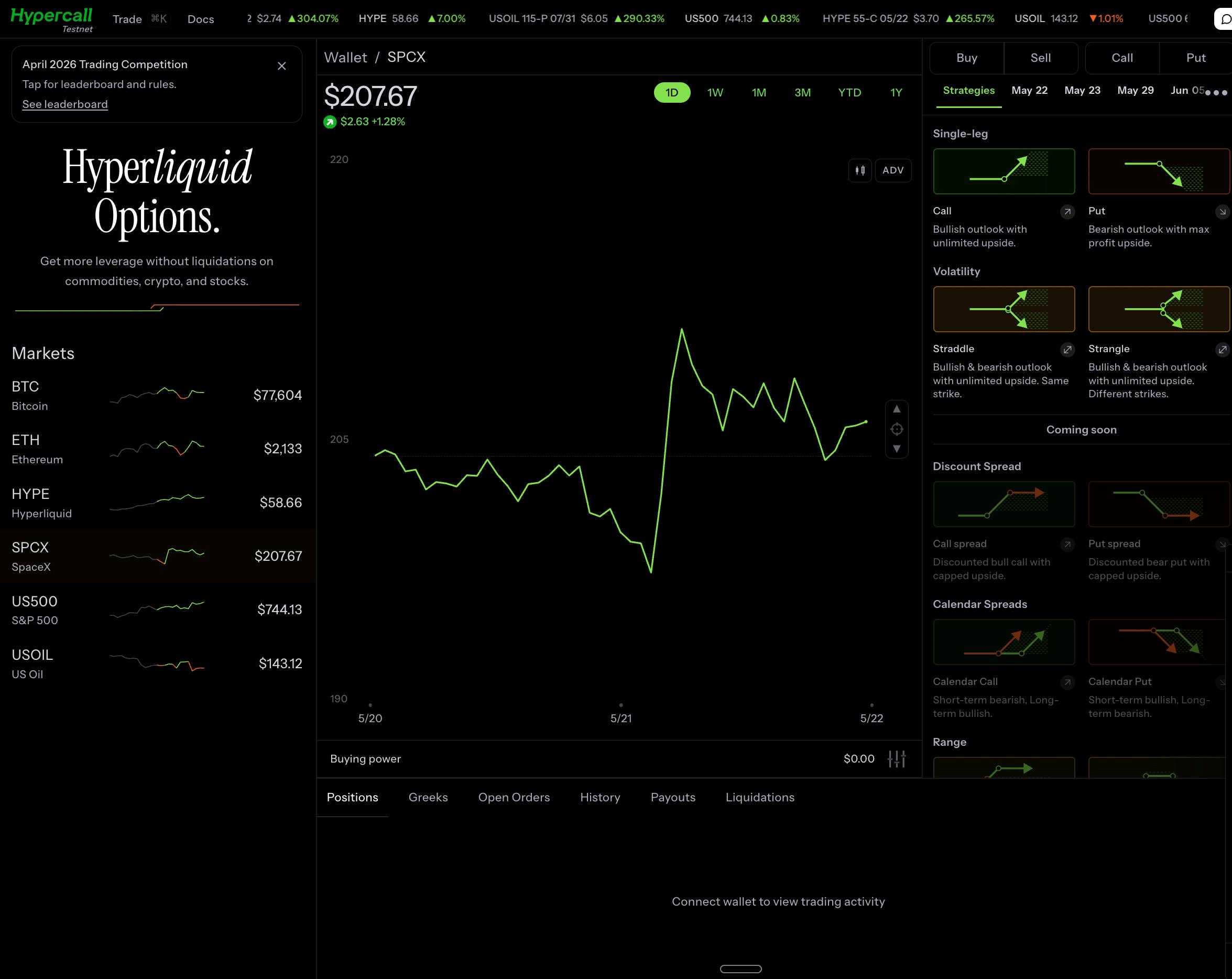
Wall Street is getting serious about markets that barely close. On September 17, the SEC brought together BlackRock, Citadel Securities, Jane Street, Nasdaq, Cboe, DTCC and others for a full-day roundtable on 24-hour U.S. equity trading. The agenda covered liquidity, surveillance, clearing, settlement, market data, cybersecurity and the infrastructure required for an eventual move toward round-the-clock trading. Robinhood has since announced plans to add weekend trading in select U.S. stocks and ETFs, extending a broader push toward continuous access. There is a major gap in that transition: options. If stocks become continuously tradable while their options remain tied to traditional market hours, investors will be able to take on risk at hours when they can’t hedge it. Today, most U.S. single-stock options trade 6.5 hours a day, five days a week: 32.5 of the week’s 168 hours. Cboe’s new extended session adds about two hours a day for roughly 20 of the largest names. Nights and weekends stay dark. That creates a mismatch between the hours in which markets produce risk and the hours in which participants can efficiently manage it. Markets Close. Risk Doesn’t. Markets now react continuously to elections, geopolitical events, regulatory decisions, economic developments, and corporate news. SEC Chair Paul Atkins made the same point at the September roundtable: “When the world reacts in real time to breaking news, waiting to adjust a position or rebalance a hedge until the clock strikes 9:30 on Monday morning may beget missed opportunities or additional risk.” Consider January 2025. The DeepSeek story built over a weekend, and by Monday’s pre-market, Nvidia shares were already down roughly 14%. Its options couldn’t trade until 9:30 a.m. By the close, Nvidia had lost $589 billion in market value, the largest one-day loss in U.S. market history. That matters because extending trading in the underlying asset solves only half the problem. If material news breaks on Saturday and a stock reprices immediately, an investor may be able to buy or sell the shares but still lack access to the options market used to define downside, hedge volatility or manage a specific exposure. Price discovery becomes continuous while risk transfer remains intermittent. Options Are Part of the Market Infrastructure Options let portfolio managers protect positions without liquidating them, market makers manage exposure and investors construct defined-risk trades that cannot always be replicated efficiently in the underlying asset alone. Those functions matter even more as trading hours expand. Overnight and weekend markets can have thinner liquidity and sharper moves, exactly the conditions in which access to hedging tools becomes more valuable. A continuous stock market paired with a part-time options market is an incomplete design. This does not mean every option on every stock needs to trade every second of the week. Liquidity, market-maker participation and operational resilience still matter. But the closer equities get to 24/7 trading, the harder it becomes to avoid the larger question: what should continuous risk management look like? Crypto Has Already Been Testing the Answer Crypto faced this problem earlier because its markets never had a closing bell. That environment produced financial products designed around continuous trading, most notably perpetual futures. Perpetuals became dominant because their structure fit a market that operated continuously rather than forcing that market into legacy schedules. That model is now moving outward. Robinhood’s September announcement included plans for crypto perpetual futures alongside weekend stock trading, showing how crypto-native market structure is beginning to influence traditional finance. But perpetuals solve access, not risk. On Friday, October 10, 2025, a U.S.–China tariff escalation landed around the U.S. equity close. Crypto was the only major market still open, and it absorbed the shock alone: more than $19 billion of leveraged positions were liquidated, the largest such event on record. Perpetuals gave traders continuous access. They didn’t give them a defined downside. That is what options add, and they are harder to build. A credible 24/7 options market needs reliable underlying prices, continuous volatility data, responsive collateral systems and market makers capable of pricing risk across very different liquidity environments. That is not simply a matter of keeping an exchange open longer. It requires infrastructure built for a market that never meaningfully shuts down. That is exactly where traditional markets are stuck. Listed options key exercise, settlement and daily margin off official opening and closing prices, and “closing price processes” made the SEC’s roundtable agenda. The Options Clearing Corporation, which clears every U.S.-listed option, runs one settlement cycle a day through banks that keep business hours. Its own September 2025 paper sketches a phased path that starts at 22 hours a day, five days a week, with 24/7 as the final stage. Its suggested fix for the banking bottleneck is telling: “when legacy banking entities are closed, stable instruments may enable on-chain, near-instant transfer of margin and settlement obligations.” For a trader who needs a hedge tonight, a phased roadmap doesn’t help. Built for a Market That Never Closes At Hypercall, we started from the other end. Instead of stretching an exchange’s hours, we built options for markets that never close. Hypercall runs on Hyperliquid, where the markets our options reference trade around the clock, so market makers can hedge at 3 a.m. on a Sunday the same way they do at noon on a Tuesday. Margin is posted in USDC on-chain, so collateral moves when it’s needed, not when a bank opens. Hypercall lists options on Nvidia, Apple, Microsoft, the S&P 500 and bitcoin, among others, and they trade at any hour of any day. If the next DeepSeek breaks overnight, an Nvidia holder doesn’t have to wait for the opening bell to hedge. The hardest part of running options around the clock isn't keeping the venue open. It's knowing what a fair price is when the markets you reference go quiet. Implied volatility doesn't stop moving just because quotes thin out at 3 a.m., so we run more than one volatility source and fail over between them, and every surface carries an expiry so a stale price can't quietly set margin. We'd rather stop quoting than quote on bad data. 24/7 Markets Need 24/7 Risk Management The SEC’s own roundtable made clear how much infrastructure sits beneath the idea of longer trading hours. Clearing, settlement, surveillance, liquidity, resiliency and market data all have to evolve with the trading session. Options belong in the same conversation because they are part of how modern markets transfer and manage risk. The larger opportunity is not to take today’s market and stretch it across more hours. It is to redesign financial infrastructure around the reality that markets are becoming global, continuous and increasingly unconstrained by the opening and closing bell. If stocks trade 24/7, risk eventually will too. The options market will have to follow. On-chain, it already has. By Jake Sylvestre, Founder of Hypercall Disclosure: Jake Sylvestre is the founder of Hypercall, an on-chain options venue, so he has a direct interest in the market structure this piece describes. Nothing in this article is investment advice.
A 24/7 Stock Market Needs a 24/7 Risk Market. It Already Exists On-Chain
Full Article
Original Source
Read the full article at Hackernoon →KhanList aggregates and links to publicly available news content. We do not host full articles from third-party sources. Always verify important information with original sources.