
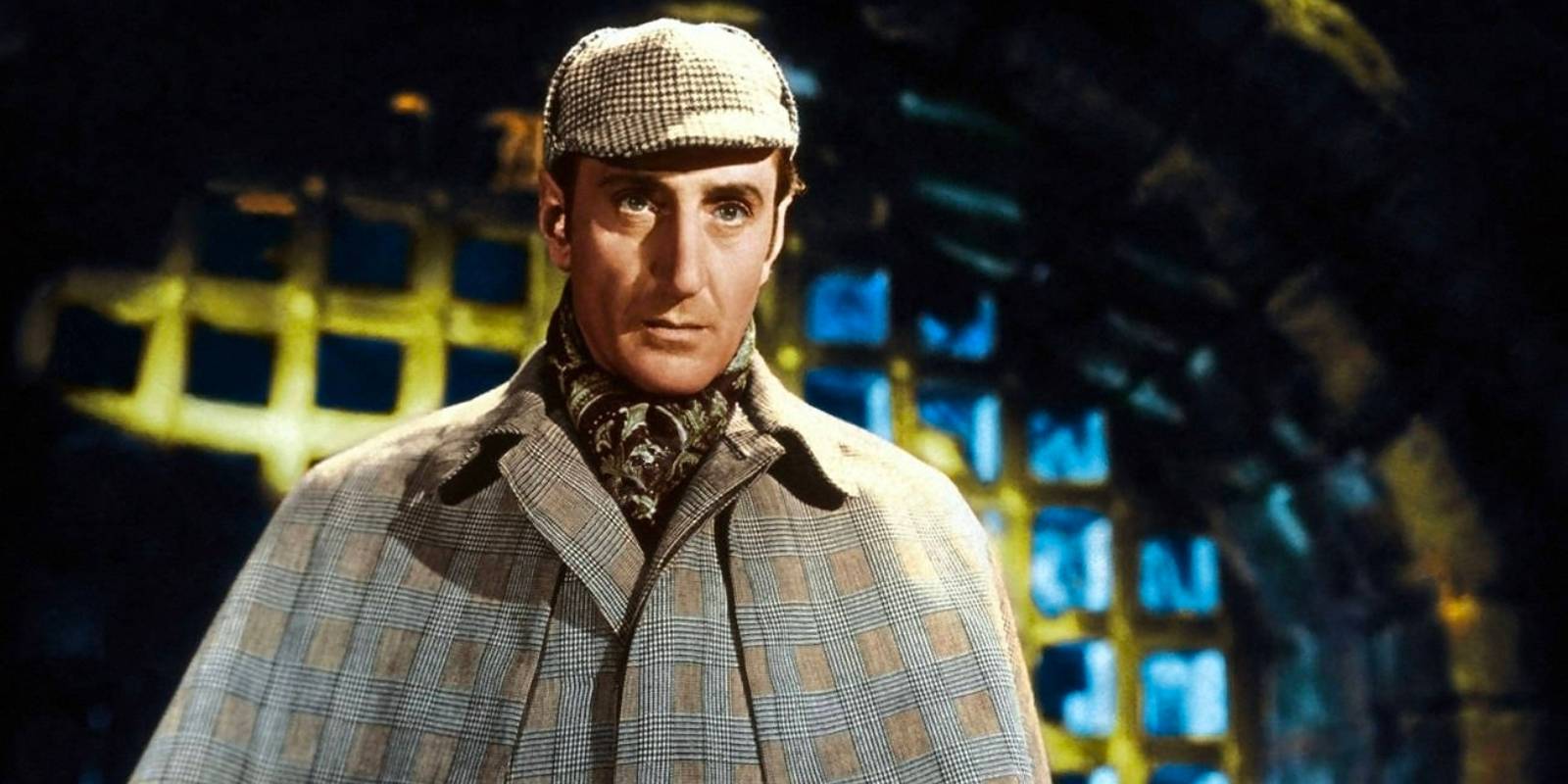
Published Nov 2, 2026, 7:02 AM EST Lloyd 'Happy Trails' Farley: the man, the myth, the legend. What can be said about this amazing - and humble - man that hasn't been said before? Or, more accurately, what can be said in public? Born in Calgary, Alberta, Canada, Lloyd is a master of puns and a humorist, who has authored one pun book to date - Pun and Grimeish Mint - and is working on a second. His time with Collider has allowed Lloyd's passion for writing to explode, with nearly 1,000 articles to his name that have been published on the site, with his favorite articles being the ones that allow for his sense of humor to shine. Lloyd also holds fast to the belief that all of life's problems can be answered by The Simpsons, Star Wars, and/or The Lion King. You can read more about Lloyd on his website, or follow his Facebook page and join the Llama Llegion. Happy trails! Sherlock Holmes is a character who simply won’t go away, with the 139-year-old consistently being revisited and reimagined in media adaptations, from 1900's silent short film Sherlock Holmes Baffled to a recently-announced project, with the working title Animated Sherlock, which will see the famed detective in an animated series aimed at an adults-only audience, currently in production. That comes in a year that has already seen the Sherlock-adjacent third installment of Netflix's Enola Holmes and Prime Video's Young Sherlock, developed by Guy Ritchie, the man behind 2009's Sherlock Holmes and its follow-up, Sherlock Holmes: A Game of Shadows. These projects have generated a number of memorable quotes (including this one), but only one, first uttered in 1929, still defines the character to this day: "Elementary, my dear Watson." Sherlock Holmes' Defining Quote Is Pure Hollywood What's interesting about the quote is that, over the course of four novels and 56 short stories, Sir Arthur Conan Doyle never had the sleuth actually say it. The closest he came was in 1893's The Adventure of the Crooked Man, with the phrases "my dear Watson" and "elementary" have a full 52 words in between them, while in 1904's The Adventure of the Missing Three-Quarter, where Sherlock says, "Exactly, my dear Watson." The origin of the phrase is believed to lie with actor William Gillette, who uttered the line in the 1899 stage production of his play Sherlock Holmes, but that has never been verified. The first confirmed use of the quote came in the 1929 film The Return of Sherlock Holmes, spoken by actor Clive Brook, who played Sherlock, at the end. But the phrase and the character became forever entwined in popular culture thanks to Basil Rathbone, who first played Sherlock Holmes in 1939's The Hound of the Baskervilles. Everything we associate with Sherlock Holmes — the deerstalker cap, the smoking pipe, even the relationship with Dr. Watson — was set as the standard by Rathbone's 14 Sherlock Holmes films. That includes "Elementary, my dear Watson," which Rathbone would say for the first time in the 1939 follow-up, The Adventures of Sherlock Holmes. Over time, Rathbone grew to resent the line and the films, cringing whenever a fan cried it out, and feeling that the films diminished the depth of Conan Doyle's original works (and left him typecast). This 'Sherlock Holmes' Quote Still Defines the Character Despite Its Absence The reason "Elementary, my dear Watson" works as a defining quote is in how it captures who Sherlock Holmes is so simply. "Elementary" sums up the ease with which Holmes discerns things, while "my dear Watson" is an expression of affinity for his long-time partner, two fundamental truths that are consistent across the board. Only it's not just the words, but how they're delivered that makes the phrase so beautifully perfect for any adaptation of the character. In iterations of the character where he's more polite and gentlemanly, i.e. Basil Rathbone or Henry Cavill in the Enola Holmes films, the phrase takes on more of a mentor tone, maybe slightly condescending but certainly not mean-spirited, like a "for your benefit, here's how I came to this conclusion" vibe. In the more sociopathic portrayals, like Benedict Cumberbatch's take in Sherlock (or even Hugh Laurie's non-Sherlock-but-very-similar Dr. House in House), it's decidedly condescending, dismissive, and outright arrogant, delivered in that "what kind of idiot are you that you can't see it" tone. And with slight variations, it fits all points in between as well. The fact that the phrase hasn't been used again since Rathbone's films is irrelevant. "Elementary, my dear Watson" stands as the perfect summation of the character, even if the character never actually says it, because the spirit of it is still reflected in the portrayal. Besides, the phrase is so intrinsically tied to Sherlock Holmes that even those that have never heard it delivered on screen know the connection exactly. When the crime procedural series Elementary hit the air in 2012, the name alone was all it needed for people to understand it would be a take on Sherlock Holmes: the "who" was simply understood, and all that was left was the "how." "Elementary, my dear Watson" is the perfect marriage of character and quote, and its 97-year history only proves it. The Return of Sherlock Holmes Release Date October 26, 1929 Runtime 71 minutes Director Basil Dean
97 Years Later, This Sherlock Holmes Quote Still Defines the Franchise
Full Article
Original Source
Read the full article at Collider →KhanList aggregates and links to publicly available news content. We do not host full articles from third-party sources. Always verify important information with original sources.