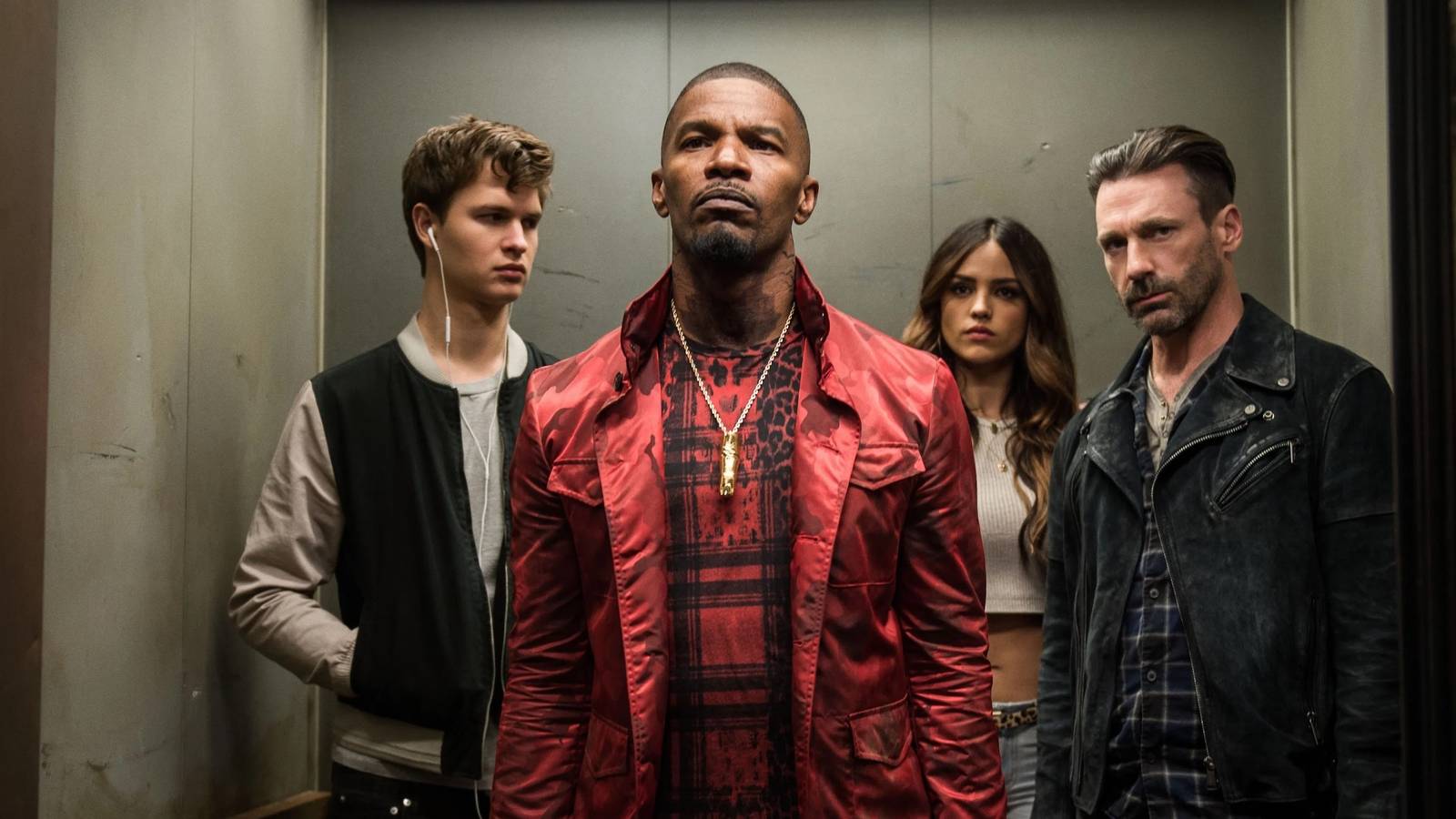
Image via Sony Pictures Releasing Published Jul 31, 2026, 12:06 PM EDT Thomas Butt is a senior writer. An avid film connoisseur, Thomas actively logs his film consumption on Letterboxd and vows to connect with many more cinephiles through the platform. He is immensely passionate about the work of Martin Scorsese, John Ford, and Albert Brooks. His work can be read on Collider and Taste of Cinema. He also writes for his own blog, The Empty Theater, on Substack. He is also a big fan of courtroom dramas and DVD commentary tracks. For Thomas, movie theaters are a second home. A native of Wakefield, MA, he is often found scrolling through the scheduled programming on Turner Classic Movies and making more room for his physical media collection. Thomas habitually increases his watchlist and jumps down a YouTube rabbit hole of archived interviews with directors and actors. He is inspired to write about film to uphold the medium's artistic value and to express his undying love for the art form. Thomas looks to cinema as an outlet to better understand the world, human emotions, and himself. Sign in to your Collider account Believe it or not, 2017 was nearly a decade ago. To a certain extent, not much has changed culturally, for better or worse. In other ways, things that were at the peak of their popularity, such as superhero movies and IP revivals, have waned in 2026 after years of oversaturation. The year that witnessed seismic events like Donald Trump's inauguration and the launch of the #MeToo movement also featured an eclectic cinematic calendar. Unlike most years of its era, the Oscar nominees of the year's respective films (not to be confused with the Moonlight/La La Land mix-up at the Oscars held to honor the 2016 movies) experienced noteworthy crossover with the masses. Between epic spectacle-oriented triumphs and quiet indie expressions, these 10 films best sum up the year from 9 years ago. 10 'Baby Driver' Image via TriStar Pictures An individual frame of an Edgar Wright film oozes with style and sheer cinematic bravura. A true idiosyncratic auteur whose infectious visual language, writing, and pop culture infusion were adored by cult cinephiles, he announced himself to the entire moviegoing world with Baby Driver, a mean, dynamic, and rip-roaring action-heist thriller that retains Wright's oddball sensibilities while flexing the director's blockbuster muscles. Despite its misleading title, Baby Driver sees Wright at his most vicious, as the story follows an innocent yet desperate getaway driver, Baby (Ansel Elgort), vying to walk away from the criminal underworld and settle down with his new love, Debora (Lily James). Wright, a savvy cinephile in his own right, samples the tropes and iconic sequences of various '60s and '70s American and British crime movies and crafts something unique, lending the film a deceiving sense of vibrant originality. The heart of the film doesn't come from its exhilarating driving and chase sequences, which are brilliant, but instead from its deep soundtrack, filled with catchy pop bangers and quirky hidden gems. Wright, a master of genre ingenuity with equal amounts of comedy and sincerity, brings out the budding filmmaker in everyone. 9 'Personal Shopper' Image via Les Films du Losange Say what you want about Twilight, but there is no denying Kristen Stewart's brilliance as an actor. Since her days as Bella Swan, she has used her cachet as shrewdly as any major star in a franchise vehicle, and more A-listers ought to take notes. For all the Twilight skeptics, Personal Shopper was a shocking revelation for Stewart, and her muted yet haunting lead performance in Olivier Assayas' psychological drama officially cemented her as a magnetic screen presence. Assayas, the renowned French filmmaker behind Irma Vep and Clouds of Sils Maria, was a co-winner of Best Director at the Cannes Film Festival for his striking, beguiling mystery film following Stewart as Maureen, a celebrity assistant trying to connect with her deceased twin brother in Paris, which is complicated by a series of ominous text messages she receives. Personal Shopper is a methodical film that demands your fullest attention, but when that effort is applied to this oblique narrative, the mind has no choice but to fall into Assayas' hypnotic direction. For any director intimidated by portraying smartphone use in movies, take a look at Personal Shopper, the most cinematic way of depicting cellular communication that speaks to our parasocial relationship to screens. Stewart was worthy of an Oscar nomination for her inspired turn as a young woman lost amid a cloud of haziness. 8 'Star Wars: Episode VIII - The Last Jedi' If there are five words that will get the Internet riled up, they are Star Wars: The Last Jedi. A film that enraged many sectors of the Star Wars fandom simply for trying to be daring and outside-the-box, Rian Johnson's singular take on the massive franchise was a swan song for tentpole franchise movies, as the insane backlash and divisive discourse stemming from its release seemed to have scared Disney off from making anything slightly esoteric ever again. Either way, The Last Jedi still rocks, sorry. The Last Jedi, following The Force Awakens' jukebox showing of Star Wars' greatest hits, pushed the franchise in unimaginable directions, notably in Johnson's characterization of Luke Skywalker (Mark Hamill) as a bitter, mournful aging master who confronts the legacy of a new impending hero, Rey (Daisy Ridley). The galactical battle between good and evil is miraculously imbued with complex thematic intrigue in this film that was shamelessly retconned in The Rise of Skywalker. Rey and Kylo Ren (Adam Driver) undergo the most sophisticated and nuanced character dynamic in the saga's history. Although Star Wars has become reduced to streaming fodder these days, The Last Jedi was a sweeping reminder of the enduring power of the franchise and the awe-inspiring magic that audiences first experienced in 1977. 7 'Three Billboards Outside Ebbing, Missouri' Image via Searchlight Pictures The hot-button film of 2017 that polarized audiences (but nonetheless played like gangbusters for the Academy Awards), Three Billboards Outside Ebbing, Missouri was the most urgent and provocative outing by writer-director Martin McDonagh. Channeling the pitch-black comedy and grim violence of In Bruges with a mournful study of justice, bigotry, and police brutality, McDonagh poked at viewers' sensitive areas with Three Billboards, a film that should at least be appreciated as an acting and writing showcase. Three Billboards accomplished a rare feat in Oscar history by having two Oscar-winning performances in its cast: the first for Sam Rockwell, and the second of three for Frances McDormand. Their dueling performances of chaotic neutral and chaotic evil turn the film into a powder keg of combustibility and tension. McDormand's turn as a grieving mother reflects the nobility of a parent and the righteous whistleblower exposing the corruption in McDonagh's fictional town, while also signaling the simmering desires of lawless societies in an aggravated society. Rockwell's hostile and racist police officer was the unflinching, harrowing villain of the Trump era. His character serves as a cautionary tale and an ugly reflection in the mirror for America at the time. Commentary aside, Three Billboards is a pleasure to watch as a piece of uncompromising dialogue and fierce screen acting. 6 'Good Time' Image via A24 Before going their separate ways as filmmakers and even stars of blockbuster movies, Josh Safdie and Benny Safdie were the most exciting directing duo to emerge since the Joel and Ethan Coen. After all, it's hard not to start hooting and hollering after watching Good Time, the precursor to the signature brand of Safdie live-wire anxiety trips seen in Uncut Gems and Marty Supreme. The film, which stars Robert Pattinson in one of his best outings on screen to date, injected American independence cinema with newfound blood. The Safdies create an uneasy, documentary-like experience that echoes the spirit of the criminal underworld and frantic lifestyle of New York City. Trying to maintain a steady heartbeat while watching a Safdie Brothers movie is an impossible task, and Good Time pushes you to the edge. Following along Connie Nikas (Pattinson) as he flees from the authorities and other enemies following a botched bank robbery, the Safdies create an uneasy, documentary-like experience that echoes the spirit of the criminal underworld and frantic lifestyle of New York City. Still, Good Time is gorgeously stylized to a degree that puts studio films to shame, and its visual clarity and tonal specificity were clear signs that the Safdies were the real deal. Pattinson, in a performance that laid the groundwork for his future boundary-pushing roles in other A24 gems like The Lighthouse and The Drama, portrays a scuzzy, dangerous felon with the persistence of a true hero. Collider Exclusive · Oscar Best Picture Quiz Which Oscar Best PictureIs Your Perfect Movie? Parasite · Everything Everywhere · Oppenheimer · Birdman · No Country Five Oscar Best Picture winners. Five completely different visions of what cinema can be — and what it can do to you. One of them is the film that was made for the way your mind works. Ten questions will figure out which one. 🪜Parasite 🌀Everything Everywhere ☢️Oppenheimer 🐦Birdman 🪙No Country for Old Men FIND YOUR FILM → 01 What kind of film experience do you actually want? The best movies don't just entertain — they leave something behind. ASomething that pulls the rug out — that makes me think I'm watching one kind of film and then reveals I'm watching another entirely. BSomething overwhelming — funny, sad, absurd, and genuinely moving, all at once. CSomething grand and weighty — a film that makes me feel the full scale of what I'm watching. DSomething formally daring — a film that pushes what cinema can even do. ESomething lean and relentless — pure tension with no wasted frame. NEXT QUESTION → 02 Which idea grabs you most in a film? Great films are driven by a central obsession. What's yours? AClass, inequality, and what people are willing to do when desperation meets opportunity. BIdentity, family, and the chaos of trying to hold your life together when everything is falling apart. CGenius, moral responsibility, and the catastrophic weight of a decision you can never take back. DEgo, legacy, and the terror of becoming irrelevant while you're still alive to watch it happen. EEvil, chance, and whether moral order actually exists or if we just tell ourselves it does. NEXT QUESTION → 03 How do you like your story told? Form is content. The way a story is shaped changes what it means. AGenre-twisting — I want it to start in one lane and migrate into something completely different. BMaximalist and genre-blending — comedy, action, drama, sci-fi, all in one ride. CEpic and non-linear — cutting between timelines, building a mosaic of cause and consequence. DA single unbroken flow — I want to feel like I'm living it in real time, no cuts to safety. ESpare and precise — every scene doing exactly what it needs to do and nothing more. NEXT QUESTION → 04 What makes a truly great antagonist? The opposition defines the protagonist. What kind of opposition fascinates you? AA system — invisible, structural, and almost impossible to fight because it has no single face. BThe self — the ways we sabotage, abandon, and fail the people we love most. CHistory — the unstoppable momentum of events that no single person can stop or redirect. DThe industry — the machinery of culture that chews up talent and spits out irrelevance. EPure, implacable evil — a force so certain of itself it becomes almost philosophical. NEXT QUESTION → 05 What do you want from a film's ending? The final note is the one that lingers. What do you want it to sound like? AShock and inevitability — a conclusion that recontextualises everything that came before it. BEarned emotion — I want to cry, laugh, and feel genuinely hopeful, even if the world is a mess. CDevastation and grandeur — an ending that makes me sit in silence for a few minutes after. DAmbiguity — something that leaves enough open that I'm still thinking about it days later. EBleakness — an honest refusal to pretend the world is tidier than it actually is. NEXT QUESTION → 06 Which setting pulls you in most? Where a film takes place shapes everything — mood, stakes, what's even possible. AA gleaming modern city with a hidden underside — beauty masking rot, wealth masking desperation. BA collapsing suburban life that opens onto something infinite — the multiverse of a single ordinary person. CThe corridors of power and science at a world-historical turning point — where decisions echo for decades. DThe grimy, alive chaos of New York and Hollywood — fame as both destination and trap. EVast, indifferent landscape — desert and highway where violence arrives without warning or reason. NEXT QUESTION → 07 What cinematic craft impresses you most? Every great film has a signature — a technical or artistic element that makes it unmistakable. AProduction design and mise-en-scène — every frame composed to carry meaning beneath the surface. BEditing and tonal control — the ability to move between registers without losing the audience. CScore and sound design — music that becomes inseparable from the dread and awe of what you're watching. DCinematography as performance — the camera not recording events but participating in them. ESilence and restraint — what's left unsaid and unshown doing more work than any dialogue could. NEXT QUESTION → 08 What kind of main character do you root for? The protagonist is the lens. Who you choose to follow says something about you. ASomeone smart and resourceful who makes increasingly dangerous decisions under pressure. BSomeone overwhelmed and ordinary who turns out to be capable of something extraordinary. CA brilliant, tortured figure whose gifts and flaws are inseparable from each other. DA self-destructive artist whose ego is both their superpower and their undoing. EA quiet, principled person trying to make sense of a world that has stopped making sense. NEXT QUESTION → 09 How do you feel about a film that takes its time? Pace is a choice. Some films sprint; others let tension accumulate slowly, deliberately. AI love a slow build when I know the payoff is going to be seismic — patience for a devastating reveal. BGive me relentless momentum — I want to feel breathless and emotionally spent by the end. CEpic runtime doesn't scare me — if the material demands three hours, give me three hours. DI want it to feel propulsive even when nothing is technically happening — restless energy throughout. EDeliberate and unhurried — I want dread to accumulate in the spaces between the action. NEXT QUESTION → 10 What do you want to feel walking out of the cinema? The best films leave a mark. What kind of mark do you want? AUnsettled — like I've just seen something I can't fully explain but can't stop thinking about. BMoved and energised — like the film reminded me what actually matters and gave me something to hold onto. CHumbled — like I've been in the presence of something genuinely important and overwhelming. DExhilarated — like I've just seen cinema doing something it's never quite done before. EHaunted — like a cold, quiet dread that stays with me for days. REVEAL MY FILM → The Academy Has Decided Your Perfect Film Is…Your answers have pointed to one Oscar Best Picture winner above all others. This is the film that was made for the way your mind works. ParasiteYou are drawn to films that operate on multiple levels simultaneously — that begin in one genre and quietly, brilliantly migrate into another. Bong Joon-ho's Parasite is a film about class, desire, and the architecture of inequality that manages to be darkly funny, deeply suspenseful, and genuinely shocking across a single extraordinary running time. Your instinct is for cinema that hides its true intentions until the moment it's ready to reveal them. Parasite is exactly that — a film that rewards close attention and punishes assumptions, right up to its devastating final image. Everything Everywhere All at OnceYou want it all — and this film gives you all of it. The Daniels' Everything Everywhere All at Once is one of the most maximalist films ever made: action comedy, multiverse sci-fi, family drama, existential crisis, and a genuinely earned emotional core that sneaks up on you amid the chaos. You are someone who responds to ambition, who doesn't want cinema to choose between being entertaining and being meaningful. This film refuses that choice entirely. It is overwhelming by design, and its overwhelming nature is precisely the point — because the feeling of being crushed by infinite possibility is exactly what it's about. OppenheimerYou are drawn to cinema on a grand scale — films that understand history not as a backdrop but as a force, and that place their characters inside that force and watch what happens. Christopher Nolan's Oppenheimer is a film about the terrifying gap between what we can do and what we should do, told with the full weight of one of the most consequential moments in human history behind it. You want your films to feel important without feeling self-important — to earn their ambition through sheer craft and the gravity of their subject. Oppenheimer does exactly that. It is enormous, complicated, and refuses easy comfort. BirdmanYou are drawn to films that foreground their own construction — that make the how of the filmmaking part of the what it's about. Alejandro González Iñárritu's Birdman, shot to appear as a single continuous take, is cinema examining itself through the cracked mirror of a fading actor's ego. You respond to formal daring, to the feeling that a film is doing something that probably shouldn't be possible. Michael Keaton's performance and Emmanuel Lubezki's restless camera create something genuinely unlike anything else — a film that is simultaneously about creativity, relevance, self-destruction, and the impossibility of ever truly knowing if your work means anything at all. No Country for Old MenYou are drawn to cinema that trusts silence, that refuses to explain itself, and that treats dread as a form of meaning. The Coen Brothers' No Country for Old Men is a film about the arrival of a new kind of evil — implacable, arbitrary, and utterly indifferent to the moral frameworks we use to make sense of the world. It is one of the most formally controlled films ever made, and its controlled restraint is what makes it so terrifying. You want your films to haunt you, not comfort you. You are not interested in resolution if resolution would be dishonest. No Country for Old Men is honest in a way that most cinema never dares to be. ↻ RETAKE THE QUIZ 5 'Dunkirk' Image via Warner Bros. After climbing the cinematic mountain with bigger and bigger epics, Christopher Nolan stripped down his virtuosic vision with Dunkirk, a sub-2-hour, nearly silent World War II movie set during the titular evacuation. Comprised of an ensemble cast including many relatively unknown young English actors like Fionn Whitehead and Tom Glynn-Carney, Dunkirk is nonetheless an inventive and spellbinding portrait of war and human perseverance that cemented Nolan's status as the king of modern blockbusters. With Dunkirk, Nolan added another notch to his belt as a master of "dad" movies, thanks to his passion for WWII further explored in Oppenheimer. However, Nolan's most experimental film since his debut, Following, is anything but an easy Sunday stroll. Shot on 65 mm and the director's beloved IMAX format, Dunkirk recalled the classics of silent cinema with its use of minimalist dialogue and heavy reliance on facial gestures, practical effects, sweeping vistas, and a heart-pounding score by Hans Zimmer. Although the film's elaborate nonlinear timeline is a handful at first, it eventually proves to be more than a gimmick, as the shock and awe of war fractures all senses of time and place. Despite being an expert spectacle filmmaker, Nolan showed that war often came down to survival and bearing unseemly human conditions. 4 'The Florida Project' Image via A24 For ardent followers of the work of Sean Baker, Anora was a satisfying moment of validation for an independent, autonomous visionary who defied all conventions of Hollywood filmmaking. Baker's following began with his mainstream breakthrough, The Florida Project, a lively and heartbreaking drama that became the director's blueprint, laying out his fascination with sex workers, marginalized communities, real settings, and non-professional actors, traits that make his filmography so indelible. Baker, whose films carry a loose, plot-free, and immersive scope dealing with unglamorous issues, feels like the proper heir apparent to the French New Wave, specifically François Truffaut, as his landmark film The 400 Blows looms large over The Florida Project. The trope of non-professional actors, who each bring verismiltitude and intimacy to this backdrop of impoverished long-term residents at a motel near Disney World, and Baker captures his actors with more dignity than any Hollywood movie would ever think of doing. Stabilizing The Florida Project is Willem Dafoe in an Oscar-nominated role as the strung-out but supportive motel manager, a character that fleshes out the actor's unsung warmth. Framing the story from the perspective of the children stuck in this world, Baker portrays this world with the Disney-esque magic and wonder of a guileless child trying to make the best of unfortunate circumstances. 3 'Phantom Thread' Image via Focus Features A romantic drama for the true "sickos" out there, Paul Thomas Anderson's romantic streak runs through all his movies, but his purest distillation of love between strong-willed, emotionally complex people was put on display in Phantom Thread, the film that promised to be Daniel Day-Lewis' final performance (so long for that!). Either way, audiences were treated to two marvelous performances by Day-Lewis and breakout Vicky Krieps in this tender, thorny, haunting, and darkly funny romance. A plot revolving around a British dressmaker and his personal assistant in the 1950s sounds like a so-called "homework" movie, but with Anderson behind the page and camera, it is anything but that. Phantom Thread is a deliciously stirring film wrestling with egoism, control, dynamics between men and women in relationships, and psychological wounds in desperate need of healing. Anderson's execution of complex, love-hate relationships peaks in this movie, which pits Reynolds (Day-Lewis) as both a defiant domineering boss and petulant child against the wise and methodical Alma (Krieps). In addition to the impeccable on-screen chemistry and writing that reflects PTA's own sensibilities toward love and care-taking, Phantom Thread features top-of-the-line cinematography, sound, and, of course, costume design. As sweet as jam on a piece of toast and bitter as a poisoned mushroom, the film is just one of many masterpieces by our finest American auteur. 2 'Get Out' Image via Universal Pictures Is there a more influential film of the last decade than Get Out? With the rise of "elevated horror" and the current boom in the horror genre as event cinema, which has launched a handful of exciting new voices, writer-director Jordan Peele can take comfort in the fact that he was a true maverick of the art form. A word-of-mouth sensation that became a box-office hit and a stunning Oscar contender, Get Out was the pitch-black comedy and terrifying, socially charged horror movie America needed in 2017 and still does today. Peele, who established the surprisingly reliable pipeline from sketch comedy to horror auteur, infused his Key & Peele roots to deploy a perfect skit premise for a biting commentary on race relations in the Trump era, regarding both explicit bigotry and the well-meaning, "white guilt," attitude of liberalism. An attribute that gets lost amid its dazzling display of survival and supernatural horror, Get Out is a brilliant satire on the unshakable awkwardness and sense of invasion that comes from being a Black person in white America's world, an uneasy feeling perfectly calibrated by its breakthrough star, Daniel Kaluuya as Chris Washington. No matter if it's dabbling in metaphorical imagery or blatant allusions to slavery and Jim Crow America, the film's textual depth is profound, a quality that complements its status as an already brilliant piece of genre entertainment. 1 'Lady Bird' Image via A24 Every generation deserves its totemic coming-of-age film, dating back to the 1950s with Rebel Without a Cause. For Millennials and older Gen Z, Lady Bird is not only a perfect comedy-drama about the last days of youthfulness before adulthood; it is a perfect piece of cinema. Massive success was inevitable for Greta Gerwig as a filmmaker following her miraculous 2017 solo debut, but even after Barbie, she'll be hard-pressed to outperform the simple yet transformative magic of her breakthrough. Starring a magnificent Saoirse Ronan as Christine, a.k.a. her titular moniker, Lady Bird doesn't try to reinvent the wheel of coming-of-age/high school comedies, but rather, it deploys the familiar setting to explore rich themes of identity, the tender and harsh relationships between children and parents, and the fleeting sense of time. Lady Bird wants to get away from her boring Sacramento home and longs for the days when exciting things occurred before 2002. As she constantly fights with her mother, in a Hall of Fame-worthy performance by Laurie Metcalf, and rebels against everything around her, she never realizes how much fun she's having and how much she's developed as a young woman. Gerwig tackles the rapid-paced nature of adolescence and the enduring feeling that the grass is always greener on the other side. Lady Bird is wholly personal yet universal, resonating with every viewer's complex memories of their youth. Release Date December 1, 2017 Runtime 94 minutes Director Greta Gerwig
9 Years Later, These Are the 10 Best Movies of 2017
Full Article
Original Source
Read the full article at Collider →KhanList aggregates and links to publicly available news content. We do not host full articles from third-party sources. Always verify important information with original sources.