
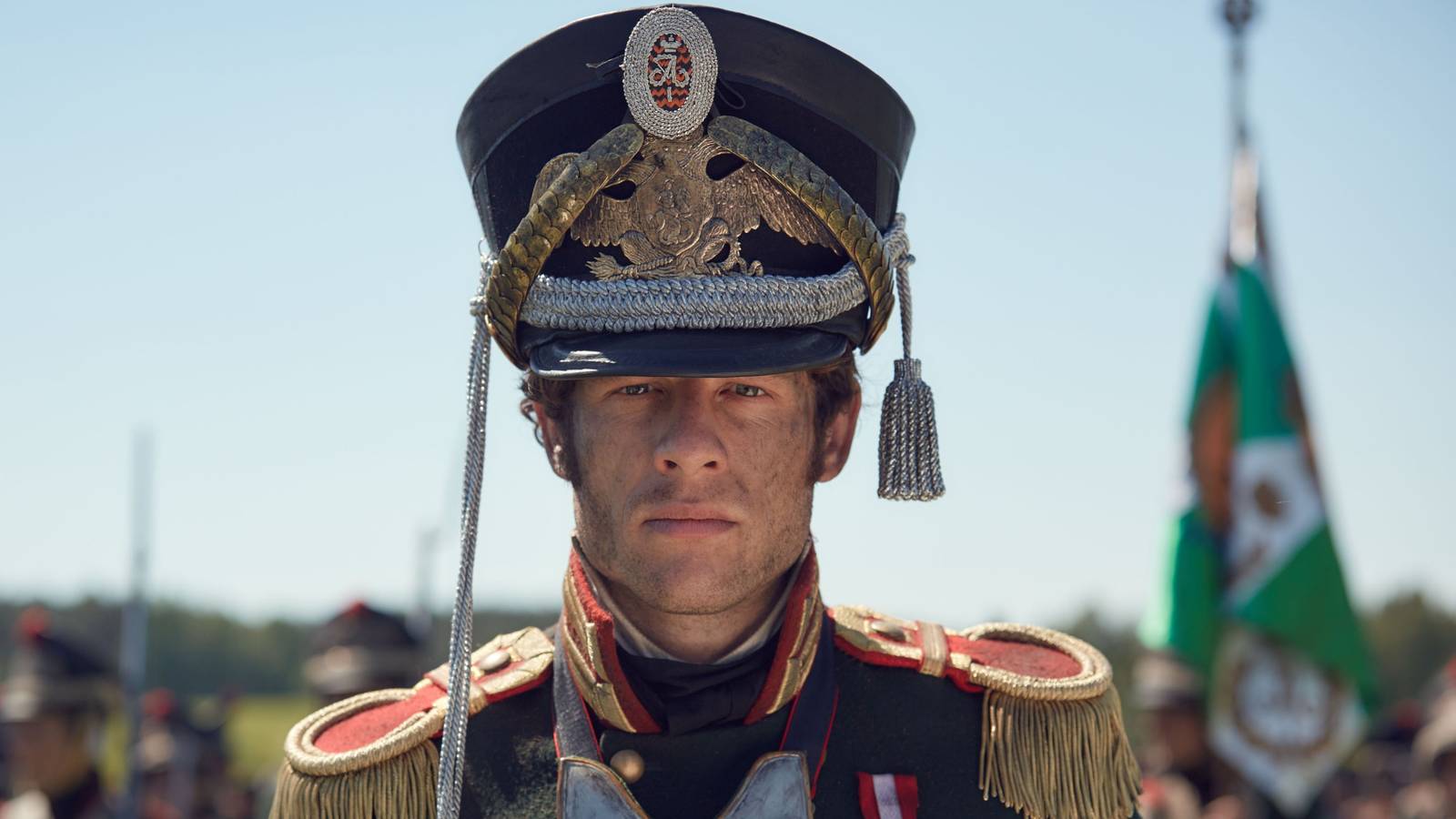
Published Aug 29, 2026, 9:30 PM EDT Faith Roswell is a Senior Writer on Screen Rant's Classic TV team. Since earning her degree in Creative Writing over a decade ago, Faith has written articles on film and TV from a variety of different angles. Faith now combines her knowledge of psychology with her love of monster movies to give more insight into what makes the best ones. You may have read her Screen Rant lists and features covering horror, sci-fi, and fantasy, or read her Amazon Top 10 book, "Movie Monsters of the Deep." Faith has had an extensive career as a writer, appearing on BBC live radio, researching true crime for Rotten Mango podcast, and writing for publications including Mental Floss, Atlas Obscura, and The Daily Jaws before beginning here at Screen Rant. An excellent war TV series can tell an emotive story within a surprisingly short amount of time, even if the war itself lasted for years or even decades. While realistic and hard-hitting action sequences can make a good show into an unforgettable one, perfect war TV shows have another element, and that is the human impact. Giving viewers a sweeping overview of an event might be an impressive feat of storytelling, but this is generally the job of a documentary. On the other hand, the war stories that stay with viewers center on personal details, choosing unfilled shoes over explosions. Action scenes are usually important in the war genre, but another essential factor is offering an unexpected element. This is harder to do when the war is extremely well-covered, like WWII, which has easily accessible accounts from real people. Still, making a war TV show historically accurate, having standout performances from the main actors, and offering a perspective that has not been as well-covered can make even the most popular themes feel fresh and new, while other miniseries offer a glimpse into an entirely new setting, giving lesser-known stories a chance. 9 All The Light We Cannot See Mark Ruffalo stars in the visually-stunning adaptation of Anthony Doerr's Pulitzer-winning novel of the same name. The story follows two young people who play very different roles in WWII's Battle of Saint-Malo. The German Werner is forced to join and fight for the Nazis, while the French Marie-Laure must learn to carry secret broadcasts using Jules Verne's 20,000 Leagues Under the Sea as code. Marie-Laure is underestimated for being blind, and the story illustrates the way the actions of ordinary people went undetected by the Nazis, whose support of eugenics was often their downfall. Marie-Laure is Aria Mia Loberti's first acting role, after the show's creators posted a global search for an actor who was blind or had low vision. All the Light We Cannot See made some changes from the book, and while this was not always popular with critics, who gave the show just 28% on Rotten Tomatoes, this does not tell the full story. Audiences were much more impressed, giving it 81% and praising the acting from Ruffalo and Loberti, as well as Hugh Laurie. The miniseries condensed the original story somewhat but perfectly executed its most tense scenes and emotional core. 8 Anzac Girls It is understandable that many great war movies and TV shows focus on the soldiers on the front line, as this is where much of the action and horror is found. However, it is recognized, perhaps now more than ever, that the stories of other people involved should not be overlooked, and can be just as compelling. Rather than follow soldiers in action, ANZAC Girls is about Australian nurses serving during WWI, and is a truly underrated wartime TV show. Instead of portraying the nurses as minor characters merely helping with the war, the series places their bravery and resilience at the forefront, working from a respected source. ANZAC Girls was inspired by the diaries of the nurses during WWI and does an exceptional job of highlighting the emotional toll of seeing catastrophically wounded people arriving daily, knowing that not all can be saved. The choice to keep much of the violence offscreen was a smart creative decision that kept the horrors implied, focusing on the consequences rather than the spectacle. 7 Hitler: The Rise Of Evil The universally-understood fact that Adolf Hitler and his ideologies were monstrous makes it easy to slot him into a war movie or TV show as a ready-made villain. Unfortunately, this fails to address one of the most important talking points in any discussion about the man himself, and that is the way in which fascism was allowed to rise in the first place. Hitler: the Rise of Evil takes this uncomfortable subject and tackles it head-on, highlighting some uncomfortable and recognizable parallels to some of today's political figures. Instead of battlefield moments, the two-part show centers on strategy and perfectly illustrates the warning it displays at the start and end: "The only thing necessary for the triumph of evil is for good men to do nothing." Even aside from the novel approach, Robert Carlyle's performance is mesmerizing, and the show is worth watching for this alone. 6 Catch-22 George Clooney's underrated six-part war miniseries deserves much more acclaim for its adaptation of the iconic subject matter and dark humor. Catch-22 is based on Joseph Heller's satirical war novel in which an American bombardier tries to navigate red tape and bureaucracy during WWII. The army keeps raising the number of missions that soldiers must fly in order to complete their service, while the exhausted Captain John Yossarian attempts to avoid flying. Catch-22 refers to a rule that states a soldier can be relieved of duty by reason of insanity. However, a request to be removed from duty is evidence of sanity, making the soldier ineligible to be relieved of duty. Christopher Abbott's performance is pitch-perfect in the main role, and the show captures the insanity and humor the soldiers experience as they try to survive by any means necessary. 5 War & Peace War & Peace is a miniseries with an epic feel. Leo Tolstoy's original novel is famously long, and yet despite cutting significant portions of the source material, the show is widely regarded as one of the best classic book TV show adaptations of all time. The historical conflict between Russia and Napoleon Bonaparte's French Empire is only part of the story, yet the war overshadows much of the action, making the drama even more fraught. War & Peace has a stacked cast, including Lily James, Gillian Anderson, Jim Broadbent, and Jessie Buckley, and the acting is just as excellent as might be expected with such an impressive range of actors. The way in which the show has captured the spirit of the lengthy historical drama without including every individual detail is a great feat of storytelling and while War & Peace is often forgotten compared to other military masterpieces, it is an underrated 10/10 series. 4 The Pacific Image via MovieStillsDB Steven Spielberg, Tom Hanks, and Gary Goetzman created Band of Brothers to great acclaim, and while The Pacific was the follow-up that the masterpiece TV show never needed, it became a success in its own right. The Pacific followed the lesser-explored part of WWII, with the action centering on The Pacific War and the acting earning the show a 91% positive audience rating on Rotten Tomatoes. The Pacific drew great praise for its tone and subject matter, which is similar to Band of Brothers but without attempting to be the same series. The Pacific was nominated for five Primetime Emmy Awards, winning the Outstanding Miniseries category. The Pacific is a rare TV show that accurately captures the horrors of war, and this is partly due to its tight focus on three Marines. The relatively small cast gave the series a claustrophobic feel and the ability to more thoroughly explore the psychological states of the men, dealing with themes of PTSD, trauma, and difficulty adjusting to life after war. These are more commonly addressed now, but the approach was relatively rare for 2010, making The Pacific stand out for its combination of sensitivity and brutality. 3 Generation Kill Generation Kill was an instant war TV masterpiece from its opening scene, throwing the viewer right into combat in the 2003 Iraq invasion. Conveying the personalities of the main characters while portraying the heat of war is a challenging task, but this scene proves Generation Kill to be a masterclass in character writing. This may not be such a surprise when taking the source material into account. The show is based on Rolling Stone journalist Evan Wright's 2004 book about his experience as a reporter following the US Marine Corps' 1st Reconnaissance Battalion. Generation Kill misses many of the common beats and tropes found in the war genre, giving us fewer motivational speeches in favor of portraying the reality of war, from horror to boredom and frustration to confusion. There are many war TV shows that feel authentic, but Generation Kill's narrative voice is markedly different, coming from a perspective that is rarely given outside of a newspaper article. 2 A Small Light As one of the most haunting and well-documented human perspectives on WWII, it is hardly surprising that Anne Frank's story has been adapted for TV and film many times. However, A Small Light still manages to offer a new approach, following secretary Miep Gies, who hid Otto Frank and his family during the Nazi invasion of the Netherlands. Though it is almost certain that everybody watching the series will know the eventual fate of Anne and the main characters, A Small Light includes the human details that are often overlooked in favor of the harrowing ending. The title comes from Miep's words, "even an ordinary secretary, or a housewife, or a teenager can turn on a small light in a dark room." War stories can portray their central characters as heroes, but A Small Light deliberately avoids this, becoming all the more inspiring in the process. The series' power comes from the way it highlights the struggle of ordinary people to maintain their humanity and empathy even in the face of fascism and manufactured hatred for their neighbors. Anne's eventual fate is essential to know, but Miep's story is just as worthy of telling, especially now, and A Small Light has a well-deserved 100% positive critics' score on Rotten Tomatoes. 1 Band Of Brothers Band of Brothers is arguably the definitive wartime masterpiece, and deserves more than its Rotten Tomatoes ratings, 94% and 97% from critics and audiences respectively. The ten-episode miniseries follows Easy Company's actions during WWII, from training to combat and the end of the war. The show has a stellar cast including famous names like Damian Lewis and Michael Fassbender, and features early 2000s rising stars like Tom Hardy and James McAvoy. Still, no matter whether an A-lister or an unknown name at the time, the cast of Band of Brothers is one of the best in any war TV show. The series is not just held up by its acting, with every element working together from writing to visuals. The transformation of the men from new recruits to a competent team is extremely realistic, with minor characters becoming shockingly important later and main characters taking unexpected directions. The most powerful scenes in Band of Brothers outperform even the best war epics of all time, and the show does not have a single bad episode, with the veteran interviews providing another layer to the story.
9 War Miniseries That Are Perfect From Start To Finish
Full Article
Original Source
Read the full article at Screenrant →KhanList aggregates and links to publicly available news content. We do not host full articles from third-party sources. Always verify important information with original sources.