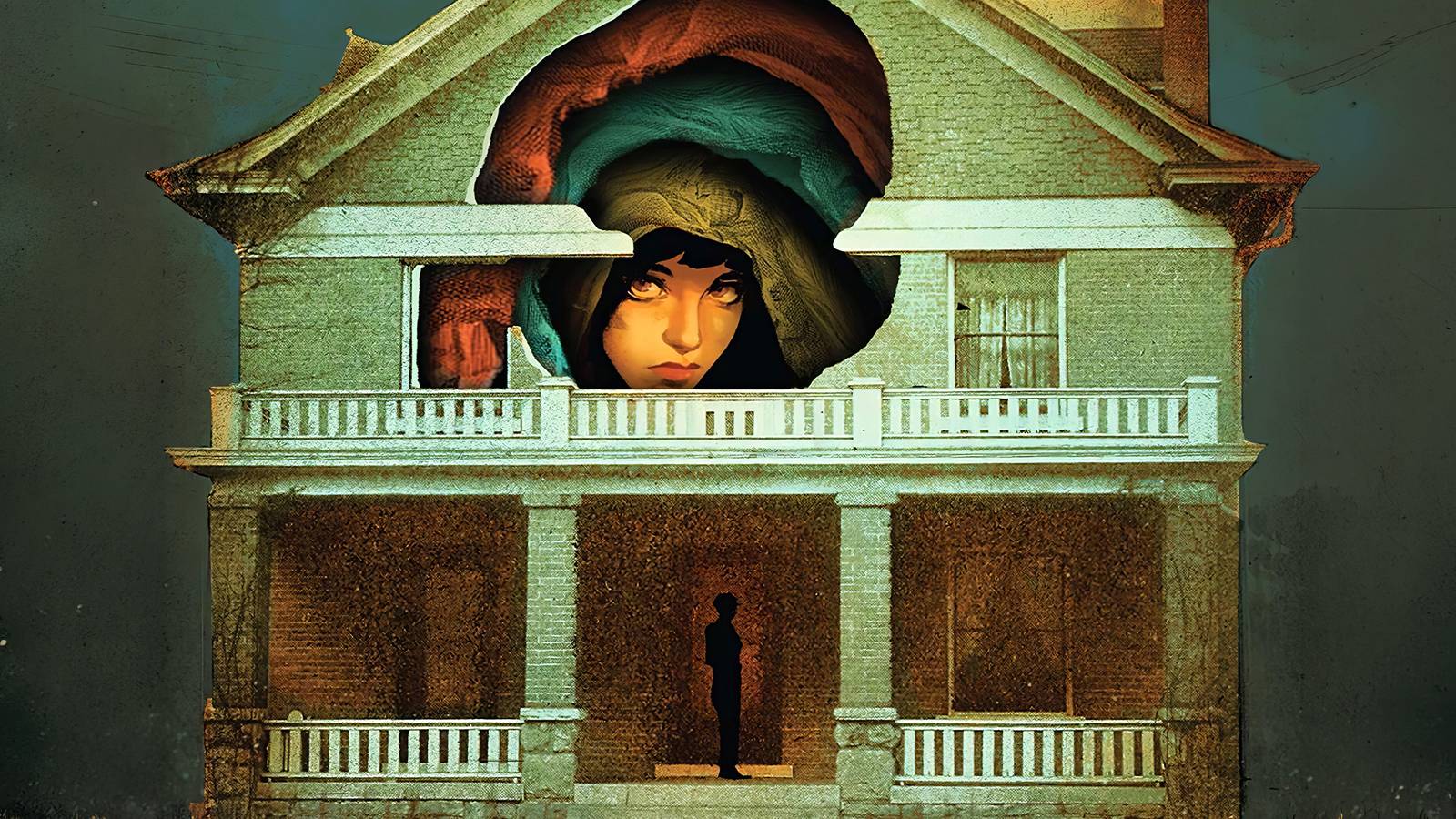
Image via Graywolf Press Published Aug 7, 2026, 3:20 PM EDT Erin is a Books & Literature Writer for Collider. She received her MA in English at LSU New Orleans, where she specialized in Disability Studies and maximized her Gothic literature obsession. She once aspired to be a ghost hunter, but has now settled into the writer’s life. A Pushcart-nominated poet and proud Piscean, if she’s not feverishly writing, you can find her stress baking, swimming, and adding to her tarot card deck collection. Sign in to your Collider account As a creative nonfiction genre, memoirs are most often associated with linear storytelling. The author recounts their life in sequential chapters, painting a clear arc of growth, perhaps even arriving at some hard-fought clarity or wisdom about identity, passion, loss, and life’s purpose. While many creatives embrace and hone this familiar chronological structure to satisfying self-reflective ends, some of the most triumphant and innovative examples of narrative nonfiction are found in experimental memoirs, which embody the fraught and slippery nature of memory and meaning. Evading memoir conventions in form, pacing, and point of view, these nine books remind us there is no singular correct way to narrate life on the page. Some blend autobiography with speculative fiction elements or unfold through comic strips. Others are comprised of essays and artifacts, creating an intimate collage of a life through embedded photos, recipes, emails, and chat screenshots. The memoir genre is undoubtedly in flux, and these masterful works are heading up the transformation. 9 'The Backwards Hand' (2024) By Matt Lee Image via Curbstone Books Told entirely in lyrical fragments, Matt Lee's memoir explores how his disability identity emerged in tandem with an enduring love for horror films. Born with a rare congenital defect, Lee considers how the media and art he has consumed throughout his life, including films like The Unknown and The Changeling, reinforce or challenge broader sociocultural constructions of monstrosity. Rich in historical research and steeped in pop culture discourse, The Backwards Hand is a unique and thought-provoking read for horror aficionados. Like any good piece of horror storytelling, this memoir has the ability to make you shift uncomfortably in your seat. It's dark and unflinching, but still deeply cathartic and grounded. Lee's discourse on mental health, agency, and disability narratology is timely, and his unconventional narrative approach proves the propulsive potential of the collage-style memoir. 8 'A Constellation of Ghosts' (2021) By Laraine Herring Image via Regal House Publishing Laraine Herring's A Constellation of Ghosts: A Speculative Memoir with Ravens is a groundbreaking work of grief and healing that operates at an ancestral, intergenerational level. The autobiographical plot is a deeply spiritual one: following her cancer diagnosis, Herring's father, who passed decades ago, finds her in the form of a raven. Rather than treating ravens as simply metaphors in an illness journey, Herring embraces speculative storytelling elements to explore, most sincerely, the relationships that transcend death. Even though A Constellation of Ghosts may be shelved as speculative fiction, its magic does not disqualify it as a work of narrative nonfiction. A work of both prose and poetry, Herring's genre-bending lyrical writing submerges readers in a liminal realm. Herring's narrative experimentation proves that the most honest of memoirs are those that incorporate (and narrate with) ghosts. 7 'Year of the Tiger' (2022) By Alice Wong Image via Penguin Random House The late great Alice Wong, incredible disability rights activist and storyteller, forged a new form of contemporary multimedia memoir through Year of the Tiger. Written during the COVID-19 pandemic, Wong’s eclectic archive compiles essays, interviews, podcast transcripts, photographs, social media posts, infographics, recipes, report cards, and even a crossword puzzle. In her “mash-up of scrapbook,” humor and rage, joy and grief, are explored side by side. Wong tackles ableism in childhood, academia, and in society at large, with such a candid, conversational power that the reading experience feels more like getting to know a new friend over coffee. Her experimental style bolsters a core argument in her written work: disabled lives are too often pigeonholed into one-note stories of tragedy or inspiration, rather than embraced in all their complexity. As Wong declares in the memoir’s introduction, “I contain multitudes, and this is a small, playful sample of who I am.” 6 'Can't We Talk About Something More Pleasant?' (2014) By Roz Chast Image via Bloomsbury Publishing Top-notch cartoonist Roz Chast's inventive memoir is framed by her experience tending to her elderly parents until their deaths. At once an amusing family portrait and a raw exposition of the bewildering logistical nightmare that comes with moving two aged New Yorkers out of their lifelong apartment, Can't We Talk About Something More Pleasant? delivers some hearty laughs without ever veering into gimmicky or unseemly portrayals of old age. Chast's prowess as an artist, honed over decades as a cartoonist for The New Yorker, is on full display in this graphic memoir. It's not easy to render such weighty topics of memory loss and end-of-life care visually, but Chast succeeds in constructing an incredibly nuanced, intimate archive of familial love, tension, and caregiving, with all its absurdities, rehashed arguments, and moments of tenderness. All in all, this is a great debut memoir for those who don't typically gravitate toward graphic novels or toward nonfiction as a whole. 5 'Madder: A Memoir in Weeds' (2021) By Marco Wilkinson Image via Coffee House Press Marco Wilkinson's Madder: A Memoir in Weeds toes the line between memoir and environmental writing, turning to the plant world as both subject and storytelling device. Rather than recounting his life through a strictly human timeline, Wilkinson, a horticulturist, structures the memoir around weeds: the resilient, often overlooked or outright despised plants that always find a way to flourish. Each plant encounter becomes a point of entry into larger reflections on family, queerness, identity, and place. The result is a deeply poetic and meditative work that demonstrates how human lives are inextricably entangled with the natural landscapes they inhabit. Wilkinson’s garden of a memoir is, indeed, full of weeds and is all the better for it. 4 'The Invention of Solitude' (1982) By Paul Auster Image via Faber & Faber Paul Auster demonstrated just how elastic the memoir genre could be with The Invention of Solitude, abandoning the conventions of autobiography almost entirely. Split into two distinct halves, Auster’s writing spirals between philosophy, literary criticism, family lore, and fragmented personal musings on fatherhood and mortality. In the first section, "Portrait of an Invisible Man," Auster dissects his emotionally distant father after his unexpected death. The second section, "The Book of Memory," becomes much more labyrinthine and unbound by chronological time. Auster notably adopts a third-person persona for himself, simply called “A." Given Auster’s resistance to the book’s classification as a memoir, The Invention of Solitude may be better understood as a sort of anti-memoir that trades chronology for a web of associations and circuitous contemplation. 3 'Curing Season: Artifacts' (2022) By Kristine Langley Mahler Image via West Virginia University Press Kristine Langley Mahler writes life through the objects or, rather, artifacts that sustain and survive us. Returning to her middle school years, a time of life most are eager to forget, Mahler’s memoir traverses themes of belonging, displacement, friendship, and inheritance. At its most streamlined, Curing Season is essentially a coming-of-age memoir recounting four formative years of the author’s life via essays of emotional and historical weight, pleasantly dotted with 90s nostalgia. Curing Season, as a deeply visual and inquisitive iteration of memoir, shows how active historical research and documentation feed personal reflection on lineage and loss. Mahler essentially becomes a sleuth digging into her own past, roping the reader in as an active participant in questioning the reliability of memory and piecing together the puzzle of remnants human beings leave behind. 2 'A Man of Two Faces' (2023) By Viet Thanh Nguyen Image via Grove Atlantic With a subtitle that promises "A Memoir, A History, A Memorial," Pulitzer-Prize winner Viet Thanh Nguyen signals, from the get-go, a truly multi-layered work of nonfiction. Nguyen writes about the refugee experience, American identity, and historical traumas through essayistic fragments structured around two distinct and often conflicting perspectives. The passages in A Man of Two Faces are displayed with a clever, nontraditional typesetting. Specifically, the memoir's text is sometimes aligned with the left margin of the page, giving voice to one perspective, then later aligned with the right-hand side, which reflects another distinct vein of Nguyen’s internal dialogue on personal and collective memory. As Nguyen ricochets between two outlooks, two awarenesses, two identities, readers can trace the migration of his thoughts across the page, creating a truly unique reading experience. 1 'In the Dream House' (2019) By Carmen Maria Machado Image via Graywolf Press Few memoirs have reinvented narrative nonfiction as memorably as Carmen Maria Machado's In the Dream House. Chronicling her experience in an abusive lesbian relationship, Machado breaks tradition by wielding a second-person narration for most of this memoir and filtering each chapter through a different concept, trope, genre, motif, etc. Folklore, gothic fiction, fairy tales, and even a "Choose Your Own Adventure" format all become vehicles for lush, staggering vignettes that lean into memory nonchronologically. Machado exposes how survivors of emotional abuse, particularly within queer partnerships, often struggle to find narratives that reflect and speak to their strife. As an act of vital documentation, In the Dream House looks to record the unrecorded in both nonfiction and fiction alike, pushing back on archival silence(s).
9 Experimental Memoirs That Are 10/10 Masterpieces
Full Article
Original Source
Read the full article at Collider →KhanList aggregates and links to publicly available news content. We do not host full articles from third-party sources. Always verify important information with original sources.