
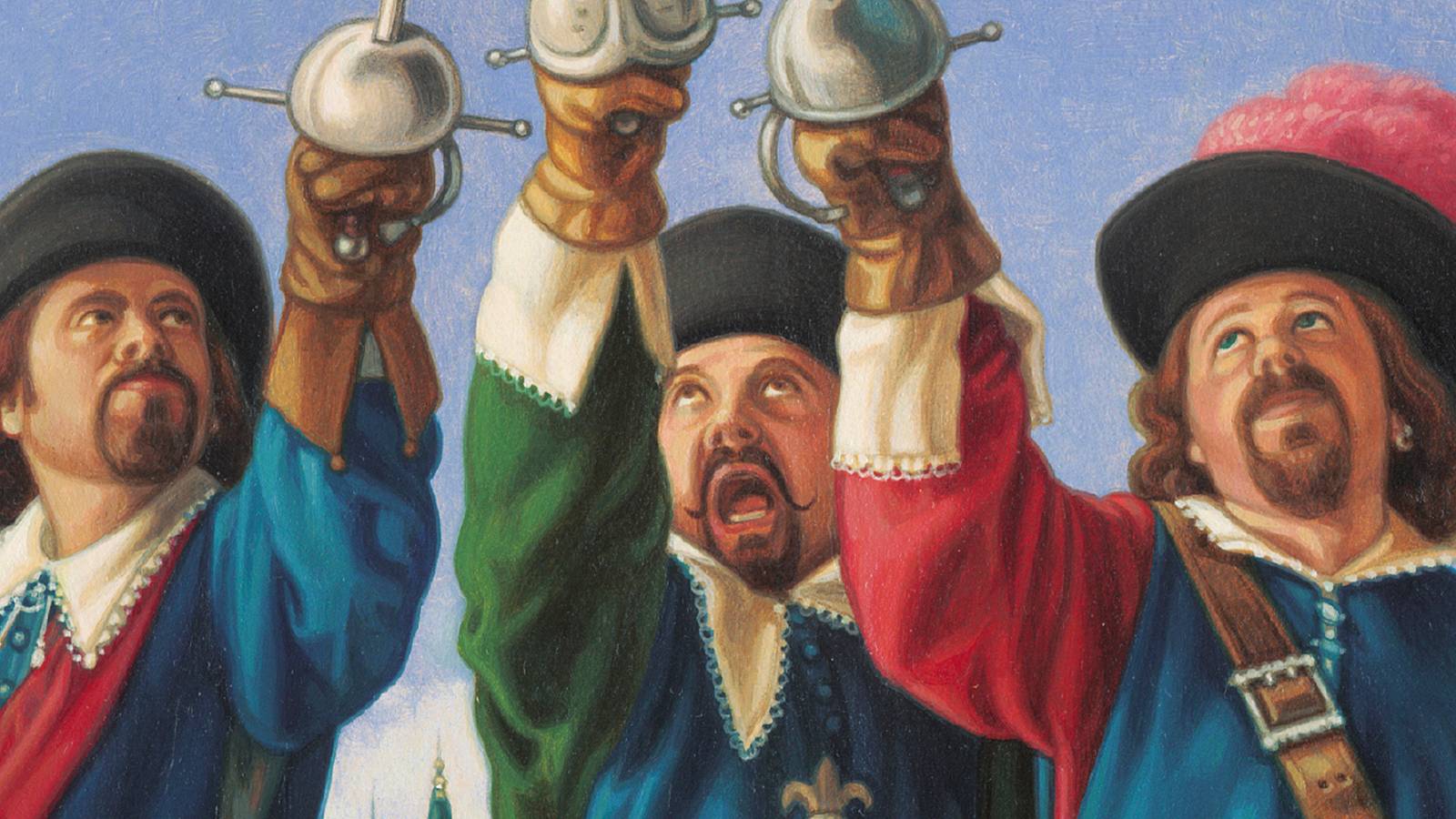
Image via Simon & Schuster Published Sep 17, 2026, 7:21 AM EDT Diego Pineda has been a devout storyteller his whole life. He has self-published a fantasy novel and a book of short stories, and is actively working on publishing his second novel. A lifelong fan of watching movies and talking about them endlessly, he writes reviews and analyses on his Instagram page dedicated to cinema, and occasionally on his blog. His favorite filmmakers are Andrei Tarkovsky and Charlie Chaplin. He loves modern Mexican cinema and thinks it's tragically underappreciated. Other interests of Diego's include reading, gaming, roller coasters, writing reviews on his Letterboxd account (username: DPP_reviews), and going down rabbit holes of whatever topic he's interested in at any given point. Sign in to your Collider account There's nothing quite like finding a new great book series to read. Regardless of what genres one typically enjoys, history's greatest book series are proof that often, literary masterpieces come in groups. But while many book series achieve the admirable feat of getting better with each new installment, others end up offering the best of what they have in their very first volume. That's not to say that what follows is in any way bad. In fact, the best book series that peak with their first chapter nevertheless have sequels that are also among the greatest texts their respective genres have ever seen. Indeed, from Patricia Highsmith's Ripley Series to Frank Herbert's Dune Saga, there are plenty of literary cycles that peak early in spite of how incredible everything that follows may be. The Ripley Series Image via Coward-McCann Revolutionary novelist and short story writer Patricia Highsmith was best known for her psychological thrillers and crime dramas, particularly the exceptional Ripley series. These five novels, which introduced the world to the iconic Tom Ripley, were nothing short of groundbreaking, subverting the conventions of mid-20th-century crime fiction by forcing the reader to (at times quite uncomfortably) sympathize with a cold-blooded criminal. It all started back in 1955 with The Talented Mr. Ripley. All of this classic's sequels are also great, Ripley's Game in particular standing out as strong competition for the title of "best Tom Ripley book." However, there's simply no beating The Talented Mr. Ripley in terms of charm, influence, or iconicity. It's one of those classic thriller books that are perfect from the first page to the last; a radically unique and sharply written masterpiece which laid the blueprint for the modern thriller antihero. The Takeshi Kovacs Series Image via Victor Gollancz Ltd So far, the 21st century has seen the publication of some absolutely remarkable science fiction book trilogies, Richard K. Morgan's Takeshi Kovacs Series in particular standing out as one of the best. Takeshi Kovacs is the name of the lead character of these incredible cyberpunk novels, starting with 2002's Altered Carbon. All in all, it's not unreasonable to say it's one of the best sci-fi thrillers of the last 25 years. Broken Angels is delightfully creative, and Woken Furies is almost as good as the first book, but Altered Carbon is simply too thrilling and too perfectly written to be beaten by its sequels. It's a pure hard-boiled murder mystery with an airtight noir-ish structure, but also an engrossing piece of science fiction with some of the strongest worldbuilding of any cyberpunk novel from the 21st century. The whole trilogy is worth checking out, but Altered Carbon in particular is a must-read. The Border Trilogy Image via Alfred A. Knopf Cormac McCarthy was nothing short of one of the most important and influential American novelists of the late 20th and early 21st centuries, a titan of English-language writing who proved that genre fiction could be true high art. Case in point: the Border Trilogy, composed of three of the greatest Western books that the 20th century ever saw. There's no consensus on what the best book in the series is, each installment having many scholars and bookworms pointing to it as the greatest; but there's a strong argument to be made in favor of All the Pretty Horses. Thankfully, and rather unsurprisingly considering that it's McCarthy we're talking about, the Border Trilogy is one of those series where every book is a masterpiece. There's something uniquely special about All the Pretty Horses, though. It's a rousing masterpiece that brilliantly deconstructs the myth of the American West, while still leaving plenty of space for the reader to appreciate the beauty of the space, the story, and McCarthy's prose without quite as much cold existentialism as the sequels. The Hitchhiker's Guide to the Galaxy Series Image via Pan Books There's nothing wrong with a book series that takes itself and its genre completely seriously, delivering a hard-hitting experience that's both emotional and thought-provoking. Every now and then, however, pretty much anyone who loves reading—including science fiction fans—craves something lighter, and that's precisely why comedy literature is so important. And as far as comedic books go, it doesn't get much better (or much funnier) than Douglas Adams' The Hitchhiker's Guide to the Galaxy. The series that carries the original book's title is fantastic, but since Adams kept growing increasingly burnt out on the story due to writer's block and publisher pressure, each installment kept growing a little weaker than the last. That's not to say that Hitchhiker's Guide is the best of the bunch merely by default, though. It genuinely is one of the best sci-fi book masterpieces ever, a hilarious gem which balances conceptual density, thematic sprawl, existential cynicism, and absurdist humor flawlessly. Collider Exclusive · Sci-Fi Survival Quiz Which Sci-Fi World Would You Survive? The Matrix · Mad Max · Blade Runner · Dune · Star Wars Five universes. Five completely different ways the future went wrong — or sideways, or up in flames. Only one of them is the world your instincts were built for. Eight questions will figure out which dystopia, galaxy, or desert wasteland you'd actually make it out of alive. 💊The Matrix 🔥Mad Max 🌧️Blade Runner 🏜️Dune 🚀Star Wars TEST YOUR SURVIVAL → 01 You sense something is deeply wrong with the world around you. What do you do? The first instinct is often the truest one. APull on every thread until I understand the system — then figure out how to break it. BStop asking questions and start stockpiling — food, fuel, weapons. Questions don't keep you alive. CKeep my head down, observe carefully, and trust no one until I know who's pulling the strings. DStudy the patterns. Every system has a rhythm — learn it, and you learn how to survive it. EFind the people fighting back and join them. You can't fix a broken galaxy alone. NEXT QUESTION → 02 In a world of scarcity, what resource do you guard most fiercely? What we protect reveals what we believe survival actually requires. AKnowledge. If you understand the system, you don't need resources — you can generate them. BFuel. Everything else — movement, power, escape — runs on it. CTrust. In a world of fakes and informants, a truly reliable ally is rarer than any commodity. DWater. And after water, information — the two things empires are truly built on. EShips and credits. The galaxy is big — you survive it by being able to move through it freely. NEXT QUESTION → 03 What kind of threat keeps you up at night? Fear is useful data — if you're honest about what you're actually afraid of. AThat reality itself is a lie — that everything I experience has been constructed to keep me compliant. BA raid. No warning, no mercy — just the roar of engines and then nothing left. CBeing identified. Once someone with power decides you're a problem, you're already out of time. DBeing outmanoeuvred — losing a political game I didn't even know I was playing. EThe Empire tightening its grip until there's nowhere left to run. NEXT QUESTION → 04 How do you deal with authority you don't trust? Every dystopia has a power structure. Your approach to it determines everything. ASubvert it from the inside — learn its rules well enough to weaponise them against it. BIgnore it and stay out of its reach. The further from any power structure, the better. CAppear to comply while doing exactly what I need to do. Visibility is the enemy. DManoeuvre within it carefully. You can't beat a system you refuse to understand. EResist openly when I have to. Some things are worth the risk of being seen. NEXT QUESTION → 05 Which environment could you actually endure long-term? Survival isn't just tactical — it's physical, psychological, and very much about where you are. AUnderground bunkers and server rooms — cramped, artificial, but with access to everything that matters. BOpen wasteland — brutal sun, no shelter, constant movement. At least the threat is honest. CA dense, rain-soaked city where you can disappear into the crowd and nobody asks questions. DMerciless desert — extreme heat, no water, and something enormous living beneath the sand. EThe fringe — backwater planets and busy spaceports where the Empire's attention rarely reaches. NEXT QUESTION → 06 Who do you want in your corner when things fall apart? The company you keep is the clearest signal of who you actually are. AA tight crew of believers who've seen behind the curtain and have nothing left to lose. BOne or two people I'd trust with my life. Any more than that and someone talks. CNobody, ideally. Alliances are liabilities. I work alone unless I have no choice. DA community bound by shared hardship and mutual survival — people who need each other to last. EA ragtag team with wildly different skills and total commitment when it counts. NEXT QUESTION → 07 Where do you draw the line — if you draw one at all? Every survivor eventually faces a moment that tests what they're actually made of. AI won't harm the innocent — even the ones who'd report me without hesitation. BI do what I have to to protect the people I've chosen. Everything else is negotiable. CThe line shifts depending on who's asking and what's at stake. DI draw a long-term line — nothing that compromises my people's future, even if it'd help now. ESome lines, once crossed, can't be uncrossed. I know which ones they are. NEXT QUESTION → 08 What would actually make survival worth it? Staying alive is one thing. Having a reason to is another. AWaking others up — dismantling the illusion so no one else has to live inside it. BFinding somewhere — or someone — worth protecting. A reason to keep moving. CAnswers. Understanding what I am, what any of this means, before time runs out. DLegacy — shaping the future in a way that outlasts me by generations. EFreedom — for myself, for others, for every world still living under someone else's boot. REVEAL MY WORLD → Your Fate Has Been Calculated You'd Survive In…Your answers point to the world your instincts were built for. This is the universe your temperament, your survival instincts, and your particular brand of stubbornness were made for. The MatrixYou took the red pill a long time ago — probably before anyone offered it to you. You're a systems thinker who can't help but notice the seams in things. You're drawn to understanding how the system works before figuring out how to break it. You'd find the Resistance, or it would find you — your instinct for spotting constructed realities is the machines' worst nightmare. You function best when you have access to information and the freedom to act on it. The Matrix built an airtight prison. You'd be the one probing the walls for the door. Mad MaxThe wasteland doesn't reward the clever or the well-connected — it rewards those who are hard to kill and harder to break. That's you. You don't need comfort, community, or a cause larger than the next horizon. You need a vehicle, a clear threat, and enough fuel to outrun it — and you're good at all three. You are unsentimental enough to survive that world, and decent enough — just barely — to be something more than another raider. In the wasteland, that distinction is everything. Blade RunnerYou'd survive here because you know how to exist in moral grey areas without losing yourself completely. You read people accurately, keep your circle small, and ask the questions others prefer not to answer. In a city where humanity is a legal designation rather than a feeling, you hold onto something that keeps you functional. You're not a hero. But you're not lost, either. In Blade Runner's world, that distinction is everything. DuneArrakis is the most hostile environment in the known universe — and you are precisely the kind of person it rewards. Patience, discipline, and political awareness are your core strengths — and on Arrakis, they're survival tools. You understand that the long game matters more than any single victory. Others come to Dune and are consumed by it. You'd learn its logic and earn its respect. In time, you wouldn't just survive Arrakis — you'd begin to reshape it. Star WarsThe galaxy far, far away is vast, loud, and in a constant state of violent political upheaval — and you wouldn't have it any other way. You find meaning in being part of something larger than yourself — a cause, a crew, a rebellion. You'd gravitate toward the Rebellion, or the fringes, or whatever pocket of the galaxy still believes the Empire's grip can be broken. You fight — not because you have to, but because standing aside isn't something you're capable of. In Star Wars, that willingness is what makes all the difference. ↻ RETAKE THE QUIZ The Broken Earth Trilogy Image via Orbit Considering that it was the first book series in history where every individual volume won the Hugo Award for Best Novel—and in three consecutive years, no less—calling N. K. Jemisin's Broken Earth Trilogy one of the best in the history of speculative fiction is by no means an overstatement. This record-breaking series truly is a historic achievement in the history of science fantasy, with The Fifth Season, The Obelisk Gate, and The Stone Sky all being among the best science fantasy books of all time. Considering how immensely acclaimed each installment in the trilogy is, each one has a strong claim to the #1 position in the series, but fans tend to agree that The Fifth Season is where Jemisin delivered her best work. The whole book is a masterpiece in structure and experimental style; its multiple parallel points of view and its revolutionary use of second-person narration are still as refreshing today as they were 11 years ago. The 2010s gave us several fantasy masterpieces and several sci-fi masterpieces, and The Fifth Season brings the best of both worlds together impeccably. The Hyperion Cantos Series Image via Doubleday Dan Simmons' Hyperion Cantos Series is widely regarded as one of the most monumental and hugely influential space opera book series in history, the first book in the series in particular being a true cornerstone in the genre's history. Indeed, something truly special is needed to win both the Hugo and Locus Awards, and Hyperion is nothing if not special. Structured like Geoffrey Chaucer's Canterbury Tales, it's a gem of pure literary, artistic, and philosophical depth. It's also one of the sci-fi books with the best worldbuilding ever, perfectly establishing the basis for a series that continues being absolutely masterful with every subsequent volume. The Canterbury Tales structural inspirations, far from just being a gimmick, serve as scaffolding for Simmons to deliver a consistently mind-bending mystery that's surprisingly moving, surprisingly thought-provoking, and surprisingly inventive. The entirety of Hyperion Cantos is essential reading for sci-fi fans, but there's simply no topping the original. The Sprawl Trilogy Image via Orion Publishing Group It's mainly thanks to the first book in the series, but William Gibson's Sprawl Trilogy has remained one of the most important and hugely influential book series in the history of science fiction. It was the trilogy that completely redefined the cyberpunk subgenre, laying out the blueprint for its aesthetics, prose style, and many pieces of iconography. Its pop-cultural legacy will likely only continue to grow with the coming release of Apple TV's show adaptation, and living up to its legacy will be no small challenge. But as exceptional as the entire trilogy is, Neuromancer is on a whole other level as one of the most groundbreaking, most impactful, and most prophetic sci-fi books of all time. Far from its revolution of the cyberpunk subgenre being its only strength, Neuromancer stands out thanks to its addictively paced, high-stakes narrative, engrossing character work, and one-of-a-kind worldbuilding. Both Count Zero and Mona Lisa Overdrive are masterpieces, but Neuromancer transcends that label. The d'Artagnan Romances Image via Penguin Classics French author Alexandre Dumas was one of the most important and widely read French authors in history, a man who helped shape and popularize adventure fiction throughout the 19th century. Inspired by the captain of musketeers Charles de Batz-Castelmore d'Artagnan, Dumas penned the d'Artagnan Romances, one of those book series everyone should read at least once. It's a testament to Dumas' genuinely timeless quality as a novelist that nearly two centuries later, these books are still as deliriously entertaining as they surely must have been back in the day. The Three Musketeers in particular has remained one of the most legendary novels ever written in the French language, a pure swashbuckling adventure with fast pacing, high energy, and unforgettable characters. Its sequels grow darker and less focused on pure entertainment, making it unsurprising that they've never been quite as legendary—masterful though they may be. The Dune Series Image via Penguin Publishing Group By this point, with Denis Villeneuve's film adaptation proving that the franchise's appeal is as universal and timeless as it has ever been, there's pretty much no need to introduce Frank Herbert's Dune series. It may very well be the single most iconic and widely celebrated sci-fi book series in history; and if not, it's at least way up there. Herbert only wrote six novels before he died and his son took over the series, and though all six have plenty to offer and have generally aged perfectly, the original Dune stands on a tier all of its own. Indeed, many sci-fi literature fans would confidently call Herbert's magnum opus the greatest sci-fi novel ever written, and it would be difficult to disagree. It certainly is one of the most influential sci-fi books of all time, one that strikes a perfect balance between flowing like a traditional Hero's Journey epic and offering plenty of thematic and narrative uniqueness that still makes it feel subversive decades later. Its sequels are wholly different and usually don't appeal to everyone, but Dune is a masterpiece that everyone should read at least once in their lives.
9 Book Series That Peaked With Their First Entry
Full Article
Original Source
Read the full article at Collider →KhanList aggregates and links to publicly available news content. We do not host full articles from third-party sources. Always verify important information with original sources.