
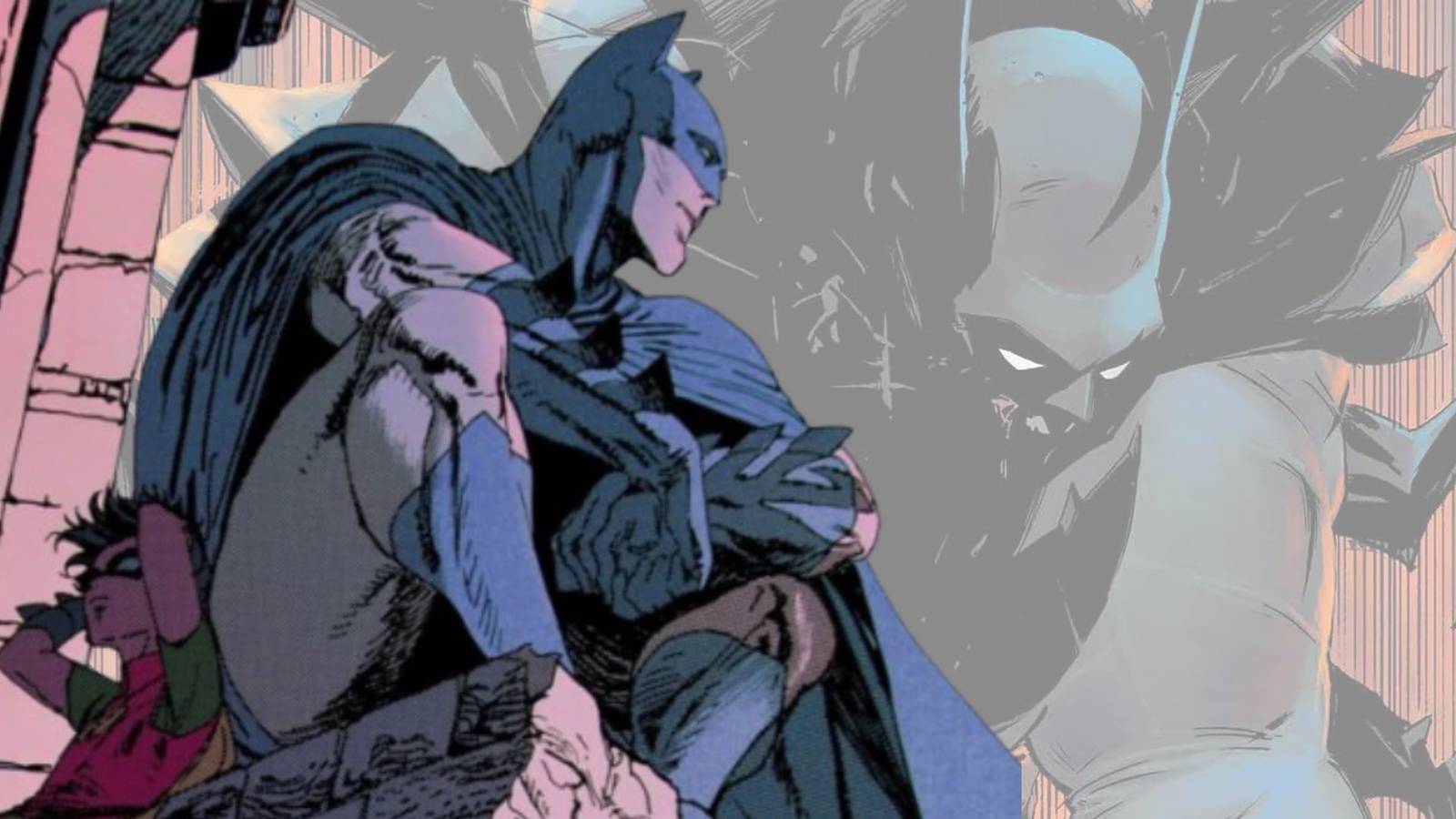
Published Sep 20, 2026, 6:58 PM EDT Emedo Ashibeze is a tenured journalist and critic specializing in the entertainment industry. Before joining ScreenRant in 2025. he wrote for several major publications, including GameRant. Writing a story has never been easy, and a comic book is harder still. A comic writer has to script for an artist, plan around the page turn, and tell a story in a fixed number of panels. The pen is just half the job; the best writers also know when to step back and let the art carry the scene. The 2010s produced some of the medium's most distinctive voices. Minds like Jonathan Hickman and Tom King turn corporate properties into personal, novelistic statements, while Brian K. Vaughan and Kelly Sue DeConnick proved creator-owned work could compete with anything Marvel or DC. Together, these writers built some of the greatest comic books and built the mythology modern ones thrive on. 9 Jonathan Hickman Not everyone gets handed the keys to an entire universe, and fewer still actually know what to do once they have them. Jonathan Hickman does both. His career reads less like a rise through the ranks and more like a quiet takeover, one franchise at a time. He started small with Secret Warriors and S.H.I.E.L.D., then moved into Fantastic Four and FF, reshaping the Richards family and deepening Marvel's cosmic lore along the way. By 2019, that pattern climaxed with House of X and Powers of X, launching the Krakoan era and rewriting the X-Men from the ground up. Outside Marvel, Hickman boasts an equally formidable Image catalog: The Nightly News, The Manhattan Projects, the 45-issue East of West. Secret Wars and his X-Men relaunch dominate sales charts, and the honors follow: Eisner and Harvey nods, an Inkpot Award, and a blueprint the industry still borrows from. 8 Tom King Tom King spent seven years hunting terrorists for the CIA before he ever wrote a comic script. That resume alone explains why his superheroes never feel like they're just punching their way through another Tuesday. His signature 2010s work, The Vision, Mister Miracle, The Sheriff of Babylon, and an 85-issue Batman run, trades cosmic battles for quiet devastation, often boxed into rigid nine-panel grids. The Vision turns a synthetic family's attempt at suburban normalcy into tragedy, while Mister Miracle uses a New God to stare directly at depression and PTSD. The Eisners pile up, including Best Writer. Then Marvel Studios adapted his work for WandaVision, keeping the frightening household feel and emotional core of his Vision comic while changing the plot. 7 Kelly Sue DeConnick In 2012, Kelly Sue DeConnick took a mostly forgotten Ms. Marvel and rebuilt her into Captain Marvel, giving her a costume a real-life pilot would proudly brandish. The resulting "Carol Corps" fandom eventually helped pave the runway for Marvel's first female-led film. DeConnick extended her reach far past the Marvel realm. Pretty Deadly delivers a haunting, poetic Western soaked in death. At the same time, Bitch Planet, co-created with Valentine De Landro, weaponizes exploitation-cinema tropes against institutional sexism with real fury behind every panel. Eisner, Hugo, and British Fantasy nominations follow both projects. Bitch Planet in particular becomes a genuine cultural flashpoint, and DeConnick cements herself as proof that unapologetic, political comics can still dominate a sales chart. 6 Scott Snyder Scott Snyder treats Gotham less like a simple city and more like an ancient haunted house with hidden secrets waiting to be uncovered. Teaming with Greg Capullo during DC's New 52 relaunch, he invents the Court of Owls, a secret cabal woven into the city's past that longtime readers second-guess their own memory of it. Death of the Family and Zero Year follow, each darker than the last. Then Snyder goes cosmic with Dark Nights: Metal cracking open the Dark Multiverse and unleashes the Batman Who Laughs, a villain that immediately outgrows its own miniseries. Away from Gotham, Snyder builds a parallel legacy in horror with American Vampire, Wytches, and Severed. For five straight years, his Batman run tops the charts, making him DC's single biggest revenue engine of the decade. 5 Matt Fraction Matt Fraction's Hawkeye should not have worked. Stripping Clint Barton of his Avengers spectacle and stranding him in a rundown Brooklyn apartment sounds like career suicide. Instead, paired with artist David Aja, it became one of the decade's most celebrated runs. The experimentation never stops: conversational dialogue, unconventional panel pacing, an entire issue narrated from a dog's point of view. Fraction carries that same fearlessness into Image's Sex Criminals, a comedy about a couple who freeze time the moment they climax. Hawkeye sweeps Eisners and Harveys. Sex Criminals lands on the New York Times bestseller list and claims Best New Series. All from a writer who made small stakes feel enormous. 4 Amanda Conner Amanda Conner was already one of comics' sharpest, most expressive artists before 2013, and her comic timing was on full display in Power Girl and Before Watchmen: Silk Spectre. Then she co-wrote Harley Quinn with Jimmy Palmiotti, and Harley's entire identity gets rebuilt from scratch. She left the Joker and friends behind to start fresh in Coney Island. There, she picked up roller derby, surrounded herself with strange friends, and fully embraced her own chaotic life. The gamble pays off instantly, with sales that regularly outperform DC's so-called "big four." The series became one of DC's top sellers, spawning spinoffs, toys, and apparel. Even better, it helped keep Harley's popularity climbing as she reached the big screen in Margot Robbie's portrayal. 3 Geoff Johns Geoff Johns spent the 2010s as DC's chief architect, and the decade opens with him still finishing what Blackest Night started. He quickly moved on to launch an even bigger project: DC's 2011 New 52 relaunch. Justice League, launched with Jim Lee, becomes 2011's best-selling comic outright. Johns also resurrects Aquaman from sales obscurity and pens Flashpoint, the crossover event that detonates the entire DC timeline just to rebuild it. Later, Rebirth and Doomsday Clock stitch the classic DC Universe back together with Watchmen's DNA. His fingerprints don't stop at the page, either; they run straight through DC's film slate, television shows, and video games. 2 Greg Capullo While widely regarded as one of the leading comic pencillers of his time, Greg Capullo was also an essential visual co-teller of the stories. Capullo’s version of Gotham is alive, heavily atmospheric, and constantly dangerous. Dynamic action choreography collides with genuine horror, and the results carry straight into Dark Nights: Metal, where Capullo's creature designs help redefine DC's multiverse. The Snyder-Capullo Batman was a top seller throughout its five-year run. Moreover, the pair created the Court of Owls and the Batman Who Laughs, two of the few new Batman villains in decades likely to become permanent fixtures of the mythos. Recognition, of course, followed. Capullo received an Inkpot Award at San Diego Comic-Con in 2015, and Snyder earned his own in 2019. Litte wondser 1 Brian K. Vaughan Brian K. Vaughan walked away from comics for eighteen months to write television, then returned in 2012 with Saga. Since then, nothing about mainstream space opera looks the same. Paired with Fiona Staples, he opens the series mid-childbirth, a declaration that convention is not welcome here. Saga follows two soldiers from opposite sides of an endless war, trading galactic battles for something rawer: parenthood, survival, domestic intimacy under fire. Vaughan follows it with Paper Girls and The Private Eye, a DRM-free digital experiment years ahead of its time. Saga routinely outsells Marvel and DC's own flagship titles in trade paperbacks, while the writer himself has bagged Eisners, Harveys, and a Hugo for Best Graphic Story. It then won a second Hugo in 2024, more than a decade after its debut.
9 Best Comic Writers Of The 2010s
Full Article
Original Source
Read the full article at Screenrant →KhanList aggregates and links to publicly available news content. We do not host full articles from third-party sources. Always verify important information with original sources.