
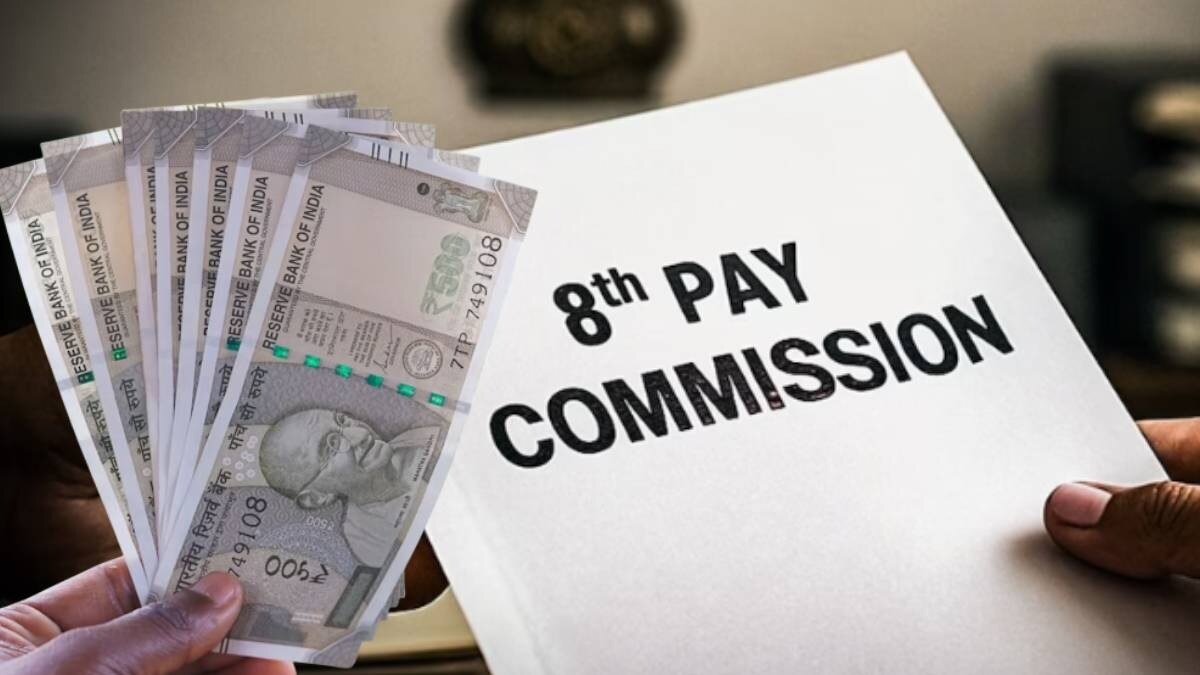
The 8th Pay Commission's discussions on salary, allowances and pension changes are gaining momentum. Now, the All India Railwaymen's Federation (AIRF) wants the Commission to set aside at least two more days to ensure that the demands of several Railway employee categories are heard.Formally established on November 3, 2025, the 8th Central Pay Commission is tasked with reviewing the salaries, allowances and pensions of central government employees and pensioners. Its recommendations are expected to benefit more than 50 lakh employees and nearly 69 lakh pensioners.In a letter to Pankaj Jain, Member Secretary of the 8th Pay Commission, AIRF General Secretary Shiva Gopal Mishra has requested another meeting with the Commission's Chairperson and members. He said several categories of railway employees are yet to get an opportunity to present their specific demands and service-related concerns.Mishra referred to the meeting held between the AIRF delegation and the 8th Pay Commission on October 30, 2026. During the meeting, the federation presented its views on the demands of Loco and Traffic Running Staff, Technicians, Track Maintainers and other employees of the Civil Engineering Department. Thanking the Commission for giving the delegation an opportunity to present its views, Mishra said the discussions were held in a cordial atmosphere and that the members patiently heard their submissions.However, he pointed out that railway employees work across several departments, each with different responsibilities, working conditions and service-related issues. As a result, many categories still need to be covered in discussions with the Commission. AIRF has already submitted its detailed memorandum through a letter dated October 10, 2026. Mishra has now requested another meeting to present the demands of the remaining employee categories.WHICH RAILWAY EMPLOYEE CATEGORIES ARE SEEKING REPRESENTATION?In his letter, Mishra listed several categories of railway employees whose demands AIRF wants to place before the 8th Pay Commission.These include all non-gazetted employees of the Railway Medical Department, along with supervisory staff from technical departments. The latter includes Drawing and Design staff, CMT staff, Depot Material Superintendents (DMS) and employees of the Information Technology (IT) cadre.The federation has also sought discussions on non-gazetted employees of the Traffic Department, including controllers, excluding train managers.Ministerial staff, including Stenographers, Staff and Welfare Inspectors and Works Study Inspectors, are also among the categories for which AIRF wants a separate discussion. The proposed list further includes Accounts staff and other miscellaneous categories of railway employees.Employees of Metro Railway Kolkata, the Research Designs and Standards Organisation (RDSO) and Rajbhasha categories have also been included in the request.WHY AIRF WANTS TWO ADDITIONAL DAYSAccording to Mishra, these categories make up a significant part of the railway workforce and have different job responsibilities and service-related concerns. Their demands, he said, need to be properly presented before the Commission so that they receive due consideration while recommendations are being prepared.The federation has therefore requested that at least two additional days be set aside for detailed discussions on these categories.Mishra has asked the Commission to schedule the proposed meeting at a mutually convenient date and time. He said this would allow the AIRF delegation to present its submissions in an organised and detailed manner.The letter also stressed that no major category of railway employees should be left out of the consultation process.AIRF has expressed hope that the Commission will consider its request favourably and provide an early opportunity for further discussions.- Ends
8th Pay Commission: Why Railway employees seek more time for staff demands
Full Article
Original Source
Read the full article at Indiatoday →KhanList aggregates and links to publicly available news content. We do not host full articles from third-party sources. Always verify important information with original sources.