
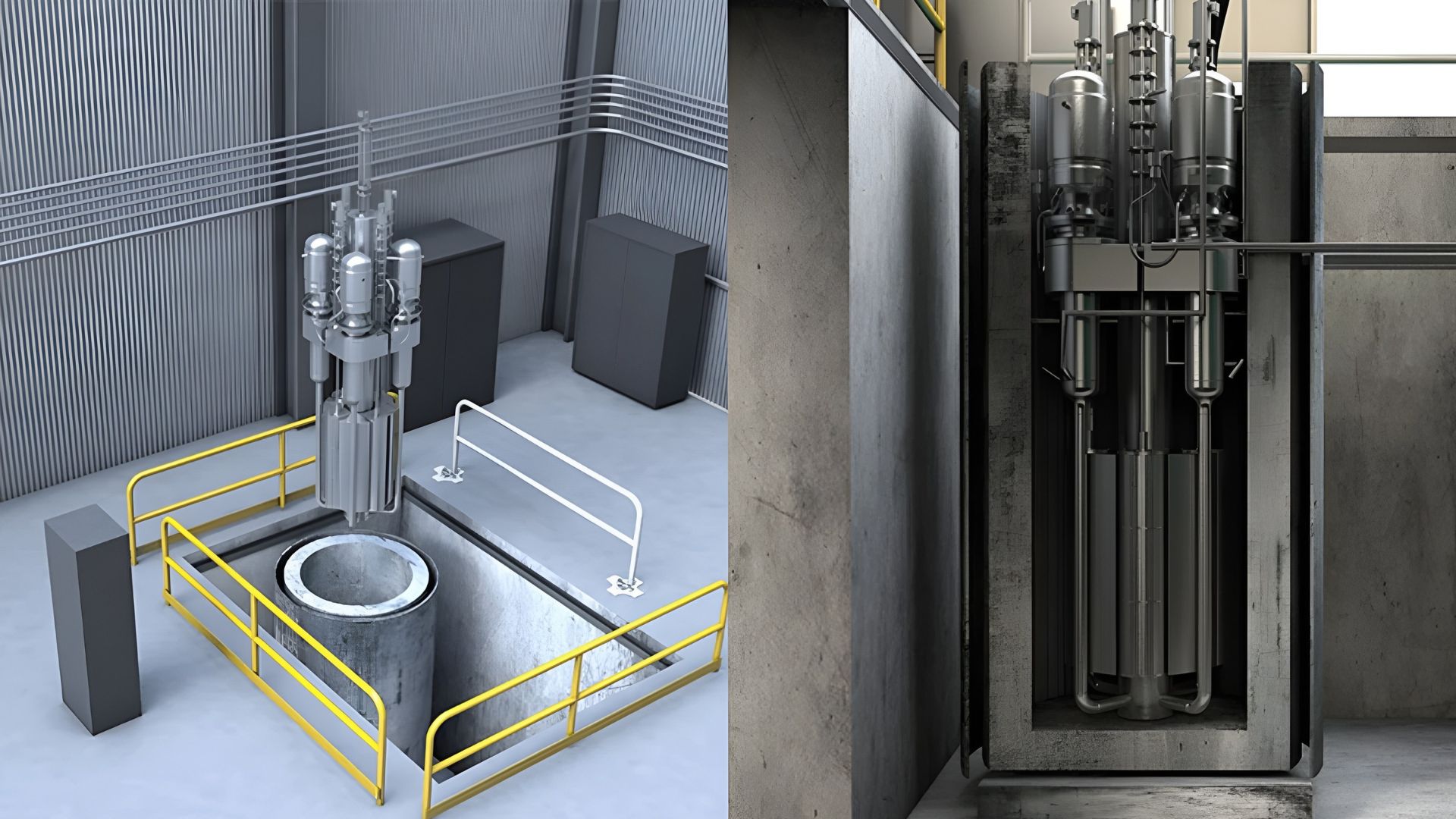
A small nuclear reactor at Idaho National Laboratory is approaching its first criticality test after engineers received a major piece of its cooling system. The primary coolant system for the Department of Energy’s MARVEL microreactor reached INL in mid-September. Its arrival gives engineers another major component to integrate before the reactor enters initial testing, which the project currently expects in December. MARVEL stands for Microreactor Applications Research Validation and Evaluation. INL leads the project for DOE as researchers explore how compact nuclear systems behave and how their operating data can support future reactor development. Key system arrives The primary coolant system will eventually carry heat away from MARVEL’s reactor core. It uses a sodium-potassium alloy that remains liquid at room temperature and can transfer heat at high temperatures. Unlike water-based systems that operate under significant pressure, the liquid-metal coolant does not require pressurization to remain fluid. That makes its behavior particularly relevant to researchers studying compact reactor designs. The system arrived at INL’s Transient Reactor Test Facility, where engineers will integrate it with the rest of MARVEL. That work will prepare the reactor for a series of tests leading toward initial criticality. Criticality marks the point when a reactor sustains a nuclear chain reaction. MARVEL’s first criticality will not immediately mean full-power operation. Instead, researchers will use the early phase to collect measurements about the reactor’s physics and behavior. The project reached another important checkpoint before the coolant system arrived. DOE’s Idaho Operations Office approved MARVEL’s final documented safety analysis, clearing the way for a dry criticality configuration. Safety work clears path Dry criticality allows engineers to reach a controlled critical state with almost no power generation. The configuration does not require coolant during that test. That distinction matters because MARVEL’s initial physics work can proceed before the reactor enters full thermal operation. Researchers can focus on reactor behavior and collect data under tightly controlled conditions. Abdalla Abou-Jaoude, MARVEL’s lead, said the team can now move toward initial criticality following the approval. The safety analysis could also have value beyond MARVEL itself. Abou-Jaoude said DOE guidance gives the team an opportunity to share the approved document with industry stakeholders. INL nuclear safety engineer Doug Gerstner said the analysis reflects years of engineering and safety work. He said the approval supports the risk-informed approach developed for the project. Testing could shape designs MARVEL’s importance extends beyond the reactor sitting inside an INL test facility. Its experiments could give researchers a benchmark for checking reactor physics calculations against measurements from an actual nuclear system. That data could prove useful as developers pursue other advanced reactor concepts. Small reactors face different engineering challenges from large commercial plants, particularly when designers try to reduce system size and complexity. MARVEL will provide a controlled environment for testing those ideas without attempting to replicate a commercial nuclear power plant. Its purpose is to generate evidence that researchers and engineers can use when evaluating future microreactor technologies. The next major test now sits on the calendar for December. If MARVEL reaches initial criticality as planned, researchers will have their first opportunity to put the reactor’s physics to the test and begin building the dataset that the project was designed to produce. Get the latest in engineering, tech, space & science - delivered daily to your inbox.Aamir is a seasoned tech journalist with experience at Exhibit Magazine, Republic World, and PR Newswire. With a deep love for all things tech and science, he has spent years decoding the latest innovations and exploring how they shape industries, lifestyles, and the future of humanity.
85-kW MARVEL microreactor gets liquid-metal coolant ahead of criticality test
Full Article
Original Source
Read the full article at Interestingengineering →KhanList aggregates and links to publicly available news content. We do not host full articles from third-party sources. Always verify important information with original sources.