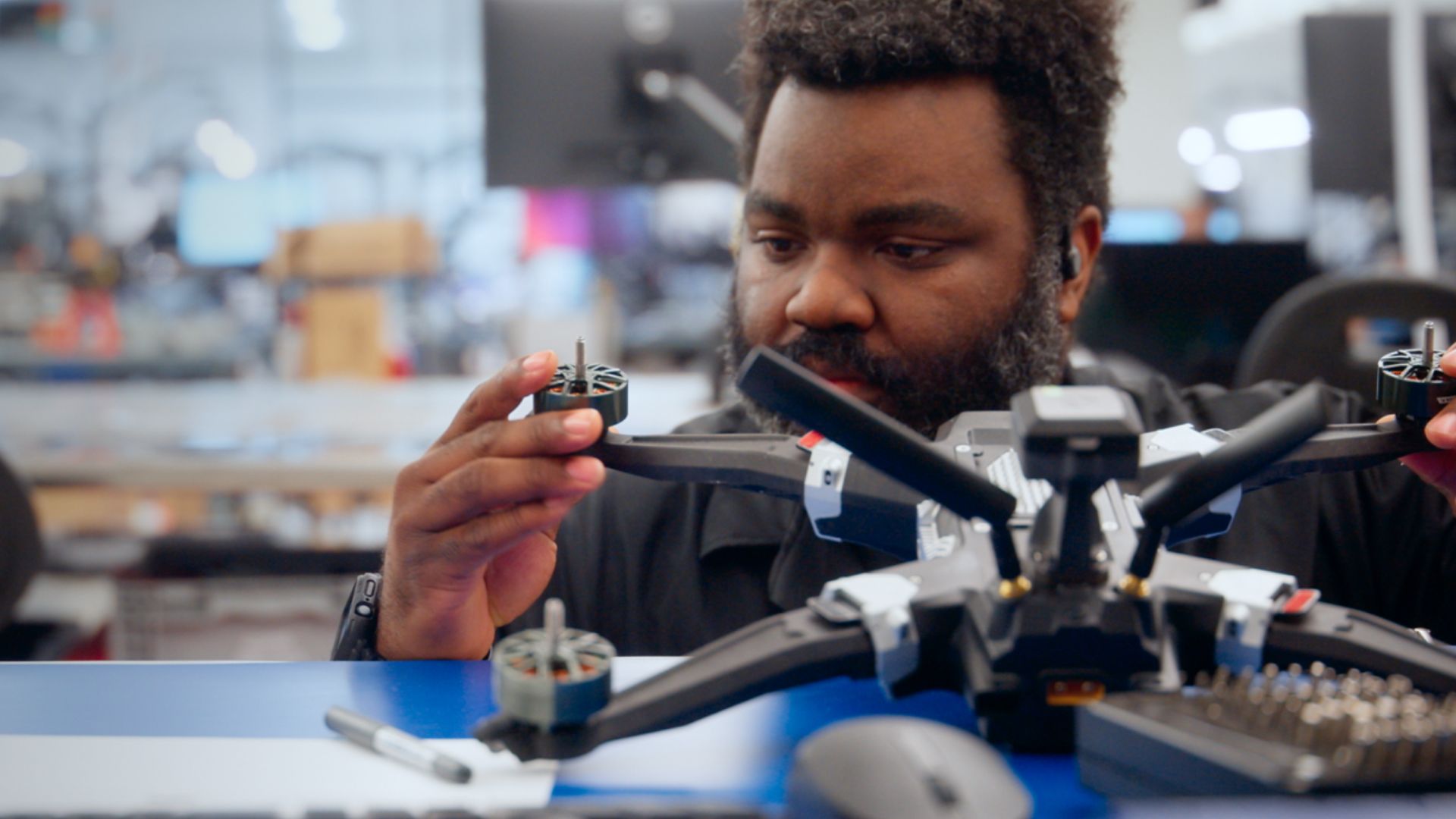
The United States is moving to expand its domestic drone manufacturing base after Performance Drone Works (PDW) received a conditional loan commitment of up to $820 million from the Department of War’s Office of Strategic Capital (OSC). Rather than focusing solely on producing more drones, the proposed funding aims is address one of the industry’s biggest vulnerabilities: reliance on foreign-controlled supply chains for critical drone components. If finalized, the financing would help expand U.S. production capacity for propulsion systems, power electronics, flight-control hardware, vision systems, and other key technologies used in drones, robotics, and autonomous platforms. Building the industrial base behind military drones Modern military drones are only as resilient as the supply chains that support them. While the United States develops some of the world’s most advanced unmanned systems, many of the electronic components and subsystems that power them continue to come from overseas suppliers. According to the company, the proposed investment would allow PDW to manufacture many of these critical technologies domestically while also supplying components to other American drone manufacturers. The initiative reflects broader efforts to strengthen the U.S. defense industrial base as demand for unmanned systems continues to grow. The company currently operates Drone Factory 01, a 90,000-square-foot engineering and manufacturing facility in Huntsville, Alabama, where engineering, systems integration, flight testing, manufacturing, and fulfillment are carried out under one roof. Lessons from modern warfare The announcement comes as drones have become one of the defining technologies of modern conflict. From intelligence gathering and precision strikes to logistics and electronic warfare, unmanned systems are now central to military operations across multiple theaters. Recent conflicts have also exposed the importance of manufacturing capacity. Producing advanced drones at scale requires a reliable supply of motors, batteries, flight controllers, sensors, cameras, communications equipment, and propulsion systems. Many of these have historically depended on international supply chains. By investing in domestic production of these technologies, the United States aims to reduce potential supply disruptions while improving the ability to rapidly manufacture mission-critical systems when required. Beyond defense applications Although the proposed financing is driven by national security priorities, the manufacturing capability could extend beyond military use. PDW said the expanded production capacity is intended to support future public safety, industrial, and commercial applications in addition to meeting defense requirements. A stronger domestic component ecosystem could also benefit the wider U.S. drone industry by providing American-made alternatives for manufacturers that currently rely on imported hardware. The Office of Strategic Capital was established to help finance technologies considered important to long-term U.S. national security and industrial competitiveness, particularly in areas where private investment alone may not be sufficient to rapidly scale manufacturing. Funding remains conditional The proposed $820 million financing has not yet been finalized. According to the announcement, the commitment remains conditional and is subject to additional financial, legal, technical, and due diligence requirements before reaching financial close. Even so, the size of the proposed investment illustrates how drone manufacturing has become a strategic priority for the United States. As militaries increasingly rely on autonomous systems across air, land, and sea, building secure domestic supply chains for the components behind those platforms is emerging as an important part of maintaining technological and industrial competitiveness. Recommended ArticlesGet the latest in engineering, tech, space & science - delivered daily to your inbox.Kaif Shaikh is a journalist and writer passionate about turning complex information into clear, impactful stories. His writing covers technology, sustainability, geopolitics, and occasionally fiction. A graduate in Journalism and Mass Communication, his work has appeared in the Times of India and beyond. After a near-fatal experience, Kaif began seeing both stories and silences differently. Outside work, he juggles far too many projects and passions, but always makes time to read, reflect, and hold onto the thread of wonder.
$820 million boost expands U.S. drone industrial base, cuts foreign reliance
Full Article
Original Source
Read the full article at Interestingengineering →KhanList aggregates and links to publicly available news content. We do not host full articles from third-party sources. Always verify important information with original sources.