
Seoul National University of Science and Technology researchers have developed a probabilistic method to estimate how likely nuclear power plant coolant pipes are to rupture, potentially giving engineers a clearer picture of which failure scenarios deserve the most attention. The team used probabilistic fracture mechanics to examine two piping systems at a reference Korean nuclear power plant. Unlike approaches that rely on fixed assumptions, the method accounts for uncertainty in material behavior, degradation, operating conditions, and inspection effectiveness. The researchers focused on a type of accident in which a primary coolant pipe breaks and causes a loss of coolant. Such failures are an important safety consideration because the primary coolant system helps maintain the reactor’s operating conditions. The analysis could help engineers distinguish extremely unlikely pipe failures from scenarios that are more credible. That could support decisions on reactor design, inspection schedules and maintenance, particularly as nuclear plants operate for longer periods. Modeling cracks across decades The researchers used the eXtremely Low Probability of Rupture (xLPR) code to model the behavior of two leak-before-break-approved piping systems: a steam-generator coolant, or SC, piping system and a surge nozzle. They simulated 80 years of plant operation, assuming stress corrosion cracking (SCC) was the only degradation mechanism. The team then varied several factors to see how they affected predicted rupture frequency. These included weld residual stress (WRS), crack growth rate (CGR), weld overlay (WOL) repairs, and inspection performance. The results showed that these variables do not affect rupture predictions equally. WRS emerged as the most influential factor. Using the 95th-percentile WRS profile led to a considerable reduction in predicted rupture frequency for the SC piping compared with the base case. Crack growth rate also had a significant effect on the results. Meanwhile, the surge nozzle showed no rupture across the scenarios examined, while the weld-overlay analysis produced no rupture for either piping system. Inspections produced one of the clearest effects. Periodic inspections reduced the predicted rupture frequency by several orders of magnitude, showing how maintenance and monitoring can significantly influence calculated nuclear-piping risk. Probabilities can sharpen safety decisions The researchers say probabilistic analysis can provide information that deterministic approaches may miss. Instead of treating individual parameters as fixed values, the framework evaluates how uncertainty in those parameters changes the estimated likelihood of failure. “Probabilistic fracture mechanics makes it possible to estimate rupture frequency while accounting for the stochastic nature of material behavior, degradation over time, loading conditions, and even effectiveness of inspections,” said Nam-Su Huh, a professor at the School of Mechanical Systems Engineering at Seoul National University of Science and Technology. The approach could be particularly relevant to aging nuclear plants, where degradation can accumulate over decades. It could also help operators determine where inspection and maintenance resources are likely to have the greatest safety impact. “A probabilistic framework can help engineers identify which factors govern the predicted failure behavior, providing a reliable technical basis for plant design and safety evaluations,” Huh said. “In the long term, this research could contribute to risk-informed approaches to maintain the safety of both aging plants and new plants.” The study does not predict that the analyzed pipes will fail. Instead, it provides a way to quantify how different assumptions and degradation factors can change calculated rupture probabilities, potentially giving engineers a more detailed basis for nuclear safety decisions. The study is set to be published in Engineering Failure Analysis. Get the latest in engineering, tech, space & science - delivered daily to your inbox.With over a decade-long career in journalism, Neetika Walter has worked with The Economic Times, ANI, and Hindustan Times, covering politics, business, technology, and the clean energy sector. Passionate about contemporary culture, books, poetry, and storytelling, she brings depth and insight to her writing. When she isn’t chasing stories, she’s likely lost in a book or enjoying the company of her dogs.
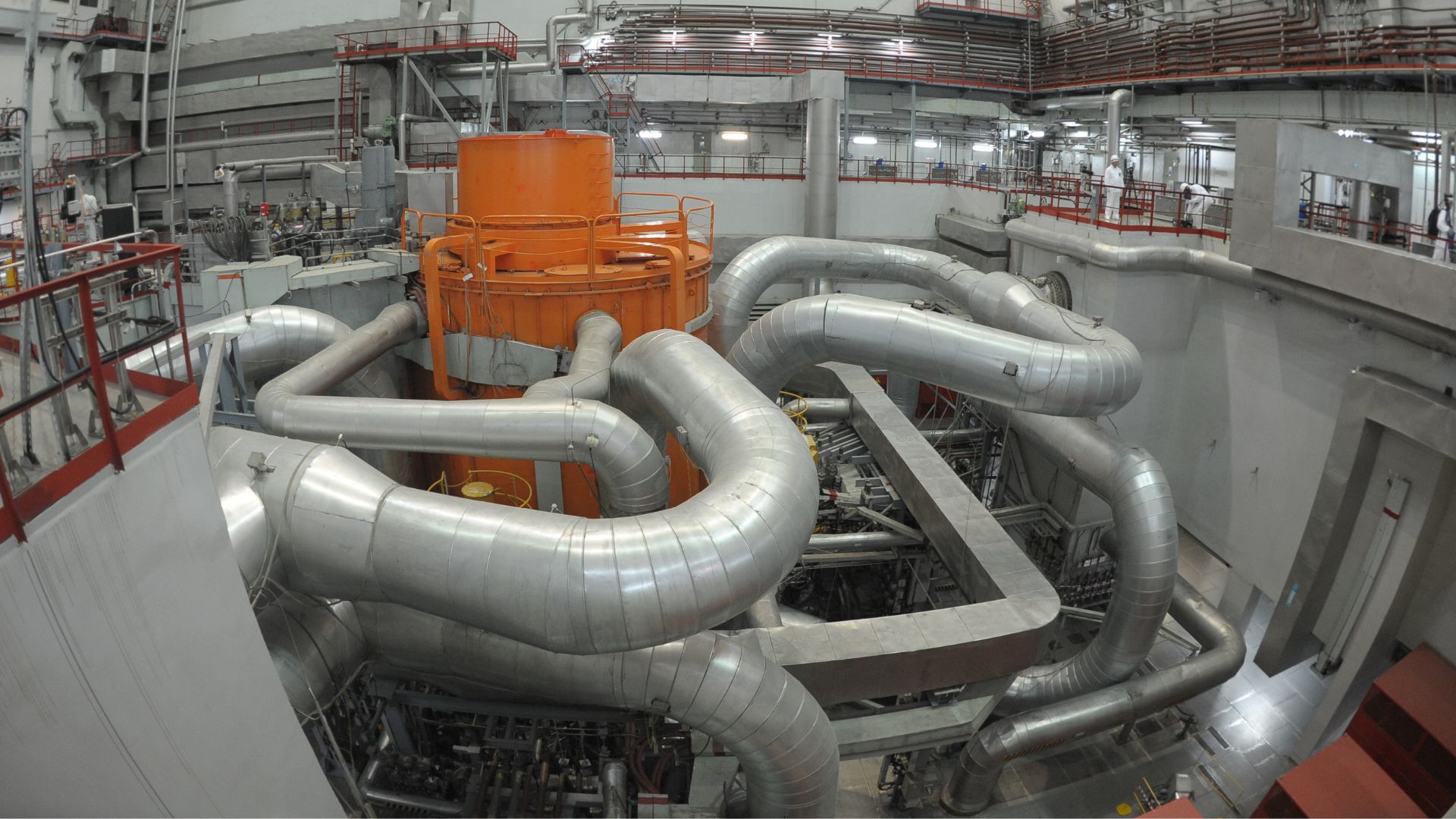
80-year nuclear plant model tracks coolant pipe cracks to pinpoint rupture risks
Full Article
Original Source
Read the full article at Interestingengineering →KhanList aggregates and links to publicly available news content. We do not host full articles from third-party sources. Always verify important information with original sources.