
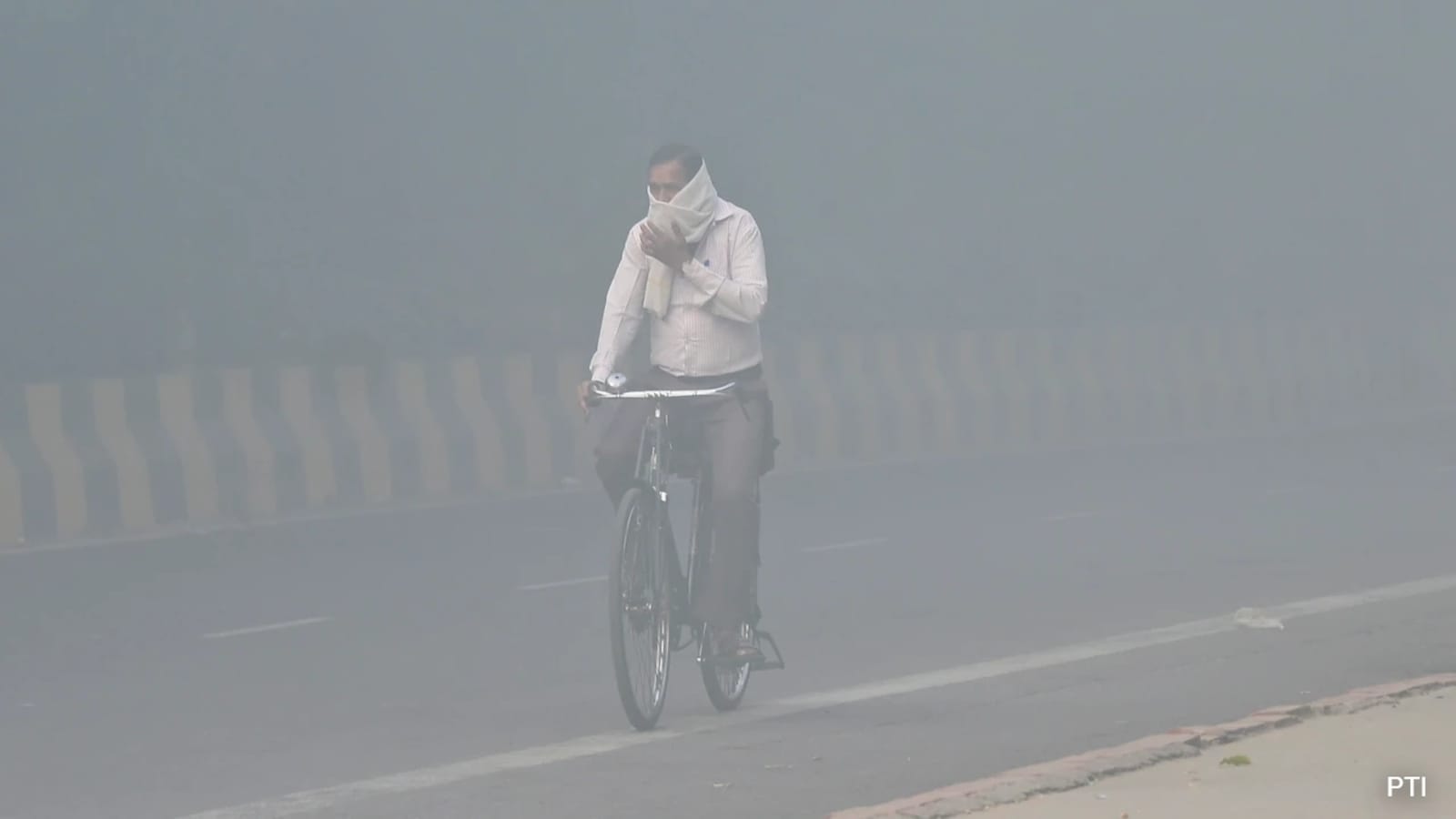
Delhi's post-Diwali air pollution spike had a clear and unusually concentrated source: Firecrackers. Emissions from fireworks accounted for more than 80 per cent of the capital's pollution load on Monday, a day after Diwali, according to estimates by the Indian Institute of Tropical Meteorology (IITM). The high numbers maybe contested, but the toxic haze that covered the national capital and its neighbouring areas after Diwali highlighted how a few hours of fireworks can dramatically alter the composition of an already polluted atmosphere.A separate IITM source-apportionment assessment estimated that firecrackers contributed 71.1 per cent of Delhi's PM2.5 concentration between 1 am and 9 am on November 9. IITM dashboard shows huge spike in PM2.5 level on Monday, a day after Diwali.Photo Credit: ews.tropmet.res.inThe IITM assessment also reveals how dramatically the pollution mix changed around Diwali. Firecrackers accounted for 43.4 per cent of PM2.5 during the corresponding hours on November 8, compared to just 5.6 per cent on November 7. Their contribution had been 5.6 per cent on November 5 and 9.3 per cent on November 6.The impact was visible in actual pollution measurements as well. PM2.5 concentrations at Jahangirpuri reached 4,985 micrograms per cubic metre at 3 am on November 9, while Nehru Nagar recorded 2,808 micrograms per cubic metre, according to a report in Times of India. However, the data was later revised to 776 micrograms per cubic metre by Delhi Pollution Control Committee (DPCC).Interestingly, vehicular emissions accounted for only 6.9 per cent of PM2.5 during the November 9 assessment window. Secondary inorganic aerosols contributed five per cent, while secondary organic aerosols accounted for 4.5 per cent.With a value of 308, the AQI remained in the 'very poor' category on Wednesday morning. A further improvement in air quality is expected over the next few days as wind speeds are likely to increase.Why Delhi's Pollution Spike PersistedWeather conditions play a crucial role in determining how long pollutants remain suspended over a city. The India Meteorological Department (IMD) monitors wind speed, wind direction, temperature and humidity, all of which influence atmospheric dispersion. Favourable winds helped improve conditions after the Diwali pollution spike, although the accumulated pollutants did not disappear immediately.Delhi's average Air Quality Index (AQI) stood at 376 on Diwali, November 8, placing it in the 'very poor' category. It improved to 299 at 4 pm on November 10, entering the 'poor' category, before rising to 302 by 6 pm.The findings underline the difference between episodic and persistent pollution sources. Fireworks can cause an abrupt increase in particulate matter, while vehicles, industrial emissions, construction activity and road dust contribute to Delhi's pollution throughout the year.Following Diwali celebrations on November 8, India featured prominently in global pollution rankings, with 93 Indian cities among the world's 100 most polluted locations, according to AQI.in data published on November 9.
80% Of Post-Diwali Pollution In Delhi Caused By Firecrackers: Study
Full Article
Original Source
Read the full article at Ndtv →KhanList aggregates and links to publicly available news content. We do not host full articles from third-party sources. Always verify important information with original sources.