
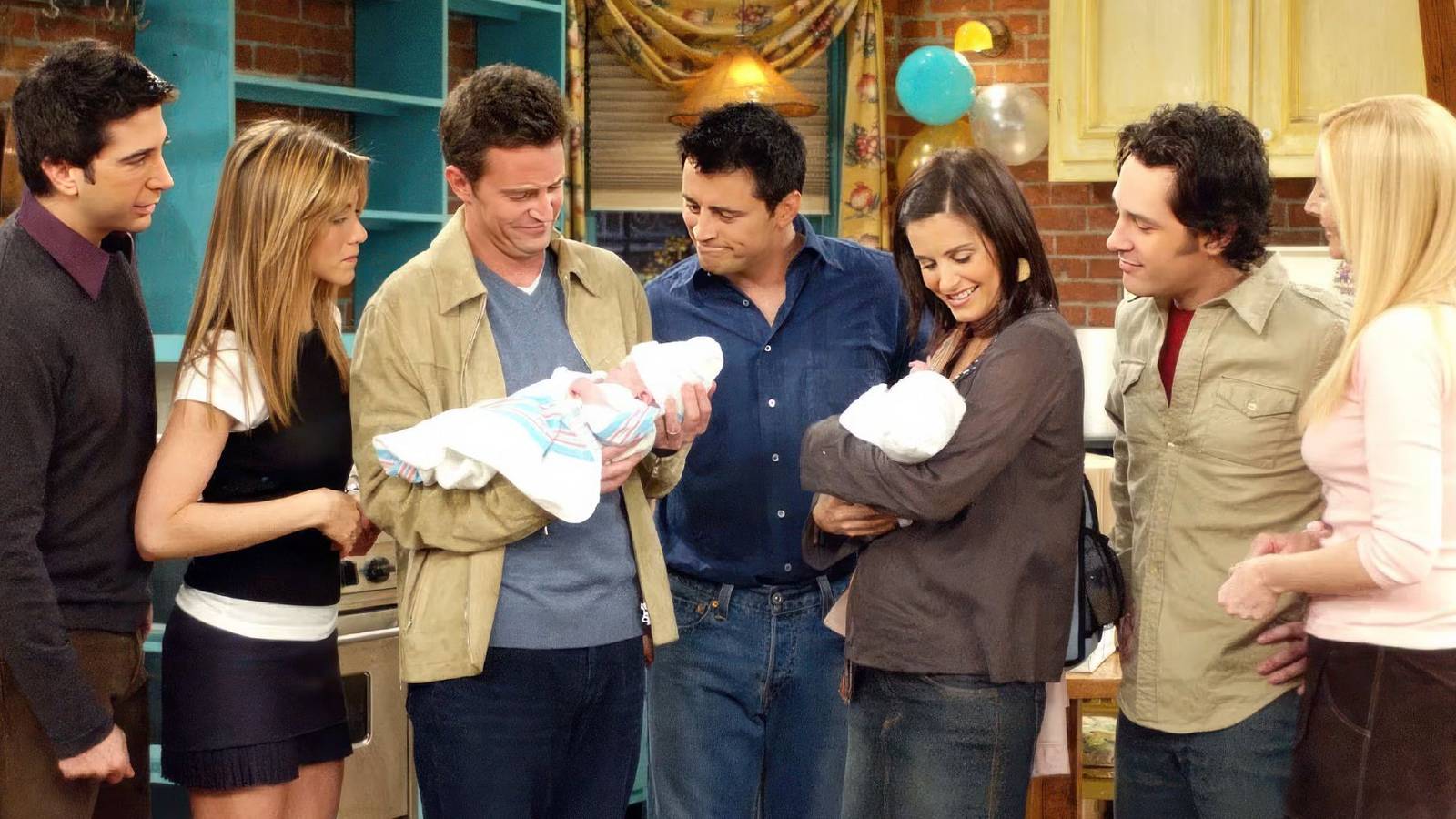
Image via NBC Published Jul 23, 2026, 1:18 PM EDT Remus is a writer, editor, journalist, and author with an eye for detail and an extremely active imagination. He is an enthusiast of everything to do with the graphic medium, whether it's Western comics and their adaptations or manga and anime. Remus is also the author of the sci-fantasy novel Once Upon a Time in Hyperspace and several works of short fiction in the mystery, comedy, and horror genres. Sign in to your Collider account TV shows have a way of forming very intimate connections with the audience, especially those that have lasted for years, sometimes over a decade. Their characters, stories, and milestones often become integral parts of our lives, shaping contemporary culture. And when these shows end, it marks not only the end of a story but also of an era. Only a select group of television shows over the years have been able to truly give closure to a saga that the audience has lived with day in and day out. These landmark series defined the eras in which they were broadcast, reinventing their respective genres with new perspectives on conventions and going on to become pop culture sensations. So, when they ended — some with a bang, some with silence — it not only marked their ending but concluded something much bigger. So, without further ado, here’s our handpicked selection of TV finales that officially marked the end of an era. 1 ‘The Sopranos’ (1999–2007) Season 6, Episode 21: “Made in America” Image via HBO A legendary crime drama series, The Sopranos was created by David Chase and follows the titular New Jersey-based Italian-American crime family. When Tony Soprano begins experiencing panic attacks and struggles to manage the stress of his business and family life, he starts consulting a therapist who helps him process his troubles, as he navigates his marriage, family, and the endless dangers of his criminal profession. James Gandolfini’s Tony Soprano remains a TV icon, alongside other main characters played by Edie Falco, Lorraine Bracco, Michael Imperioli, Dominic Chianese, and more. In its day, The Sopranos was an innovative, groundbreaking show that played a key role in transforming HBO into the cultural powerhouse it is now. The crime drama masterpiece famously has one of the most epic and shocking finales of its time, where the abrupt final cut to a black screen shattered all television conventions and audience expectations, leaving people with ambiguity and confusion. “Made in America” marked the end of traditional narrative convention, with The Sopranos paving the way for more anti-heroic dramas like Breaking Bad and Mad Men. 2 ‘Buffy the Vampire Slayer’ (1997–2003) Season 7, Episode 22: “Chosen” Image via 20th Century Television Created by Joss Whedon and based on his 1992 film, Buffy the Vampire Slayer is a '90s and 2000s television icon that’s synonymous with the decade’s pop culture, starring Sarah Michelle Gellar in her breakout role. The series centers on Gellar’s titular character, Buffy Summers, the latest in a succession of Slayers, who fights vampires, demons, and various forces of darkness while navigating high school and teenage life. The show also stars Nicholas Brendon, Alyson Hannigan, Charisma Carpenter, Anthony Stewart Head, David Boreanaz, Michelle Trachtenberg, and more in iconic roles. By pioneering the aesthetic and narrative style of supernatural teen drama, Buffy the Vampire Slayer redefined its genre and became a major pop culture landmark. The show’s finale was not just Buffy’s final stand as the Chosen One but marked a conclusion to the teen culture of the late '90s and early 2000s. Its ending sparked a new generation of young adult fiction storytelling, mixing horror, humor, and emotional themes, which became a template for later young adult fantasy fiction shows like The Vampire Diaries. 3 ‘Six Feet Under’ (2001–2005) Season 5, Episode 12: “Everyone's Waiting” Image via HBO Alan Ball’s dark comedy drama show Six Feet Under follows two generations of the Fisher family and how they navigate their family funeral home business after the family patriarch passes away. The series begins in the aftermath of the father’s death, exploring the changing family dynamic between siblings Nate Jr., David, Claire, and their mother, Ruth, as all of them navigate life and death at Fisher & Sons. Richard Jenkins, Michael C. Hall, Peter Krause, Lauren Ambrose, and Frances Conroy play the main cast in some of their most memorable performances. Six Feet Under was inventive and very moving at its time and became the defining cultural text of the post-9/11 years, encouraging conversations on death and mortality. For a series that proudly explores and embraces death (and beautifully so), Six Feet Under delivers a fitting finale with “Everyone’s Waiting,” which plays like an epilogue culminating in an emotionally devastating finale. After watching their journey for five years, it broke many hearts as fans witnessed the ultimate deaths of every main character, and the episode is often considered one of the saddest in television history. Collider Exclusive · Taylor Sheridan Universe Quiz Which Taylor SheridanShow Do You Belong In? Yellowstone · Landman · Tulsa King · Mayor of Kingstown Four worlds. All of them brutal, complicated, and built on power, loyalty, and the price of survival. Taylor Sheridan doesn't write heroes — he writes people who do what they have to do and live with the cost. Ten questions will reveal which one of his worlds you were made for. 🤠Yellowstone 🛢️Landman 👑Tulsa King ⚖️Mayor of Kingstown FIND YOUR WORLD → 01 Where does your power come from? In Sheridan's world, everyone has leverage. The question is what kind. ALand, legacy, and a name that's been feared and respected for generations. BKnowing the deal better than anyone else in the room — and being willing to walk away first. CReputation. I've earned it the hard way, and everyone in the room knows it. DBeing the only person both sides will talk to. That makes me indispensable — and dangerous. NEXT QUESTION → 02 Who do you put first, no matter what? Loyalty in Sheridan's universe is always absolute — and always costly. AFamily — blood or chosen. The ranch, the name, the people who carry it with me. BThe company — or whoever's signing the cheques. Loyalty follows the contract. CMy crew. The men who stood with me when it counted — I don't abandon them for anything. DMy community — even when my community is a powder keg and I'm the only thing stopping it from blowing. NEXT QUESTION → 03 Someone crosses a line. How do you respond? Every Sheridan protagonist has a line. What matters is what happens after it's crossed. AQuietly, decisively, and in a way that sends a message to everyone watching. BI outmanoeuvre them legally, financially, and politically before they even know I've moved. CDirectly. Old school. You cross me, you hear about it to your face — and then you deal with the consequences. DI absorb it, calculate the fallout, and find the move that keeps the whole system from collapsing. NEXT QUESTION → 04 Where do you feel most in your element? Sheridan's worlds are as much about place as they are about people. AWide open land — mountains, sky, silence. Somewhere you can see trouble coming from a mile away. BThe oil fields of West Texas — brutal, lucrative, and indifferent to whoever happens to be standing on top of them. CA mid-size city where the rules haven't quite caught up yet — fertile ground for someone with vision and nerve. DA rust-belt town built around a prison — where everyone's life is shaped by what's inside those walls. NEXT QUESTION → 05 How do you feel about operating in the grey? Nobody in a Sheridan show has clean hands. The question is how they carry the dirt. AI do what has to be done to protect what's mine. I'll answer for it eventually — but not today. BGrey is just business. The line moves depending on what's at stake, and I move with it. CI have a code — it's not the law's code, but it's mine, and I don't break it. DI've made peace with it. Keeping the peace requires compromises most people don't have the stomach for. NEXT QUESTION → 06 What are you actually fighting to hold onto? Every Sheridan character is fighting a war. The real question is what they're defending. AA way of life that the modern world is doing everything it can to erase. BMy position — and the leverage that comes with being the person everyone needs to close a deal. CRelevance. I've been away, I've been written off — and I'm proving that was a mistake. DWhatever fragile order I've managed to build — because without it, everything burns. NEXT QUESTION → 07 How do you lead? Authority in Sheridan's world is never given — it's established, maintained, and constantly tested. ABy example and force of will. People follow me because they believe in what I'm protecting — and because they know what happens if they don't. BThrough negotiation and leverage. I don't need people to like me — I need them to need me. CBy being the smartest, most experienced person in the room and making sure everyone quietly knows it. DBy being the calm centre of a situation that would spiral without me — and accepting that nobody thanks you for it. NEXT QUESTION → 08 Someone new arrives and tries to change how things work. Your reaction? Every Sheridan show has an outsider disrupting an established order. Sometimes that outsider is you. AThey'll learn. Or they won't. Either way, the land was here before them and it'll be here after. BI figure out what they want, what they're worth, and whether they're an asset or a problem — fast. CI was the outsider once. I give them a chance — one — to show they understand respect. DNew players destabilise everything I've built. I assess the threat and manage it before it manages me. NEXT QUESTION → 09 What has your position cost you? Nobody gets to where these characters are without paying for it. The bill is always personal. AMy family's peace — maybe their innocence. The ranch demands everything, and I've let it take too much. BRelationships, time, any version of a normal life. The job eats everything that isn't nailed down. CYears. Decades in some cases. Time I can't get back — but I'm not done yet. DMy conscience, mostly. And the ability to ever fully trust anyone on either side of the wall. NEXT QUESTION → 10 When it's over, what do you want people to say? Sheridan's characters all know the ending is coming. The question is what they leave behind. AThat I held the line. That the land is still ours and everything I did was worth it. BThat I was the best at what I did and that no deal ever got closed without me at the table. CThat I built something real, somewhere nobody expected it, and I did it on my own terms. DThat I kept the peace when nobody else could — and that the town is still standing because of it. REVEAL MY SHOW → Sheridan Has Spoken You Belong In…The show that claimed the most of your answers is the world you were built for. If two tied, both are shown — you're complicated enough to straddle two Sheridan universes. 🤠 Yellowstone 🛢️ Landman 👑 Tulsa King ⚖️ Mayor of Kingstown You are a Dutton — or you might as well be. You understand that some things are worth protecting at any cost, and that the modern world's indifference to history, to land, to legacy, is not something you're willing to accept quietly. You lead from the front, you carry your family's weight without complaint, and when someone threatens what's yours, you don't escalate — you finish it. You're not cruel. But you are absolute. In Yellowstone's world, that combination of ferocity and loyalty doesn't make you a villain. It makes you the only thing standing between everything that matters and everyone who wants to take it. You thrive in the chaos of high-stakes negotiation, where the money is enormous, the margins are thin, and the wrong word in the wrong room can cost everyone everything. You're a fixer — the person called when a situation is already on fire and needs someone with the nerve to walk into it. West Texas oil country rewards exactly what you are: sharp, adaptable, unsentimental, and absolutely clear-eyed about what people want and what they'll do to get it. You're not naive enough to think this world is fair. You're smart enough to be the one deciding who it's fair to. You are a Dwight Manfredi — someone who has served their time, paid their dues, and arrived somewhere unexpected with nothing but their reputation and their wits. You adapt without losing yourself. You build loyalty through respect rather than fear, though you're not above reminding people that the two aren't mutually exclusive. Tulsa King is for people who are still standing when everyone assumed they'd be finished — who find, in an unfamiliar place, that they're more capable than the world gave them credit for. You don't need a throne. You build one, wherever you happen to land. You carry the weight of a system that is broken by design, and you do it anyway — because someone has to, and because you're the only one positioned to do it without the whole thing collapsing. Mike McLusky's world is for people who are comfortable operating where there are no good options, only less catastrophic ones. You speak every language: law enforcement, criminal, political, human. That fluency makes you invaluable and it makes you a target. You've made your peace with both. Mayor of Kingstown belongs to people who understand that keeping the peace is not the same as being at peace — and who do the job regardless. ↻ RETAKE THE QUIZ 4 ‘The Office’ (2005–2013) Season 9, Episode 24-25: “Finale” Image: Chris Haston/©NBC/courtesy Everett Collection One of the best TV mockumentaries ever made and a cult classic sitcom, The Office is a workplace comedy revolving around a misfit group of employees at a small branch office of Dunder Mifflin Paper Company. The show documents their daily office life, various antics, and interpersonal conflicts, but mostly tackles their eccentric regional manager, Michael Scott, and his self-proclaimed second-in-command, Dwight Schrute. Steve Carell’s Michael Gary Scott and characters played by John Krasinski, Rainn Wilson, Jenna Fischer, B.J. Novak, and Ed Helms have since become internet sensations. Not only did Greg Daniels’ American adaptation of the British show become more popular, but The Office became a 21st-century comedy landmark, with a significant pop culture impact. The show inspired an entire generation of workplace comedies with its intimate, mockumentary-style narrative and meta-humor that culminated in a very poignant goodbye. Even if the show doesn’t end dramatically, the final episode, “Finale,” closes the book on their nine-year journey with the documentary’s release and grants every character a satisfying close. 5 ‘The Big Bang Theory’ (2007–2019) Season 12, Episode 24: “The Stockholm Syndrome” Image via CBS One of the most-watched sitcoms of the 21st century, The Big Bang Theory was created by Chuck Lorre and Bill Prady and follows the misadventures in the daily lives of Leonard, Sheldon, their neighbor Penny, and their friends Howard and Rajesh. The series is a comedic chronicle of what happens when two physicists, two biologists, one engineer, one astrophysicist, and an aspiring actress bring their respective social ineptitudes to their social and professional lives. The series stars Johnny Galecki, Jim Parsons, Kaley Cuoco, Simon Helberg, Kunal Nayyar, and more as lead characters. The Big Bang Theory became a massive success, redefining nerd comedy by translating subgenre conventions into popular cultural motifs. Hilarious and sometimes heartfelt, The Big Bang Theory popularized geek culture for an entire generation of fans and became a global favorite. The show’s heartfelt final episode, "The Stockholm Syndrome," concludes its era by keeping the group's dynamic intact, despite their achievements and emotional growth, proving that stories do not always have to end with sadness. 6 ‘Two and a Half Men’ (2003–2015) Season 12, Episode 15-16: “Of Course He's Dead” Image via Warner Bros. Television Chuck Lorre was a well-known sitcom creator before the 2000s, but Two and a Half Men, co-created with Lee Aronsohn, cemented his status as the King of Sitcoms. The deliciously dark, brazen comedy follows the dysfunctional Harper family, specifically Alan Harper and his 10-year-old son, Jake, who become permanent guests at Alan’s brother Charlie’s house, upending Charlie’s freewheeling lifestyle. The key characters played by Jon Cryer, Charlie Sheen, Angus T. Jones, Holland Taylor, Melanie Lynskey, and Conchata Ferrell have all since become icons of TV comedy. During its run, Two and a Half Men was at the pinnacle of satirical comedy with its brash, unabashed humor that anchored 2000s network TV. The final episode of Two and a Half Men is not just the end of the sitcom’s 12-year-long journey but also a symbolic closure to the show’s turbulent off-screen history. The finale, “Of Course He’s Dead,” signifies the actual death of Charlie Harper while also bookending the infamous behind-the-scenes drama between creator Chuck Lorre and star Charlie Sheen. 7 ‘Friends’ (1994–2004) Season 10, Episode 17-18: “The Last One” Image via NBC One of the most iconic sitcoms of all time, Marta Kaufman and David Crane’s Friends revolves around six friends — Ross, Rachel, Monica, Chandler, Phoebe, and Joey — who navigate life, romance, friendships, careers, and each other’s eccentricities in 1990s New York City. From its story and characters to the staging, wardrobe, style, tone, and even music, every aspect of the show has since become part of the template for sitcoms about friends. David Schwimmer, Jennifer Aniston, Courteney Cox, Matthew Perry, Lisa Kudrow, and Matt LeBlanc became synonymous with their respective lead characters, who remain a blueprint for sitcoms today. Some dated jokes and motifs aside, Friends was a major pop culture sensation for the greater part of the '90s and the early 2000s. When it ended with them leaving Monica's apartment, the epicenter of their decade-long journey, it closed the book on TV’s most distinguishing found-family as they leave behind the past and move onto the future. It’s no wonder that the final episode of Friends, “The Last One,” is the most-watched television episode of the 2000s and one of the best comedy finales of all time. 8 ‘M*A*S*H’ (1972–1983) Season 11, Episode 16: "Goodbye, Farewell and Amen" Image via CBS Developed by Larry Gelbart, M*A*S*H is a timeless war comedy that was an original spin-off adaptation of the 1970 film, in turn based on Richard Hooker's 1968 novel MASH: A Novel About Three Army Doctors. Set during the Korean War, the series follows the medical staff and patients at the 4077th Mobile Army Surgical Hospital in South Korea, where they survive various odds and tackle life with practical jokes and witty banter. The series stars Alan Alda, Wayne Rogers, Loretta Swit, Jamie Farr, and more in main roles. M*A*S*H was a massively popular TV comedy of its time and became a multi-generational phenomenon, launching the titular franchise that now includes plays, video games, and further spin-offs. The show’s final episode, “Goodbye, Farewell and Amen,” depicting the final days of the war and the dismantling of the medical unit, bids a tearful adieu to the characters as they go their separate ways. The episode garnered an astonishing viewership with over 125 million viewers and held the record for the most-watched TV episode and the most-watched TV finale in American history until 2010. M*A*S*H Release Date 1972 - 1983-00-00 Network CBS Cast Loretta Swit Margaret Houlihan
8 TV Finales That Officially Marked the End of an Era
Full Article
Original Source
Read the full article at Collider →KhanList aggregates and links to publicly available news content. We do not host full articles from third-party sources. Always verify important information with original sources.