Image via Orion Published Aug 12, 2026, 12:14 AM EDT Luc Haasbroek is a writer and videographer from Durban, South Africa. He has been writing professionally about pop culture for eight years. Luc's areas of interest are broad: he's just as passionate about psychology and history as he is about movies and TV. He's especially drawn to the places where these topics overlap. Luc is also an avid producer of video essays and looks forward to expanding his writing career. When not writing, he can be found hiking, playing Dungeons & Dragons, hanging out with his cats, and doing deep dives on whatever topic happens to have captured his interest that week. Sign in to your Collider account Tension is the lifeblood of every great thriller. While compelling characters and strong writing are important, the genre ultimately succeeds or fails based on its ability to keep readers turning pages. With that in mind, this list looks at some of the novels that do it best. The titles below vary a lot in style and tone, each of them generating suspense in their own way, whether that's through lost memories, espionage, lies, or relentless survival scenarios. All are worth checking out if you're a thriller fanatic. 8 'The Spy Who Came in from the Cold' (1963) Image via Penguin "What if nobody is truly on your side?" The Spy Who Came in from the Cold revolutionized espionage fiction with its complex characters and moral ambiguity, as well as its abundance of tightly coiled suspense. In it, British intelligence officer Alec Leamas is left exhausted and disillusioned by a disastrous mission. Offered one final assignment against East Germany, he agrees to participate in an elaborate deception that gradually becomes far more dangerous than either he or the reader initially realizes. John le Carré's greatest strength here might be his refusal to provide certainty. Every new revelation raises fresh doubts about who is telling the truth and whose interests are actually being served. These characters lie for a living, after all. The book broke major ground by depicting spycraft as something inherently corrosive, always ending in paranoia. 7 'Gone Girl' (2012) Image via Phoenix "What happens when nobody can be trusted?" Even before David Fincher's killer film adaptation, Gone Girl had established itself as one of the defining thrillers of the 2010s. The delectably intricate tale begins with the disappearance of Amy Dunne on the morning of her fifth wedding anniversary. Her husband Nick quickly becomes the focus of public suspicion, but as the investigation unfolds, Gillian Flynn repeatedly overturns readers' expectations. Every chapter encourages readers to reassess earlier events, while the shifting perspectives continually undermine confidence in what appears to be true. There are twists aplenty and a ton of narrative misdirection, all of it calibrated for maximum impact. On top of being an exercise in sheer genre style, Gone Girl also works as a combustible dissection of a marriage. Not for nothing, it was a runaway bestseller. 6 'The Talented Mr. Ripley' (1955) Image via W. W. Norton & Company "How long can someone successfully pretend to be another person?" Many thrillers build tension around catching a criminal. The Talented Mr. Ripley plunges us into the mind of the criminal himself. This is the book that introduced Tom Ripley, a struggling young American sent to Italy to persuade wealthy heir Dickie Greenleaf to return home. Instead, Tom becomes dangerously fascinated with Dickie's privileged lifestyle. Soon, he's spinning lies and contemplating violence. Patricia Highsmith opened up new possibilities for thriller writing by getting us to understand this twisted antihero without ever fully approving of him. At the same time, she wrings unbearable tension out of every one of Ripley's cons. They're always threatening to collapse around him, and readers are forced to experience every one of those close calls. We feel the stress of a desperate man trying to avoid exposure. 5 'The Silence of the Lambs' (1988) Image via St. Martin's Press "We covet what we see every day." Serial killer writing changed forever with The Silence of the Lambs. Author Thomas Harris had been delivering great work for years before this, but here he perfected his recipe. The setup is iconic by now: FBI trainee Clarice Starling seeks the imprisoned psychiatrist and cannibal Hannibal Lecter in hopes of gaining insight into another murderer known as Buffalo Bill. However, every interview with Lecter becomes a psychological contest. Here, Harris balances multiple sources of suspense. We fear Clarice's dangerous encounters with Lecter, we're gripped by her race to stop Bill, and we constantly wonder whether Lecter himself is manipulating everyone around him for purposes not yet revealed. It helps that the character himself is so brilliant: urbane, unpredictable, charming, terrifying, adept at figuring out his interlocutors' vulnerabilities. Collider Exclusive · Horror Survival Quiz Which Horror Villain Do You Have the Best Chance of Surviving? Jason Voorhees · Michael Myers · Freddy Krueger · Pennywise · Chucky Five killers. Five completely different ways to die — if you're not smart enough, fast enough, or self-aware enough to avoid it. Only one of them is the villain your particular set of instincts gives you a fighting chance against. Eight questions will figure out which one. 🏕️Jason 🔪Michael 💤Freddy 🎈Pennywise 🪆Chucky TEST YOUR SURVIVAL → 01 Something feels wrong. You can't explain it — you just know. What do you do? First instincts are the difference between the survivor and the first act casualty. ALeave immediately. I don't need to understand a threat to respect it. BStay quiet and observe. If I can see it, I can understand it. If I can understand it, I can avoid it. CStay awake. Whatever this is, I am not going to sleep until I feel safe again. DConfront it directly. Fear grows in the dark — I'd rather know what I'm dealing with. ECheck everything, trust nothing. The threat might be closer than I think — and smaller. NEXT QUESTION → 02 Where are you most likely to find yourself when things go wrong? Setting is everything in horror. Where you are determines which rules apply. ASomewhere remote — a cabin, a campsite, off the grid and away from people. BA quiet suburban neighbourhood where nothing ever happens. Except tonight. CIn my own head — the most dangerous place of all, depending on what's already in there. DWherever children are — because something about this place attracts the worst things. ESomewhere ordinary — a house, a toy store, a place where the last thing you'd expect is a threat. NEXT QUESTION → 03 What is your most reliable survival asset? Every survivor has a quality the villain didn't account for. What's yours? APhysical fitness — I can run, I can swim, I can outlast something that relies on brute persistence. BSpatial awareness — I always know the exits, the hiding spots, the fastest route out. CPsychological resilience — I've faced my worst fears before. They don't have the same power over me. DEmotional steadiness — I don't panic. Panic is what gets you caught. EScepticism — I don't underestimate threats because of how they look. Size is irrelevant. NEXT QUESTION → 04 What kind of fear is hardest for you to fight through? Knowing your weakness is the first step to not dying because of it. AThe unstoppable — something that will not stop, cannot be reasoned with, and is always getting closer. BThe invisible — a threat I can feel but can't locate, watching from somewhere I can't see. CThe psychological — something that uses my own mind and memories against me. DThe unknowable — something ancient, shapeless, that feeds on the fear itself. EThe mundane — a threat so ordinary-looking that no one will believe me until it's too late. NEXT QUESTION → 05 You're with a group when things start going wrong. What's your role? Horror movies are brutally clear about who survives group situations and who doesn't. AThe one who says "we need to leave" first — and means it, even when no one listens. BThe one who stays quiet, watches the others, and figures out the pattern before anyone else does. CThe one who holds the group together when panic sets in — because someone has to. DThe one who asks the questions nobody wants to ask — because ignoring them gets people killed. EThe one who takes the threat seriously when everyone else is laughing it off. NEXT QUESTION → 06 What's the horror movie mistake you're most likely to make? Honest self-assessment is a survival skill. Denial is not. AGoing back for someone — I know I shouldn't, but I can't leave them behind. BAssuming I'm safe once I've found a hiding spot. That's when it finds me. CFalling asleep when I absolutely cannot afford to. Exhaustion is its own enemy. DLetting my curiosity override my instincts — I always need to understand what I'm dealing with. EDismissing the threat because of how it looks. That's exactly what it wants. NEXT QUESTION → 07 What's your best weapon against something that can't be stopped by conventional means? Every horror villain has a weakness. The survivors are always the ones who find it. AThe environment itself — I use the terrain, the water, the geography against it. BPatience — I wait, I watch, and I strike at the one moment it doesn't expect. CLucidity — if I can stay in control of my own mind, it loses its primary weapon. DCourage — facing it directly, refusing to run, taking away the fear it feeds on. EImprovisation — I use whatever's at hand, however unconventional. Creativity over brute force. NEXT QUESTION → 08 It's the final scene. You're the last one standing. How did you make it? The final survivor always has a reason. What's yours? AI kept moving. I never stopped, never hid for too long, never let it corner me. BI figured out the pattern before anyone else did — and I used it against the thing following it. CI stayed awake, stayed lucid, and refused to give it the one thing it needed most. DI stopped being afraid of it. And the moment I did, everything changed. EI took it seriously from the start — and I never once made the mistake of underestimating it. REVEAL MY VILLAIN → Your Survival Odds Have Been Calculated Your Best Chance Is Against…Your instincts, your strengths, and your particular way of thinking under pressure point to one villain you actually have a fighting chance against. Everyone else — good luck. Jason VoorheesJason is relentless, but he is also predictable — and that is the gap you would exploit. He moves in straight lines toward his target. He doesn't strategise, doesn't adapt, doesn't outsmart. He simply pursues. Your ability to keep moving, use the environment, and resist the panic that freezes most victims gives you a genuine edge. The Crystal Lake survivors were always the ones who stopped running in circles and started thinking about terrain, water, and distance. You think like that. Which means Jason, for all his indestructibility, would face someone who simply refused to be where he expected. Michael MyersMichael watches before he moves. He is patient, methodical, and almost impossible to detect — until it's too late for anyone who isn't paying close enough attention. But you are paying attention. You notice the shape in the window, the car parked slightly wrong, the silence where there should be sound. Michael's power lies in the invisibility of ordinary suburbia — the fact that nothing ever looks wrong until it already is. Your spatial awareness and instinct to map every room, every exit, and every shadow before you need them is precisely the quality Laurie Strode had. You are not a victim waiting to happen. You are someone who already suspects something is wrong — and acts on it. Freddy KruegerFreddy wins by getting inside your head — using your own fears, your own memories, your own subconscious as weapons against you. That strategy requires a target who can be destabilised. You are harder to destabilise than most. You've faced uncomfortable truths about yourself and you haven't looked away. The survivors on Elm Street were always the ones who understood what was happening and chose to face it rather than flee from it. Freddy's greatest weakness is that his power evaporates in the presence of someone who refuses to give him the fear he feeds on. Your psychological resilience — the ability to stay grounded when reality itself becomes unreliable — is exactly the quality that keeps you alive here. PennywisePennywise is ancient, shapeshifting, and feeds on terror — but it has one critical vulnerability: it cannot function against someone who genuinely stops being afraid of it. The Losers Club didn't survive because they were braver than everyone else. They survived because they faced their fears together, and faced them honestly. You ask the questions others avoid. You look directly at what frightens you rather than turning away. That directness — the refusal to let fear fester in the dark — is Pennywise's worst nightmare. It chose the wrong target when it chose you. You are exactly the kind of person whose fear tastes like nothing at all. ChuckyChucky's greatest advantage is that nobody takes him seriously until it's already too late. He exploits the gap between how something looks and what it actually is. You don't have that gap. You take threats seriously regardless of how they present — and you never make the mistake of underestimating something because of its size or appearance. Chucky relies on surprise, on the delay between recognition and response. You close that delay faster than almost anyone. Your instinct to treat every unfamiliar thing with appropriate scepticism — rather than dismissing it because it seems absurd — is the exact quality that keeps you breathing. Against Chucky, not laughing is already winning. You are very good at not laughing. ↻ RETAKE THE QUIZ 4 'The Girl with the Dragon Tattoo' (2005) Image via Norstedts Förlag "Sometimes the oldest secrets are the most dangerous." Stieg Larsson's Millennium series was a publishing sensation in the mid-to-late 2000s, selling approximately a bazillion copies. It's easy to see why: the main characters are memorable, and the plots keep the pages turning effortlessly. The first one pairs investigative journalist Mikael Blomkvist with the brilliant hacker Lisbeth Salander as they reopen the decades-old disappearance of Harriet Vanger, whose wealthy family has remained haunted by the unsolved mystery for more than forty years. Soon, the protagonists are knee-deep in family secrets, sprawling conspiracies, financial corruption, and the threat of violence. The whole way through, the narrative momentum never lets up. Every answer uncovers another mystery, every suspect conceals additional secrets, every breakthrough increases the danger, and the story tightens like a noose. Larsson knew exactly how to play his audience. 3 'The Bourne Identity' (1980) Image via Hachette/ Richard Marek "Who are you when even your own memories have disappeared?" Everyone knows the Bourne movies, but Robert Ludlum's original novel, published all the way back in 1980, is a banger in its own right. The plot hits the ground running, opening with an unidentified man being pulled from the Mediterranean Sea with multiple gunshot wounds and no memory of who he is. As he slowly begins uncovering fragments of his identity, he discovers evidence suggesting he may be one of the world's most dangerous assassins. Amnesia has become a familiar thriller device, but few novels have used it as effectively as this one. Bourne's loss of identity is the prime mover of the whole story, and his quest is beset by dead ends and false turns, to the point that his identity seems to grow more uncertain the deeper he digs. The question of who he is and what he might have done generates endless drama. 2 'And Then There Were None' (1939) Image via Collins Crime Club "One by one..." This is one of the most influential mystery novels ever for a reason. In And Then There Were None, ten strangers are invited to a remote island by a mysterious host who never appears. Shortly after arriving, each guest is publicly accused of having caused another person's death. Then the guests begin dying one by one, with every murder following the verses of a sinister nursery rhyme. Trapped on the island with no possibility of escape, the survivors desperately try to identify the killer before it's too late. This whole book is a marvel of narrative construction, weaponizing point of view and building up to a killer twist. Every chapter steadily increases the pressure until readers, like the characters themselves, begin questioning absolutely everyone. The isolated setting ensures that the tension feels 10 times as intense, a veritable pressure-cooker threatening to explode. 1 'Misery' (1987) Image via Viking "I'm your number-one fan." Reading this book is a white-knuckle experience. Misery begins with novelist Paul Sheldon getting into a car accident during a Colorado snowstorm. Rescued by his self-proclaimed "number-one fan," Annie Wilkes, Paul initially believes himself fortunate to be alive. He soon discovers, however, that Annie is dangerously unstable and has no intention of allowing her favorite author to leave until he rewrites the ending of his latest novel according to her demands. Stephen King strips thriller mechanics down to their essentials with this one. It's a claustrophobic psychological battle consisting of just two characters and one location, far from help. Wilkes herself is a truly loathsome creation, pivoting at a moment's notice from kindness to shocking brutality, which is a huge part of why we root so desperately for Paul to escape... and why we're so devastated when he fails. Misery Release Date November 30, 1990 Runtime 107 minutes
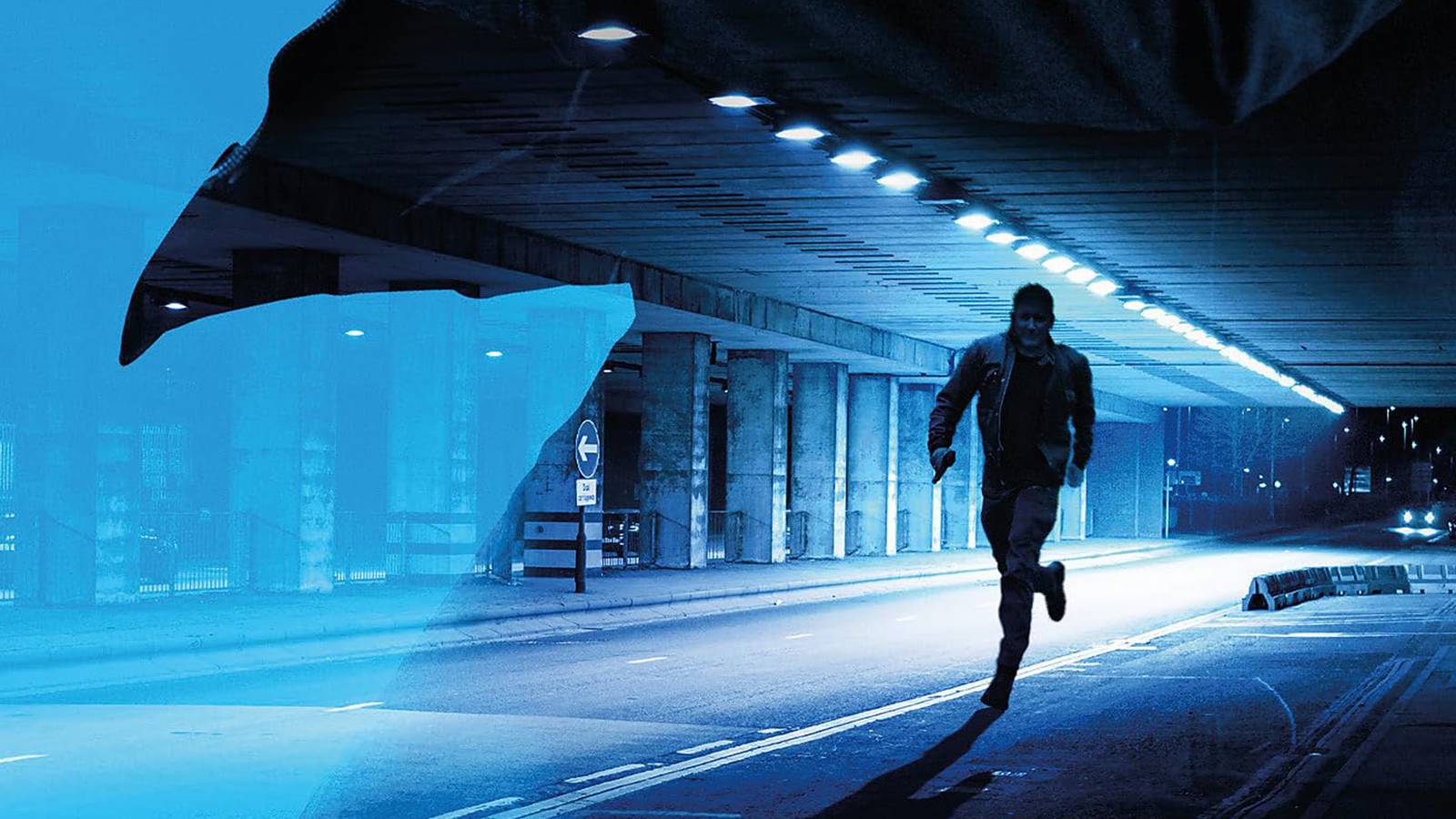
8 Thriller Books That Are a Masterclass in Tension
Full Article
Original Source
Read the full article at Collider →KhanList aggregates and links to publicly available news content. We do not host full articles from third-party sources. Always verify important information with original sources.